

 Предпросмотр
 Поделиться
 Поделиться
 Детали произведения

 Скачать
 Похожие работы
 Рентгенография
 Слайд-шоу
 Статистика
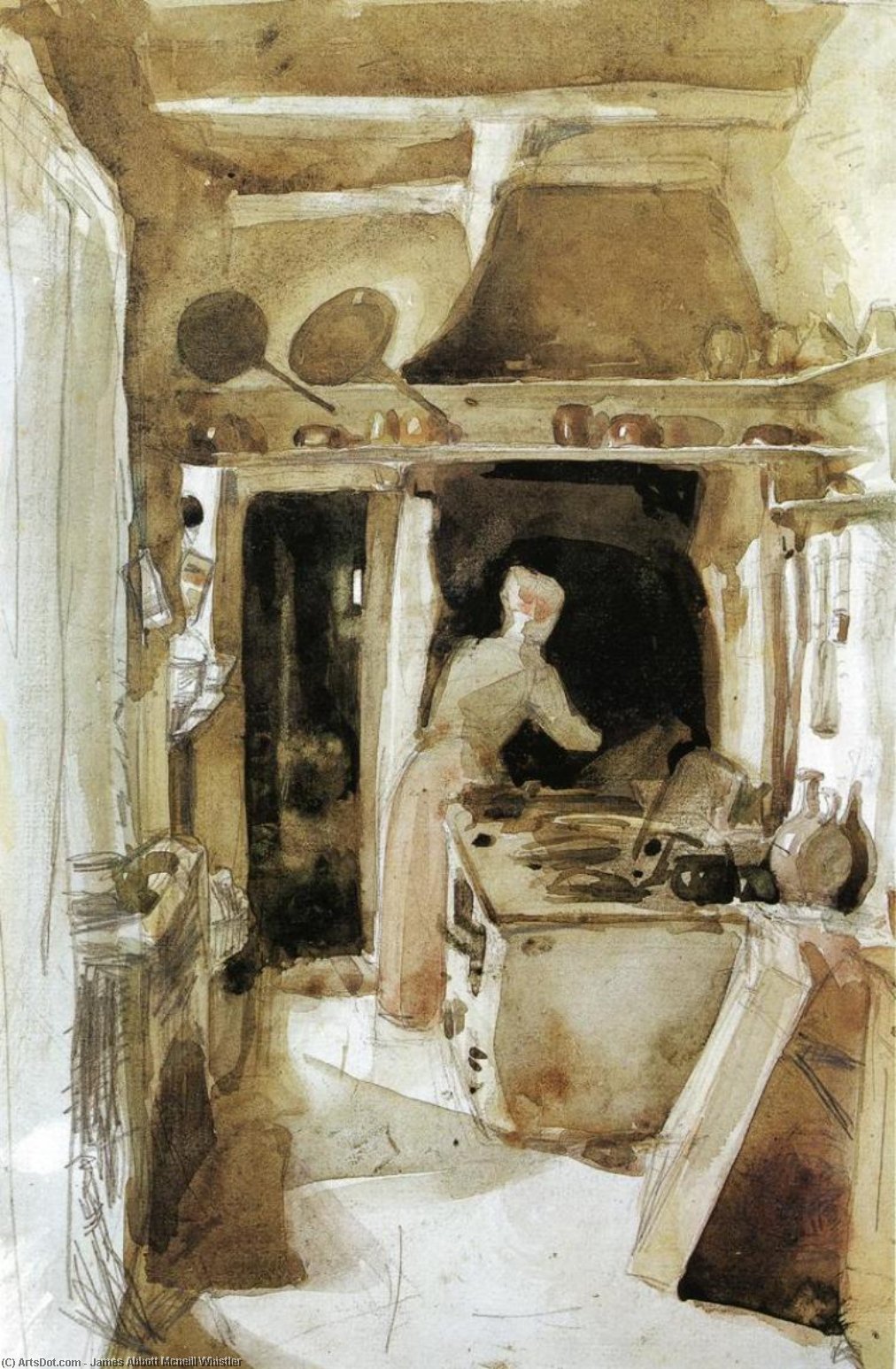
The Kitchen


 Читать далее
Приобретите цифровое изображение высокого разрешения в улучшенном качестве, которое значительно превосходит онлайн-превью.
Каждый файл тщательно подготавливается нашими специалистами с использованием передовых инструментов и экспертной ручной ретуши. Мы гарантируем исключительную четкость, точную цветопередачу и детальную проработку каждого изображения.
Финальный файл доставляется по электронной почте в течение 72 часов и оптимизирован для немедленного использования в профессиональной среде, при верстке и печати. Это тот же уровень качества, которому доверяют ведущие дизайнерские студии, издательства и галереи.
Цифровое изображение
Скачайте файл высокого разрешения для личного использования, печати и творческих проектов. ( Перейти к печати Купить картину ручной работы)
Включено в каждый заказ цифровых изображений
Гарантия экспертной цифровой доставки
Выбирая ArtsDot.com, вы получаете не просто изображение — вы приобретаете профессионально обработанное цифровое произведение искусства, созданное с безупречной точностью и под защитой гарантии качества. Вот всё, что автоматически входит в ваш заказ:

Мгновенная доставка по e-mail
Ваш цифровой файл в высоком разрешении будет отправлен вам по электронной почте в течение 72 часов после оформления заказа — и сразу станет доступен для использования.

Цифровой файл с ИИ-улучшением
Ваше произведение искусства проходит профессиональную оптимизацию с использованием передовых инструментов ИИ и ручной обработки, что гарантирует максимальную детализацию, четкость и точность цветопередачи.

Бессрочная бесплатная повторная доставка
Случайно удалили или потеряли файл? Не беспокойтесь — мы отправим его вам повторно в любое время и совершенно бесплатно.

Без импортных пошлин — навсегда
Наслаждайтесь вашим произведением искусства мгновенно без таможенных пошлин, сборов или затрат на доставку — цифровые загрузки всегда не облагаются налогом.

Гарантия точности цветопередачи
Мы гарантируем, что ваше цифровое изображение максимально точно передает оригинальные цвета благодаря использованию профессиональных инструментов и систем управления цветом.

Гарантия удовлетворенности 100 дней
Если вы не будете удовлетворены своим цифровым изображением, мы внесем правки или вернем 100% стоимости в течение 100 дней — без лишних вопросов.

100% Гарантия возврата средств
Не удовлетворены покупкой? Получите полный возврат средств в течение 100 дней после получения цифрового файла — без лишних вопросов.

Скидки на оптовые заказы
Купите 3 изображения, сэкономьте 10% — Купите 5, сэкономьте 15% — Купите 10+, сэкономьте 20%. Отличное решение для творческих проектов, галерей и агентств.
The Quiet Intimacy of Domestic Life
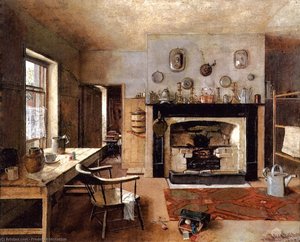
To gaze upon James Abbott McNeill Whistler's "The Kitchen" is to step across the threshold into a moment suspended in time—a sanctuary of quiet domesticity. This painting transcends a mere depiction of household objects; it captures the very atmosphere of lived-in comfort. The scene unfolds with an almost reverent stillness, centering around a woman whose presence imbues the functional space with a subtle narrative weight. Whistler, ever the master observer of human experience filtered through an aesthetic lens, invites us not just to look at pots and pans, but to feel the gentle rhythm of daily life unfolding within these familiar walls.
Tonal Mastery and Aesthetic Philosophy
Whistler’s signature tonalism is immediately apparent here. Rather than relying on harsh contrasts or dramatic color palettes, he employs a sophisticated interplay of muted grays, soft browns, and subtle shadows. This technique allows the light itself to become a primary subject—it seems to filter into the room, illuminating the curve of a bowl or catching the gleam off a resting spoon near the sink. For the collector or designer, this mastery is key; it suggests an artwork that will harmonize with sophisticated interiors, adding depth and mood without overwhelming the space. It speaks to the aesthetic ideal: beauty found in subtlety.
Symbolism of the Everyday Object
The arrangement of objects—the scattered bowls, the substantial oven anchoring the middle ground, the simple chair near the edge—transforms the mundane into the meaningful. These items are not merely props; they carry the weight of routine and connection. The kitchen, historically a hub of labor and sustenance, becomes here a portrait of quiet contemplation. It suggests moments stolen from the rush of life: the pause after cooking, the calm before the evening meal. This symbolism resonates deeply with those who find solace in the familiar architecture of home.
A Whistlerian Echo for Modern Spaces
For those considering bringing this evocative piece into their own homes or design projects, "The Kitchen" offers more than just decoration; it offers an emotional anchor. It channels the spirit of late 19th-century aestheticism—a movement that championed beauty for its own sake. A high-quality reproduction allows one to partake in Whistler’s vision of refined living. Imagine this painting gracing a dining room or a study, lending an air of cultured melancholy and timeless grace. It is art that whispers rather than shouts, perfect for those who appreciate the poetry inherent in everyday existence.
Похожие произведения
Биография художника
A Life Shaped by Aestheticism: The World of James Abbott McNeill Whistler
James Abbott McNeill Whistler, born in Lowell, Massachusetts in 1834, was a figure perpetually at odds with convention—a painter who championed “art for art’s sake” during an era obsessed with moralizing narratives. His early life, marked by frequent relocations due to his father's railroad engineering career, instilled within him a sense of adaptability and exposure to diverse environments. A brief, unhappy stint at West Point proved ill-suited to his artistic temperament, followed by work with the U.S. Coast and Geodetic Survey that, while delaying, did not extinguish his burgeoning passion for art. These formative years were characterized by an innate talent for drawing and a resolute desire to forge a path as a professional artist, a pursuit that would ultimately lead him across the Atlantic and into the heart of the European avant-garde. The seeds of Whistler’s artistic rebellion were sown early, nurtured by a spirit that resisted conformity and embraced aesthetic exploration above all else.Parisian Beginnings and the Cultivation of Style
The pivotal moment in Whistler's artistic journey arrived with his move to Paris in 1855. Here, under the tutelage of Sébastien Bouré, he honed his skills in oil painting, watercolor, and printmaking, absorbing the influences of French Realism and the Barbizon School painters. However, Whistler quickly transcended mere imitation, developing a distinctive style characterized by tonal harmonies and atmospheric effects. He wasn’t interested in replicating reality; rather, he sought to capture its *essence*, its fleeting moods and subtle nuances. This period marked a crucial shift from representational accuracy towards an exploration of pure aesthetic form. His early works already hinted at the delicate balance between observation and abstraction that would define his mature style. It was in Paris that Whistler began to articulate his belief that art should be judged solely on its aesthetic qualities, free from didactic or moralizing constraints—a philosophy that would become the cornerstone of his artistic practice and a defining characteristic of the Aesthetic movement. He experimented with Japanese prints (ukiyo-e), finding inspiration in their bold compositions and evocative use of color, which profoundly influenced his own approach to design and arrangement.Nocturnes, Portraits, and the Pursuit of Harmony
Whistler’s artistic vision crystallized in several key themes and stylistic choices. He championed the concept of “art for art’s sake,” rejecting narratives laden with moral or social commentary. His work became an exercise in capturing subtle nuances of light, color, and atmosphere—a pursuit that led to his iconic *Nocturnes*. These atmospheric paintings of twilight scenes, often depicting the Thames River at night, were not intended as literal depictions but rather as evocative impressions, studies in tonal harmony and mood. He frequently employed limited palettes and delicate brushwork, creating a sense of ethereal beauty and quiet contemplation. Whistler also developed a unique approach to portraiture, treating his sitters not merely as likenesses but as compositional elements within a carefully constructed aesthetic framework. *Arrangement in Grey and Black No. 1*—better known as *Whistler’s Mother*—demonstrates this approach perfectly, transforming a familial portrait into an iconic image of Victorian motherhood through its masterful use of form and tone. The painting's power lies not in a realistic portrayal but in the carefully balanced arrangement of shapes and colors, evoking a sense of serenity and dignity.Controversy, Influence, and Lasting Legacy
Whistler’s career was not without controversy. The infamous libel suit brought against him by the critic John Ruskin in 1878, sparked by *Nocturne in Black and Gold – The Falling Rocket*, became a landmark moment in art history. Whistler successfully defended his artistic autonomy, arguing that his paintings were not intended to be realistic representations but rather aesthetic arrangements of color and form. This case elevated his profile and ignited important debates about the nature of art criticism and artistic freedom. Beyond this legal battle, Whistler’s influence extended far and wide. He was deeply inspired by Japanese prints (ukiyo-e), which informed his compositional principles and emphasis on decorative patterns, as well as the tonal mastery of Spanish painters like Velázquez. His advocacy for “art for art’s sake” profoundly impacted the Aesthetic movement in England and America, paving the way for modernism and challenging conventional notions about artistic purpose. He left an indelible mark on American art, inspiring generations of artists to embrace formalist approaches and explore the expressive potential of color and composition. Whistler died in London in 1903, leaving behind a body of work that continues to captivate and inspire. His unwavering commitment to artistic principles and his relentless pursuit of aesthetic beauty cemented his place as a pivotal figure in the history of art.- Notable Works: *The Forge* (1861), *Portrait of Charles Lang Freer* (1873), *Brown and Gold: The Gold Girl—Connie Gilchrist* (1876-77), *Arrangement in Grey and Black No. 1 (Whistler’s Mother)* (1871), *Nocturne in Black and Gold – The Falling Rocket* (1875).
- Influences: Japanese prints, Velázquez.
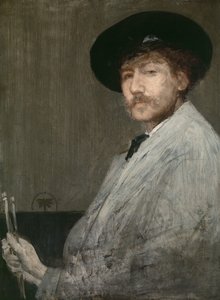
Уистлер
1834 - 1903 , Соединенные Штаты Америки
Основные сведения
- Artistic Movement Or Style: Эстетизм, тонализм
- Artists Or Movements Influenced By This Artist:
- Эстетическое движение
- Современное искусство
- Artists Who Influenced This Artist:
- Веласкес
- Японские гравюры
- Date Of Birth: 14 июля 1834 г.
- Date Of Death: 1903 г.
- Full Name: James Abbott McNeill Whistler
- Nationality: Американский
- Notable Artworks:
- Мать Уиттлера
- Ноктюрн: Синий и Серебро
- Forge
- Place Of Birth: Лоуэлл, США