 Предпросмотр
 Поделиться
 Поделиться
 Детали произведения

 Скачать
 Похожие работы
 Рентгенография
 Слайд-шоу
 Статистика
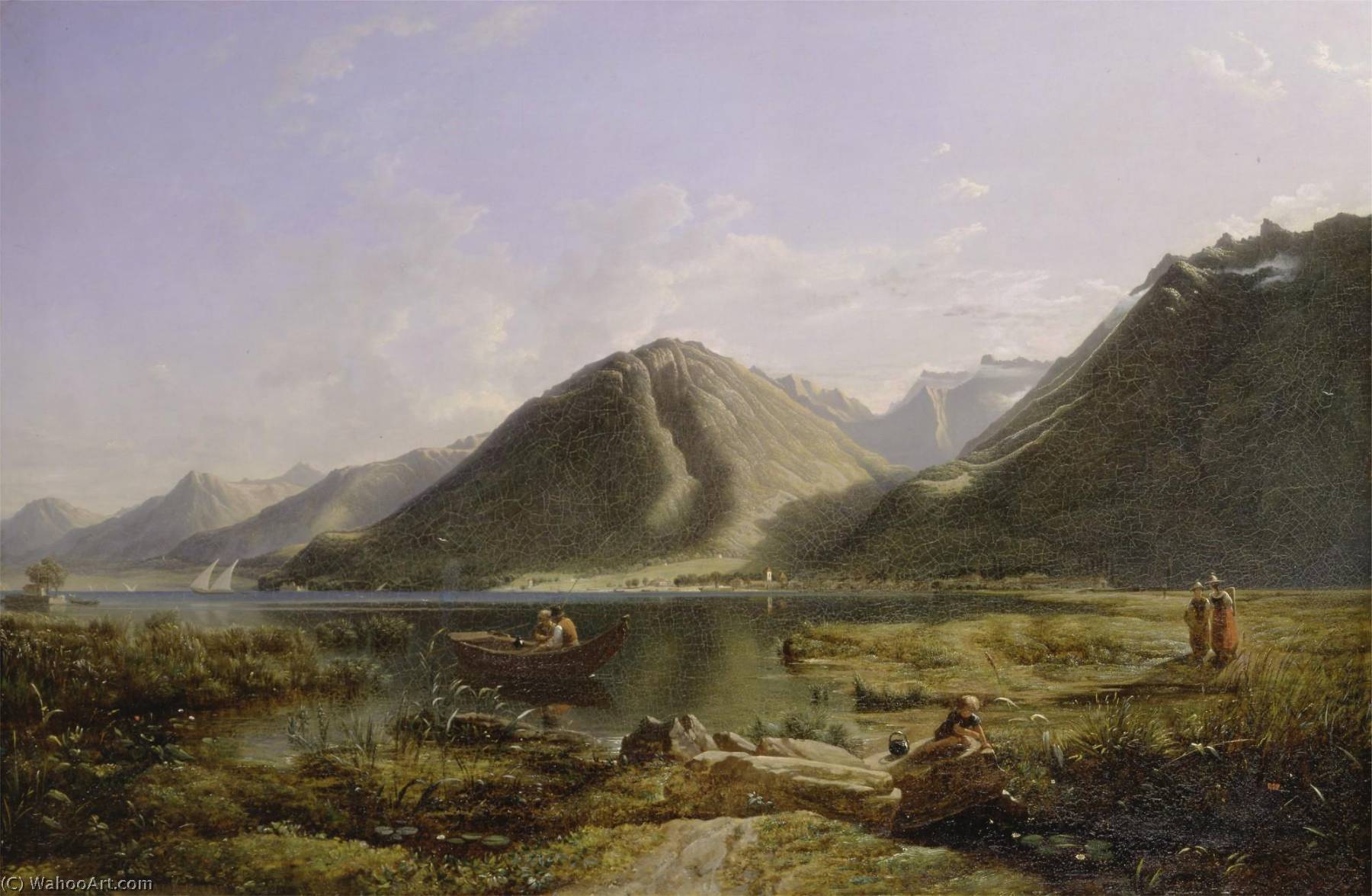
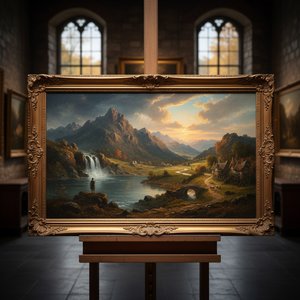
End of Lake Geneva


 Читать далее
Масляная репродукция ручной работы
Картина маслом на холсте в выбранном вами размере и раме, написанная на заказ нашими художниками. ( Перейти к печати Перейти к цифровым изображениям)




P118B $10

P118H $10

P118W $10

P438Z $10

P508JH $12

P508YH $12

P805H $10

P805Z $10

P919BZ $10

P919G $10

P919XJ $10

P959ZH $10

P968JZ $12

W106C $8

W218G $10

W218JH $8

W218Y $10

W307PJ $10

W316G $10

W316PJ $8

W316Y $10

W398PJ $8

W4111J $10

W500HY $15

W500JH $15

W692G $12

W849H $8

W940BG $15

W953PJ $8




Выберите один из наших стандартных размеров, соответствующих оригинальным пропорциям произведения искусства.

Вы можете указать собственные размеры, чтобы картина идеально вписалась в выбранную раму или пространство. Если выбранный вами размер не соответствует пропорциям оригинала, мы либо обрежем полотно, либо расширим его за счет дополнительных элементов, написанных вручную. Цифровой макет будет отправлен вам на утверждение перед началом производства.
Обратите внимание, что предварительный просмотр на экране не отражает фактическую обрезку или расширение. Только макет точно покажет окончательную композицию.
Хотя доступны индивидуальные размеры, мы рекомендуем выбирать вариант из предопределенного списка, чтобы сохранить исходные пропорции.
После оформления заказа команда ArtsDot.com свяжется с клиентом по электронной почте для уточнения деталей и предоставит предварительный макет
Доставка по всему миру () за 3–4 недели вместо стандартных 5 недель. (12 Сентябрь). Без компромиссов в качестве.

Бесплатная экспресс-доставка по всему миру

Высококачественный льняной холст

Полное страхование доставки

Гарантия возмещения таможенных пошлин

Гарантия точного соответствия цветов

100-дневная политика возврата (только при обнаружении дефектов)

Гарантия возврата 100% средств

Предложение оптовых скидок
 Вариант со стеклом доступен только для размеров менее 110 см

End of Lake Geneva
Техника репродукции
Размер репродукции
-


Итоговая стоимость
$ 263
James Francis Danby’s End of Lake Geneva: A Romantic Echo in Alpine Light
James Francis Danby (1793-1861), a pivotal figure in the British Romantic movement, possessed an extraordinary ability to translate emotion into visual form. His landscapes weren't merely depictions of scenery; they were expressions of profound feeling—a characteristic deeply rooted in his Irish upbringing and nurtured by formative artistic training under luminaries like James Arthur O’Connor and George Petrie. Danby’s “End of Lake Geneva,” completed in 1835, exemplifies this Romantic ethos with breathtaking precision and evocative artistry. This monumental canvas captures a twilight vista overlooking the serene expanse of Lake Geneva, transporting viewers to a moment suspended between day and night, beauty and melancholy.A Visionary Landscape Painter
Danby’s artistic journey began in County Wexford, Ireland, where he absorbed influences from Irish Romanticism—a movement characterized by an intense fascination with nature's sublime power and its capacity to inspire spiritual contemplation. His formal training at the Royal Dublin Society’s schools solidified his technical prowess while simultaneously fostering a sensitivity to color and composition that would define his distinctive style. Unlike many of his contemporaries who favored dramatic theatricality, Danby opted for a quieter grandeur—a deliberate choice that allowed him to convey complex psychological states through carefully crafted landscapes. He sought not just to represent what he saw but to capture the very essence of experience itself.Technique and Atmosphere: Mastering Alpine Light
“End of Lake Geneva” showcases Danby’s masterful command of oil paint on canvas—a technique favored by Romantic artists for its ability to achieve luminous effects and convey atmospheric depth. The artist employed a layered glazing process, meticulously blending shades of ochre, umber, and Prussian blue to recreate the subtle gradations of light filtering through the mountain peaks as dusk descends upon the lake’s surface. Notice particularly the way Danby captures the diffused glow emanating from the distant mountains—a technique that imbues the scene with an ethereal quality, mirroring the Romantic preoccupation with capturing fleeting moments of sublime beauty. The artist's meticulous attention to detail contributes significantly to the painting's immersive power.Symbolism and Emotion: Reflections of Byronian Idealism
The composition itself speaks volumes about Danby’s artistic sensibilities—influenced by the poetic fervor of Lord Byron, whose Romantic ideals permeated British culture at the time. The solitary boats gliding across the lake symbolize human aspiration against the backdrop of overwhelming natural grandeur. More subtly, the darkening sky hints at an underlying sense of melancholy—a reflection of the Romantic awareness of mortality and the limitations of human understanding. Danby’s aim wasn't simply to depict a picturesque landscape; he sought to evoke profound emotional responses in his audience—to transport them into a realm where beauty intertwined with sorrow, mirroring the core tenets of Byronian Romanticism.A Legacy Enduring Beauty
“End of Lake Geneva” remains a testament to Danby’s artistic vision and a cornerstone of British Romantic landscape painting. Its enduring appeal lies not only in its stunning visual qualities but also in its ability to resonate with viewers across generations—a reminder that art can transcend time, capturing the spirit of an era while simultaneously conveying timeless truths about human experience. Reproductions of this masterpiece continue to inspire admiration for Danby’s skill and sensitivity, cementing his place as one of Britain's most celebrated Romantic artists.Похожие произведения
Биография художника
A Romantic Visionary: The Life and Art of James Francis Danby
Born in County Wexford, Ireland, in 1793, James Francis Danby emerged as a significant figure within the British Romantic movement, crafting landscapes imbued with dramatic intensity and emotional resonance. His canvases, often vast in scale and steeped in atmospheric effects, stand alongside those of contemporaries like John Martin and J.M.W. Turner, yet possess a unique character rooted in his Irish origins and artistic journey. Danby’s early life was marked by upheaval; the death of his father in 1807 forced a relocation to Dublin, where he began formal art training at the Royal Dublin Society's schools under James Arthur O’Connor and alongside George Petrie. This foundational period instilled in him not only technical skills but also an appreciation for landscape as a vehicle for expressing profound feeling—a hallmark of the burgeoning Romantic sensibility. A pivotal moment arrived in 1813 when Danby, accompanied by O’Connor and Petrie, ventured to London seeking artistic opportunities. Initial struggles led them to Bristol, where Danby discovered success selling watercolor drawings, an experience that proved crucial in shaping his developing style.The Flourishing of the Bristol School
Bristol became a fertile ground for Danby’s artistic growth, as he quickly rose to prominence within the informal collective known as the Bristol School. Initially centered around Edward Bird, this group fostered an environment of shared sketching excursions and mutual influence. Danby soon succeeded Bird as its leading figure, inheriting a naturalistic approach characterized by fresh colors and meticulous observation. Works like “Boys Sailing a Little Boat” (circa 1821) exemplify this early style, showcasing his ability to capture the subtle nuances of light and atmosphere. The Bristol School provided not just technical guidance but also a vital network of support and encouragement as Danby began to forge his own distinct artistic path. Edward Bird’s work was characterized by a naturalistic approach and fresh colors, while Cumberland's influence introduced Danby to the visionary power of William Blake’s art, igniting a shift towards grander, more emotionally charged compositions. The group’s evening sketching meetings were crucial for developing his skills and understanding of the local landscape.Dramatic Visions and Critical Acclaim
Danby’s breakthrough arrived with “The Upas Tree of Java” (1820), a painting that garnered immediate recognition and secured his election as an Associate Member of the Royal Academy. This work, depicting a poisonous tree from Indonesian folklore, showcased his mastery of dramatic composition and atmospheric effects—qualities that resonated deeply with the Byronic taste prevalent in the 1820s. He continued to produce ambitious canvases such as “Disappointed Love” (1821), demonstrating his characteristic poetical approach to landscape, potentially influenced by the writings of Samuel Taylor Coleridge. "An Enchanted Island" (1825) proved particularly influential, inspiring other Bristol School artists and earning praise from Letitia Elizabeth Landon in her celebrated collection, “The Troubadour.” His ambition reached new heights with “Opening of the Sixth Seal” (1828), a large-scale narrative scene purchased by the discerning collector William Beckford. These works established Danby as a leading exponent of Romantic landscape painting, renowned for his ability to evoke powerful emotions and transport viewers to realms of imagination and awe. His style is characterized by vast illusionist canvases depicting grand, gloomy, and fantastic subjects – themes that resonated with the Byronic taste of the 1820s.Later Years and Enduring Legacy
Following a period spent on the shores of Lake Geneva in Switzerland and a brief sojourn in Paris, Danby returned to England in 1840, revitalizing his reputation with “The Deluge” – a monumental work that showcased his continued mastery of dramatic composition. While some later paintings, such as "The Woodnymph's Hymn to the Rising Sun" (1845), displayed a calmer aesthetic, he ultimately returned to his earlier, more theatrical mode with pieces like “The Shipwreck” (1859). Throughout his career, Danby grappled with financial difficulties and critical fluctuations, yet he remained committed to his artistic vision. He continued exhibiting regularly, showcasing both new works and revisiting themes from his earlier successes. James Francis Danby died in 1861, leaving behind a body of work that continues to captivate audiences today. His legacy rests on his significant contribution to British Romantic art. Along with John Martin and J.M.W. Turner, he is celebrated for his imaginative landscapes and ability to evoke powerful emotions through his paintings, solidifying his place as a visionary artist of the 19th century.Key Characteristics of Danby’s Art
- Dramatic Landscapes: Vast, sweeping vistas often featuring turbulent skies and seas.
- Emotional Intensity: Paintings imbued with a sense of awe, mystery, and emotional depth.
- Romantic Themes: Exploration of themes such as the sublime, the power of nature, and human vulnerability.
- Illusionistic Technique: Masterful use of light, shadow, and perspective to create a sense of realism and grandeur.
- Narrative Elements: Many works incorporate narrative elements drawn from mythology, literature, or biblical stories.
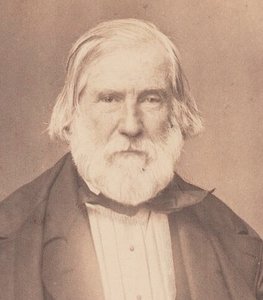
James Francis Danby
1793 - 1861 , Ирландия
Основные сведения
- Artistic Movement Or Style: Романтизм
- Artists Or Movements Influenced By This Artist: ['Бристольская школа']
- Artists Who Influenced This Artist:
- Джон Мартин
- Уильям Блейк
- Date Of Birth: 1793
- Date Of Death: 1861
- Full Name: James Francis Danby
- Nationality: Ирландец
- Notable Artworks:
- Upas Tree
- Disappointed Love
- An Enchanted Island
- Place Of Birth: Вексфорд, Ирландия
Похожие статьи

Романтический пейзаж: 10 шедевров, изменивших искусство | ArtsDot.com
Погрузитесь в мир романтического пейзажа! 10 шедевров Фридриха, Тёрнера и других гениев. Узнайте историю создания культовых картин и вдохновитесь для декора интерьера. Репродукции высокого качества на ArtsDot.com.

Джеймс Уистлер: Топ-25 шедевров художника для ценителей искусства и декора
Погрузитесь в мир Джеймса Уистлера! Топ-25 шедевров художника, от знаменитых ноктюрнов до изысканных портретов. Узнайте историю создания и эстетику каждой картины. Репродукции высокого качества для вашего интерьера на ArtsDot.com.

Evocations of Place: A Historical Journey Through Landscape Art
Explore the rich history of landscape art with ArtsDot. Discover renowned artists, movements like Impressionism & Romanticism, and expert guidance for collecting timeless pieces. Find your perfect serene escape today!
Альфред Муннингс: 25 шедевров британского импрессионизма для вашего интерьера | ArtsDot
Погрузитесь в мир Альфреда Муннингса! 25 шедевров британского импрессионизма, запечатлевших красоту лошадей и сельской Англии. Репродукции картин высокого качества для вашего интерьера на ArtsDot.com.
The Sublime and the Picturesque: Exploring Emotion & Nature in Romantic Landscape Painting
Explore the emotional power of Romantic landscape painting! Discover the sublime & picturesque traditions, key artists like Friedrich & Cole, and find your perfect artwork at ArtsDot.