

 Поделиться
 Поделиться
 Детали произведения

 Скачать
 Похожие работы
 Слайд-шоу
 Статистика
Lycidas


 Читать далее
Масляная репродукция ручной работы
Картина маслом на холсте в выбранном вами размере и раме, написанная на заказ нашими художниками. ( Перейти к печати Перейти к цифровым изображениям)




































Выберите один из наших стандартных размеров, соответствующих оригинальным пропорциям произведения искусства.

Вы можете указать собственные размеры, чтобы картина идеально вписалась в выбранную раму или пространство. Если выбранный вами размер не соответствует пропорциям оригинала, мы либо обрежем полотно, либо расширим его за счет дополнительных элементов, написанных вручную. Цифровой макет будет отправлен вам на утверждение перед началом производства.
Обратите внимание, что предварительный просмотр на экране не отражает фактическую обрезку или расширение. Только макет точно покажет окончательную композицию.
Хотя доступны индивидуальные размеры, мы рекомендуем выбирать вариант из предопределенного списка, чтобы сохранить исходные пропорции.
После оформления заказа команда ArtsDot.com свяжется с клиентом по электронной почте для уточнения деталей и предоставит предварительный макет
Доставка по всему миру () за 3–4 недели вместо стандартных 5 недель. (11 Сентябрь). Без компромиссов в качестве.

Бесплатная экспресс-доставка по всему миру

Высококачественный льняной холст

Полное страхование доставки

Гарантия возмещения таможенных пошлин

Гарантия точного соответствия цветов

100-дневная политика возврата (только при обнаружении дефектов)

Гарантия возврата 100% средств

Предложение оптовых скидок
 Вариант со стеклом доступен только для размеров менее 110 см

Lycidas
Техника репродукции
Размер репродукции
-


Итоговая стоимость
$ 263
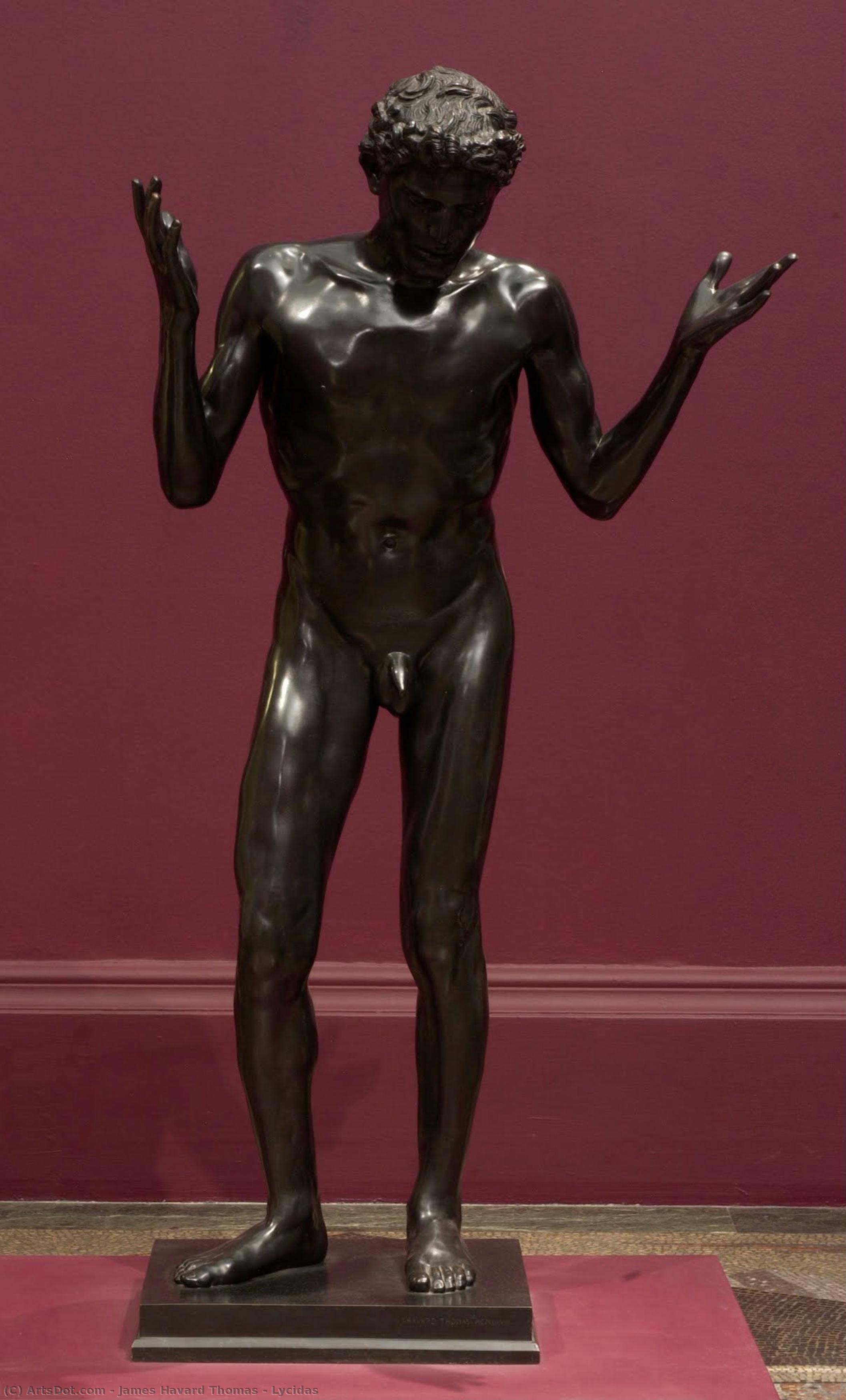
A Poetic Vision in Bronze: The Soul of Lycidas
In the quiet intersection of classical myth and Victorian sentiment, James Havard Thomas’s Lycidas emerges as a profound meditation on loss, beauty, and the ephemeral nature of youth. This masterful bronze sculpture, created between 1902 and 1908, transcends mere physical form to capture a moment of suspended animation. The piece depicts a young shepherd boy, his gaze upturned in a state of rapt wonder, as he observes nymphs bathing in a hidden stream. It is a scene that breathes with the spirit of Romanticism, inviting the viewer into a world where the boundaries between the human and the divine are blurred by the mist of imagination.
The emotional resonance of the work is deeply rooted in its literary lineage, drawing direct inspiration from John Milton’s elegiac poem, Lycidas. Just as Milton used his verse to mourn a fallen companion, Thomas uses the weight and permanence of bronze to contemplate themes of mortality and the bittersweet ache of memory. There is a palpable tension in the boy's posture—a delicate balance between the innocence of childhood and the heavy realization of life's inevitable tragedies. For the collector or the lover of fine art, this sculpture offers more than just aesthetic pleasure; it provides a window into the human condition, making it a centerpiece of profound intellectual and emotional depth.
Mastery of Form and Meticulous Realism
What truly distinguishes Lycidas from the broader sculptural movements of its era is Thomas’s unparalleled commitment to technical precision. Moving away from the sweeping, often generalized gestures of academic tradition, Thomas employed an innovative and highly personal system of measurement to capture the complex topography of the human body. This painstaking approach allowed him to achieve a level of anatomical accuracy that was both startling and breathtaking. The musculature, the subtle tension in the limbs, and the lifelike texture of the skin are rendered with such fidelity that the bronze seems to pulse with an inner vitality.
The artist’s choice of model—his servant Antonio—further underscores this dedication to truth in art. By utilizing a real human subject rather than an idealized, generic figure, Thomas infused the work with a grounded, visceral reality. This marriage of meticulous realism and Romantic idealism creates a unique stylistic tension; while the subject matter is mythological and ethereal, the execution is strikingly tangible. For interior designers seeking to introduce a sense of classical gravitas and sophisticated craftsmanship into a space, the intricate details of this piece offer endless visual intrigue and a commanding presence.
A Legacy of Innovation and Controversy
The history of Lycidas is as compelling as the sculpture itself. During its creation, Thomas was a figure of both immense admiration and significant controversy within the British art establishment. His refusal to adhere to the rigid, often stagnant doctrines of the Royal Academy led to a complex relationship with the era's most powerful institutions. While the Academy initially rejected the work for a perceived lack of traditional originality, the sculpture found its true home at the New Gallery, where it was embraced by those seeking a more emotive and modern approach to sculpture.
Today, held within the prestigious collection of Tate Britain, the piece stands as a triumph of the "New Sculpture" movement. It represents a pivotal moment in art history when technical prowess began to merge with a deeper, more psychological exploration of subject matter. Owning a high-quality reproduction of such a significant work allows one to bring this historical dialogue into the modern home. Whether placed in a sunlit library or a grand salon, Lycidas serves as an enduring symbol of artistic courage and the timeless pursuit of capturing the sublime.
Похожие произведения
Биография художника
John Martin: Architect of the Sublime
John Martin (1789–1854) remains a profoundly enigmatic figure in British art, an artist whose dramatic visions and unconventional techniques captivated audiences during his lifetime and continue to exert a powerful influence today. Born near Hexham in Northumberland, his early life was marked by a series of shifts – from apprenticeship as a heraldic coach painter to training under a Chinese painter, and finally, to London where he began his career as an artist. This restless exploration shaped not only his artistic style but also the intensely personal and often turbulent nature of his work. Martin’s journey reflects a broader cultural shift towards Romanticism, a movement that valued emotion, imagination, and the power of the individual experience – qualities that would become central to his distinctive aesthetic.Early Influences and Artistic Development
Martin's artistic development was profoundly shaped by several key influences. His initial apprenticeship in heraldic painting instilled a meticulous attention to detail and an understanding of composition, skills he later adapted to create the monumental scale of his landscapes. However, it was his time with Charles Muss, a master of porcelain decoration, that proved particularly formative. This experience exposed him to the techniques of etching and engraving, which would become crucial tools in disseminating his vast, complex imagery. Crucially, Martin’s exposure to the works of classical antiquity – particularly Roman ruins – ignited a fascination with decay, grandeur, and the sublime—a concept central to Romantic thought. He was deeply moved by the remnants of ancient civilizations, perceiving within them echoes of human mortality and the overwhelming power of nature. This interest manifested in his paintings of ruined cities and desolate landscapes, often imbued with an atmosphere of foreboding and spiritual intensity.The Language of the Sublime
Martin’s most distinctive achievement lies in his masterful depiction of the sublime—a concept articulated by Edmund Burke and later developed by Immanuel Kant. The sublime isn't simply beauty; it’s an experience that overwhelms our senses, evoking feelings of awe, terror, and a sense of insignificance in the face of something vast and powerful. Martin achieved this effect through several key techniques. His compositions are characterized by immense scale, often featuring towering mountains, raging storms, and colossal figures dwarfed by their surroundings. He employed dramatic lighting—chiaroscuro—to heighten the contrast between light and shadow, creating a sense of mystery and foreboding. Furthermore, he meticulously rendered minute details within these vast landscapes, drawing the viewer’s eye into a world teeming with hidden narratives and symbolic meanings. His paintings, such as *Belshazzar's Feast* (1819) and *The Great Day of His Wrath* (1824), are not merely depictions of events; they are carefully constructed allegories designed to provoke profound emotional and intellectual responses.Engravings and Popular Success
While Martin’s paintings were initially met with mixed reactions—some critics found them unsettling or overly dark—his engravings enjoyed immense popularity among the public. The process of translating his large, complex canvases into smaller, more accessible prints proved remarkably successful. His most famous series, *The Biblical Poems*, included works like *The Deluge* (1837) and *The Fall of Nineveh* (1829), which were widely reproduced and circulated throughout Europe. These engravings captured the essence of Martin’s vision—his fascination with apocalyptic events, his exploration of human mortality, and his depiction of nature's overwhelming power—and brought his art to a vast audience who might otherwise have been unaware of it. The French Academy recognized this popularity, presenting him with medals and honorary membership, reflecting the widespread admiration for his dramatic imagery.Legacy and Historical Significance
Despite facing criticism from some of his contemporaries, particularly John Ruskin, who dismissed his work as “dark” and lacking in moral substance, John Martin’s influence on subsequent generations of artists is undeniable. His exploration of the sublime, his innovative use of light and shadow, and his willingness to confront difficult themes—such as death, destruction, and religious apocalypse—established a precedent for Romantic painters like J.M.W. Turner and Caspar David Friedrich. Martin’s work continues to resonate with viewers today, offering a powerful meditation on the human condition and the enduring mysteries of the natural world. His paintings serve as a potent reminder of the capacity of art to evoke profound emotional responses and to challenge our understanding of beauty, terror, and the sublime—qualities that remain central to the artistic imagination.
james havard thomas
1854 - 1921 , United Kingdom
Основные сведения
- Artistic Movement Or Style: Impressionism, Portraiture
- Artists Or Movements Influenced By This Artist:
- John Singer Sargent
- French Impressionism
- Artists Who Influenced This Artist:
- William Merritt Chase
- Jean-Léon Gérôme
- Date Of Birth: January 12, 1856
- Date Of Death: November 3, 1925
- Full Name: John Singer Sargent
- Nationality: American
- Notable Artworks:
- Madame X
- Carnival at Kioto
- The Daughters of Edward Darley Boit
- Place Of Birth: Florence, Italy
Похожие статьи

10 легендарных бронзовых шедевров, изменивших искусство | ArtsDot
Погрузитесь в мир великих бронзовых шедевров! От Давида Донателло до Мыслителя Родена – узнайте историю создания, технику и значение легендарных скульптур. Вдохновение для интерьера и музейное качество репродукций на ArtsDot.com.

Thomas H. Shepherd: Capturing Victorian London's Essence Through Topographical Precision
Explore the exquisite topographical paintings of Thomas H. Shepherd, renowned for his detailed depictions of Victorian London and beyond. Discover his legacy & artistic techniques.

The Enduring Legacy of Bronze: A Historical & Artistic Exploration for the Collector
Explore the rich history & enduring appeal of bronze sculpture with expert insights for collectors at ArtsDot. Learn about casting techniques, iconic artists, collecting tips & contemporary interpretations.

Romantic Realism's Finest: 10 Masterpieces for Your Home | ArtsDot
Explore 10 defining masterpieces of Romantic Realism! Discover Courbet, Millet & Daumier's powerful paintings—capturing emotion and social realities. Find museum-quality reproductions for your home at ArtsDot.com.
The Enduring Legacy of Bronze: History, Technique & Artistic Expression for the Collector
Explore the rich history & enduring appeal of bronze sculpture with expert insights for collectors at ArtsDot. Learn about casting techniques, iconic artists, and collecting tips.