 Предпросмотр
 Поделиться
 Поделиться
 Детали произведения

 Скачать
 Похожие работы
 Рентгенография
 Слайд-шоу
 Статистика
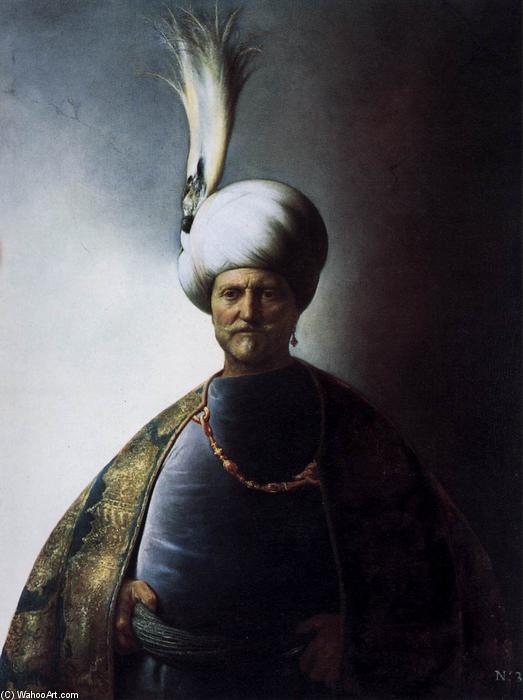
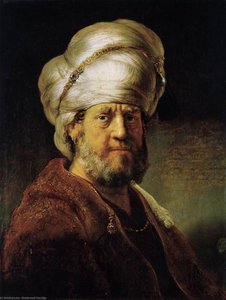
Old Man in Oriental Garb
 Oil On Canvas
- WallArt
- 17th Century Dutch Realism
 1628
1628 135.0 x 101.0 cm
 Schloss Sanssouci
 Читать далее
Жикле / Арт-принт
Печать (жикле) или холст музейного качества с быстрыми сроками изготовления и широким выбором вариантов отделки. ( Купить картину ручной работы Перейти к цифровым изображениям)




P118B $10

P118H $10

P118W $10

P438Z $10

P508JH $12

P508YH $12

P805H $10

P805Z $10

P919BZ $10

P919G $10

P919XJ $10

P959ZH $10

P968JZ $12

W106C $8

W218G $10

W218JH $8

W218Y $10

W307PJ $10

W316G $10

W316PJ $8

W316Y $10

W398PJ $8

W4111J $10

W500HY $15

W500JH $15

W692G $12

W849H $8

W940BG $15

W953PJ $8




Выберите один из наших стандартных размеров, соответствующих оригинальным пропорциям произведения искусства.

Вы можете указать свои собственные размеры, чтобы репродукция идеально подошла под конкретную раму или пространство. Если выбранный вами размер не будет соответствовать пропорциям оригинала, мы либо обрежем произведение, либо дополним изображение зеркальным отражением краев или однотонной заливкой. Перед началом производства вам будет отправлен цифровой макет для утверждения.
Пожалуйста, обратите внимание, что предварительный просмотр на экране не отображает фактическую обрезку или расширение изображения. Только макет точно покажет финальную композицию.
Несмотря на возможность заказа индивидуальных размеров, мы рекомендуем выбирать размер из предопределенного списка, чтобы сохранить оригинальные пропорции.
Доставка по всему миру () за 2 недели вместо стандартных 4/5 недель. (12 Сентябрь)

Бесплатная экспресс-доставка по всему миру

Высококачественный льняной холст

Полное страхование доставки

Гарантия возмещения таможенных пошлин

Гарантия точного соответствия цветов

100-дневная политика возврата (только при обнаружении дефектов)

Гарантия возврата 100% средств

Предложение оптовых скидок
 Вариант со стеклом доступен только для размеров менее 110 см

Old Man in Oriental Garb
Жикле / Арт-принт
Размер репродукции
-


Итоговая стоимость
$ 62
A Portrait of Exoticism: Jan Andrea Lievens’ “Old Man in Oriental Garb”
Within the hallowed halls of the Schloss Sanssouci in Berlin resides a captivating painting – Jan Andrea Lievens’ “Old Man in Oriental Garb,” a work that transcends mere portraiture to become a window into a bygone era of trade, diplomacy, and burgeoning European fascination with the East. Completed in 1628, this oil on canvas isn't simply a depiction of an individual; it’s a carefully constructed tableau brimming with symbolic weight and artistic mastery, reflecting both the meticulous realism favored by Lievens and the exotic allure of Ottoman culture.
The subject himself is rendered with remarkable detail – an older gentleman, his face etched with a contemplative serenity, draped in opulent attire that immediately transports the viewer to a distant land. The rich, dark robe, adorned with intricate patterns reminiscent of Persian carpets, speaks volumes about wealth and status. A crisp white turban, topped with a flamboyant plume, anchors the composition, instantly signaling the subject’s connection to the Ottoman Empire – a realm often perceived as both mysterious and alluring during this period. The subtle shift in lighting, originating from an unseen left-hand source, sculpts the figure's features, highlighting the texture of his clothing and drawing attention to the details that define his exotic appearance.
A Masterclass in 17th-Century Dutch Realism
Lievens’ skill as a painter is immediately apparent. The work exemplifies the hallmarks of 17th-century Dutch realism, characterized by an unwavering commitment to accurate representation and a sophisticated understanding of light and shadow. The meticulous rendering of fabrics – from the velvet of the robe to the shimmering sheen of the turban – demonstrates a remarkable ability to capture texture and depth. Notice how Lievens skillfully employs layering techniques with oil paint, creating subtle gradations in color that give the subject’s attire a tangible quality, almost as if one could reach out and feel its luxurious weight.
The composition itself is carefully balanced, drawing the eye directly to the man's face. The neutral expression – neither overtly joyful nor sorrowful – invites contemplation, suggesting a quiet dignity and perhaps even a hint of melancholy. The dark background serves not as an obstruction but rather as a powerful amplifier, intensifying the impact of the figure’s presence and emphasizing his distinctive appearance.
Historical Echoes: Prussia, Trade, and the “Orient”
To fully appreciate “Old Man in Oriental Garb,” it's crucial to understand its historical context. The Schloss Sanssouci itself was a testament to Prussian King Frederick the Great’s vision of a refined summer retreat – a space designed to evoke the tranquility and beauty of the French court. The painting, housed within this opulent setting, reflects the broader European fascination with the East that flourished during the 17th century, fueled by burgeoning trade routes and diplomatic exchanges.
The Ottoman Empire, in particular, held a powerful allure for Europeans, representing a world of exotic customs, luxurious goods, and untold riches. This painting can be viewed as a visual manifestation of this fascination – a carefully constructed image designed to capture the essence of “Oriental” culture. The inclusion of elements like the turban and elaborate robes served not only to depict an individual from that region but also to embody the broader cultural exchange taking place between Europe and the East.
Symbolism and Emotional Resonance
Beyond its technical brilliance, “Old Man in Oriental Garb” resonates with a subtle emotional depth. The subject’s contemplative gaze suggests a wisdom earned through experience, while his regal attire hints at authority and power. The painting invites us to consider the complexities of cultural interaction – the allure of the unfamiliar, the potential for misunderstanding, and the enduring human desire to connect across boundaries.
Ultimately, this portrait is more than just a likeness; it’s a carefully crafted narrative that speaks volumes about the historical context, artistic techniques, and emotional resonance of 17th-century Dutch painting. It remains a compelling testament to Jan Andrea Lievens' skill and a captivating window into a world both distant and deeply intriguing.
Похожие произведения
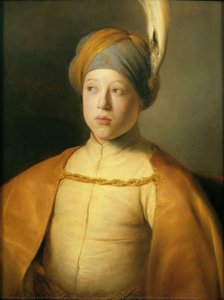
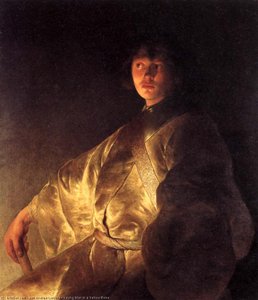
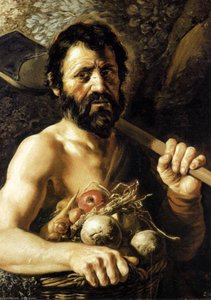
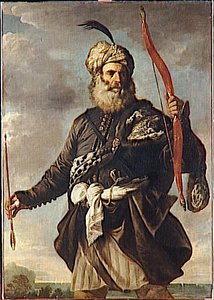
Биография художника
Jan Andrea Lievens: A Shadowed Master of the Dutch Golden Age
Jan Andrea Lievens, born in Leiden in 1607 and tragically passing away in Berlin in 1674, remains a fascinating enigma within the pantheon of Dutch Masters. Often overshadowed by his more celebrated contemporary, Rembrandt van Rijn, Lievens’s artistic journey is one of remarkable talent, intense collaboration, and ultimately, relative obscurity—a story that now deserves renewed attention. His life embodies the complexities of the Dutch Golden Age, marked by both immense promise and a frustrating lack of recognition during his own lifetime.Early Years and Artistic Foundations
Lievens’s early life was steeped in the traditions of Leiden, a city renowned for its artistic heritage. He was the son of Lieven Hendriksze, a skilled embroiderer – a craft that instilled within him an appreciation for meticulous detail and vibrant color. At the tender age of eight, he began his formal training under Joris van Schooten, a respected local artist who provided him with the foundational principles of drawing and painting. This early apprenticeship was followed by a crucial two-year period spent in Amsterdam, where he honed his skills under the tutelage of the renowned history painter, Pieter Lastman. Lastman’s influence is palpable in Lievens's later work – particularly in his dramatic compositions and masterful use of light and shadow, elements that would become hallmarks of his style. It was during this time that Lievens began to develop a distinctive approach, one characterized by a bold theatricality and an inclination towards capturing the psychological depth of his subjects.A Collaborative Spark: The Rembrandt Connection
Lievens’s career truly ignited in the early 1620s when he moved back to Leiden and entered into a remarkable partnership with Rembrandt. For nearly a decade, from 1626 to 1631, they worked side-by-side, producing over two dozen paintings, drawings, and etchings—a period of intense creative exchange and, inevitably, some degree of artistic rivalry. This collaboration is particularly noteworthy because it occurred during a time when Rembrandt was still establishing himself as an independent artist. Lievens’s experience and technical skill provided a valuable counterbalance to Rembrandt's innovative spirit, resulting in a diverse body of work that reflects both artists’ individual styles. However, the exact attribution of these works remains a subject of ongoing scholarly debate—a testament to the close stylistic similarities between the two masters.The Influence of Caravaggisti and Rubens
Lievens’s artistic development was profoundly shaped by several key influences. Initially, he embraced the dramatic flair of the *Caravaggisti* – Italian painters who had brought a new intensity of light and shadow, known as *chiaroscuro*, to European art. This influence is evident in his early works, characterized by dynamic compositions and a heightened sense of theatricality. Furthermore, Lievens’s work demonstrates a clear debt to Peter Paul Rubens, the towering figure of Flemish Baroque painting. The opulent colors, dramatic gestures, and allegorical themes found in Rubens's paintings—particularly *Judith with the Head of Holofernes* – resonated deeply with Lievens, shaping his approach to large-scale religious and mythological scenes.A Journey Beyond Leiden: London, Antwerp, and Berlin
Following his collaboration with Rembrandt, Lievens embarked on a series of journeys that took him far beyond the familiar landscapes of Leiden. He spent time in London, where he was invited to the British court—a testament to his growing reputation. He then settled in Antwerp, a vibrant center of artistic activity during this period, and later found patronage in The Hague and Berlin. Each location contributed to his evolving style, exposing him to new influences and broadening his artistic horizons. Despite these travels, Lievens never achieved the same level of fame or recognition as Rembrandt—a tragic irony for an artist whose talent was so consistently praised by his contemporaries.Legacy and Rediscovery
Today, Jan Andrea Lievens is finally receiving the recognition he deserves. His works, characterized by their dramatic intensity, technical brilliance, and profound psychological insight, are increasingly being appreciated for their artistic merit. Museums across Europe—including the Mauritshuis in The Hague and the Kremer Collection—are showcasing his paintings, allowing a new generation of viewers to experience the beauty and power of his art. Lievens’s story serves as a poignant reminder that history can be shaped by circumstance, and that even the most talented artists can remain hidden from view for centuries—until their work is rediscovered and celebrated anew.
Ян Ливенс
1607 - 1674 , Нидерланды
Основные сведения
- Artistic Movement Or Style: Голландская золотая эпоха
- Artists Who Influenced This Artist:
- Питер Ластман
- Пьер Ребёрб
- Date Of Birth: Октябрь 24, 1607
- Date Of Death: Июнь 4, 1674
- Full Name: Jan Lievens
- Nationality: Нидерландцы
- Notable Artworks:
- Голова старого человека
- Портрет Константина Гугенсберга
- Молодой человек в капюшоне и тунике
- Place Of Birth: Лейден, Нидерланды
Похожие статьи
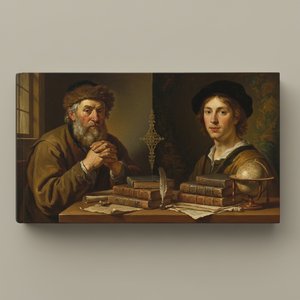
Jan Lievens & Rembrandt: A Comparative Study of Baroque Innovation
Explore the fascinating artistic dialogue between Jan Lievens and Rembrandt van Rijn. Discover Lievens’s unique Baroque style, continental influences, and evolving legacy – a must-read for discerning art collectors.

The Enduring Power of Painting: A Historical & Contemporary Exploration of Form and Emotion
Explore the rich history & enduring techniques of oil painting with ArtsDot. Discover masterpieces, learn about art collecting, and find authentic handmade reproductions crafted by skilled artists.

The Enduring Legacy of Oil on Canvas: Technique, History & Aesthetic Impact
Explore the rich history & techniques of oil painting – from Renaissance masters to Impressionism. Discover pigments, layering methods, and why this timeless medium endures. Expert insights for artists & art enthusiasts.

Oil on Canvas: A Historical & Technical Exploration of a Timeless Artistic Medium
Explore the rich history & enduring techniques of oil painting on canvas. Discover the science behind its longevity, conservation practices, and contemporary relevance. Expert insights for art enthusiasts.

Масляная живопись: История, техника и непреходящее наследие
Узнайте все о масляной живописи: история техники, секреты мастеров и современные тенденции. Погрузитесь в мир искусства с экспертами !