

 Предпросмотр
 Поделиться
 Поделиться
 Детали произведения

 Скачать
 Похожие работы
 Рентгенография
 Слайд-шоу
 Статистика
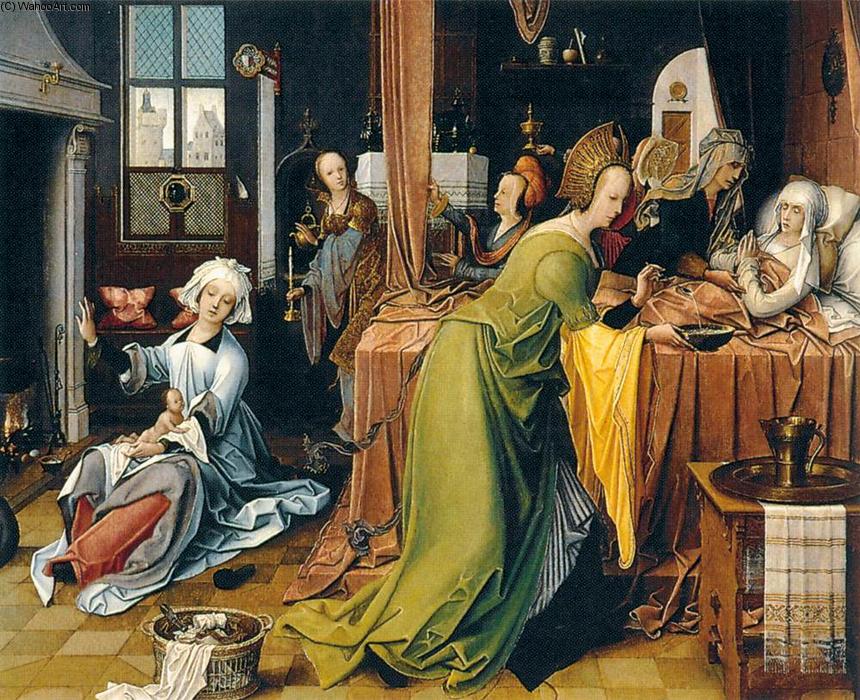
Birth of the Virgin
 Acrylic On Canvas
- WallArt
- Antwerp Mannerism
 1520
1520 112.0 x 131.0 cm
 Музей Тиссен-Борнмизеса
 Читать далее
Жикле / Арт-принт
Печать (жикле) или холст музейного качества с быстрыми сроками изготовления и широким выбором вариантов отделки. ( Купить картину ручной работы Перейти к цифровым изображениям)




P118B $10

P118H $10

P118W $10

P438Z $10

P508JH $12

P508YH $12

P805H $10

P805Z $10

P919BZ $10

P919G $10

P919XJ $10

P959ZH $10

P968JZ $12

W106C $8

W218G $10

W218JH $8

W218Y $10

W307PJ $10

W316G $10

W316PJ $8

W316Y $10

W398PJ $8

W4111J $10

W500HY $15

W500JH $15

W692G $12

W849H $8

W940BG $15

W953PJ $8




Выберите один из наших стандартных размеров, соответствующих оригинальным пропорциям произведения искусства.

Вы можете указать свои собственные размеры, чтобы репродукция идеально подошла под конкретную раму или пространство. Если выбранный вами размер не будет соответствовать пропорциям оригинала, мы либо обрежем произведение, либо дополним изображение зеркальным отражением краев или однотонной заливкой. Перед началом производства вам будет отправлен цифровой макет для утверждения.
Пожалуйста, обратите внимание, что предварительный просмотр на экране не отображает фактическую обрезку или расширение изображения. Только макет точно покажет финальную композицию.
Несмотря на возможность заказа индивидуальных размеров, мы рекомендуем выбирать размер из предопределенного списка, чтобы сохранить оригинальные пропорции.
Доставка по всему миру () за 2 недели вместо стандартных 4/5 недель. (11 Сентябрь)

Бесплатная экспресс-доставка по всему миру

Высококачественный льняной холст

Полное страхование доставки

Гарантия возмещения таможенных пошлин

Гарантия точного соответствия цветов

100-дневная политика возврата (только при обнаружении дефектов)

Гарантия возврата 100% средств

Предложение оптовых скидок
 Вариант со стеклом доступен только для размеров менее 110 см

Birth of the Virgin
Жикле / Арт-принт
Размер репродукции
-


Итоговая стоимость
$ 62
Jan de Beer’s “Birth of the Virgin”: A Window Into Antwerp Mannerism
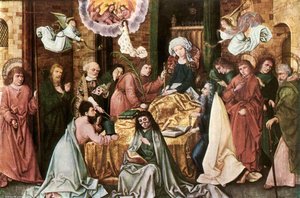
The painting "Birth of the Virgin," attributed to Jan de Beer (c. 1475–1528), stands as a testament to the flourishing artistic spirit of Antwerp during the early sixteenth century—a period known as Antwerp Mannerism. This captivating depiction captures a pivotal moment in Christian iconography, portraying Mary receiving the infant Jesus after childbirth within a richly adorned chamber. More than just a visual representation, it’s an exploration of humanist ideals intertwined with devotional fervor, reflecting the intellectual currents shaping Europe at the time.A Masterful Synthesis of Style and Technique
De Beer's artistic prowess is evident in his meticulous attention to detail and masterful command of oil paint on panel—a technique favored by Antwerp artists during this era. Unlike the idealized forms prevalent in earlier Renaissance styles, De Beer’s figures possess a subtle dynamism and expressive gesture, characteristic of Mannerist aesthetics. The artist skillfully employs chiaroscuro – dramatic contrasts between light and dark – to sculpt the contours of Mary's body and illuminate the serene faces of the attendants, creating an atmosphere imbued with palpable emotion. Notice particularly how the artist uses soft brushstrokes to convey tenderness and reverence.Historical Context: Antwerp’s Artistic Crucible
Antwerp was at the epicenter of artistic innovation during De Beer’s lifetime, attracting talent from across Europe. The city's prosperity stemmed from its role as a major trading hub, fostering an environment conducive to cultural exchange and experimentation. Influenced by Italian Renaissance masters like Raphael and Michelangelo—though arguably tempering their grandeur with Flemish sensibilities—De Beer’s workshop embraced a Romanist style that sought to revive classical ideals of beauty and proportion. However, it simultaneously retained the expressive power of Northern European tradition, resulting in a distinctive visual language that distinguishes Antwerp Mannerism from its Italian counterpart. The painting's commission likely served as an emblem of civic pride and piety within the burgeoning city.Symbolic Layers: Reverence and Maternal Grace
The scene is laden with symbolic significance. Mary’s kneeling posture embodies humility and devotion, while her gaze directs towards Jesus—representing divine grace and salvation. The attendants surrounding her are depicted with dignified composure, symbolizing the Church's role in safeguarding faith and upholding moral virtue. The inclusion of a bowl – traditionally associated with purity and nourishment – reinforces the theme of maternal care and spiritual sustenance. Furthermore, the muted color palette contributes to the painting’s contemplative mood, emphasizing the sanctity of the occasion and inviting viewers into a realm of profound contemplation.Emotional Resonance: A Portrait of Spiritual Serenity
“Birth of the Virgin” transcends mere depiction; it aspires to evoke an emotional response in the viewer. The artist's skillful use of light and shadow creates a sense of intimacy and warmth, drawing us into the sacred space depicted. The faces of Mary and her companions radiate compassion and serenity—expressions that resonate with universal themes of motherhood, faith, and divine grace. It’s a painting designed not just to be seen but felt—a timeless masterpiece capturing the essence of Christian piety and artistic brilliance.Похожие произведения

Биография художника
Michelangelo Buonarroti: A Titan of the Renaissance
Michelangelo di Lodovico Buonarroti Simoni, born in Caprese in 1475 and dying in Rome in 1564, remains one of the most profoundly influential figures in Western art history. More than simply a sculptor, painter, architect, or poet—he was, as his contemporaries declared, the greatest artist of his era, a true “divine” creator who redefined the boundaries of artistic expression. His career spanned over seven decades, marked by an unparalleled mastery of technique and a deeply personal vision that continues to resonate with audiences today. Michelangelo’s life was one of intense dedication to his craft, often at the expense of personal comfort and social graces, yet he left behind a legacy of works that are universally recognized as masterpieces.
Early Life and Artistic Training
Michelangelo's early years were shaped by a complex family dynamic. His father, Lodovico Buonarroti, a notary and member of the Florentine gentry, initially resisted his son’s ambition to pursue an artistic career, believing it unsuitable for a man of noble birth. However, Michelangelo’s prodigious talent quickly became undeniable, leading him to apprentice under the renowned sculptor Bertoldo di Giovanni in Florence around 1483. This early training instilled in him a deep understanding of classical sculpture and anatomy—a foundation that would inform his entire artistic practice. Following Bertoldo's dismissal from the Medici court, Michelangelo spent several years working as a stonemason, honing his skills and developing his own distinctive style. He also studied the vast collection of Roman sculptures housed in Florence, which profoundly influenced his aesthetic sensibilities, inspiring him to emulate the idealized forms and heroic narratives of antiquity.
Sculptural Masterpieces: Form and Emotion
Michelangelo’s sculptural achievements are arguably the most celebrated aspects of his oeuvre. His early works, such as the *Pietà* (1498-9), a breathtakingly realistic depiction of Mary cradling the dead Christ, demonstrated an astonishing command of marble and a profound understanding of human emotion. The *Pietà* is not merely a technical marvel; it’s imbued with a palpable sense of grief and tenderness—a testament to Michelangelo's ability to imbue inanimate stone with life. The *David* (1501-4), originally intended for the Florence Cathedral, quickly became a symbol of Florentine civic pride and republican ideals. This colossal statue embodies youthful strength, determination, and moral courage, capturing the essence of the biblical hero in a remarkably dynamic pose. Later works like *Moses* (1513-15) showcase his increasing mastery of dramatic composition and expressive power, while the unfinished *Rondanini Marcher*, a monumental bronze figure commissioned for the tomb of Cardinal Jean de Medici, reveals his ambition to create truly grand narratives in three dimensions.
Painting: The Sistine Chapel Ceiling and Beyond
While Michelangelo considered himself primarily a sculptor, he made an indelible mark on the world of painting. His most iconic contribution is undoubtedly the ceiling frescoes of the Sistine Chapel in Rome (1508-1512). Commissioned by Pope Julius II, this monumental undertaking demanded immense physical and artistic effort—Michelangelo spent four years lying on his back to paint hundreds of figures depicting scenes from Genesis. The *Creation of Adam*, arguably the most famous image within the cycle, captures a moment of divine inspiration with breathtaking power and dynamism. Beyond the Sistine Chapel, Michelangelo painted several other significant works, including *The Last Judgment* (1536-1541) on the altar wall of the same chapel—a powerful and emotionally charged depiction of the apocalypse. His *Doni Tondo*, a circular painting depicting the Virgin Mary with infant Jesus and John the Baptist, is another notable example of his artistic versatility.
Architecture and Legacy
Michelangelo’s influence extended beyond sculpture and painting into the realm of architecture. He served as the architect for several significant projects in Rome, including the Laurentian Library (1520-1524) and the redesign of St. Peter's Basilica, where he oversaw the construction of the dome—a monumental achievement that transformed the skyline of the city. Throughout his career, Michelangelo’s work was characterized by a profound understanding of proportion, harmony, and classical ideals. His innovative use of space, dramatic lighting, and expressive figures set new standards for artistic excellence. He died in Rome in 1564, leaving behind a vast body of work that continues to inspire awe and admiration centuries later. Michelangelo’s legacy as one of the greatest artists of all time is secure, his works serving as enduring symbols of human creativity and spiritual aspiration.
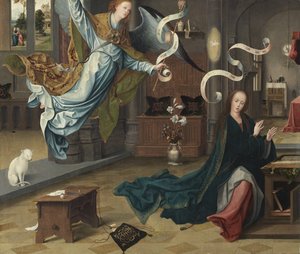
jan de beer
1475 - 1528 , Netherlands
Основные сведения
- Artistic Movement Or Style: High Renaissance, Mannerism
- Artists Or Movements Influenced By This Artist:
- Renaissance art
- Mannerism
- Artists Who Influenced This Artist:
- Classical antiquity
- Leonardo da Vinci
- Date Of Birth: 6 March 1475
- Date Of Death: 18 February 1564
- Full Name: Michelangelo di Lodovico Buonarroti Simoni
- Nationality: Italian
- Notable Artworks:
- Pietà
- David
- Sistine Chapel ceiling
- The Creation of Adam
- Moses
- The Last Judgment
- Place Of Birth: Caprese, Italy
Похожие статьи
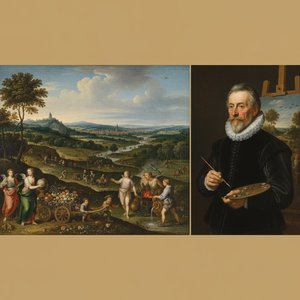
Jan Brueghel the Elder: A Master of Flemish Landscape & Allegory – Exploring Innovation & Influence
Explore the captivating world of Jan Brueghel the Elder, a Flemish Baroque master renowned for his stunning landscapes & allegorical paintings. Discover his collaborations with Rubens and lasting artistic legacy.
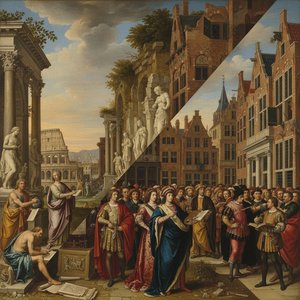
Jan Gossaert (Mabuse): Pioneering Renaissance Style & the Birth of Netherlandish Antiquity
Explore the groundbreaking art of Jan Gossaert (Mabuse), a pioneer of Renaissance painting in the Low Countries. Discover his Romanist style, stunning portraits, and influence on Northern European art history.
10 Шедевров Раннего Нидерландского Живописи: История Искусства в Вашем Интерьере
Погрузитесь в мир Раннего нидерландского живописи! Откройте 10 шедевров Яна ван Эйка, Рогира ван дер Вейдена и других мастеров. История искусства, техника исполнения и вдохновение для вашего интерьера на ArtsDot.com.

О нас
Откройте для себя нашу историю! Мы привносим искусство мирового класса в вашу жизнь благодаря экспертному отбору, индивидуальным заказам и бесплатным обзорам. Одобрено частными лицами и компаниями с 2000 года.

Топ-25 шедевров Гойи: от придворного портрета до мрачных пророчеств | ArtsDot
Погрузитесь в мир гения Франсиско Гойи! 🎨 От придворных портретов до мрачных "Капричос" – исследуйте топ-25 шедевров испанского романтизма. Купите репродукции картин Гойи музейного качества на ArtsDot.com и украсьте свой интерьер искусством.