

 Предпросмотр
 Поделиться
 Поделиться
 Детали произведения

 Скачать
 Похожие работы
 Рентгенография
 Слайд-шоу
 Статистика
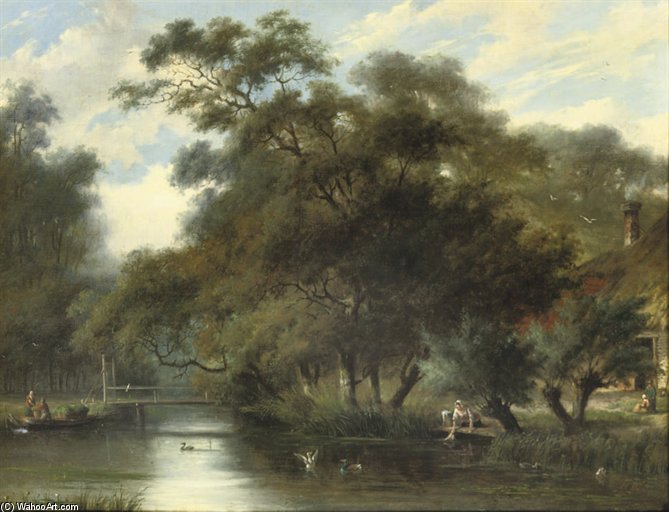
Washing The Laundry In A River
 Читать далее
Масляная репродукция ручной работы
Картина маслом на холсте в выбранном вами размере и раме, написанная на заказ нашими художниками. ( Перейти к печати Перейти к цифровым изображениям)




































Выберите один из наших стандартных размеров, соответствующих оригинальным пропорциям произведения искусства.

Вы можете указать собственные размеры, чтобы картина идеально вписалась в выбранную раму или пространство. Если выбранный вами размер не соответствует пропорциям оригинала, мы либо обрежем полотно, либо расширим его за счет дополнительных элементов, написанных вручную. Цифровой макет будет отправлен вам на утверждение перед началом производства.
Обратите внимание, что предварительный просмотр на экране не отражает фактическую обрезку или расширение. Только макет точно покажет окончательную композицию.
Хотя доступны индивидуальные размеры, мы рекомендуем выбирать вариант из предопределенного списка, чтобы сохранить исходные пропорции.
После оформления заказа команда ArtsDot.com свяжется с клиентом по электронной почте для уточнения деталей и предоставит предварительный макет
Доставка по всему миру () за 3–4 недели вместо стандартных 5 недель. (11 Сентябрь). Без компромиссов в качестве.

Бесплатная экспресс-доставка по всему миру

Высококачественный льняной холст

Полное страхование доставки

Гарантия возмещения таможенных пошлин

Гарантия точного соответствия цветов

100-дневная политика возврата (только при обнаружении дефектов)

Гарантия возврата 100% средств

Предложение оптовых скидок
 Вариант со стеклом доступен только для размеров менее 110 см

Washing The Laundry In A River
Техника репродукции
Размер репродукции
-


Итоговая стоимость
$ 263
Похожие произведения

Биография художника
A Life Rooted in Art – The Early Years and Family Legacy
Jan Evert Morel, a name perhaps less frequently heralded than some of his Golden Age predecessors, nevertheless stands as a significant figure within the evolution of 19th-century Dutch landscape painting. Born in Amsterdam in 1835, he inherited an artistic lineage that profoundly shaped his own trajectory – a legacy inextricably linked to the sea. His father, C.J. Morel, was a respected marine painter, capturing the dramatic expanse and ever-changing moods of the North Sea. This familial connection initially steered Jan Evert towards maritime subjects, but a conscious artistic decision led him down a different path: inward, into the heart of the Dutch countryside.
Growing up within an artistic household instilled in Morel a deep appreciation for technique and observation. While the specifics of his early training remain somewhat obscured by historical records, it’s widely believed that he received his foundational skills under his father's tutelage. However, crucially, Jan Evert distinguished himself from his father by choosing to depict not the turbulent sea but the serene beauty of wooded landscapes – a deliberate shift reflecting a burgeoning Romantic sensibility within Dutch art.
The Influence of Koekkoek and the Romantic Vision
Morel’s artistic development was profoundly shaped by the work of Bernard Cornelis Koekkoek, a pivotal figure in the Dutch Romantic movement. Koekkoek, often dubbed “the Prince of Landscape Painting,” captivated audiences with his meticulously rendered forest scenes, panoramic vistas, and an evocative use of light – frequently imbued with an Italianate quality even when portraying Dutch or German scenery. Morel clearly absorbed many of Koekkoek’s techniques and sensibilities, adopting a similar approach to composition, detail, and atmospheric rendering.
Like Koekkoek, Morel embraced the tenets of Romanticism, imbuing his landscapes with an emotional depth previously absent in Dutch art. He moved beyond mere topographical accuracy, seeking to capture the *feeling* of nature – its tranquility, its grandeur, and its inherent beauty. His paintings are rarely wild or untamed; instead, they present a carefully orchestrated vision of the natural world, bathed in gentle light and imbued with a sense of harmonious order.
The influence is particularly evident in Morel’s use of color – rich greens, warm browns, and touches of gold and silver – which contribute to the idyllic and slightly nostalgic atmosphere of his scenes. He skillfully employed brushwork to create a sense of depth and texture, mimicking the dappled light filtering through leaves and the subtle variations in bark and foliage.
Subject Matter and Compositional Techniques
Morel’s oeuvre primarily consists of smaller panel paintings, typically depicting woodland interiors, riverbanks, and quiet country paths. This preference for a more intimate scale allowed him to focus on meticulous detail and create works that invite close contemplation. These smaller canvases were well-suited to the tastes of the burgeoning middle class in 19th-century Holland, who sought art for their homes.
A recurring compositional device employed by Morel is the inclusion of small figures – “staffage” – rendered with the same level of care as the surrounding landscape. These figures – perhaps a mother and child strolling along a path, peasants tending livestock, or companions resting beneath a tree – are invariably dwarfed by the scale of nature, emphasizing its overwhelming grandeur and permanence. This technique serves not only to add visual interest but also to underscore the humbling power of the natural world.
A Legacy in Detail: Morel’s Enduring Appeal
While Jan Evert Morel may not command the same level of recognition as some of his contemporaries, his contribution to Dutch landscape painting is undeniable. His meticulous attention to detail, coupled with a deep understanding of Romantic principles and a clear debt to the legacy of Koekkoek, resulted in a body of work that continues to resonate with viewers today. His paintings offer a glimpse into a bygone era – a time when nature was revered as a source of solace, inspiration, and spiritual renewal.
Morel’s works are often found in private collections and museums throughout the Netherlands, testament to their enduring appeal. They represent not just skillful execution but also a profound appreciation for the beauty and tranquility of the Dutch countryside – a legacy carefully preserved through the artist's discerning eye and steady hand.
jan evert morel
1835 - 1905 , Netherlands
Основные сведения
- Artistic Movement Or Style: Romantic Landscape
- Artists Or Movements Influenced By This Artist: ['Dutch Romanticism']
- Artists Who Influenced This Artist: ['B.C. Koekkoek']
- Date Of Birth: Feb 24, 1835
- Date Of Death: May 14, 1905
- Full Name: Jan Evert Morel II
- Nationality: Dutch
- Notable Artworks:
- Still Life with Flowers
- Wooded Landscape
- Winter Landscape
- Place Of Birth: Amsterdam, Netherlands