

 Предпросмотр
 Поделиться
 Поделиться
 Детали произведения

 Скачать
 Похожие работы
 Рентгенография
 Слайд-шоу
 Статистика
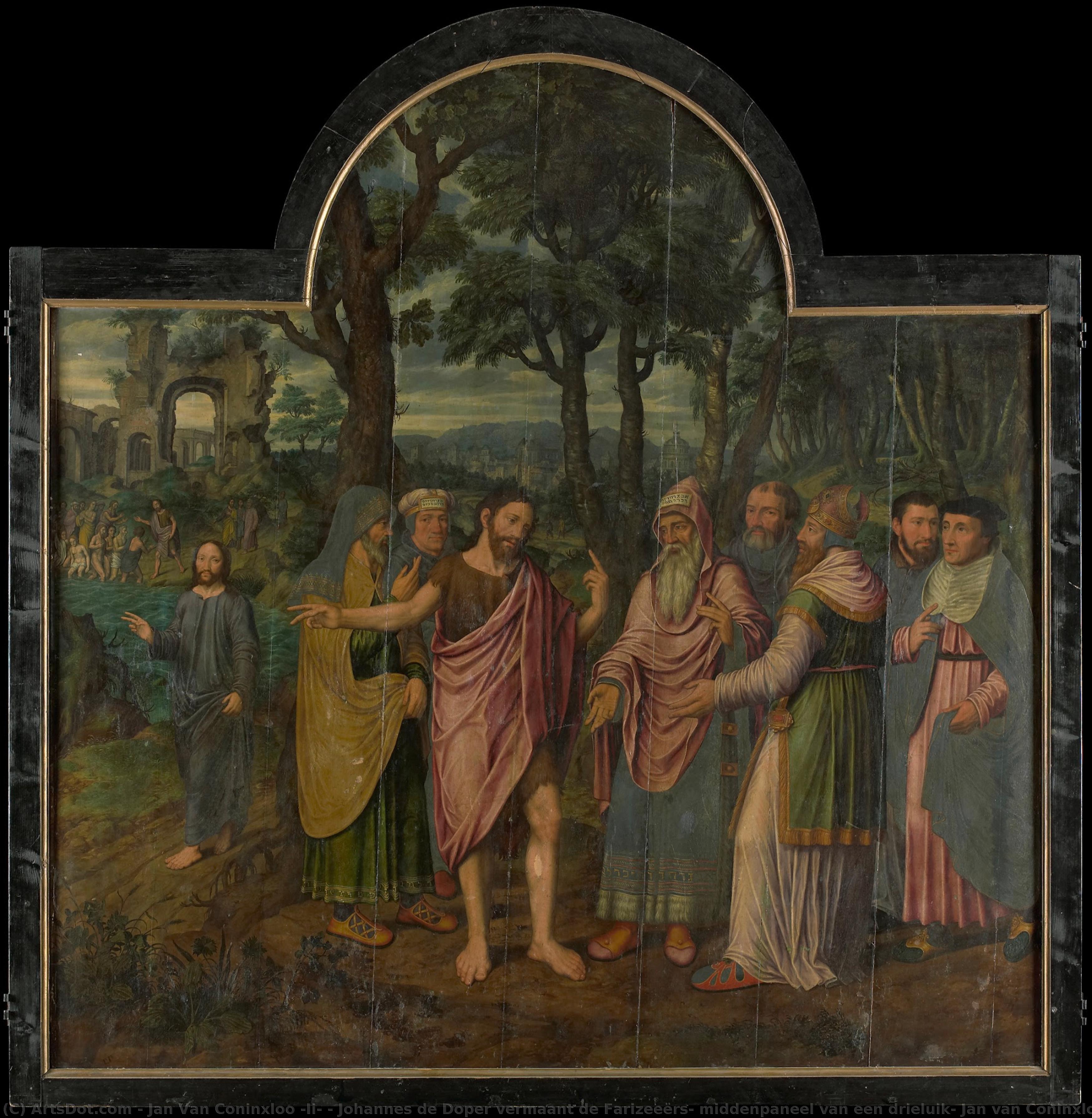
Johannes de Doper vermaant de Farizeeërs, middenpaneel van een drieluik, Jan van Coninxloo (II), 1557
 Early Netherlandish
 1557
1557 209.0 x 202.0 cm
 Читать далее
Приобретите цифровое изображение высокого разрешения в улучшенном качестве, которое значительно превосходит онлайн-превью.
Каждый файл тщательно подготавливается нашими специалистами с использованием передовых инструментов и экспертной ручной ретуши. Мы гарантируем исключительную четкость, точную цветопередачу и детальную проработку каждого изображения.
Финальный файл доставляется по электронной почте в течение 72 часов и оптимизирован для немедленного использования в профессиональной среде, при верстке и печати. Это тот же уровень качества, которому доверяют ведущие дизайнерские студии, издательства и галереи.
Цифровое изображение
Скачайте файл высокого разрешения для личного использования, печати и творческих проектов. ( Перейти к печати Купить картину ручной работы)
Включено в каждый заказ цифровых изображений
Гарантия экспертной цифровой доставки
Выбирая ArtsDot.com, вы получаете не просто изображение — вы приобретаете профессионально обработанное цифровое произведение искусства, созданное с безупречной точностью и под защитой гарантии качества. Вот всё, что автоматически входит в ваш заказ:

Мгновенная доставка по e-mail
Ваш цифровой файл в высоком разрешении будет отправлен вам по электронной почте в течение 72 часов после оформления заказа — и сразу станет доступен для использования.

Цифровой файл с ИИ-улучшением
Ваше произведение искусства проходит профессиональную оптимизацию с использованием передовых инструментов ИИ и ручной обработки, что гарантирует максимальную детализацию, четкость и точность цветопередачи.

Бессрочная бесплатная повторная доставка
Случайно удалили или потеряли файл? Не беспокойтесь — мы отправим его вам повторно в любое время и совершенно бесплатно.

Без импортных пошлин — навсегда
Наслаждайтесь вашим произведением искусства мгновенно без таможенных пошлин, сборов или затрат на доставку — цифровые загрузки всегда не облагаются налогом.

Гарантия точности цветопередачи
Мы гарантируем, что ваше цифровое изображение максимально точно передает оригинальные цвета благодаря использованию профессиональных инструментов и систем управления цветом.

Гарантия удовлетворенности 100 дней
Если вы не будете удовлетворены своим цифровым изображением, мы внесем правки или вернем 100% стоимости в течение 100 дней — без лишних вопросов.

100% Гарантия возврата средств
Не удовлетворены покупкой? Получите полный возврат средств в течение 100 дней после получения цифрового файла — без лишних вопросов.

Скидки на оптовые заказы
Купите 3 изображения, сэкономьте 10% — Купите 5, сэкономьте 15% — Купите 10+, сэкономьте 20%. Отличное решение для творческих проектов, галерей и агентств.
Похожие произведения
Биография художника
A Legacy of Light and Line: The Life of Jan van Coninxloo II
In the vibrant tapestry of the sixteenth-century Low Countries, few names carry the weight of a true artistic dynasty quite like that of Jan van Coninxloo II. Born in Brussels around 1489, Jan was not merely an individual creator but a vital link in a multi-generational lineage of Flemish masters. As the son of Jan van Coninxloo I, he was immersed from birth in a world where the brush and the palette were the primary languages of storytelling. His early years in Brussels placed him at the heart of a burgeoning Renaissance, a period where the meticulous traditions of the Northern masters began to dance with the new, dramatic possibilities of light and perspective.
The trajectory of his life was one of movement and adaptation, mirroring the shifting political and religious landscapes of Europe. While his roots remained firmly planted in the soil of Brussels, his career saw him navigating the great artistic hubs of the era. His presence in Antwerp around 1550, where he registered with the prestigious Guild of Saint Luke, speaks to a man of significant standing and professional rigor. This period of his life was marked by a profound engagement with the contemporary masters; he moved within circles that included the celebrated Bernard van Orley, whose influence on the Brussels art scene likely informed Jan’s own approach to integrating religious narratives with grander, more complex compositions.
The Mastery of Sacred Narrative and Landscape
To gaze upon a work attributed to Jan van Coninxloo II is to witness a delicate balance between the divine and the earthly. He was a painter who understood that a religious scene gained its emotional potency from the world it inhabited. His works, often executed with exquisite care in oil on panel, frequently featured sacred subjects—such as The Virgin and Child Enthroned or scenes of the Flight into Egypt—not as isolated icons, but as living moments embedded within architectural grandeur or lush, atmospheric landscapes. This ability to weave the spiritual into the tangible is what defines his unique contribution to the South Netherlandish tradition.
His technical prowess was particularly evident in his handling of light and detail. There is a certain luminosity in his compositions that suggests a deep fascination with how sunlight filters through foliage or strikes a stone altar. This mastery allowed him to bridge the gap between the rigid, symbolic landscapes of the earlier Flemish tradition and the more fluid, emotive styles that would eventually pave the way for the Baroque. His works often served as a precursor to the more dramatic chiaroscuro seen in later centuries, using subtle shifts in tone to guide the viewer's eye through complex, multi-layered scenes.
A Dynasty of Visionaries
The historical significance of Jan van Coninxloo II extends far beyond his individual canvases; he was the architect of a family legacy that would shape European art for decades. His marriage to Elisabeth Hasaert produced a generation of artists who would carry his technical foundations into new territories and styles. Among his most notable descendants was his son, Gillis van Coninxloo III, a celebrated landscape painter who would become a titan of the late sixteenth century.
Through his children, Jan’s influence rippled through the annals of art history:
- Gillis van Coninxloo III: A master of the forest landscape, carrying the family's botanical precision into the next era.
- Catharina and Hans van Coninxloo: Members of a family unit that functioned as a cohesive force within the Flemish guild system.
As the religious tensions of the Dutch Revolt began to reshape the borders of Europe, Jan’s later years likely saw him navigating the complexities of relocation, perhaps eventually finding refuge in Emden, Germany. Though his life ended around 1555, the echoes of his brushwork remained. He stands as a pivotal figure—a master who took the established traditions of his ancestors and infused them with the burgeoning energy of a new age, ensuring that the Coninxloo name would remain synonymous with the beauty and complexity of the Flemish spirit.
jan van coninxloo (ii)
1489 - 1555 , Belgium
Основные сведения
- Artistic Movement Or Style: High Renaissance, Mannerism
- Artists Or Movements Influenced By This Artist:
- Baroque
- Rococo
- Artists Who Influenced This Artist:
- Lorenzo Costa
- Francesco Francia
- Andrea Mantegna
- Leonardo da Vinci
- Date Of Birth: August 1489
- Date Of Death: March 1534
- Full Name: Antonio Allegri da Correggio
- Nationality: Italian
- Notable Artworks:
- Assumption of the Virgin
- Jupiter and Io
- Vision St. John Patmos
- Place Of Birth: Correggio, Italy