Предпросмотр
 Поделиться
 Поделиться
 Детали произведения

 Скачать
 Похожие работы
 Рентгенография
 Слайд-шоу
 Статистика
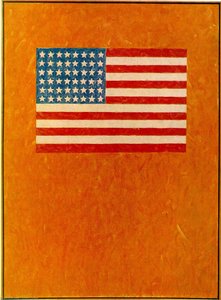
Флаг на оранжевом поле
 Масло на холсте
- Настенный декор
- Abstract Expressionism
 1957
1957- — Модерн
 124.0 x 167.0 cm
 Читать далее
Жикле / Арт-принт
Печать (жикле) или холст музейного качества с быстрыми сроками изготовления и широким выбором вариантов отделки. ( Купить картину ручной работы Перейти к цифровым изображениям)




P118B $10

P118H $10

P118W $10

P438Z $10

P508JH $12

P508YH $12

P805H $10

P805Z $10

P919BZ $10

P919G $10

P919XJ $10

P959ZH $10

P968JZ $12

W106C $8

W218G $10

W218JH $8

W218Y $10

W307PJ $10

W316G $10

W316PJ $8

W316Y $10

W398PJ $8

W4111J $10

W500HY $15

W500JH $15

W692G $12

W849H $8

W940BG $15

W953PJ $8




Выберите один из наших стандартных размеров, соответствующих оригинальным пропорциям произведения искусства.

Вы можете указать свои собственные размеры, чтобы репродукция идеально подошла под конкретную раму или пространство. Если выбранный вами размер не будет соответствовать пропорциям оригинала, мы либо обрежем произведение, либо дополним изображение зеркальным отражением краев или однотонной заливкой. Перед началом производства вам будет отправлен цифровой макет для утверждения.
Пожалуйста, обратите внимание, что предварительный просмотр на экране не отображает фактическую обрезку или расширение изображения. Только макет точно покажет финальную композицию.
Несмотря на возможность заказа индивидуальных размеров, мы рекомендуем выбирать размер из предопределенного списка, чтобы сохранить оригинальные пропорции.
Доставка по всему миру () за 2 недели вместо стандартных 4/5 недель. (14 Сентябрь)

Бесплатная экспресс-доставка по всему миру

Высококачественный льняной холст

Полное страхование доставки

Гарантия возмещения таможенных пошлин

Гарантия точного соответствия цветов

100-дневная политика возврата (только при обнаружении дефектов)

Гарантия возврата 100% средств

Предложение оптовых скидок
 Вариант со стеклом доступен только для размеров менее 110 см

Флаг на оранжевом поле
Жикле / Арт-принт
Размер репродукции
-


Итоговая стоимость
$ 62
A Bold Statement of American Identity: Jasper Johns’ *Flag on Orange Field* (1957)
Jasper Johns' *Flag on Orange Field*, painted in 1957, is far more than a simple depiction of the American flag. It’s a provocative statement – a bold exploration of national identity, symbolism, and the very nature of representation that continues to resonate with viewers today. This iconic work, bridging Abstract Expressionism and the nascent Pop Art movement, invites us to confront our assumptions about patriotism and the role of art in society.
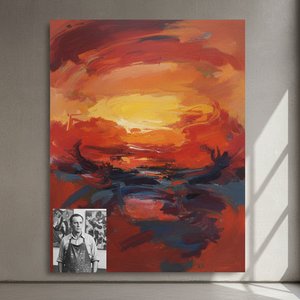
- Subject & Composition: Произведение представляет собой поразительный взгляд на американский флаг, расположенный крупным планом на фоне яркого оранжевого поля. Композиция предельно ясна и прямолинейна; флаг доминирует на холсте, мгновенно захватывая внимание зрителя. Джонс отказывается от традиционных изображений патриотических символов, представляя флаг как объект – поле цвета и формы, подлежащее изучению.
- Стиль & Техника: *Flag on Orange Field* является ключевой работой, соединяющей абстрактную экспрессию и поп-арт. Хотя он сохраняет жестикулятивную манеру письма, характерную для первой, Джонс вводит узнаваемые образы – отличительную черту второй. Применение масла намеренно заметно, создавая богатую текстуру как в полосах и звездах флага, так и в слое оранжевого поля. Это тактильное качество побуждает к внимательному осмотру и подчеркивает материальность самой картины.
- Исторический контекст & Художественная инновация: Созданное в 1957 году, во время пика Холодной войны и периода интенсивного национального самоанализа, это произведение бросило вызов общепринятым представлениям о патриотизме. Выбор Джонса изображать флаг не как символ непоколебимой преданности, а как написанную картину был революционным. Он поставил под сомнение саму природу репрезентации и символизма в то время, когда американское искусство было в основном сосредоточено на субъективных эмоциях абстрактной экспрессии.
- Символизм & Интерпретация: Казалось бы, простое изображение наполнено сложным смыслом. Убрав флаг из его обычного контекста – с флагштока, по маршруту парада – Джонс заставляет нас переосмыслить его значение. Это утверждение американских идеалов? Критика слепого патриотизма? Или просто исследование формы и цвета? Яркий оранжевый фон добавляет еще один слой неоднозначности; он теплый, но при этом напористый, возможно, отражая как энергию, так и скрытые напряжения в американском обществе.
- Эмоциональное воздействие & Эстетическая привлекательность: *Flag on Orange Field* вызывает широкий спектр эмоций – от гордости до беспокойства. Яркие цвета и динамичная манера письма создают захватывающий визуальный опыт. Его масштаб (124 x 167 см) еще больше усиливает воздействие, делая его мощным произведением для любой коллекции или интерьера.
- Наследие Джонса: Jasper Johns признан пионером, который фундаментально изменил ход американского искусства. Его исследование повседневных предметов и символов проложило путь для поп-арта и продолжает оказывать влияние на художников сегодня. *Flag on Orange Field* остается одним из его самых знаковых работ, воплощающих его инновационный дух и непреходящую актуальность.
- Для коллекционеров и дизайнеров: Воссоздание этой работы придает современным интерьерам изысканный штрих, побуждает к разговору и добавляет глубины любому пространству. Его смелый эстетический вид дополняет минималистичные дизайны, одновременно предоставляя яркий контраст в более традиционных обстановках.
Похожие произведения
Биография художника
A Life Painted in Symbols: The World of Jasper Johns
Jasper Johns emerged as a pivotal figure in the landscape of American art, bridging the emotive intensity of Abstract Expressionism with the burgeoning Pop Art movement that would soon redefine artistic boundaries. Born in Augusta, Georgia, in 1930, his early life was marked by a sense of displacement following his parents’ divorce, an experience that perhaps subtly informed his later explorations of identity and belonging within the context of American iconography. His formative years unfolded across various schools before he briefly attended the University of South Carolina, but it wasn't until his move to New York City in 1949 that Johns truly began to forge his artistic path. A period of service during the Korean War further shaped his perspective, exposing him to a world far removed from the burgeoning art scene he was eager to embrace upon his return.Breaking with Abstraction: The Dawn of a New Visual Language
The post-war American art world was dominated by Abstract Expressionism—a style characterized by spontaneous gesture and deeply personal emotional expression. While initially influenced by this movement, Johns felt compelled to move beyond its purely non-representational approach. He sought a new visual language, one that incorporated recognizable imagery not as illustrations but as vehicles for deeper contemplation. This wasn’t simply about *depicting* the world; it was about questioning how we perceive and interpret symbols within it. Key influences guided his departure: Marcel Duchamp's radical readymades challenged conventional notions of art-making, forcing a reevaluation of what constituted “art,” while the emphasis on materiality in Abstract Expressionism informed Johns’ early techniques—particularly his use of encaustic, a mixture of pigment and hot wax that allowed for layered textures and subtle shifts in color. However, it was the everyday objects and potent symbols of American culture—flags, targets, maps, numbers—that truly became central to his artistic vocabulary. He wasn't interested in escaping representation; he wanted to dissect it, layer it with meaning, and ultimately reveal its inherent ambiguities.Iconic Images: Flags, Targets, and the Language of Symbols
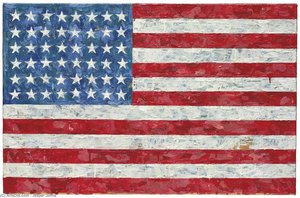
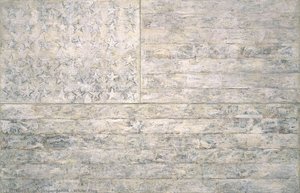
Johns’ breakthrough works arrived in the mid-1950s, instantly establishing him as a force to be reckoned with. His paintings of flags, most notably *Flag* (1954–55), were not patriotic declarations but rather investigations into the very nature of representation. Rendered in a semi-abstract style, using encaustic—pigment mixed with hot wax—and collage techniques, these flags weren’t simply images; they were textured surfaces laden with symbolic weight. The image itself was deliberately ambiguous – a depiction of the American flag, yet simultaneously a study in its materiality and construction. The target series, beginning in 1958, further explored this fascination with recognizable forms, questioning perception and meaning through the seemingly straightforward image of a bullseye. *Map* (1961), with its fragmented and layered depictions of the United States, delved into themes of geography, identity, and the complexities of national representation. Works like *False Start* (1959) demonstrated his experimentation with language and visual codes, creating complex compositions that challenged viewers to decipher their underlying meanings. Even *White Flag* (1955), a seemingly simple monochrome canvas, prompted profound questions about absence, surrender, and the very act of seeing.The Influence of Rauschenberg and Neo-Dada
Johns’ artistic evolution was profoundly shaped by his close collaboration with Robert Rauschenberg. Their shared interest in blurring the boundaries between art and life led to a dynamic exchange of ideas and techniques. Rauschenberg's "combine paintings," incorporating found objects and collage elements, influenced Johns’ approach to layering imagery and challenging traditional notions of artistic authorship. This period also saw a strong influence from Neo-Dada, with its playful appropriation of everyday objects and its rejection of established art conventions. Johns embraced this spirit of experimentation, using techniques like assemblage and ready-made elements in his work, further complicating the relationship between image and reality.Recognition and Enduring Impact
Jasper Johns has received numerous accolades throughout his illustrious career. He was awarded the Golden Lion at the Venice Biennale in 1988, a testament to his enduring influence on the art world. In 1990, he was presented with the National Medal of Arts, recognizing his significant contributions to American culture. He also received the Presidential Medal of Freedom in 2011, the highest civilian honor bestowed by the United States government. His works are held in major museum collections throughout the world—the Museum of Modern Art, the Whitney Museum of American Art, the Metropolitan Museum of Art in New York, and Tate Modern in London, to name just a few. Johns’ impact extends beyond his paintings; he has been a significant contributor to printmaking and sculpture, demonstrating his versatility and unwavering commitment to artistic innovation. His enduring legacy lies not only in the iconic images he created but also in the profound questions he raised about the nature of representation, symbolism, and the very essence of what it means to be an artist in a rapidly changing world. He remains an active artist, constantly evolving his approach and solidifying his position as one of the most important figures in 20th and 21st-century art.
Джеймс Джонс
1930 - , Соединенные Штаты Америки
Основные сведения
- Artistic Movement Or Style: Поп-арт, Абстрактный экспрессионизм
- Artists Or Movements Influenced By This Artist:
- Ворхол
- Лихтенштейн
- Artists Who Influenced This Artist:
- Дюшан
- Ротко
- Date Of Birth: 15 мая 1930 г.
- Full Name: Jasper Johns
- Nationality: Американский
- Notable Artworks:
- Flag
- Target
- Map
- Place Of Birth: А Augusta, США
Похожие статьи
Beyond Representation: Exploring the Emotional Landscape of Abstract Expressionism
Explore the profound emotional world of Abstract Expressionism with ArtsDot. Discover key artists like Pollock & Rothko, learn about collecting, and find museum-quality reproductions to inspire your space.

Джон Констебль: 25 шедевров английского пейзажа для вашего интерьера
Погрузитесь в мир английского пейзажа с Джоном Констеблом! 25 шедевров романтизма, история создания картин и вдохновение для вашего интерьера. Репродукции высокого качества на ArtsDot.com – искусство для ценителей.
Топ-10 шедевров абстрактного экспрессионизма: искусство для вашего интерьера от ArtsDot.com
Погрузитесь в мир абстрактного экспрессионизма! Откройте для себя 10 шедевров Поллока, Ротко и других гениев. История искусства, техники живописи и вдохновение для вашего интерьера от ArtsDot.com. Explore the full collection online!
Jacob Kainen: A Pioneer of American Color Field Painting & Abstract Expressionism
Explore the life & work of Jacob Kainen, a pivotal figure in American Abstract Expressionism and Color Field painting. Discover his journey from Social Realism to vibrant abstraction and lasting influence on 20th-century art.

Джон Сингер Сарджент: 25 шедевров портретной живописи для вашего интерьера | ArtsDot
Погрузитесь в мир Джона Сингера Сарджента! 25 шедевров импрессионизма и реализма, раскрывающих элегантность эпохи Gilded Age. Купите репродукции картин Сарджента музейного качества для вашего интерьера на ArtsDot.com.