 Поделиться
 Поделиться
 Детали произведения

 Скачать
 Похожие работы
 Слайд-шоу
 Статистика
Denis Diderot


 Читать далее
Масляная репродукция ручной работы
Картина маслом на холсте в выбранном вами размере и раме, написанная на заказ нашими художниками. ( Перейти к печати Перейти к цифровым изображениям)




































Выберите один из наших стандартных размеров, соответствующих оригинальным пропорциям произведения искусства.

Вы можете указать собственные размеры, чтобы картина идеально вписалась в выбранную раму или пространство. Если выбранный вами размер не соответствует пропорциям оригинала, мы либо обрежем полотно, либо расширим его за счет дополнительных элементов, написанных вручную. Цифровой макет будет отправлен вам на утверждение перед началом производства.
Обратите внимание, что предварительный просмотр на экране не отражает фактическую обрезку или расширение. Только макет точно покажет окончательную композицию.
Хотя доступны индивидуальные размеры, мы рекомендуем выбирать вариант из предопределенного списка, чтобы сохранить исходные пропорции.
После оформления заказа команда ArtsDot.com свяжется с клиентом по электронной почте для уточнения деталей и предоставит предварительный макет
Доставка по всему миру () за 3–4 недели вместо стандартных 5 недель. (11 Сентябрь). Без компромиссов в качестве.

Бесплатная экспресс-доставка по всему миру

Высококачественный льняной холст

Полное страхование доставки

Гарантия возмещения таможенных пошлин

Гарантия точного соответствия цветов

100-дневная политика возврата (только при обнаружении дефектов)

Гарантия возврата 100% средств

Предложение оптовых скидок
 Вариант со стеклом доступен только для размеров менее 110 см

Denis Diderot
Техника репродукции
Размер репродукции
-


Итоговая стоимость
$ 263
Denis Diderot: A Portrait of Enlightenment
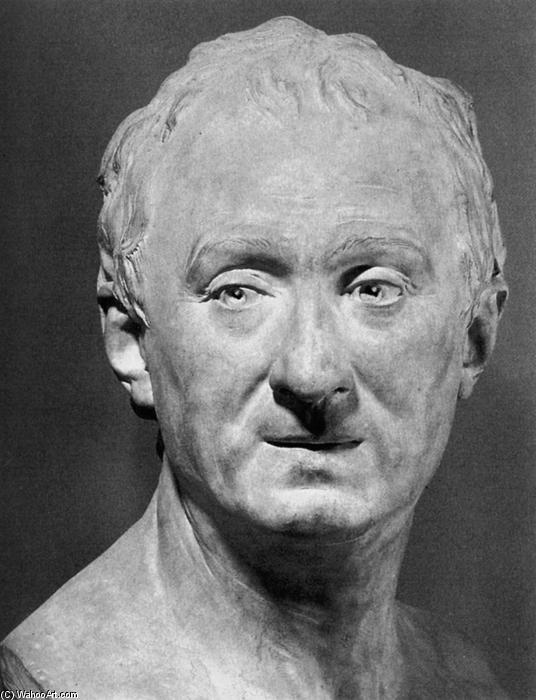
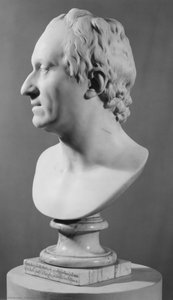
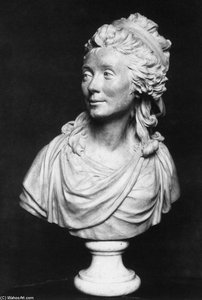
Jean-Antoine Houdon’s “Denis Diderot” is more than just a bust; it's a distilled essence of the 18th century’s intellectual revolution. Completed in 1771, this remarkable sculpture captures not merely the likeness of the influential philosopher but also his profound thoughtfulness and the weight of his ideas. The photograph itself, a meticulously rendered grayscale image, allows us to appreciate the incredible detail Houdon achieved in capturing Diderot's features – the subtle furrow of his brow, the keen intelligence in his eyes, and the dignified bearing of his posture. The stark monochrome palette emphasizes the texture of the marble, revealing the artist’s masterful subtractive technique—a testament to the painstaking process of carving this monumental figure from a solid block.
Houdon, a pivotal figure bridging the Rococo and Neoclassical eras, was driven by a desire to represent subjects with an unprecedented level of psychological realism. Unlike the idealized figures prevalent in earlier styles, Houdon sought to portray the inner life of his sitters, imbuing them with character and emotion. This is powerfully evident in “Denis Diderot.” The slightly asymmetrical composition—Diderot’s head positioned just off-center—creates a dynamic tension that draws the viewer's eye and invites contemplation. The lighting, originating from above and subtly to the left, dramatically sculpts Diderot’s face, highlighting his features with sharp contrasts of light and shadow, lending an almost theatrical quality to the portrait.
Neoclassical Realism and the Philosopher’s Gaze
The sculpture firmly resides within the Neoclassical style, a movement that championed clarity, order, and a return to classical ideals. Houdon's meticulous attention to anatomical accuracy and his ability to capture subtle nuances of expression are hallmarks of this period. However, it is Diderot’s gaze itself that truly captivates. It isn’t a triumphant or assertive stare; rather, it conveys a quiet intensity, an almost melancholic contemplation—a reflection perhaps of the immense intellectual burden he carried as co-founder of the Encyclopédie. The lines etched around his eyes and mouth speak to years spent wrestling with complex ideas and challenging established norms.
Further research reveals that Diderot’s life was inextricably linked to the tumultuous events of his time – the rise of Enlightenment thought, the burgeoning revolutionary fervor, and the constraints imposed by a conservative monarchy. Houdon's portrait serves as a visual embodiment of this era, capturing not just a man but also an intellectual movement dedicated to reason, knowledge, and social reform. The sculpture’s enduring appeal lies in its ability to evoke these historical currents and invite us to consider the legacy of one of history’s most influential thinkers.
Technical Mastery and Marble's Enduring Beauty
The creation of “Denis Diderot” involved a complex interplay of artistic skill and technical expertise. Houdon utilized subtractive sculpting techniques, carefully removing material from the marble block to gradually reveal the desired form. The photograph itself likely originates from an original print or scan, preserving the remarkable texture of the finished sculpture. Notice how the smooth surfaces reflect light, contrasting with the subtly rougher areas where the carving process left its mark – a tangible reminder of the artist’s hand.
The use of grayscale in the photograph is particularly effective in highlighting these textural differences and emphasizing the three-dimensionality of the bust. It allows us to appreciate the subtle gradations of tone that Houdon achieved, creating a sense of volume and depth. Considering the sculpture's original material – marble—adds another layer of appreciation for Houdon’s skill; marble is notoriously difficult to work with, demanding patience, precision, and a deep understanding of its properties.
A Timeless Portrait: Reproduction Possibilities
ArtsDot.com offers meticulously crafted hand-painted reproductions of “Denis Diderot,” ensuring that the artistry and detail of Houdon’s original sculpture are faithfully preserved. These reproductions provide an exceptional opportunity to bring this iconic portrait into your home or office, serving as a powerful reminder of the Enlightenment's intellectual legacy. Whether you are an art enthusiast, a collector, or simply seeking a unique piece of decor, a ArtsDot reproduction of “Denis Diderot” is a timeless investment that celebrates both artistic excellence and historical significance.
Похожие произведения
Биография художника
Jean-Antoine Houdon: The Neoclassical Sculptor With A-List Sitters
Jean-Antoine Houdon, born in Versailles in 1741, stands as a pivotal figure bridging the Rococo and Neoclassical eras—a sculptor whose work embodies the intellectual fervor and evolving aesthetic sensibilities of the eighteenth century. His life unfolded amidst dramatic shifts in French society, from the waning opulence of the monarchy through the revolutionary upheaval and Napoleonic ascendance. Yet, Houdon remained remarkably consistent in his artistic vision: to capture not merely a likeness, but the very essence of his subjects—their intellect, character, and inner lives—in enduring marble and bronze. This dedication stemmed from an early aptitude for sculpture, nurtured by formal training at the Académie Royale de Peinture et de Sculpture beginning in 1752 under esteemed sculptors like René-Michel Slodtz, Jean-Baptiste Lemoyne, and Jean-Baptiste Pigalle. His subsequent enrollment at the École Royale des Élèves Protégés from 1761 to 1764 solidified his foundation, culminating in a triumphant win of the Prix de Rome competition in 1761—an award that granted him invaluable study time with classical art firsthand in Italy, an experience profoundly shaping his aesthetic sensibilities.Early Training and Artistic Foundations
Houdon’s artistic journey commenced at a remarkably young age—nine years old—when he began sculpting under the tutelage of Michel Ange Slodtz, Jean-Baptiste Lemoyne, and Jean-Baptiste Pigalle at the Académie Royale de Peinture et de Sculpture. These masters instilled in him a deep understanding of anatomical principles and sculptural technique, laying the groundwork for his future achievements. The École Royale des Élèves Protégés further honed his skills, providing him with access to the Louvre’s studios—a privilege afforded by his father's position as concierge—where he immersed himself in the study of ancient sculptures and artistic traditions. This formative experience instilled in Houdon a lifelong fascination with classical art and its influence on aesthetic expression. The Prix de Rome competition proved to be a decisive moment, securing him a prestigious scholarship to Rome and granting him unparalleled opportunity to engage directly with the masterpieces of antiquity—a pivotal step in shaping his distinctive style.The Triumph of Verisimilitude: A Revolutionary Approach
Unlike many sculptors of his time who idealized their subjects according to prevailing artistic conventions, Houdon championed verisimilitude—the faithful representation of reality—as paramount to achieving artistic excellence. He meticulously studied human anatomy, dissecting cadavers and conducting detailed observations to gain a profound understanding of the human form. This dedication to realism extended beyond mere physical accuracy; Houdon sought to penetrate the surface, revealing the personality and intellect within his subjects. His sculptures weren’t merely portraits; they were psychological explorations—capturing not just how someone looked but *who* they were—their emotions, motivations, and inner thoughts. He achieved this remarkable feat through subtle nuances in expression, posture, and the rendering of details like the eyes—often carved with a slight concavity to capture the play of light and suggest inner contemplation. This innovative technique distinguished Houdon from his contemporaries and established him as a pioneer of sculptural realism.Classical Influences and Artistic Style
Houdon’s artistic style was profoundly influenced by the Baroque tradition, particularly the dramatic grandeur and expressive dynamism of Bernini—whom he admired greatly during his time in Rome. However, he swiftly assimilated the lessons of antiquity, embracing classical ideals of beauty and proportion while simultaneously rejecting excessive ornamentation. His sculptures often featured idealized poses reminiscent of Greek statues—a deliberate stylistic choice that reflected his conviction in the enduring power of classical art as a source of inspiration. Yet, Houdon’s approach was never purely imitative; he infused his works with a distinctive humanist sensibility—capturing not just physical likeness but also psychological depth and emotional resonance. He skillfully blended classical influences with Baroque dynamism, creating sculptures that were both aesthetically refined and emotionally compelling. His meticulous attention to detail—evident in the rendering of skin textures, drapery folds, and facial expressions—further cemented his reputation as one of France’s greatest sculptors.A Pantheon of Enlightenment Figures: Portraits That Speak Volumes
Jean-Antoine Houdon's legacy rests primarily on his extraordinary portrait sculptures—a genre he elevated to an art form capable of profound psychological insight and historical documentation. He amassed a remarkable clientele comprising intellectuals, statesmen, artists, and aristocrats—individuals who recognized the transformative power of capturing their likenesses with unparalleled accuracy and sensitivity. His portraits weren’t merely decorative objects; they were windows into the minds and souls of his subjects—revealing their character traits, intellectual pursuits, and emotional states. Houdon's ability to convey not just *how* someone looked but *who* they were—a feat achieved through subtle nuances in expression, posture, and the rendering of details like the eyes—set him apart from his peers and established him as a master sculptor whose work continues to captivate audiences today. Among his most celebrated portraits are those of Voltaire, Benjamin Franklin, Denis Diderot, George Washington, Thomas Jefferson, and Napoleon Bonaparte—each sculpture embodying the spirit of its subject with remarkable eloquence and conviction. Houdon’s enduring influence can be seen in the works of countless artists who followed him—a testament to his pioneering contribution to sculptural realism and his unwavering commitment to capturing the human condition with artistic brilliance.
Жан-Антуан Гудон
1741 - 1828 , Франция
Основные сведения
- Artistic Movement Or Style: Неоклассицизм
- Artists Or Movements Influenced By This Artist: ['Канова']
- Artists Who Influenced This Artist:
- Рене-Мишель Слотц
- Жан-Баптист Лемуан
- Жан-Баптист Пигаль
- Date Of Birth: 1741
- Full Name: Jean-Antoine Houdon
- Nationality: Французский
- Notable Artworks:
- Статуя Вашингтона
- Вольтер
- Бенджамин Франклин
- Place Of Birth: Versailles, Франция
Похожие статьи

10 легендарных бронзовых скульптур, изменивших искусство навсегда | ArtsDot
Погрузитесь в мир великих бронзовых скульптур! От Давида Микеланджело до работ Родена – история искусства, техники и вдохновения. Купите репродукции шедевров для вашего интерьера на ArtsDot.com

The Enduring Form: Sculpture Across History, Technique & Emotional Resonance
Explore the rich history of sculpture with ArtsDot. Discover key techniques, influential artists & investment potential for discerning collectors. Expert insights into valuing and collecting timeless masterpieces.
Antonio Canova: Neoclassical Sculpture & the Pursuit of Emotional Perfection
Explore the life & art of Antonio Canova, the greatest Neoclassical sculptor. Discover his masterpieces, innovative techniques, and lasting influence on fine art collecting. Expert insights for discerning investors.

10 легендарных бронзовых шедевров, изменивших искусство | ArtsDot
Погрузитесь в мир великих бронзовых шедевров! От Давида Донателло до Мыслителя Родена – узнайте историю создания, технику и значение легендарных скульптур. Вдохновение для интерьера и музейное качество репродукций на ArtsDot.com.

The Enduring Form: Exploring Themes & Techniques in Sculpture Across Historical Periods
Explore the rich history of sculpture from ancient masterpieces to contemporary innovations. Discover key techniques, influential artists & investment potential for discerning art collectors.