 Предпросмотр
 Поделиться
 Поделиться
 Детали произведения

 Скачать
 Похожие работы
 Рентгенография
 Слайд-шоу
 Статистика
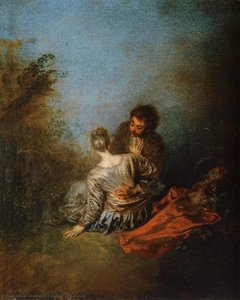
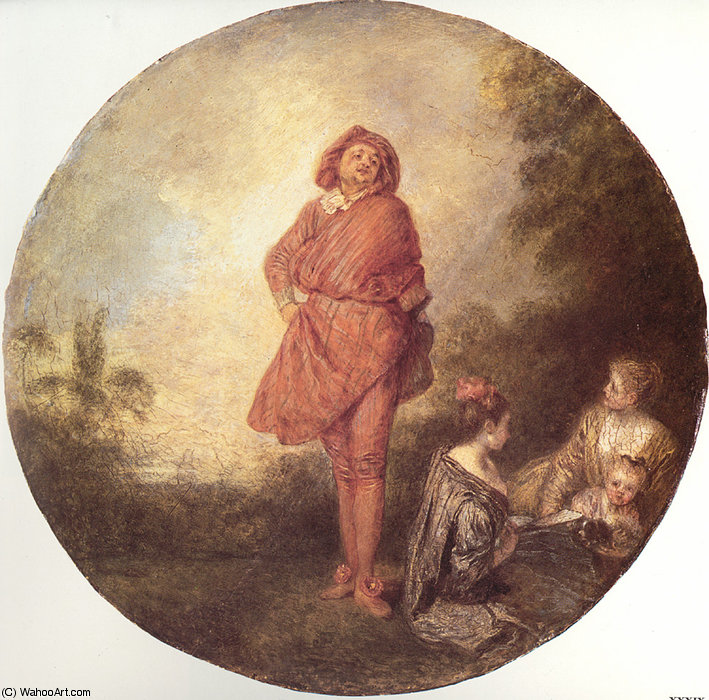
L orgueilleux


 Читать далее
Масляная репродукция ручной работы
Картина маслом на холсте в выбранном вами размере и раме, написанная на заказ нашими художниками. ( Перейти к печати Перейти к цифровым изображениям)




P118B $10

P118H $10

P118W $10

P438Z $10

P508JH $12

P508YH $12

P805H $10

P805Z $10

P919BZ $10

P919G $10

P919XJ $10

P959ZH $10

P968JZ $12

W106C $8

W218G $10

W218JH $8

W218Y $10

W307PJ $10

W316G $10

W316PJ $8

W316Y $10

W398PJ $8

W4111J $10

W500HY $15

W500JH $15

W692G $12

W849H $8

W940BG $15

W953PJ $8




Выберите один из наших стандартных размеров, соответствующих оригинальным пропорциям произведения искусства.

Вы можете указать собственные размеры, чтобы картина идеально вписалась в выбранную раму или пространство. Если выбранный вами размер не соответствует пропорциям оригинала, мы либо обрежем полотно, либо расширим его за счет дополнительных элементов, написанных вручную. Цифровой макет будет отправлен вам на утверждение перед началом производства.
Обратите внимание, что предварительный просмотр на экране не отражает фактическую обрезку или расширение. Только макет точно покажет окончательную композицию.
Хотя доступны индивидуальные размеры, мы рекомендуем выбирать вариант из предопределенного списка, чтобы сохранить исходные пропорции.
После оформления заказа команда ArtsDot.com свяжется с клиентом по электронной почте для уточнения деталей и предоставит предварительный макет
Доставка по всему миру () за 3–4 недели вместо стандартных 5 недель. (11 Сентябрь). Без компромиссов в качестве.

Бесплатная экспресс-доставка по всему миру

Высококачественный льняной холст

Полное страхование доставки

Гарантия возмещения таможенных пошлин

Гарантия точного соответствия цветов

100-дневная политика возврата (только при обнаружении дефектов)

Гарантия возврата 100% средств

Предложение оптовых скидок
 Вариант со стеклом доступен только для размеров менее 110 см

L orgueilleux
Техника репродукции
Размер репродукции
-


Итоговая стоимость
$ 263
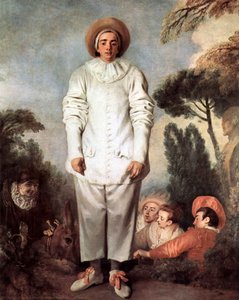
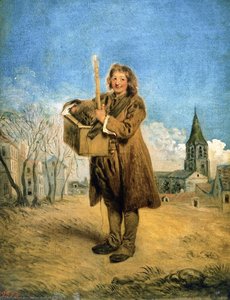
A Portrait of Elegance: Exploring Jean Antoine Watteau’s L'Orgueilleux
Jean Antoine Watteau, a name that whispers of Parisian salons and the fleeting beauty of Rococo art, remains one of the most beloved figures in eighteenth-century painting. His masterpiece, “L’Orgueilleux,” transcends mere visual representation; it embodies an entire aesthetic sensibility—a deliberate rejection of Baroque grandeur for a celebration of refined leisure and subtle emotion.
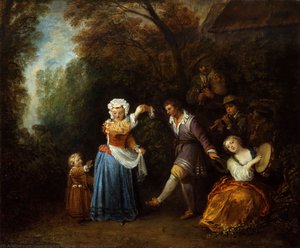
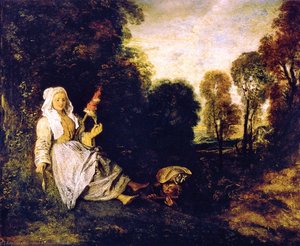
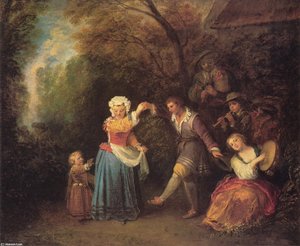
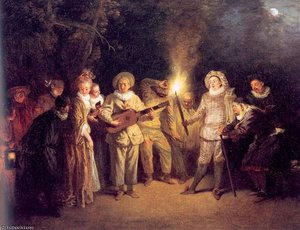
- Composition & Style: Watteau's vision is strikingly unconventional for its time. Rather than depicting heroic narratives or religious themes, he presents a pastoral scene populated by figures engaged in an informal dance—a “fête galante.” The central figure, bathed in soft light, exudes confidence and poise as he stands with his hands on his hips, embodying the aristocratic ideal of the era. Surrounding him are trees and grass, meticulously rendered to create an immersive outdoor setting that contrasts sharply with the formal interiors favored by previous generations.
- Technique: Watteau’s mastery lies in his delicate brushwork—a hallmark of Rococo style—characterized by thin layers of translucent glaze. This technique allows for a luminous quality, capturing the ephemeral beauty of light and atmosphere. The artist skillfully employs chiaroscuro to sculpt form and enhance depth, subtly guiding the viewer's eye across the canvas.
- Historical Context: Created in 1716, “L’Orgueilleux” reflects the intellectual climate of Louis XIV’s reign—a period marked by opulent court life and a fascination with classical ideals. However, Watteau deliberately subverts these conventions, prioritizing psychological realism over historical accuracy. He captures not just what was seen but how it felt—the pleasure of companionship, the thrill of artistic invention.
Similar Artistic Voices: Exploring Connections Beyond Watteau
Watteau’s influence extended far beyond his own lifetime, inspiring artists like Maria Primachenko and Hannu Väisänen. Primachenko's Naive Art style—characterized by bold colors and simplified forms—shares Watteau’s commitment to capturing the essence of human experience with immediacy and sincerity.
- Maria Primachenko: Her paintings, such as “Dumplings on the Shelf,” exemplify a similar approach to depicting everyday life.
- Hannu Väisänen: Similarly, Väisänen’s “September Yellow” utilizes vibrant hues and expressive brushstrokes to convey emotion—a stylistic kinship with Watteau’s oeuvre.
Beyond Imitation: Recognizing Watteau's Legacy
Sibylle Gabriele Prinzessin Von Preußen’s “Fly,” showcases a thoughtful style that resonates with Watteau’s exploration of human psychology and emotion. Devender Pal Singh’s “Guru Gobind Singh and Sahibzada Ajit Singh” at Chamkaur similarly captures the spirit of Sikh history and culture, demonstrating how Watteau's aesthetic principles continue to inspire artists today.
- Sibylle Gabriele Prinzessin Von Preußen: Her work embodies a contemplative gaze—a characteristic found in Watteau’s portraits.
- Devender Pal Singh: Like Watteau, Singh strives to convey profound meaning through visual storytelling.
To delve deeper into Jean Antoine Watteau and his artistic vision, visit ArtsDot's dedicated page on the artist or explore Wikipedia’s comprehensive biography.

Биография художника
A Delicate Brushstroke: The Life and Art of Jean-Antoine Watteau
Jean-Antoine Watteau, a name synonymous with the blossoming Rococo style, emerged from the northern French city of Valenciennes in 1684. His brief but incandescent career irrevocably altered the course of eighteenth-century painting, shifting its focus from the grandeur and drama of the Baroque to an intimate world of elegance, leisure, and subtle emotion. Unlike many artists who followed a clearly defined path, Watteau’s journey was marked by initial struggles for recognition within the established art institutions of Paris. Born into a family of modest means—his father a master roofer—young Jean-Antoine displayed an early aptitude for drawing, initially sketching the colorful characters and bustling scenes of his hometown streets. This formative experience instilled in him a keen eye for observation and a fascination with everyday life, themes that would permeate his later work. His initial training under local artists Jacques-Albert Gérin and Julien provided a foundation, but it was his move to Paris around 1702 that truly ignited his artistic development.From Theatrical Scenes to *Fêtes Galantes*
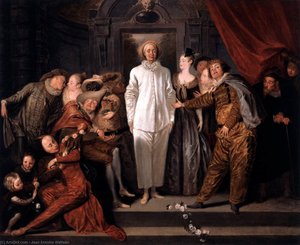
In the vibrant heart of Paris, Watteau entered the workshop of Claude Gillot, a painter specializing in theatrical designs and the popular genre of *fêtes galantes*—depictions of aristocratic outdoor entertainments. This apprenticeship proved pivotal. Gillot’s influence exposed Watteau to the world of commedia dell'arte, with its masked characters and playful narratives, which would become a recurring motif throughout his oeuvre. However, Watteau’s artistic sensibilities didn’t neatly align with the rigid categories favored by the Académie Royale de Peinture et de Sculpture. His genre paintings were deemed unsuitable for official recognition, leading to initial rejection when he attempted to compete for the prestigious Prix de Rome. Undeterred, and demonstrating a remarkable resilience, Watteau persevered, eventually gaining acceptance as a *maître amateur* in 1717—a status that allowed him to exhibit his work independently. This period marked a crucial turning point, allowing him to fully develop his unique style characterized by luminous colors, delicate brushwork, and an air of wistful melancholy. He began to move away from direct theatrical representation towards more poetic and evocative scenes, inventing the *fête galante* as a distinct genre—idyllic gatherings in park-like settings where aristocratic figures engaged in flirtatious pursuits and refined pastimes.The Essence of Rococo: Style and Masterpieces
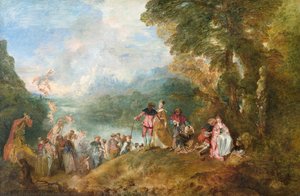
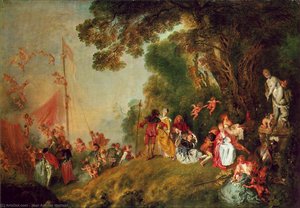
Watteau’s paintings are instantly recognizable for their distinctive qualities. He possessed an unparalleled ability to capture the elegance and refinement of aristocratic life, not through bombastic displays of power or wealth, but through subtle gestures, nuanced expressions, and a masterful use of light and color. His figures exude a poetic grace and a delicate emotional depth that sets them apart from the more formal portraits of his predecessors. The Country Dance (1718-1721), perhaps one of his most celebrated works, exemplifies this perfectly—a vibrant scene depicting carefree rustic life with exquisite detail and an underlying sense of longing. Other masterpieces such as Ceres (Summer) (1705) demonstrate his skill in portraying the beauty of nature and the human form, while The Embarkation for Cythera (1717) and its companion piece, Pilgrimage to Cythera, are iconic depictions of mythological journeys to the island of love, imbued with a sense of mystery and romantic yearning. Even his theatrical portraits, like Gilles (1719), possess an enigmatic quality that invites contemplation. Watteau’s technique was equally innovative; he employed a feathery brushstroke and a delicate layering of colors to create a shimmering effect, capturing the fleeting beauty of light and atmosphere.Legacy and Enduring Influence
Watteau's artistic lineage is complex, drawing inspiration from diverse sources. He deeply admired Venetian Renaissance masters like Titian and Veronese, particularly their rich color palettes and dynamic compositions. The influence of Flemish artists such as Rubens is also evident in his energetic brushwork and sensuous figures. However, Watteau didn’t simply imitate these predecessors; he synthesized their influences into something entirely new and uniquely his own—a style that became the hallmark of Rococo painting. Despite a tragically short life—he succumbed to tuberculosis in 1721 at the age of just thirty-seven—Watteau left an indelible mark on art history. His work profoundly influenced generations of artists, including Fragonard and Boucher, who further developed the themes and techniques he pioneered. He redefined genre painting, elevating it to a level of artistic sophistication previously reserved for historical or religious subjects. Today, his paintings are treasured in major museums worldwide—from the National Gallery of Art in Washington D.C. to the Museo del Prado in Madrid—continuing to captivate audiences with their beauty, grace, and enduring appeal, solidifying his place as one of the most important and beloved artists of the Rococo period.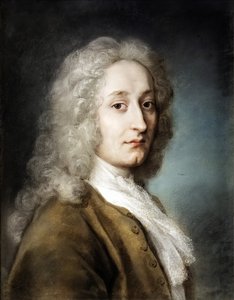
Ватто
1684 - 1721 , Франция
Основные сведения
- Artistic Movement Or Style: Рококо
- Artists Or Movements Influenced By This Artist:
- Фржегонд
- Боше
- Ватто
- Artists Who Influenced This Artist:
- Титян
- Веронезе
- Рембрандт
- Date Of Birth: 1684
- Date Of Death: 1721
- Full Name: Jean-Antoine Watteau
- Nationality: Француз
- Notable Artworks:
- Танец в деревне
- Церера (Лето)
- Договор женитьбы
- Place Of Birth: Валенсиенн, Франция
Похожие статьи

The Rococo Aesthetic: Opulence, Rebellion & the Pursuit of Pleasure in 18th-Century Art
Explore the opulent world of Rococo art! Discover its origins, key artists like Watteau & Boucher, and lasting influence on design. Expert insights for collectors & enthusiasts.
The Fête Galante & Beyond: Exploring the Artistic World of Jean-Antoine Watteau
Discover the captivating world of Jean-Antoine Watteau, master of the Fête Galante! Explore his iconic paintings, symbolism, and lasting influence on Rococo art. A deep dive for classic art enthusiasts.

Топ-10 шедевров рококо: искусство, изменившее интерьеры | ArtsDot.com
Погрузитесь в мир рококо! Откройте для себя 10 шедевров искусства от Watteau, Boucher и Fragonard. Узнайте историю создания культовых картин и вдохновитесь для декора интерьера. Репродукции высокого качества на ArtsDot.com.
The Allure of Elegance in Art: A Historical & Aesthetic Exploration of Refinement & Grace
Explore the exquisite world of Rococo art! Discover its history, masters (Watteau, Boucher & more), and defining elegance. Expert insights for collectors seeking museum-quality reproductions & custom portraits.
Jean-Baptiste Pater: Rococo Charm & Ephemeral Beauty of 18th-Century France
Explore the captivating world of Jean-Baptiste Pater, a master of Rococo painting. Discover his elegant *fête galante* scenes and shimmering portraits – a glimpse into 18th-century French aristocracy. Learn about his legacy & find high-quality reproductions.