

 Поделиться
 Поделиться
 Детали произведения

 Скачать
 Похожие работы
 Слайд-шоу
 Статистика
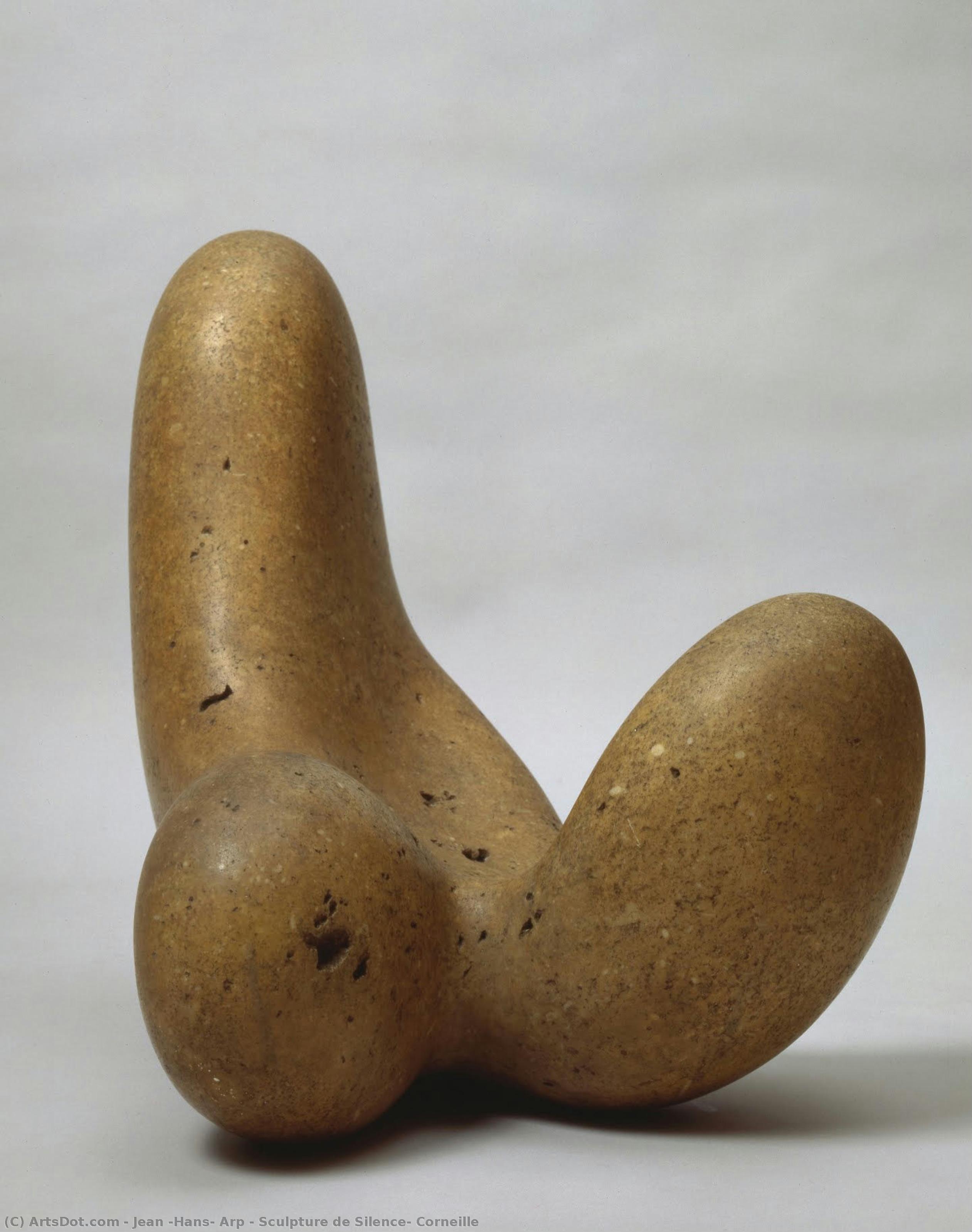
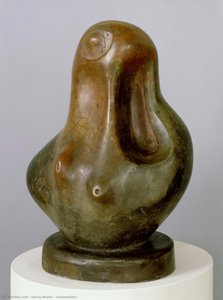
Sculpture de Silence, Corneille
 Sculpture
- Sculpture
- Abstraction-Création
 54.0 x 48.0 cm
 Galleria Civica di Arte Moderna e Contemporanea Torino
 Читать далее
Приобретите цифровое изображение высокого разрешения в улучшенном качестве, которое значительно превосходит онлайн-превью.
Каждый файл тщательно подготавливается нашими специалистами с использованием передовых инструментов и экспертной ручной ретуши. Мы гарантируем исключительную четкость, точную цветопередачу и детальную проработку каждого изображения.
Финальный файл доставляется по электронной почте в течение 72 часов и оптимизирован для немедленного использования в профессиональной среде, при верстке и печати. Это тот же уровень качества, которому доверяют ведущие дизайнерские студии, издательства и галереи.
Цифровое изображение
Скачайте файл высокого разрешения для личного использования, печати и творческих проектов. ( Перейти к печати Купить картину ручной работы)
Включено в каждый заказ цифровых изображений
Гарантия экспертной цифровой доставки
Выбирая ArtsDot.com, вы получаете не просто изображение — вы приобретаете профессионально обработанное цифровое произведение искусства, созданное с безупречной точностью и под защитой гарантии качества. Вот всё, что автоматически входит в ваш заказ:

Мгновенная доставка по e-mail
Ваш цифровой файл в высоком разрешении будет отправлен вам по электронной почте в течение 72 часов после оформления заказа — и сразу станет доступен для использования.

Цифровой файл с ИИ-улучшением
Ваше произведение искусства проходит профессиональную оптимизацию с использованием передовых инструментов ИИ и ручной обработки, что гарантирует максимальную детализацию, четкость и точность цветопередачи.

Бессрочная бесплатная повторная доставка
Случайно удалили или потеряли файл? Не беспокойтесь — мы отправим его вам повторно в любое время и совершенно бесплатно.

Без импортных пошлин — навсегда
Наслаждайтесь вашим произведением искусства мгновенно без таможенных пошлин, сборов или затрат на доставку — цифровые загрузки всегда не облагаются налогом.

Гарантия точности цветопередачи
Мы гарантируем, что ваше цифровое изображение максимально точно передает оригинальные цвета благодаря использованию профессиональных инструментов и систем управления цветом.

Гарантия удовлетворенности 100 дней
Если вы не будете удовлетворены своим цифровым изображением, мы внесем правки или вернем 100% стоимости в течение 100 дней — без лишних вопросов.

100% Гарантия возврата средств
Не удовлетворены покупкой? Получите полный возврат средств в течение 100 дней после получения цифрового файла — без лишних вопросов.

Скидки на оптовые заказы
Купите 3 изображения, сэкономьте 10% — Купите 5, сэкономьте 15% — Купите 10+, сэкономьте 20%. Отличное решение для творческих проектов, галерей и агентств.
The Enigmatic Stillness of Arp’s “Silence”
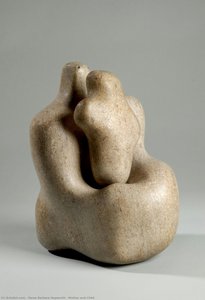
Jean Arp's "Sculpture de Silence, Corneille," a remarkable piece from 1942 crafted in rose-colored limestone, transcends the boundaries of traditional sculpture. It isn’t merely an object occupying space; it’s a profound meditation on form, absence, and the very nature of silence itself. The work emerged during a turbulent period – Arp's exile due to the German occupation of Paris – lending it a poignant resonance born from displacement and introspection. This wasn’t simply a retreat into artistic creation, but a deliberate act of resistance, a refusal to be silenced by external forces.
The choice of material is particularly striking. Limestone, typically employed for its strength and durability, here becomes an instrument of fragility. The pale pink hue, almost ethereal in quality, contributes to the sculpture’s dreamlike atmosphere. It's a deliberate departure from Arp’s usual preference for bronze or marble, suggesting a shift towards exploring softer, more organic forms – a move that foreshadows his later explorations of biomorphism and chance-based composition. The subtle variations in tone within the stone itself create an illusion of depth and movement, as if the sculpture is perpetually shifting and evolving.
A Biomorphic Echo of the Natural World
At first glance, “Silence” resembles a stylized female form – a large, abstracted vagina. However, to reduce it to such a literal interpretation would be to miss its deeper significance. Arp’s work consistently sought to strip away representational detail, focusing instead on the underlying geometry and essential forms of nature. This sculpture is not about depicting a specific body; rather, it embodies a primal, almost amniotic space – a suggestion of creation, gestation, and the quiet potential held within stillness. The two small holes, often interpreted as nipples, further enhance this sense of nascent life, hinting at an unseen source of energy.
The work’s genesis lies in Arp's exploration of the concept of “Silence” initiated in 1942. This period saw him grappling with the limitations imposed by war and exile, seeking to express profound emotions through a reductionist approach. The sculpture is a direct result of this process, embodying the very essence of that silence – not as an absence of sound, but as a state of receptive potential, a space for contemplation and transformation.
Connections to Arp’s Artistic Philosophy
“Sculpture de Silence, Corneille” is deeply rooted in Arp's broader artistic philosophy. Influenced by the theories of Henri Bergson, he believed that art should capture the “duration” – the continuous flow of time and experience – rather than static representations. His work often involved a process of chance and intuition, allowing forms to emerge organically from the interplay of geometry and material. This is evident in the sculpture’s seemingly effortless grace, as if it were grown rather than constructed.
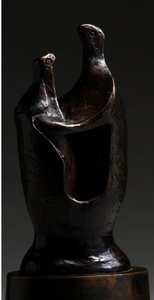
Interestingly, a similar piece, “Sculpture de Silence,” created in 1942, exists in the J. Lazard collection in Paris. The similarities in form and material suggest that Arp was exploring this concept repeatedly during his exile, refining his approach through experimentation and reflection. Furthermore, a version of the sculpture is preserved in the collection of Hans Arp’s uncle, Carl Arp, adding another layer to its historical significance.
A Legacy of Quietude
“Sculpture de Silence, Corneille” remains a powerful testament to Arp's artistic vision. It invites viewers to pause, to contemplate the beauty of simplicity, and to recognize the profound potential held within moments of quietude. More than just a sculpture, it’s an invitation to experience the world with heightened awareness – a reminder that true art lies not in representation, but in the evocative power of form and the resonance of silence.
Похожие произведения

Биография художника
A Life Forged Between Worlds: The Early Years of Jean Arp
Jean Arp’s story begins in a place defined by uncertainty – Strasbourg, a city caught between the ambitions of France and Germany, a microcosm reflecting Europe's turbulent early 20th century. Born Hans Peter Wilhelm Arp in 1886, he carried within him a unique duality, shaped by his Alsatian heritage and the shifting political landscape. His parents, a French mother and a German father, unknowingly instilled in him a sensibility that would profoundly influence his artistic vision – a questioning of fixed boundaries and an inherent awareness of displacement. Early studies at the École des Arts et Métiers in Strasbourg provided a foundational education, but it was the encouragement of his uncle, Carl Arp, a landscape painter, who truly ignited his passion for art. This early exposure to nature’s beauty and form would become a cornerstone of his later work. A move to Paris in 1908, attending the Académie Julian, opened his eyes to the vibrant currents of the avant-garde – Cubism, Fauvism, and the burgeoning ideas challenging traditional artistic conventions. Yet, Strasbourg remained a powerful memory—a city steeped in history, a symbol of cultural tension that would continually inform his art. This early period wasn’t simply about acquiring technical skills; it was about absorbing the complexities of identity, belonging, and the ever-present awareness of living on the edge of two worlds.Embracing Chaos: Dada and the Birth of Biomorphic Forms
The First World War shattered Europe's stability, unleashing a wave of disillusionment and rage that found expression in the radical movement known as Dada. Arp, deeply affected by the senseless violence and the perceived failures of reason, was drawn to Dada’s rejection of established norms and its embrace of chaos. He joined the Zurich Dada group in 1916, alongside figures like Hugo Ball, Tristan Tzara, and Marcel Janco – artists and intellectuals united by a desire to dismantle traditional artistic values. This wasn't merely an aesthetic choice; it was a profound act of rebellion against the established order. Arp’s participation in the Zurich Dada movement led him to experiment with chance operations—a technique that involved creating art through random processes, rejecting conscious control in favor of unpredictable outcomes. His “chance collages,” created by dropping paper fragments onto a surface and adhering them where they fell, were revolutionary – an audacious attempt to strip away artistic intention and embrace the inherent randomness of existence. Simultaneously, he began exploring biomorphic forms—abstract shapes resembling organic life—which would become a defining characteristic of his work. These weren’t simply abstract designs; they hinted at hidden energies, the fundamental building blocks of existence, and a subconscious connection to nature. This exploration was significantly influenced by his profound artistic partnership with Sophie Taeuber-Arp, whom he married in 1922. Their collaborative projects were innovative and mutually inspiring, pushing the boundaries of both their practices.Surrealist Visions and Sculptural Explorations
As Dada began to dissipate, Arp’s artistic trajectory led him towards Surrealism. His work was featured in the first surrealist exhibition at the Galerie Pierre in Paris in 1925, solidifying his connection to this movement that delved into the realm of dreams and the subconscious. However, Arp didn't simply adopt Surrealism wholesale; he infused it with his own unique sensibility. He began a significant transition from relief sculptures to three-dimensional works, exploring organic abstraction in freestanding forms. The “Human Concretion” series emerged during this period – smooth, rounded sculptures that evoked ambiguous references to both the human form and natural objects. Arp’s material exploration was equally important. He experimented with marble, bronze, glass, and wood, each medium offering different textures and effects, allowing him to further refine his vision of organic abstraction. His biomorphic forms profoundly influenced the development of Surrealism, particularly its fascination with automatism and subconscious imagery. Arp wasn't interested in depicting recognizable objects; he sought to capture the essence of life itself – its growth, its fluidity, its inherent mystery.Major Achievements and Lasting Influence
Throughout the 1930s and beyond, Jean Arp continued to push the boundaries of his art, experimenting with new materials and techniques while maintaining his core aesthetic principles. He became a member of the French artists’ groups ‘Cercle et Carré’ and ‘Abstraction Création’, which promoted concrete art—a movement focused on non-illusionistic forms. Notable works like *Trousse d'un dada*, the *Dada Heads* series, *Human Concretion without Oval Bowl*, *Le Soleil recerclé*, and *The Three Graces* stand as testaments to his versatility and artistic vision. Arp received increasing recognition in the post-World War II era, culminating in the Grand Prize for Sculpture at the Venice Biennale in 1954, and major retrospective exhibitions at the Museum of Modern Art in New York (1958) and the Musée National d’Art Moderne in Paris (1962). His creation of a relief sculpture for the Harvard Graduate Center stands as a testament to his enduring legacy. Arp's emphasis on organic forms resonated with subsequent generations of artists, influencing movements like Abstract Expressionism and beyond. His embrace of chance operations continues to inspire those exploring randomness and unconventional creative methods. The collaborative work he shared with Sophie Taeuber-Arp is now recognized as some of the most significant contributions to the Dada movement, highlighting the power of artistic partnership. Jean Arp’s innovative approach, his willingness to challenge convention, and his unwavering commitment to exploring the fundamental forces of life ensure that his art will continue to inspire and provoke for generations to come.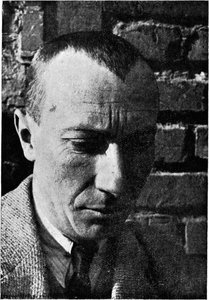
Жан Арп
1886 - 1966 , Германия
Основные сведения
- Artistic Movement Or Style: Дадаизм, Сюрреализм, Абстрактное искусство
- Artists Or Movements Influenced By This Artist:
- Абстрактное искусство
- Сюрреализм
- Artists Who Influenced This Artist:
- Ван Гог
- Кандицкий
- Date Of Birth: 16 сентября 1886 г.
- Full Name: Hans Peter Wilhelm Arp
- Nationality: Немецкий
- Notable Artworks:
- Трусов Д. Э., Головы Дада
- Человеческая конструктивизм без чаши
- Солнце округлено
- Place Of Birth: Страсбург, Германия