 Предпросмотр
 Поделиться
 Поделиться
 Детали произведения

 Скачать
 Похожие работы
 Рентгенография
 Слайд-шоу
 Статистика
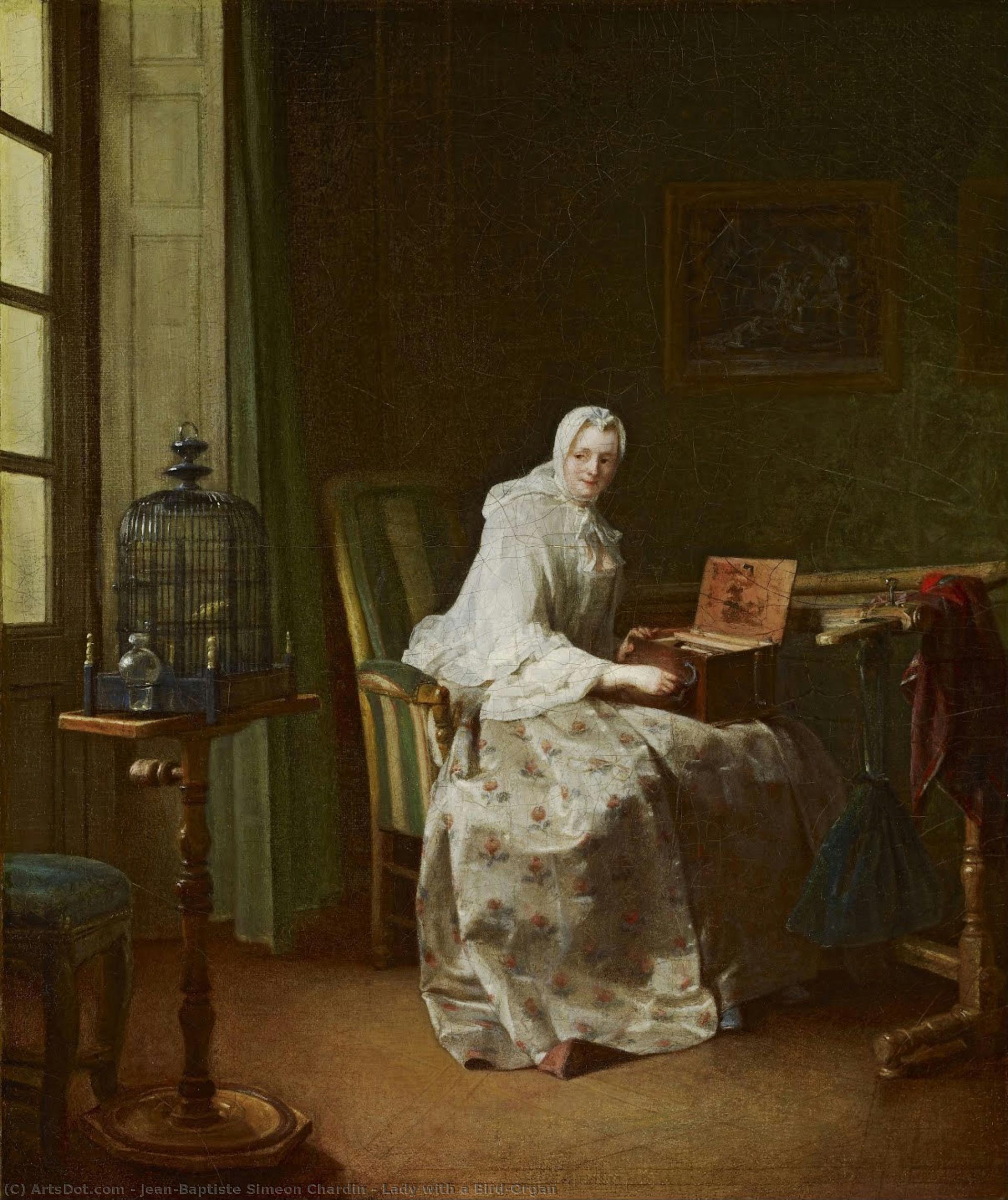
Lady with a Bird-Organ
 Oil On Canvas
- WallArt
- Seventeenth-century Dutch
 1753
1753- Early Modern
 50.0 x 43.0 cm
 Фрик Коллекция
 Читать далее
Жикле / Арт-принт
Печать (жикле) или холст музейного качества с быстрыми сроками изготовления и широким выбором вариантов отделки. ( Купить картину ручной работы Перейти к цифровым изображениям)




P118B $10

P118H $10

P118W $10

P438Z $10

P508JH $12

P508YH $12

P805H $10

P805Z $10

P919BZ $10

P919G $10

P919XJ $10

P959ZH $10

P968JZ $12

W106C $8

W218G $10

W218JH $8

W218Y $10

W307PJ $10

W316G $10

W316PJ $8

W316Y $10

W398PJ $8

W4111J $10

W500HY $15

W500JH $15

W692G $12

W849H $8

W940BG $15

W953PJ $8




Выберите один из наших стандартных размеров, соответствующих оригинальным пропорциям произведения искусства.

Вы можете указать свои собственные размеры, чтобы репродукция идеально подошла под конкретную раму или пространство. Если выбранный вами размер не будет соответствовать пропорциям оригинала, мы либо обрежем произведение, либо дополним изображение зеркальным отражением краев или однотонной заливкой. Перед началом производства вам будет отправлен цифровой макет для утверждения.
Пожалуйста, обратите внимание, что предварительный просмотр на экране не отображает фактическую обрезку или расширение изображения. Только макет точно покажет финальную композицию.
Несмотря на возможность заказа индивидуальных размеров, мы рекомендуем выбирать размер из предопределенного списка, чтобы сохранить оригинальные пропорции.
Доставка по всему миру () за 2 недели вместо стандартных 4/5 недель. (12 Сентябрь)

Бесплатная экспресс-доставка по всему миру

Высококачественный льняной холст

Полное страхование доставки

Гарантия возмещения таможенных пошлин

Гарантия точного соответствия цветов

100-дневная политика возврата (только при обнаружении дефектов)

Гарантия возврата 100% средств

Предложение оптовых скидок
 Вариант со стеклом доступен только для размеров менее 110 см

Lady with a Bird-Organ
Жикле / Арт-принт
Размер репродукции
-


Итоговая стоимость
$ 62
A Moment of Quiet Contemplation: Jean-Baptiste-Siméon Chardin’s “Lady with a Bird-Organ”
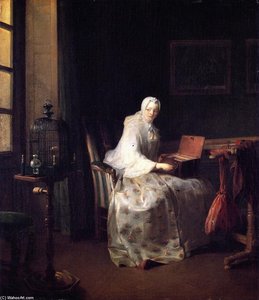
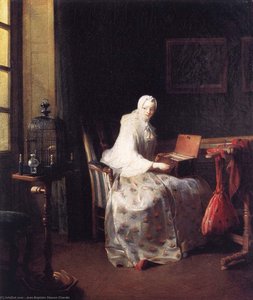
Jean-Baptiste-Siméon Chardin's "Lady with a Bird-Organ," painted in 1753, is more than just a portrait; it’s a carefully constructed tableau of domestic tranquility and subtle observation—a hallmark of the artist’s unique approach to depicting everyday life. This exquisite canvas, currently residing within The Frick Collection in New York City, offers a rare glimpse into the private world of a mid-18th century French bourgeois woman, a figure rendered with an intimacy and psychological depth rarely seen in portraiture of that era. It’s a piece that invites us to pause, to consider not just what she is doing, but *why*, and to appreciate the quiet elegance of her moment.
The painting immediately draws the eye to its subject: a woman seated comfortably in an upholstered chair, her legs crossed with graceful ease. She’s absorbed in the task of entertaining a small canary within a delicate cage positioned on the left side of the composition. Her attention isn't directed outward, but inward, as she gently operates a “bird-organ”—a fascinating precursor to modern recording technology—its intricate mechanism designed to coax forth the bird’s song. The artist masterfully uses muted silvery tones and a porcelain-like finish, a deliberate choice that echoes the refined aesthetics of 17th-century Dutch masters – artists Chardin deeply admired and sought to emulate. This subtle nod to the past elevates the work beyond a simple depiction of domesticity, suggesting a conscious effort to connect with artistic traditions while forging his own distinct style.
The Language of Gesture and Symbolism
Chardin’s genius lies in his ability to convey emotion through gesture and detail. The lady's posture is relaxed yet attentive; her hand delicately poised over the bird-organ, suggesting a gentle patience and a genuine appreciation for the music produced. The placement of the chair, with its back slightly turned towards the viewer, creates an immediate sense of intimacy, as if we’ve been granted privileged access to this private moment. The inclusion of a clock on the wall above – a detail often overlooked – subtly reinforces the passage of time and the fleeting nature of pleasure, adding another layer of contemplative depth.
The bird itself is laden with symbolic weight. In 18th-century France, songbirds were associated with joy, beauty, and even divine inspiration. The act of training the bird to sing through the mechanical device represents a desire for control over nature, a yearning for artistic creation, and perhaps even a subtle commentary on the burgeoning fascination with new technologies. It’s a delicate balance between natural instinct and human ingenuity.
A Window into an Era
“Lady with a Bird-Organ” provides invaluable insight into the social customs and leisure activities of the French upper class in the mid-18th century. The painting reflects a shift away from the formal, often ostentatious portraiture favored by earlier generations. Chardin’s focus is not on displaying wealth or status, but rather on capturing a genuine moment of human connection—a quiet pastime enjoyed within the confines of a comfortable home. The inclusion of the vase and other decorative elements further establishes this setting as a space of refined taste and understated elegance.
Interestingly, this work represents one of Chardin’s final depictions of figures in interiors. Following its commission for Louis XV, he largely abandoned portraiture and still life, choosing instead to explore the beauty of inanimate objects. This shift suggests a growing desire to distill his artistic vision into simpler forms, focusing on the inherent qualities of materials themselves. The Lady with a Bird-Organ stands as a poignant reminder of Chardin’s remarkable ability to capture the essence of human experience through subtle observation and masterful technique.
Bringing “Lady with a Bird-Organ” Home
ArtsDot offers exquisite, hand-painted reproductions of Jean-Baptiste-Siméon Chardin's "Lady with a Bird-Organ," allowing you to bring this captivating masterpiece into your own home or office. Our meticulous artisans replicate the artist’s signature soft style and delicate color palette with unparalleled accuracy, ensuring that every detail – from the porcelain-like finish to the subtle nuances of expression – is faithfully reproduced. Whether you're an art enthusiast, a collector, or simply seeking a touch of timeless elegance for your interior space, our high-quality reproductions provide a beautiful and authentic representation of this iconic work.
Explore more about Chardin’s life and artistry on our website: Jean-Baptiste-Siméon Chardin. And discover the full artwork details here: Lady with a Bird-Organ.
Похожие произведения

Биография художника
A Life Immersed in Quiet Observation
Jean-Baptiste-Siméon Chardin, born on November 2, 1699, in the heart of Paris, wasn’t a painter destined for grand historical canvases or dramatic mythological scenes. Instead, he discovered an extraordinary depth of beauty and profound meaning within the most commonplace – the humble dignity of kitchen utensils, the gentle intimacy of domestic life, the fleeting grace captured in a simple arrangement of fruit on a tabletop. His art was born not from the patronage of nobility or the ambition of academic circles, but from a deeply felt empathy for the everyday experiences of ordinary people and an acute sensitivity to the textures and forms surrounding him. Chardin’s father, a skilled cabinetmaker, instilled within his young son a keen eye for craftsmanship and an appreciation for the inherent beauty found in materials – qualities that would become fundamental to Chardin's distinctive artistic vision. Initially apprenticed under history painters like Pierre-Jacques Cazes and Noël-Nicolas Coypel, he soon realized that his true calling lay elsewhere, diverging from the prevailing trends of the era towards a more personal and introspective approach. He chose to remain largely within the confines of Paris, finding endless inspiration in the familiar streets and modest homes near Saint-Sulpice until 1757, when he was granted lodgings in the Louvre by Louis XV – a significant recognition of his talent.The Evolution of a Master: From Still Life to Genre Painting
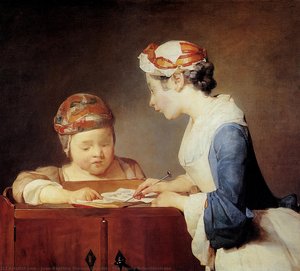
Chardin’s artistic journey began with still life, and it is here that he achieved his earliest renown. However, these weren't mere depictions of objects; they were imbued with a palpable weight, presence, and almost tactile reality. He didn’t simply *represent* an object; he captured its essence, its very being. His early works, such as “The Ray” (1728) and "The Buffet" (1728), demonstrate his remarkable ability to render textures with astonishing detail – the glistening scales of a fish, the rough weave of cloth, the cool smoothness of stone. He achieved this through a masterful manipulation of light and shadow, employing a subtle *impasto* technique that created a sense of volume and depth. This wasn’t merely a stylistic choice; it was integral to his artistic vision. The texture allowed him to capture the nuances of light and shadow, creating an atmosphere of warmth and intimacy. His admission to the Académie Royale de Peinture et de Sculpture in 1728 with these works cemented his reputation as a rising star. As his career progressed, Chardin began to explore *genre* painting – scenes of everyday life featuring kitchen maids, children, and families engaged in simple activities. Works like “The Young Schoolmistress” (1740) and "Saying Grace" are poignant studies in human interaction, capturing fleeting moments of tenderness, concentration, and quiet dignity. These paintings weren’t sentimental or idealized; they were honest and unvarnished portrayals of life as it was lived by the common people of Paris.A Technique Rooted in Tactility and Light
What truly sets Chardin apart is his unique approach to painting technique. He deliberately rejected the smooth, polished surfaces favored by many of his contemporaries, opting instead for a deliberately textured *impasto* – a thick application of paint that created a sense of physicality and depth. This wasn’t merely a stylistic choice; it was integral to his artistic vision. The texture allowed him to capture the subtle nuances of light and shadow, creating an atmosphere of warmth and intimacy. He built up layers of paint, often using a palette knife as much as a brush, to create surfaces that seemed to radiate light from within. His color palettes were typically muted and earthy – browns, grays, ochres, and creams – but he used these colors with extraordinary sensitivity, creating harmonies and contrasts that were both subtle and profound. He was a master of *chiaroscuro*, the dramatic interplay of light and dark, using it to sculpt forms and create a sense of atmosphere. His paintings invite viewers not just to look, but to *feel* – to experience the textures, the weight, and the presence of the objects depicted.Key Works and Influences
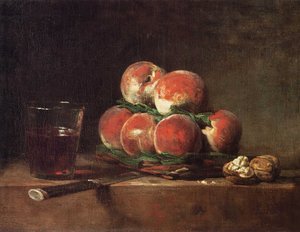
Chardin’s oeuvre is characterized by recurring motifs and a consistent approach to subject matter. He frequently depicted simple domestic scenes: a solitary figure engaged in quiet contemplation, a table laden with everyday objects, or a group of people sharing a moment of intimacy. “The Stone Breakers” (1738) exemplifies his ability to capture the dignity of labor, while “Basket of Peaches” (1730) showcases his mastery of color and texture. "The Young Schoolmistress" (1740), with its poignant depiction of a young woman teaching her students, is considered one of his most enduring works. Throughout his career, Chardin’s work was influenced by the Baroque masters, particularly Rembrandt and Caravaggio, whose use of light and shadow he skillfully emulated. He also drew inspiration from the Neoclassical painters, such as Jacques-Louis David, though he ultimately forged a distinctly personal style that set him apart. His artistic journey reflects a deep connection to his Parisian surroundings and a profound understanding of human nature.Legacy and Enduring Influence
Chardin’s influence on subsequent generations of artists is immeasurable. He was admired by painters as diverse as Paul Cézanne, Édouard Manet, and Henri Matisse, all of whom recognized his profound understanding of form, light, and composition. Cézanne famously declared that Chardin was “the father of us all,” acknowledging the debt he owed to the older master’s emphasis on structure and tactile quality. Chardin's focus on everyday subjects also paved the way for Realist painters like Gustave Courbet, who sought to depict life without idealization or embellishment. Beyond his influence on painting, Chardin’s work has resonated with writers, philosophers, and art historians alike. His paintings are often seen as meditations on themes of mortality, simplicity, and the beauty of the mundane. His legacy continues to inspire artists and viewers today, reminding us that profound meaning can be found in the most ordinary of things. He died in Paris on December 6, 1779, leaving behind a body of work that stands as a testament to his artistic genius and his unwavering commitment to truth and beauty.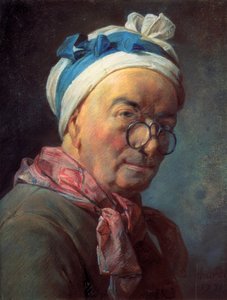
Шарден
1699 - 1779 , Франция
Основные сведения
- Artistic Movement Or Style: Натюрморт, Жанр
- Artists Or Movements Influenced By This Artist:
- Сезанн
- Матисс
- Artists Who Influenced This Artist:
- Cazes
- Coypel
- Date Of Birth: 2 нояб 1699
- Date Of Death: 6 дек 1779
- Full Name: Jean-Baptiste-Siméon Chardin
- Nationality: Француз
- Notable Artworks:
- «Крестьянин, играющий на флейте»
- «Семья с дочерью»
- Place Of Birth: Париж, Франция
Похожие статьи
Jean-Baptiste-Siméon Chardin: Master of Still Life & Everyday Elegance
Explore the serene world of Jean-Baptiste-Siméon Chardin, master of still life & genre painting. Discover his revolutionary techniques, enduring legacy, and timeless depictions of everyday elegance. Learn more at ArtsDot.
Feathered Visions: A Historical & Artistic Exploration of Birds in Painting
Explore the rich history of birds in painting! Discover symbolism, artistic movements & master artists like Audubon. High-quality reproductions available at ArtsDot.
Silent Narratives: Exploring the Enduring Appeal of Still Life Painting Across Centuries
Explore the rich history of still life painting with ArtsDot. Discover Dutch Masters, decode vanitas symbolism & learn about collecting timeless art. Expert insights and museum-quality reproductions.
Bernard Cathelin: A Poetic Realist's Exploration of Still Life and the French Landscape
Explore the captivating world of Bernard Cathelin, a master of French Poetic Realism. Discover his stunning still lifes & landscapes, and learn about his legacy with ArtsDot.
The Enduring Appeal of Still Life: A Historical & Contemporary Exploration
Explore the rich history & symbolism of still life painting with ArtsDot. Discover masterpieces from the Dutch Golden Age, learn about vanitas art, and find expert guidance for collecting timeless artworks.