

 Предпросмотр
 Поделиться
 Поделиться
 Детали произведения

 Скачать
 Похожие работы
 Рентгенография
 Слайд-шоу
 Статистика
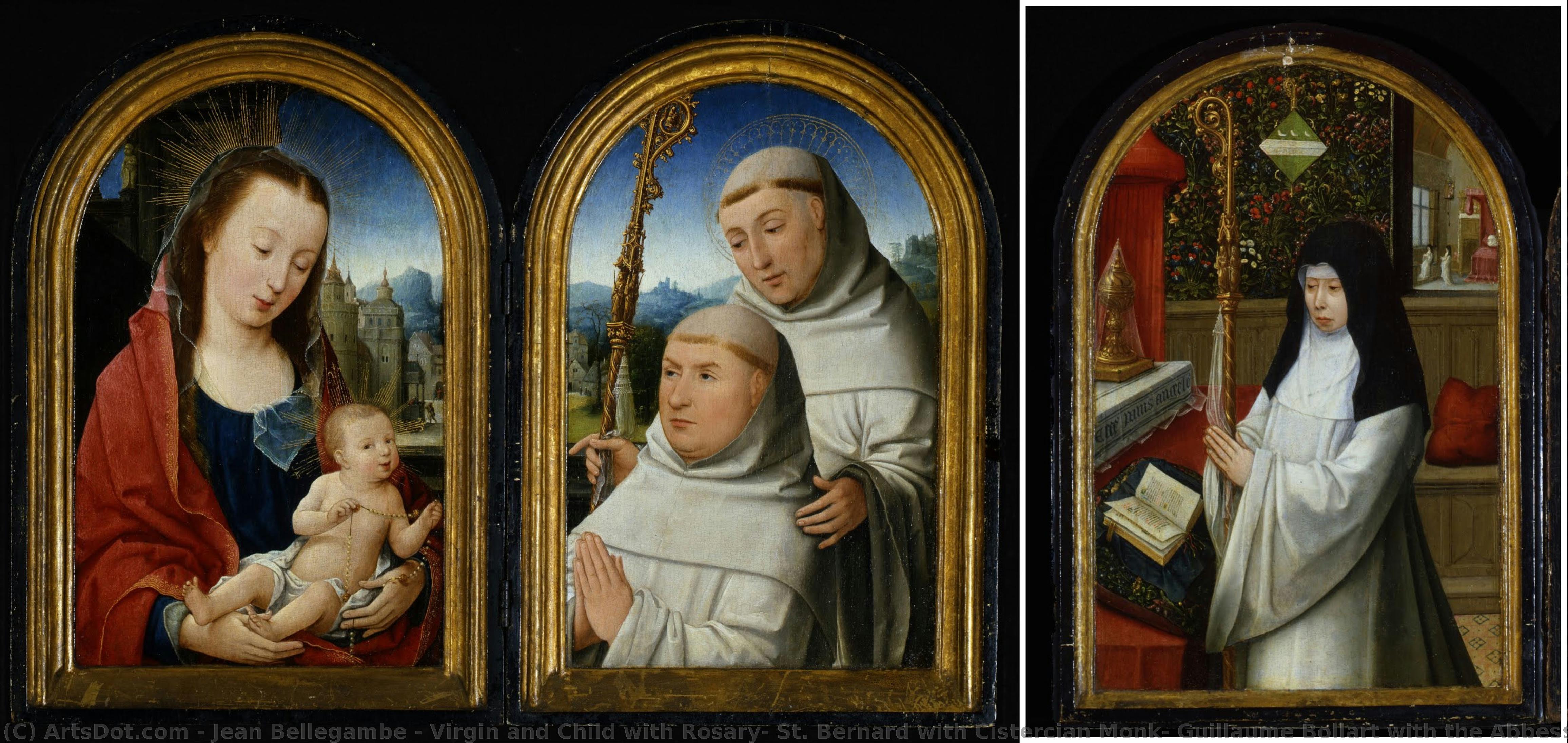
Virgin and Child with Rosary, St. Bernard with Cistercian Monk, Guillaume Bollart with the Abbess of Flines, Jeanne de Boubais on the reverse


 Читать далее
Приобретите цифровое изображение высокого разрешения в улучшенном качестве, которое значительно превосходит онлайн-превью.
Каждый файл тщательно подготавливается нашими специалистами с использованием передовых инструментов и экспертной ручной ретуши. Мы гарантируем исключительную четкость, точную цветопередачу и детальную проработку каждого изображения.
Финальный файл доставляется по электронной почте в течение 72 часов и оптимизирован для немедленного использования в профессиональной среде, при верстке и печати. Это тот же уровень качества, которому доверяют ведущие дизайнерские студии, издательства и галереи.
Цифровое изображение
Скачайте файл высокого разрешения для личного использования, печати и творческих проектов. ( Перейти к печати Купить картину ручной работы)
Включено в каждый заказ цифровых изображений
Гарантия экспертной цифровой доставки
Выбирая ArtsDot.com, вы получаете не просто изображение — вы приобретаете профессионально обработанное цифровое произведение искусства, созданное с безупречной точностью и под защитой гарантии качества. Вот всё, что автоматически входит в ваш заказ:

Мгновенная доставка по e-mail
Ваш цифровой файл в высоком разрешении будет отправлен вам по электронной почте в течение 72 часов после оформления заказа — и сразу станет доступен для использования.

Цифровой файл с ИИ-улучшением
Ваше произведение искусства проходит профессиональную оптимизацию с использованием передовых инструментов ИИ и ручной обработки, что гарантирует максимальную детализацию, четкость и точность цветопередачи.

Бессрочная бесплатная повторная доставка
Случайно удалили или потеряли файл? Не беспокойтесь — мы отправим его вам повторно в любое время и совершенно бесплатно.

Без импортных пошлин — навсегда
Наслаждайтесь вашим произведением искусства мгновенно без таможенных пошлин, сборов или затрат на доставку — цифровые загрузки всегда не облагаются налогом.

Гарантия точности цветопередачи
Мы гарантируем, что ваше цифровое изображение максимально точно передает оригинальные цвета благодаря использованию профессиональных инструментов и систем управления цветом.

Гарантия удовлетворенности 100 дней
Если вы не будете удовлетворены своим цифровым изображением, мы внесем правки или вернем 100% стоимости в течение 100 дней — без лишних вопросов.

100% Гарантия возврата средств
Не удовлетворены покупкой? Получите полный возврат средств в течение 100 дней после получения цифрового файла — без лишних вопросов.

Скидки на оптовые заказы
Купите 3 изображения, сэкономьте 10% — Купите 5, сэкономьте 15% — Купите 10+, сэкономьте 20%. Отличное решение для творческих проектов, галерей и агентств.
A Devotional Masterpiece of Flemish Splendor
In the quiet, hallowed halls of the Frick Pittsburgh, there exists a rare and intimate window into the spiritual fervor of the sixteenth century. The diptych by Jean Bellegambe, titled Virgin and Child with Rosary, St. Bernard with Cistercian Monk, Guillaume Bollart with the Abbess of Flines, is not merely a painting but a profound narrative of faith, lineage, and communal devotion. This exquisite oil on panel serves as a dual-sided testament to the piety of its era, weaving together the divine and the earthly through a series of meticulously rendered scenes. As one gazes upon the work, the luminous textures and the delicate interplay of light evoke the atmosphere of a private chapel, inviting the viewer into a meditative dialogue with the sacred figures depicted.
The composition is a complex tapestry of religious iconography and historical portraiture. On one side, we encounter the tender, celestial presence of the Virgin and Child, a scene that anchors the work in the tradition of Marian devotion. The artist’s ability to capture the soft, translucent skin of the Christ child and the soulful gaze of the Madonna demonstrates why Bellegambe was celebrated as a "master of colours." This spiritual intimacy is juxtaposed with the more terrestrial, yet equally holy, depictions of St. Bernard and a Cistercian monk, alongside the portrait of Guillaume Bollart and the Abbess of Flines. The inclusion of Jeanne de Boubais on the reverse panel adds a layer of profound personal history; her presence, marked by her identifiable coat of arms, transforms the diptych from a generic religious object into a deeply personalized monument of legacy.
The Artistry of Light and Lineage
Technically, this work is a triumph of the Flemish tradition, characterized by an extraordinary attention to detail that rewards the most discerning eye. Bellegambe utilizes the medium of oil to achieve a breathtaking transparency, allowing light to penetrate the layers of pigment and create a sense of inner radiance within the figures. Every fold of heavy liturgical drapery, every glint of light on a monastic crozier, and every subtle nuance in the facial expressions is rendered with a precision that borders on the miraculous. For collectors and interior designers, such a piece offers more than just visual beauty; it provides a focal point of immense intellectual and aesthetic depth, capable of anchoring a room with its historical gravity and sophisticated palette.
Beyond its technical brilliance, the diptych serves as a historical document of the Douai region. The connection to the artist’s family—specifically his father Georges, a cabinetmaker—suggests a holistic approach to art where the frame, the panel, and the painting were all part of a unified aesthetic vision. This sense of craftsmanship is palpable in every brushstroke. To possess a high-quality reproduction of this work is to bring a piece of the Northern Renaissance into a contemporary space, offering an enduring connection to the era of great masters. It is a work that speaks of the permanence of faith and the lasting impact of human devotion, making it an incomparable choice for those who seek art that resonates with both historical significance and emotional resonance.
Похожие произведения


Биография художника
Jean Bellegambe: The Maestro of Flemish Color
Jean Bellegambe (ca. 1470 – ca. june 1535–march 1536) stands as a pivotal figure in the artistic landscape of fifteenth and sixteenth-century Flanders, renowned primarily for his luminous religious paintings—particularly triptychs and polyptychs—that now grace institutions across Europe, including Douai Cathedral, Arras Museum, Aix Cathedral, Lille Musée Beaux Arts, Saint Petersburg Hermitage Museum, and Chicago Art Institute. He earned the moniker “master of colours” due to his unparalleled ability to achieve breathtaking transparency and harmonic interplay within his palettes, a stylistic hallmark that distinguishes him from many contemporaries. While biographical details remain scarce—his precise training is unknown—evidence suggests he emerged from Douai, France, as the son of Georges Bellegambe, a cabinetmaker and musician residing in rue Haute-des ferronniers (later rue Fosset-Maugart).- Early Life & Training: Precise information regarding Bellegambe’s formative years is elusive. Records indicate he was registered as a master painter in 1504, hinting at an apprenticeship or self-taught mastery—a common practice during the Renaissance.
- Career Highlights: By 1528, Bellegambe possessed property on rue de la Cloris and rue du Palais, reflecting his growing prosperity and establishing him as a respected artist within Douai’s artistic milieu. His prolific output spanned decades, producing monumental altarpieces and devotional panels that captivated audiences and cemented his legacy as one of the era's foremost painters.
Bellegambe’s Distinctive Style: Color & Technique
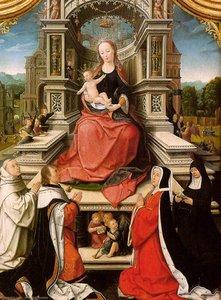
What truly elevates Bellegambe’s oeuvre is his masterful manipulation of colour—a characteristic that distinguishes him from other Flemish artists of his time. He eschewed the muted tones favored by some, opting instead for vibrant hues and subtle gradations that conveyed depth and emotion with remarkable precision. This technique, termed “sfumato,” achieved through meticulous layering of translucent glazes, created an ethereal quality reminiscent of Leonardo da Vinci’s work—a testament to Bellegambe's artistic sensitivity and innovation. Examination of surviving paintings reveals a dedication to textural detail, utilizing impasto techniques to imbue surfaces with palpable physicality.- The Cellier Altarpiece: Commissioned by Jeanne de Boubais for the Cistercian convent of Flines, this multipaneled altarpiece exemplifies Bellegambe’s stylistic prowess. Featuring Saint Bernard and his family gathered around Mary's throne, it showcases a masterful blend of realism and symbolic representation—a hallmark of Flemish devotional art.
- Notable Polyptychs: Several polyptychs attributed to Bellegambe bear witness to his artistic ambition and technical skill, demonstrating his ability to execute large-scale commissions with unwavering artistry.
Influences & Artistic Legacy
Bellegambe’s artistic vision was undoubtedly shaped by the prevailing currents of Renaissance art—particularly the influence of Italian masters like Piero della Francesca and Andrea Mantegna—whose compositional principles and use of perspective informed his approach to painting. However, unlike many artists of his era who slavishly imitated Italian models, Bellegambe developed a distinctly Flemish style characterized by psychological depth and expressive nuance. His works continue to inspire admiration for their luminous colour palettes and profound spiritual resonance.- The Last Judgment: The monumental *Last Judgment* at Saint Petersburg’s Hermitage Museum stands as a powerful testament to Bellegambe's artistic ambition and technical mastery, showcasing his ability to convey complex theological concepts with visual eloquence.
Recognitions & Museums Housing His Artworks
Bellegambe’s enduring fame is reflected in the preservation of his masterpieces within prestigious museums worldwide: Douai Cathedral houses *The Cellier Altarpiece*, Arras Museum showcases *The Saint Anne Polyptych*, Aix Cathedral displays *The Sainte Madeleine Polyptych*, Lille Musée Beaux Arts holds *The Virgin Mary with Saints* and Chicago Art Institute proudly presents *Saint Bernard and Saint Eustache*. These artworks serve as invaluable windows into the artistic spirit of fifteenth-century Flanders, ensuring that Jean Bellegambe’s legacy continues to illuminate the history of art.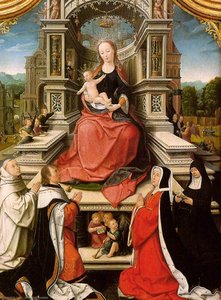
Jean Bellegambe
1470 - 1534 , France
Основные сведения
- Artistic Movement Or Style: Renaissance Painting
- Artists Or Movements Influenced By This Artist: ['Flemish Renaissance']
- Artists Who Influenced This Artist:
- Hieronymus Bosch
- Dieric Bouts
- Date Of Birth: ca. 1470
- Date Of Death: ca. june 1535–march 1536
- Full Name: Jean Bellegambe
- Nationality: Flemish
- Notable Artworks:
- The Cellier Altarpiece
- Annunciation
- Blood of Christ tryptich
- Place Of Birth: Douai, France