

 Предпросмотр
 Поделиться
 Поделиться
 Детали произведения

 Скачать
 Похожие работы
 Рентгенография
 Слайд-шоу
 Статистика
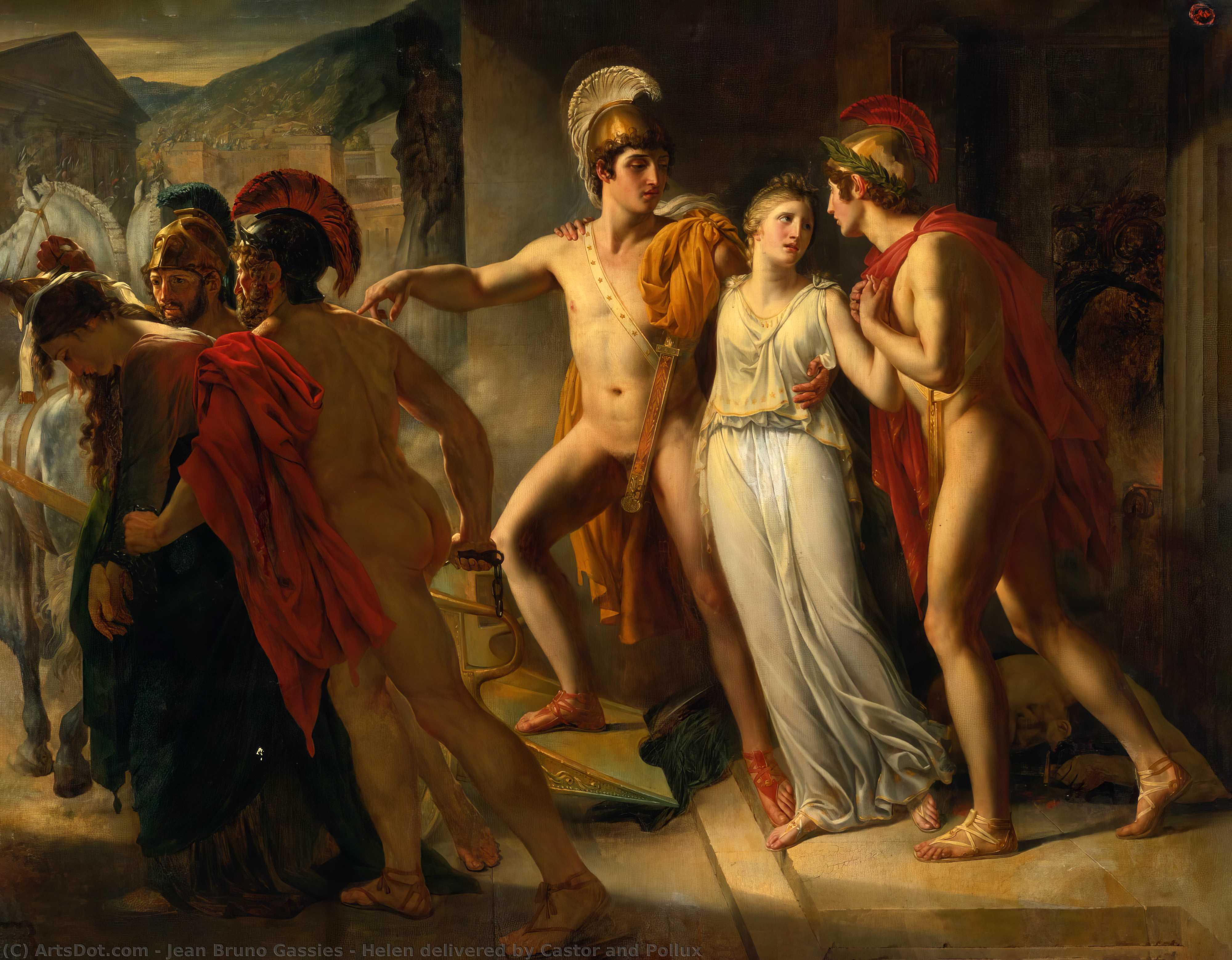
Helen delivered by Castor and Pollux
 1817
1817 113.0 x 145.0 cm
 Читать далее
Масляная репродукция ручной работы
Картина маслом на холсте в выбранном вами размере и раме, написанная на заказ нашими художниками. ( Перейти к печати Перейти к цифровым изображениям)




































Выберите один из наших стандартных размеров, соответствующих оригинальным пропорциям произведения искусства.

Вы можете указать собственные размеры, чтобы картина идеально вписалась в выбранную раму или пространство. Если выбранный вами размер не соответствует пропорциям оригинала, мы либо обрежем полотно, либо расширим его за счет дополнительных элементов, написанных вручную. Цифровой макет будет отправлен вам на утверждение перед началом производства.
Обратите внимание, что предварительный просмотр на экране не отражает фактическую обрезку или расширение. Только макет точно покажет окончательную композицию.
Хотя доступны индивидуальные размеры, мы рекомендуем выбирать вариант из предопределенного списка, чтобы сохранить исходные пропорции.
После оформления заказа команда ArtsDot.com свяжется с клиентом по электронной почте для уточнения деталей и предоставит предварительный макет
Доставка по всему миру () за 3–4 недели вместо стандартных 5 недель. (13 Сентябрь). Без компромиссов в качестве.

Бесплатная экспресс-доставка по всему миру

Высококачественный льняной холст

Полное страхование доставки

Гарантия возмещения таможенных пошлин

Гарантия точного соответствия цветов

100-дневная политика возврата (только при обнаружении дефектов)

Гарантия возврата 100% средств

Предложение оптовых скидок
 Вариант со стеклом доступен только для размеров менее 110 см

Helen delivered by Castor and Pollux
Техника репродукции
Размер репродукции
-


Итоговая стоимость
$ 263
The Scene Unfolds
The painting depicts Helen being delivered by Castor and Pollux. The scene takes place in front of a building with several people present. There are at least 12 individuals in the picture, some standing close to each other while others are more spread out throughout the scene. A horse can be seen on the left side of the painting, adding an interesting element to the composition. The main focus is on Helen, who is being held by Castor and Pollux as they deliver her from a group of men. The people in the background appear to be observing or participating in this event. Overall, it's a lively scene with various characters interacting and engaging in different activities.Artistic Significance
Jean Bruno Gassies' work is notable for its detailed depiction of human emotions and interactions. His use of oil on canvas allows for rich colors and textures, bringing the ancient myth to life. The painting is a prime example of neoclassicism, a style that emerged in the late 18th century, characterized by a revival of classical themes and techniques.Relevance in Modern Times
Today, 'Helen Delivered by Castor and Pollux' can be found in various art collections around the world. For those interested in owning a piece of history, ArtsDot offers handmade oil painting reproductions of this masterpiece. Visit /art/list/?Filter=AQRTBH-Jean-Bruno-Gassies-Helen-delivered-by-Castor-and-Pollux to explore more about this painting and other works by Jean Bruno Gassies.Other Notable Works
- John Constable's 'The Entrance to Fen Lane': A beautiful example of Romanticism, available at /art/list/?Filter=7YYNHL-John-Constable-The-Entrance-to-Fen-Lane. - John Constable's 'A View near Flatford Mill': Another masterpiece by John Constable, showcasing his skill in capturing landscapes, found at /art/list/?Filter=7YYNEM-John-Constable-A-View-near-Flatford-Mill. - John Constable's 'A Cottage in a Cornfield': A smaller but equally captivating piece by John Constable, available at /art/list/?Filter=7YYNEF-John-Constable-A-Cottage-in-a-Cornfield.Museums and Collections
For those interested in exploring more artworks like 'Helen Delivered by Castor and Pollux', the Museum Gemeente Musea (Netherlands) is a treasure trove of art from various periods. Learn more about this museum and its collections at /art/list/?Filter=A@D3B9VH-The-Museum-Gemeente-Musea-(Netherlands)-and-its-Art-Collections. In conclusion, 'Helen Delivered by Castor and Pollux' is a masterpiece that not only showcases Jean Bruno Gassies' artistic prowess but also provides a window into the rich tapestry of Greek mythology. Whether you are an art enthusiast or simply someone who appreciates the beauty of ancient stories, this painting is sure to captivate your imagination.Похожие произведения









Биография художника
A Romantic Vision of Faith and Landscape
Jean Bruno Gassies, born in the vibrant city of Bordeaux in 1786, remains a captivating figure of the French Romantic era, an artist whose brush captured the profound intersection of spiritual devotion and the untamed majesty of nature. His life and work reflect the turbulent yet deeply poetic spirit of the early nineteenth century, a period where the rigid structures of Neoclassicism began to yield to the emotional intensity and imaginative depth of Romanticism. Gassies did not merely paint scenes; he orchestrated atmospheres, weaving together biblical narratives, classical mythology, and the evocative landscapes of the British Isles into a cohesive visual language that spoke to the soul's yearning for the sublime.
The foundation of Gassies’s mastery was laid during his formative years in Paris, where he entered the prestigious École des Beaux-Arts. Under the rigorous guidance of masters such as François-André Vincent and Pierre Lacour, he developed a technical proficiency that allowed him to navigate diverse subject matters with ease. This training instilled in him a respect for classical composition, yet his temperament naturally gravitated toward the dramatic and the allegorical. His early works began to demonstrate an emerging ability to use light and shadow not just for clarity, but to evoke a sense of mystery and divine presence, a hallmark of the Romantic movement that would define his entire career.
The Tapestry of Myth and Scripture
Gassies possessed a remarkable versatility, moving seamlessly between the sacred and the profane. He was particularly renowned for his execution of historical subjects drawn from the Old and New Testaments, as well as from the annals of French history. In these works, he sought to breathe life into ancient legends, transforming static religious iconography into dynamic, breathing dramas. One can feel the tension and heroism in his depictions of biblical figures, where the weight of destiny is palpable in every brushstroke. His ability to render complex human emotions—fear, piety, and triumph—allowed him to connect deeply with a public that found solace and inspiration in these timeless stories.
Beyond the realm of the divine, Gassies delved into the lush world of classical mythology, creating scenes that shimmered with an almost ethereal beauty. His interpretations of Greek myths, such as the dramatic Helen delivered by Castor and Pollux, showcase his skill in capturing movement and the grandeur of antiquity. These mythological tableaux often utilized a more opulent, almost Neoclassical framing, yet they were infused with a Romantic sensibility that emphasized the passion and tragedy inherent in the legends. Whether portraying the celestial allure of Diane et Endymion or the poignant drama of L'Amour et Céphale, Gassies invited his viewers into a world where the boundaries between the human and the divine were perpetually blurred.
The Sublime Majesty of the Natural World
While his historical and mythological works command great attention, it is perhaps in his landscapes that Gassies most purely expressed the Romantic obsession with the sublime. He found profound inspiration in the rugged, atmospheric terrains of Scotland and the dramatic coastlines of England and France. His paintings of the Scottish Highlands, such as his evocative Paysage d’Ecosse, are masterclasses in atmospheric perspective. Through the use of misty horizons, swirling clouds, and the interplay of light upon water, he captured the sense of awe and insignificance one feels when confronted by the vastness of the natural world.
These landscapes were never merely topographical studies; they were emotional landscapes. In his depictions of Loch Lomond or the interiors of quiet churches, there is a palpable sense of reverence and stillness. He utilized the textures of the earth and the fluidity of water to mirror the internal landscapes of human emotion—the turbulence of passion or the tranquility of prayer. This ability to find the spiritual within the physical landscape ensured that his work resonated far beyond the borders of France, marking him as an artist who could translate the universal language of nature into a profound visual experience.
Legacy and Historical Significance
The life of Jean Bruno Gassies was tragically cut short by his death in Paris in 1832, at the age of only forty-six. Despite the brevity of his career, the impact of his vision remains significant within the trajectory of nineteenth-century art. He stood at a pivotal moment in history, bridging the gap between the structured elegance of the late eighteenth century and the emotive, often turbulent energy of the mid-nineteenth century. His work serves as a vital record of the Romantic era's intellectual and emotional preoccupations.
Gassies’s legacy is found in his ability to harmonize disparate themes—the historical with the poetic, the religious with the natural, and the classical with the contemporary. He remains an artist whose paintings offer more than just a window into the past; they offer a gateway to a state of contemplation, reminding us of the enduring power of myth, the sanctity of faith, and the breathtaking, often overwhelming beauty of the world around us.
jean bruno gassies
1786 - 1832
Основные сведения
- Artistic Movement Or Style: Romanticism
- Artists Or Movements Influenced By This Artist: ['Romanticism']
- Artists Who Influenced This Artist: ['Vincent Lacour']
- Date Of Birth: 1786
- Full Name: Jean Bruno Gassies
- Nationality: French
- Notable Artworks:
- Helen delivered by Castor and Pollux
- Paysage d’Ecosse
- Diane et Endymion
- Place Of Birth: Bordeaux, France