

 Предпросмотр
 Поделиться
 Поделиться
 Детали произведения

 Скачать
 Похожие работы
 Рентгенография
 Слайд-шоу
 Статистика
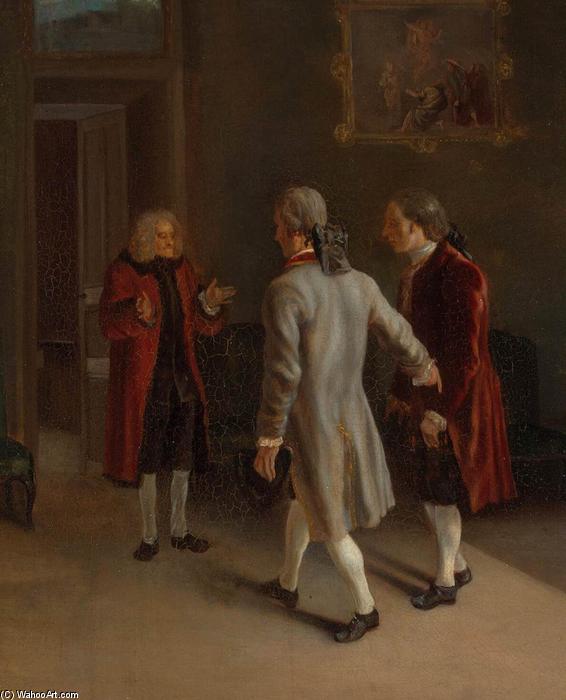
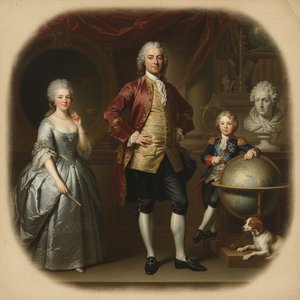
Voltaire Welcoming his Guests
 Acrylic On Canvas
- WallArt
- 18th-century silhouette art
 1750
1750- Early Modern
 54.0 x 45.0 cm
 Эрмитаж
 Читать далее
Жикле / Арт-принт
Печать (жикле) или холст музейного качества с быстрыми сроками изготовления и широким выбором вариантов отделки. ( Купить картину ручной работы Перейти к цифровым изображениям)




P118B $10

P118H $10

P118W $10

P438Z $10

P508JH $12

P508YH $12

P805H $10

P805Z $10

P919BZ $10

P919G $10

P919XJ $10

P959ZH $10

P968JZ $12

W106C $8

W218G $10

W218JH $8

W218Y $10

W307PJ $10

W316G $10

W316PJ $8

W316Y $10

W398PJ $8

W4111J $10

W500HY $15

W500JH $15

W692G $12

W849H $8

W940BG $15

W953PJ $8




Выберите один из наших стандартных размеров, соответствующих оригинальным пропорциям произведения искусства.

Вы можете указать свои собственные размеры, чтобы репродукция идеально подошла под конкретную раму или пространство. Если выбранный вами размер не будет соответствовать пропорциям оригинала, мы либо обрежем произведение, либо дополним изображение зеркальным отражением краев или однотонной заливкой. Перед началом производства вам будет отправлен цифровой макет для утверждения.
Пожалуйста, обратите внимание, что предварительный просмотр на экране не отображает фактическую обрезку или расширение изображения. Только макет точно покажет финальную композицию.
Несмотря на возможность заказа индивидуальных размеров, мы рекомендуем выбирать размер из предопределенного списка, чтобы сохранить оригинальные пропорции.
Доставка по всему миру () за 2 недели вместо стандартных 4/5 недель. (11 Сентябрь)

Бесплатная экспресс-доставка по всему миру

Высококачественный льняной холст

Полное страхование доставки

Гарантия возмещения таможенных пошлин

Гарантия точного соответствия цветов

100-дневная политика возврата (только при обнаружении дефектов)

Гарантия возврата 100% средств

Предложение оптовых скидок
 Вариант со стеклом доступен только для размеров менее 110 см

Voltaire Welcoming his Guests
Жикле / Арт-принт
Размер репродукции
-


Итоговая стоимость
$ 62
Voltaire Welcoming his Guests: A Silhouette of Enlightenment
Jean Huber’s “Voltaire Welcoming his Guests,” painted in 1750, is more than just a portrait; it's a meticulously crafted window into the intellectual and social landscape of 18th-century Switzerland. This captivating work, measuring 54 x 45 cm, immediately draws the eye with its striking silhouette technique – a hallmark of Huber’s innovative approach to art. Rather than relying on detailed rendering of facial features and clothing, Huber masterfully employs shadow and line to create remarkably expressive figures, capturing not just their appearance but also a sense of their character and presence.
The scene depicts Voltaire, the renowned philosopher and writer, surrounded by three companions in what appears to be a richly appointed salon. The composition is deceptively simple: three distinct silhouettes stand against a dark background, their forms subtly differentiated through variations in line weight and shading. Huber’s genius lies in his ability to convey personality solely through these stark outlines – Voltaire exudes an air of thoughtful authority, while his guests seem engaged in lively conversation. Notice the careful attention to posture and gesture; each figure is rendered with a quiet dignity that speaks volumes about their social standing and intellectual pursuits.
The Silhouette Technique: A Revolutionary Approach
Huber’s embrace of silhouette art was revolutionary for its time, challenging the prevailing academic style dominated by meticulous realism. He developed his technique largely independently, inspired by the practice of creating silhouettes for entertainment – a popular pastime among the aristocracy. This method demanded an acute eye for observation and a profound understanding of light and shadow. Huber wasn’t simply tracing outlines; he was sculpting forms with darkness, imbuing each figure with depth and dimension. The absence of color forces the viewer to focus entirely on form, line, and composition – elements that become paramount in conveying meaning and emotion.
Interestingly, Huber's work coincided with Voltaire’s own prolific writing period, marked by philosophical debates, satirical wit, and a fervent advocacy for reason and tolerance. The painting can be interpreted as a visual representation of Voltaire’s intellectual salon – a space where ideas were exchanged, debated, and refined. The act of welcoming guests suggests an openness to new perspectives and a commitment to fostering dialogue, core tenets of Voltaire's philosophy.
Historical Context: Enlightenment Switzerland
“Voltaire Welcoming his Guests” is deeply rooted in the context of the Enlightenment – a period of profound intellectual and social transformation. Geneva, where Huber lived and worked, was a vibrant center of reformist thought, attracting artists, writers, and philosophers from across Europe. The painting reflects this atmosphere of intellectual ferment, capturing the spirit of inquiry, debate, and progress that characterized the era. The inclusion of a Swiss artist like Huber within this influential circle highlights the importance of local talent in shaping the broader European cultural landscape.
Furthermore, the attire of the figures – particularly Voltaire’s elegant suit and the companions' formal wear – provides valuable insights into the social customs and fashion trends of 18th-century Switzerland. The details are subtle yet significant, offering a glimpse into the lives and values of the time.
Symbolism and Emotional Resonance
Beyond its technical brilliance, “Voltaire Welcoming his Guests” resonates with a quiet emotional depth. The dark background creates a sense of intimacy and enclosure, drawing the viewer into the scene. The figures’ postures suggest a comfortable camaraderie, hinting at shared interests and intellectual stimulation. While the painting lacks overt sentimentality, it evokes a feeling of warmth, conviviality, and the pursuit of knowledge – qualities that were central to Voltaire's legacy.
This artwork is not merely a depiction of a social gathering; it’s an embodiment of Enlightenment ideals, rendered with remarkable skill and artistic vision. A reproduction offers a beautiful addition to any collection, serving as a tangible reminder of a pivotal moment in art history and the enduring power of ideas.
Похожие произведения
Биография художника
The Versatile Visionary of the Enlightenment
In the vibrant intellectual landscape of the 18th century, few figures embodied the spirit of the Enlightenment quite like Jean Huber. Born in Geneva, a city steeped in both scientific rigor and artistic refinement, Huber was far more than a mere painter; he was a polymath whose creative reach extended into the realms of literature, satire, and even military service. His life, spanning from 1744 to 1786, was a tapestry woven with threads of precision and whimsy. While his early years were shaped by the disciplined atmosphere of Swiss heritage, his artistic soul sought the freedom found in movement, light, and the delicate edges of shadow. This duality—the soldier’s discipline meeting the artist’s curiosity—allowed him to capture the world with an unparalleled eye for both the grand and the minute.
Huber’s journey was deeply intertwined with the great thinkers of his era, most notably the philosopher Voltaire. This connection provided more than just social prestige; it offered a window into the burgeoning cultural shifts of Europe. Through his interactions with the intellectual elite, Huber’s work began to reflect the era's fascination with naturalism and social commentary. His ability to blend the observational accuracy required for scientific study with the biting wit of caricature made him a unique voice in an age of profound transformation. Whether he was documenting the anatomy of a creature or sketching a satirical portrait of a contemporary, Huber’s hand remained guided by a profound respect for the truth of his subject.
Mastery of Form and the Silhouette Revolution
The true hallmark of Huber’s artistic legacy lies in his revolutionary approach to portraiture and his mastery of the silhouette. Before the advent of photography, the silhouette offered a captivating way to capture the essence of a human profile through stark, elegant contrast. Huber did not merely practice this technique; he championed it, elevating it from a simple craft to a sophisticated art form. By stripping away the distractions of color and complex shading, he focused the viewer's attention on the pure geometry of the face and the evocative power of the outline. This minimalist approach required an extraordinary level of precision, as every curve and contour had to be perfectly rendered to convey character and emotion.
Beyond the delicate profiles that defined his portraiture, Huber possessed a remarkable talent for capturing the raw energy of the natural world. His studies of animals and hunting scenes were characterized by a profound sensitivity to texture and motion. He had an uncanny ability to render the sheen of a horse's coat or the tension in a predator's muscles, utilizing subtle gradations of light that hinted at the sfumato techniques of the Old Masters. His work often felt alive, as if the viewer had stumbled upon a fleeting moment in the wild. This mastery of detail was complemented by his skill in caricature, where he used his keen observational powers to create satirical works that poked fun at the social hierarchies and eccentricities of 18th-century life.
A Lasting Legacy in Swiss Art
The significance of Jean Huber extends far beyond the borders of Switzerland. He remains a pivotal figure in the history of European art, representing a bridge between the classical traditions of the past and the modern, observational styles that would emerge in the centuries to follow. His contributions can be summarized through several key artistic milestones:
- Innovation in Portraiture: The popularization and refinement of the silhouette as a legitimate and expressive medium for capturing human likeness.
- Naturalistic Excellence: A profound contribution to animalier art, blending scientific accuracy with aesthetic beauty.
- Social Commentary: The use of caricature and satire to engage with the political and social dialogues of the Enlightenment.
- Technical Versatility: An extraordinary range of skills encompassing painting, drawing, and illustrative work that captured both the monumental and the miniature.
Today, when we look upon the works of Huber, we see more than just historical artifacts; we see the pulse of an era. His ability to find beauty in a simple shadow and humor in a sharp line continues to inspire those who appreciate the intersection of art and intellect. He remains a testament to the idea that an artist can be both a meticulous observer of nature and a daring commentator on the human condition, leaving behind a legacy that is as much about the light he captured as the shadows he defined.
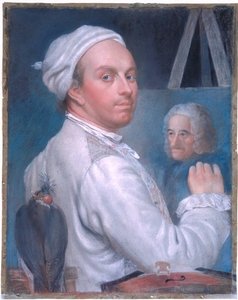
Jean Huber
1944 - 1786 , Switzerland
Основные сведения
- Artistic Movement Or Style: Silhouette Art
- Artists Or Movements Influenced By This Artist: ['']
- Artists Who Influenced This Artist: ['']
- Date Of Birth: February 13, 1721
- Date Of Death: August 21, 1786
- Full Name: Jean Huber
- Nationality: Swiss
- Notable Artworks:
- Voltaire Narrating a Fable
- Voltaire's Morning
- Young philosopher
- Place Of Birth: Geneva, Switzerland
Похожие статьи
Jean-Étienne Liotard: Rococo Portraiture & the Pursuit of Naturalism
Explore the exquisite Rococo portraits of Jean-Étienne Liotard, a master of pastel and enamel. Discover his innovative techniques, captivating Turkish scenes, and lasting influence on art history. Learn more at ArtsDot.
Jean-Marc Nattier: Rococo Portraiture & Aristocratic Patronage
Explore the exquisite Rococo portraits of Jean-Marc Nattier, favored by French aristocracy. Discover his artistic techniques, patronage network, and lasting legacy – a guide for discerning collectors.
Jean-Baptiste Pater: Rococo Charm & Ephemeral Beauty of 18th-Century France
Explore the captivating world of Jean-Baptiste Pater, a master of Rococo painting. Discover his elegant *fête galante* scenes and shimmering portraits – a glimpse into 18th-century French aristocracy. Learn about his legacy & find high-quality reproductions.
Величие XVIII века: Топ-10 шедевров искусства для вашего интерьера
Погрузитесь в эпоху рококо и барокко! Топ-10 шедевров XVIII века от Буше, Фрагонара и Рейнольдса. Узнайте историю создания культовых картин и вдохновитесь для декора вашего дома. Репродукции высокого качества на ArtsDot.com
Reflecting Nobility & Nuance: 18th-Century Portraiture as a Window into Societal Values
Explore the world of 18th-century portraiture with ArtsDot. Discover symbolism, artistic innovation & societal values reflected in masterpieces by Reynolds, Hogarth & more. Expert insights for collectors.