

 Предпросмотр
 Поделиться
 Поделиться
 Детали произведения

 Скачать
 Похожие работы
 Рентгенография
 Слайд-шоу
 Статистика
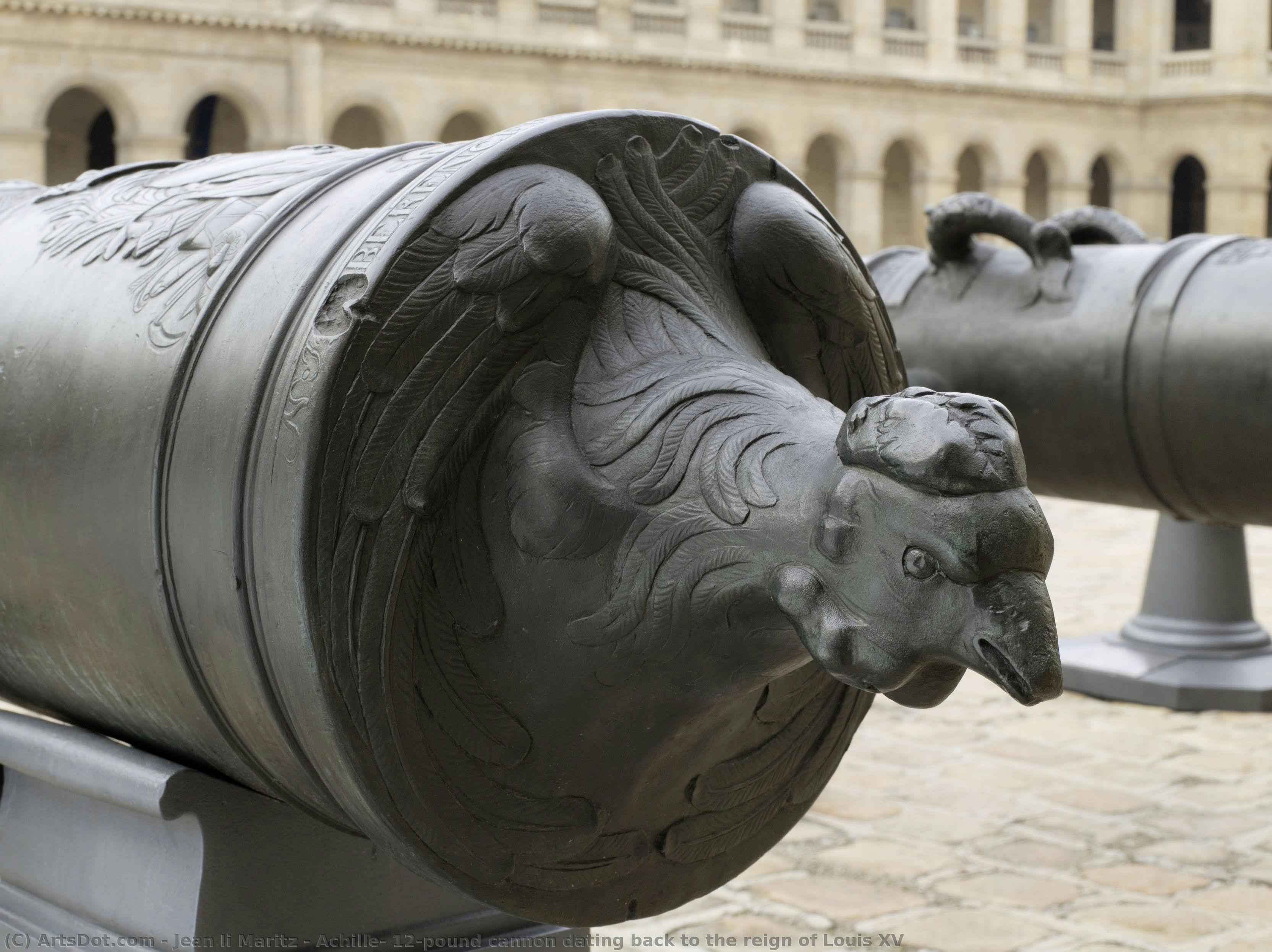
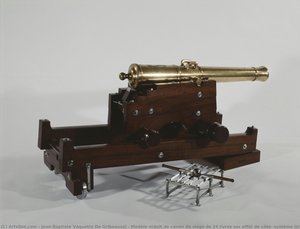
Achille, 12-pound cannon dating back to the reign of Louis XV


 Читать далее
Жикле / Арт-принт
Печать (жикле) или холст музейного качества с быстрыми сроками изготовления и широким выбором вариантов отделки. ( Купить картину ручной работы Перейти к цифровым изображениям)




































Выберите один из наших стандартных размеров, соответствующих оригинальным пропорциям произведения искусства.

Вы можете указать свои собственные размеры, чтобы репродукция идеально подошла под конкретную раму или пространство. Если выбранный вами размер не будет соответствовать пропорциям оригинала, мы либо обрежем произведение, либо дополним изображение зеркальным отражением краев или однотонной заливкой. Перед началом производства вам будет отправлен цифровой макет для утверждения.
Пожалуйста, обратите внимание, что предварительный просмотр на экране не отображает фактическую обрезку или расширение изображения. Только макет точно покажет финальную композицию.
Несмотря на возможность заказа индивидуальных размеров, мы рекомендуем выбирать размер из предопределенного списка, чтобы сохранить оригинальные пропорции.
Доставка по всему миру () за 2 недели вместо стандартных 4/5 недель. (13 Сентябрь)

Бесплатная экспресс-доставка по всему миру

Высококачественный льняной холст

Полное страхование доставки

Гарантия возмещения таможенных пошлин

Гарантия точного соответствия цветов

100-дневная политика возврата (только при обнаружении дефектов)

Гарантия возврата 100% средств

Предложение оптовых скидок
 Вариант со стеклом доступен только для размеров менее 110 см

Achille, 12-pound cannon dating back to the reign of Louis XV
Жикле / Арт-принт
Размер репродукции
-


Итоговая стоимость
$ 62
Похожие произведения



Биография художника
Jean II Maritz: The Silent Revolution of Cannonmaking
The name Jean II Maritz might not resonate with the general public, yet his contributions to the technological landscape of 18th-century Europe were nothing short of revolutionary. Born in Berne, Switzerland, around 1680 – a time of burgeoning scientific inquiry and military innovation – Maritz wasn’t a painter or sculptor, but rather a brilliant mechanic whose meticulous inventions fundamentally altered the way cannons were produced. His story is one of quiet ingenuity, strategic placement within a complex political landscape, and ultimately, a pivotal role in shaping the very foundations of modern machine tool development.
Maritz's early life remains somewhat shrouded in mystery, though he eventually settled in France, taking on the title of “Commissaire des Fontes” – Commissioner of the King’s Foundry – at Strasbourg. This position placed him at the heart of a critical military operation: the production of cannons for Louis XIV’s formidable army. Prior to Maritz's arrival, cannon construction relied heavily on traditional methods—a laborious process involving hand-carving and shaping within clay molds. These techniques were inherently imprecise, leading to inconsistencies in barrel dimensions and ultimately, reduced effectiveness. Maritz recognized this inefficiency and set about devising solutions that would dramatically improve the speed, accuracy, and quality of cannon production.
The Birth of Precision: Vertical and Horizontal Boring
Maritz’s most significant contributions revolved around two groundbreaking inventions: a vertical boring machine and a horizontal drilling machine. His initial vertical boring method, developed in 1713, involved slowly lowering the cannon barrel over a rotating drill – a delicate process that demanded considerable skill and patience. While innovative, it was prone to errors due to the instability of the setup. However, Maritz didn’t abandon his vision; he subsequently developed a horizontal boring technique around 1734, which proved far more reliable. This method utilized a solid-cast cannon mounted on a rotating lathe, allowing for precise and consistent drilling.
The significance of these inventions cannot be overstated. Traditional methods resulted in cannons with inconsistent bore diameters, leading to inaccurate shots. Maritz’s machines produced perfectly straight bores that precisely matched the diameter of the projectiles, dramatically enhancing cannon effectiveness. This wasn't merely an improvement; it represented a fundamental shift in manufacturing philosophy – moving from handcrafting to mechanized precision.
The Vallière and Gribeauval Systems: A Technological Bridge
Maritz’s inventions played a crucial role within the complex framework of the Vallière and Gribeauval systems, two ambitious cannon production programs undertaken during the reign of Louis XIV. The Vallière system, initiated by Jean-Florent de Vallière, aimed to standardize cannon design and production across France. However, it faced significant challenges due to inconsistencies in manufacturing techniques. Maritz’s machines provided a critical component – precise boring – that helped to overcome these hurdles. His work became an integral part of the Vallière system, laying the groundwork for the subsequent Gribeauval system, overseen by the brilliant but eccentric Jean-Baptiste Vaquette de Gribeauval.
Gribeauval, a former artillery officer, recognized the need for further refinement and implemented sweeping changes to the cannon production process. Maritz’s horizontal boring machine was particularly vital in this transformation, allowing for mass production of high-quality cannons with remarkable consistency. The Gribeauval system ultimately became renowned for its efficiency and effectiveness, demonstrating the power of standardized design and mechanized manufacturing.
Legacy and Recognition
Jean II Maritz died in Geneva in 1743, leaving behind a legacy that extended far beyond his immediate time. While he remained largely uncelebrated during his lifetime, his inventions were recognized as a pivotal step towards the development of machine tools – precursors to the industrial revolution. Museums across Europe, including the Musée des Beaux-Arts de Strasbourg and the Musée d’art et d'histoire neuchatel in Switzerland, proudly display works related to Maritz’s contributions, showcasing both his machines and the cannons they produced. His story serves as a testament to the impact of quiet innovation and the often-overlooked figures who shaped the course of technological history.
The “Achille,” a stunning 1746 bronze cannon adorned with eagle motifs and French royal emblems, exemplifies Maritz’s work – a tangible reminder of his revolutionary contributions. His legacy continues to inspire engineers and inventors today, demonstrating that even seemingly small advancements can have profound and lasting consequences.

jean ii maritz
1680 - 1743 , Switzerland
Основные сведения
- Artistic Movement Or Style: Machine tools history”
- Artists Or Movements Influenced By This Artist: ['Vallière system”, “Gribeauval system”']
- Date Of Death: 1743, Geneva, Switzerland
- Frigate D. Fernando Ii E Glória"
],
"Artists Who Influenced This Artist:
- John Wilkinson
- Keller
- Full Name: Jean II Maritz”
- Industrial Revolution: Notable artworks": [ "Achille (1746)
- Jean Maritz: Date of birth": "1680, Berne, Switzerland
- Nationality: Swiss
- Place Of Birth: Berthoud, Switzerland
Похожие статьи
The Enduring Legacy of Bronze: History, Technique & Artistic Expression for the Collector
Explore the rich history & enduring appeal of bronze sculpture with expert insights for collectors at ArtsDot. Learn about casting techniques, iconic artists, and collecting tips.

The Enduring Legacy of Bronze Sculpture: A Collector's Guide to Form & Cultural Significance
Explore the rich history & enduring appeal of bronze sculpture with expert insights for collectors at ArtsDot. Learn about casting techniques, iconic artists, and collecting tips to build a discerning art collection.

10 легендарных бронзовых шедевров, изменивших искусство | ArtsDot
Погрузитесь в мир великих бронзовых шедевров! От Давида Донателло до Мыслителя Родена – узнайте историю создания, технику и значение легендарных скульптур. Вдохновение для интерьера и музейное качество репродукций на ArtsDot.com.

The Enduring Legacy of Bronze Sculpture: Technique, Symbolism & Cultural Impact
Explore the rich history & enduring appeal of bronze sculpture with expert insights for collectors. Learn about casting techniques, iconic artists, collecting tips & contemporary interpretations at ArtsDot.

The Enduring Legacy of Bronze: A Historical & Artistic Exploration for the Collector
Explore the rich history & enduring appeal of bronze sculpture with expert insights for collectors at ArtsDot. Learn about casting techniques, iconic artists, collecting tips & contemporary interpretations.