

 Предпросмотр
 Поделиться
 Поделиться
 Детали произведения

 Скачать
 Похожие работы
 Рентгенография
 Слайд-шоу
 Статистика
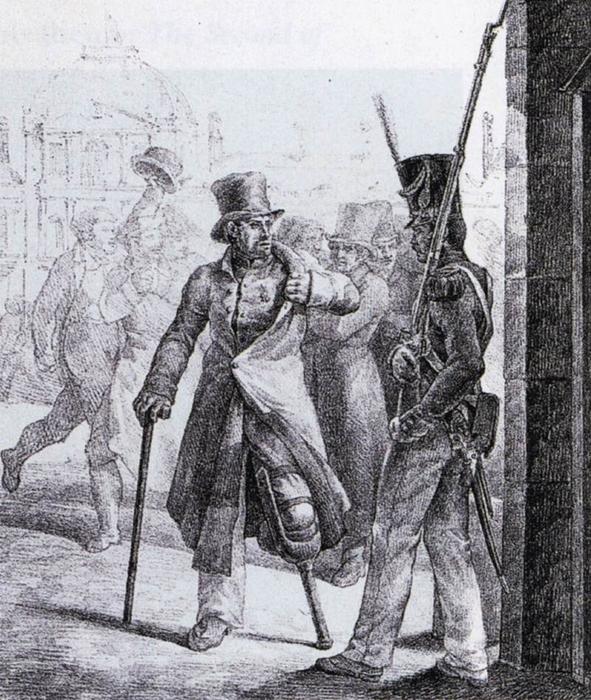
Swiss Guard and Wounded Veteran
 Acrylic On Canvas
- WallArt
- Romanticism
 1819
1819- 19th Century
 393.0 x 330.0 cm
 Лувр
Лувр
 Читать далее
Приобретите цифровое изображение высокого разрешения в улучшенном качестве, которое значительно превосходит онлайн-превью.
Каждый файл тщательно подготавливается нашими специалистами с использованием передовых инструментов и экспертной ручной ретуши. Мы гарантируем исключительную четкость, точную цветопередачу и детальную проработку каждого изображения.
Финальный файл доставляется по электронной почте в течение 72 часов и оптимизирован для немедленного использования в профессиональной среде, при верстке и печати. Это тот же уровень качества, которому доверяют ведущие дизайнерские студии, издательства и галереи.
Цифровое изображение
Скачайте файл высокого разрешения для личного использования, печати и творческих проектов. ( Перейти к печати Купить картину ручной работы)
Включено в каждый заказ цифровых изображений
Гарантия экспертной цифровой доставки
Выбирая ArtsDot.com, вы получаете не просто изображение — вы приобретаете профессионально обработанное цифровое произведение искусства, созданное с безупречной точностью и под защитой гарантии качества. Вот всё, что автоматически входит в ваш заказ:

Мгновенная доставка по e-mail
Ваш цифровой файл в высоком разрешении будет отправлен вам по электронной почте в течение 72 часов после оформления заказа — и сразу станет доступен для использования.

Цифровой файл с ИИ-улучшением
Ваше произведение искусства проходит профессиональную оптимизацию с использованием передовых инструментов ИИ и ручной обработки, что гарантирует максимальную детализацию, четкость и точность цветопередачи.

Бессрочная бесплатная повторная доставка
Случайно удалили или потеряли файл? Не беспокойтесь — мы отправим его вам повторно в любое время и совершенно бесплатно.

Без импортных пошлин — навсегда
Наслаждайтесь вашим произведением искусства мгновенно без таможенных пошлин, сборов или затрат на доставку — цифровые загрузки всегда не облагаются налогом.

Гарантия точности цветопередачи
Мы гарантируем, что ваше цифровое изображение максимально точно передает оригинальные цвета благодаря использованию профессиональных инструментов и систем управления цветом.

Гарантия удовлетворенности 100 дней
Если вы не будете удовлетворены своим цифровым изображением, мы внесем правки или вернем 100% стоимости в течение 100 дней — без лишних вопросов.

100% Гарантия возврата средств
Не удовлетворены покупкой? Получите полный возврат средств в течение 100 дней после получения цифрового файла — без лишних вопросов.

Скидки на оптовые заказы
Купите 3 изображения, сэкономьте 10% — Купите 5, сэкономьте 15% — Купите 10+, сэкономьте 20%. Отличное решение для творческих проектов, галерей и агентств.
A Moment of Stoic Resolve: Exploring Géricault’s “Swiss Guard and Wounded Veteran”
Jean-Louis André Théodore Géricault's "Swiss Guard and Wounded Veteran," painted in 1819, is not merely a historical depiction; it’s a profound meditation on duty, sacrifice, and the lingering scars of conflict. This powerful work transcends its immediate subject matter to become a poignant commentary on the complexities of post-Napoleonic France – a nation grappling with the aftermath of revolution and the restoration of monarchy. The painting immediately draws the viewer in with its stark monochrome palette, reminiscent of early photography, which lends an almost documentary quality to the scene while simultaneously amplifying the emotional weight of the figures. It’s a deliberate choice by Géricault, reflecting his fascination with capturing raw emotion and truth, often eschewing idealized beauty for unflinching realism.
At its heart, the composition centers on two men: a stoic Swiss Guard, clad in the distinctive red uniform of his regiment, and a wounded veteran bearing the visible marks of battle. Their interaction is charged with unspoken narratives – one representing unwavering loyalty and service, the other embodying the enduring pain of war. The architectural backdrop, a receding vista of Parisian buildings, subtly reinforces this dynamic. The perspective skillfully guides the eye towards the distant horizon, creating a sense of depth and emphasizing the isolation of these two figures within their shared experience. Géricault masterfully utilizes light and shadow to sculpt form, highlighting the textures of the uniforms – the crispness of the fabric, the rough edges of the veteran’s wounds – and imbuing each detail with a palpable sense of physicality.
Romanticism's Shadow: Contextualizing Géricault’s Vision
To fully appreciate “Swiss Guard and Wounded Veteran,” it’s crucial to understand the artistic climate in which it was created. The early 19th century witnessed a dramatic shift away from the rigid formality of Neoclassicism, giving rise to Romanticism – an artistic movement characterized by intense emotion, individualism, and a fascination with the sublime. Géricault stands as a pivotal figure within this movement, rejecting idealized representations in favor of portraying the darker aspects of human experience. His own life mirrored this shift; haunted by personal tragedies and deeply affected by the political turmoil of his time, he sought to capture the raw realities of war and suffering.
The painting’s creation coincided with the Bourbon Restoration following Napoleon's defeat. France was a nation still reeling from decades of upheaval, grappling with questions of identity and national pride. The Swiss Guard, historically associated with the French monarchy, became a potent symbol of this restored order – yet Géricault doesn’t offer a celebratory portrayal. Instead, he presents a scene of quiet dignity amidst hardship, suggesting a more nuanced understanding of loyalty and sacrifice than simple patriotic fervor might imply. The veteran's defiant gesture, as he exposes his Napoleonic cross, is particularly significant, hinting at a subtle critique of the regime that had caused him so much pain.
Technique and Materials: A Study in Realism
Géricault’s meticulous attention to detail speaks volumes about his commitment to realism. The painting was executed in oil on canvas, utilizing techniques borrowed from both classical and contemporary approaches. He meticulously studied anatomy, particularly the musculature of horses (a skill honed during his early training with Carle Vernet), ensuring that the figures possess a convincing sense of weight and movement. The grayscale palette, achieved through careful layering of tones rather than the addition of color pigments, creates an atmosphere of somber intensity. The artist’s use of chiaroscuro – the dramatic contrast between light and shadow – further enhances the emotional impact, drawing attention to key elements within the composition.
Interestingly, Géricault's process involved a deliberate attempt to capture the immediacy of observation. He conducted extensive research, interviewing veterans and studying medical texts to accurately depict the wounds and injuries sustained in battle. This commitment to factual accuracy underscores his desire to present a truthful representation of human suffering – a hallmark of Romantic art.
Symbolism and Emotional Resonance: A Lasting Legacy
Beyond its historical context, “Swiss Guard and Wounded Veteran” resonates with universal themes of duty, loss, and the enduring consequences of conflict. The Swiss Guard’s unwavering loyalty embodies the ideals of service and sacrifice, while the wounded veteran represents the human cost of war – a poignant reminder that even in moments of heroic dedication, suffering remains an inescapable reality. The painting's power lies not just in its depiction of specific events but in its ability to evoke a profound sense of empathy and contemplation. It’s a testament to Géricault’s artistic genius and his willingness to confront difficult truths with unflinching honesty. ArtsDot offers exceptional hand-painted reproductions that capture the essence of this iconic work, allowing you to experience its emotional depth and historical significance firsthand.
Похожие произведения
Биография художника
A Life Forged in Romantic Fire
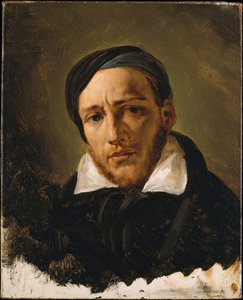
Jean-Louis André Théodore Géricault, a name that echoes through the halls of French art history, was born into a world poised on the precipice of profound change. Emerging from the bustling port city of Rouen in 1791, his early years unfolded amidst the lingering tremors of revolution and the burgeoning ambitions of Napoleon’s empire. Though inheriting a comfortable existence through his family's legal and business ventures – notably a thriving tobacco enterprise – Géricault’s destiny wasn’t one of law or commerce, but rather within the vibrant realm of artistic expression. His initial training under Carle Vernet, a master of English sporting art, instilled in him a keen eye for anatomy and movement, particularly evident in his depictions of powerful horses in motion. However, this early foundation soon led him to seek deeper knowledge independently, immersing himself within the hallowed halls of the Louvre, transforming it into his own personal academy.The Louvre as Academy: A Dialogue with Masters
From 1810 to 1815, the Louvre became Géricault’s true classroom and source of inspiration. He didn't merely copy the works of the Old Masters – Rubens, Titian, Velázquez, and Rembrandt – but engaged in a profound dialogue with their artistic philosophies. This period wasn’t about replication; it was about absorbing the very essence of these masters, internalizing their approaches to light, shadow, composition, and the portrayal of human emotion. He studied not just technique, but also the underlying motivations and narratives behind each masterpiece. This self-directed education fostered a unique artistic voice, one that would soon challenge the prevailing Neoclassical conventions, favoring dramatic intensity and emotional truth over rigid formality. His early works, such as *The Charging Chasseur* (1812), already hinted at this emerging sensibility – a boldness of execution, a fascination with movement, and a willingness to depict contemporary subjects with unprecedented realism. He continued to refine his skills in equestrian art, mastering the portrayal of power, grace, and the raw energy of horses, a subject that would remain a recurring theme throughout his career.The Raft of the Medusa: A Monument to Human Suffering
Géricault’s name is inextricably linked with *The Raft of the Medusa* (1818-1819), a monumental canvas that transcends mere historical depiction and becomes a searing indictment of human fallibility and societal injustice. Inspired by the harrowing true story of the shipwreck of the French frigate Méduse in 1816, where negligence and incompetence led to unimaginable suffering for its passengers, the painting is a visceral portrayal of desperation, hope, and despair. Géricault undertook meticulous research, interviewing survivors, studying corpses at hospitals, and even constructing a scale model of the raft itself to ensure accuracy. He sought not just to record an event, but to convey the profound emotional impact on those who endured it. The resulting work is not simply a depiction of tragedy; it’s an immersive experience that confronts viewers with the raw reality of human suffering. The composition, built around two pyramidal structures – one representing despair and death, the other embodying hope and potential rescue – creates a dynamic tension that draws the eye across the canvas, mirroring the struggle for survival amidst overwhelming odds. *The Raft of the Medusa* was initially met with controversy at its exhibition in 1819, sparking intense political debate and firmly establishing Géricault’s reputation as a daring and unconventional artist. The painting's impact extended far beyond the art world, becoming a potent symbol of governmental incompetence and the resilience of the human spirit in the face of unimaginable hardship.Beyond Tragedy: Military Themes and Artistic Legacy
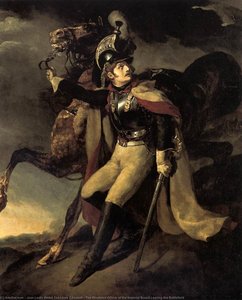
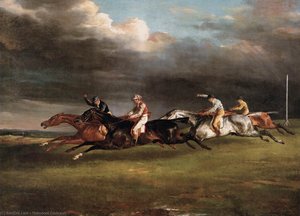
While *The Raft of the Medusa* remains his most celebrated achievement, Géricault’s artistic output encompassed a broader range of subjects. He continually returned to military themes, evident in works like *Wounded Cuirassier* (1814) and *The Derby of Epsom* (1821), demonstrating a fascination with drama, conflict, and the psychological toll of warfare. These paintings reveal his continued exploration of human emotion under duress – fear, pain, courage, and vulnerability – often focusing on the physical and emotional consequences of battle. He also ventured into portraiture and lithography, further expanding his artistic repertoire and experimenting with new techniques. Tragically, Géricault’s life was cut short by illness at the age of 32 in 1824, following years of suffering from riding accidents and a chronic tubercular infection. His premature death robbed the art world of a prodigious talent, but his influence on subsequent generations of artists – particularly Eugène Delacroix – was profound. He is remembered as a pioneer of Romanticism, an artist who dared to confront difficult truths, imbue his work with a powerful emotional resonance, and challenge the established norms of artistic expression. His bronze figure reclines, brush in hand, on his tomb at Père Lachaise Cemetery in Paris, above a low-relief panel depicting the harrowing scene from *The Raft of the Medusa* – a fitting tribute to an artist who dedicated his life to capturing the complexities and contradictions of the human condition.Key Characteristics & Influences
- Romanticism: Géricault is considered one of the first French Romantic painters, moving away from Neoclassical ideals towards emotional intensity and dramatic expression.
- Dramatic Composition: His paintings are known for their dynamic compositions, often utilizing diagonal lines and contrasting light and shadow to create a sense of movement and tension.
- Realism & Research: Géricault was committed to realism, conducting extensive research – including studying corpses and interviewing survivors – to ensure the accuracy and emotional impact of his work.
- Influence of Old Masters: He drew inspiration from Baroque masters like Rubens, Titian, and Velázquez, adopting their techniques for dramatic lighting and expressive brushwork.
- Focus on Human Suffering: His art often depicts scenes of tragedy, despair, and the darker aspects of human experience, reflecting a Romantic fascination with intense emotions.
Жан-Луи Герике
1791 - 1824 , Франция
Основные сведения
- Artistic Movement Or Style: Романтизм
- Artists Or Movements Influenced By This Artist: ['Жюльен Дюкруа']
- Artists Who Influenced This Artist:
- Карл Верне
- Пьер-Нарсис, барон Жеринье
- Date Of Birth: 26 сентября 1791 г.
- Date Of Death: 26 января 1824 г.
- Full Name: Jean-Louis André Théodore Géricault
- Nationality: Француз
- Notable Artworks:
- Рафт Медузы
- Вормозный кавалерист
- Египетская сказка
- Place Of Birth: Рейн, Франция