

 Поделиться
 Поделиться
 Детали произведения

 Скачать
 Похожие работы
 Слайд-шоу
 Статистика
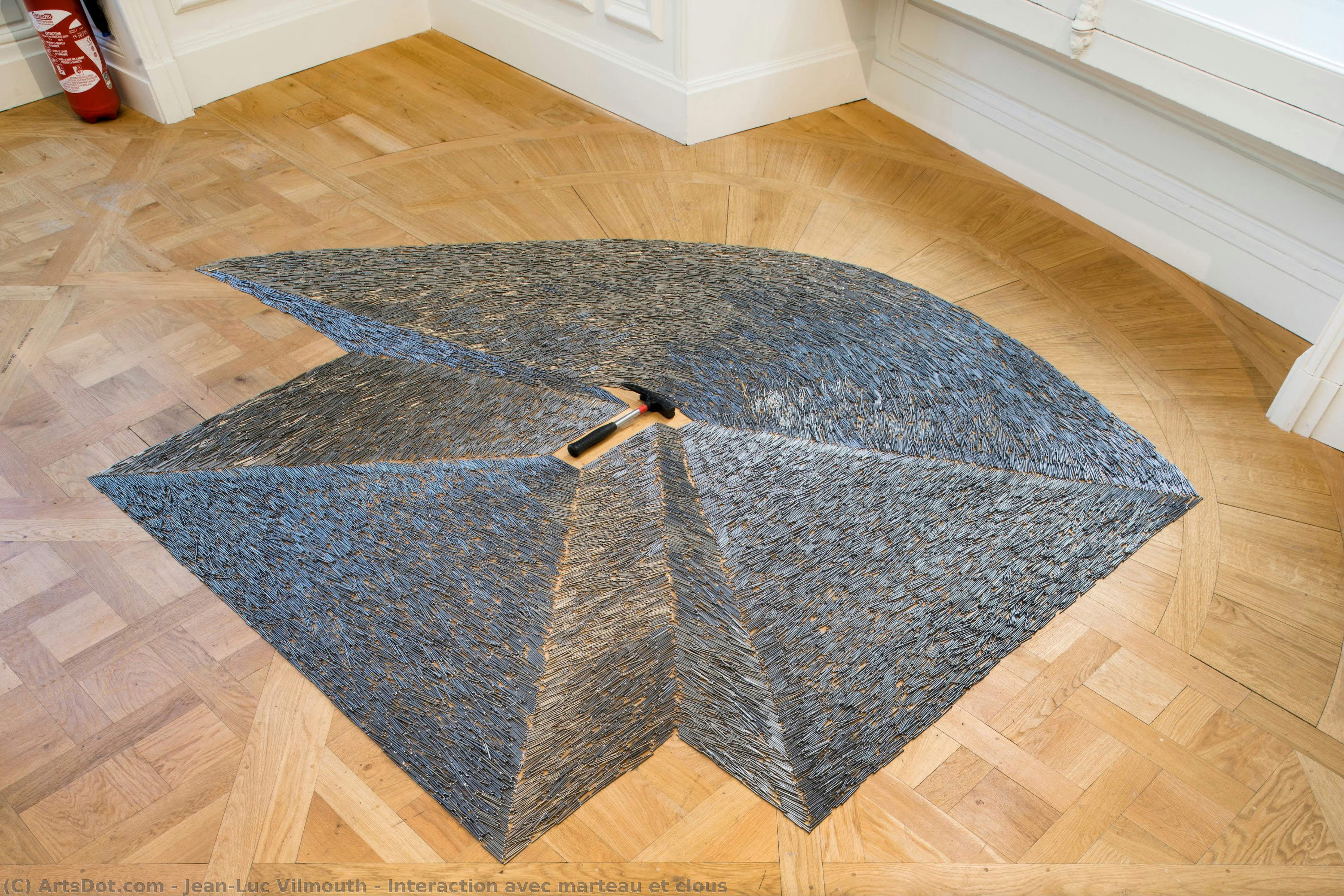
Interaction avec marteau et clous


 Читать далее
Приобретите цифровое изображение высокого разрешения в улучшенном качестве, которое значительно превосходит онлайн-превью.
Каждый файл тщательно подготавливается нашими специалистами с использованием передовых инструментов и экспертной ручной ретуши. Мы гарантируем исключительную четкость, точную цветопередачу и детальную проработку каждого изображения.
Финальный файл доставляется по электронной почте в течение 72 часов и оптимизирован для немедленного использования в профессиональной среде, при верстке и печати. Это тот же уровень качества, которому доверяют ведущие дизайнерские студии, издательства и галереи.
Цифровое изображение
Скачайте файл высокого разрешения для личного использования, печати и творческих проектов. ( Перейти к печати Купить картину ручной работы)
Включено в каждый заказ цифровых изображений
Гарантия экспертной цифровой доставки
Выбирая ArtsDot.com, вы получаете не просто изображение — вы приобретаете профессионально обработанное цифровое произведение искусства, созданное с безупречной точностью и под защитой гарантии качества. Вот всё, что автоматически входит в ваш заказ:

Мгновенная доставка по e-mail
Ваш цифровой файл в высоком разрешении будет отправлен вам по электронной почте в течение 72 часов после оформления заказа — и сразу станет доступен для использования.

Цифровой файл с ИИ-улучшением
Ваше произведение искусства проходит профессиональную оптимизацию с использованием передовых инструментов ИИ и ручной обработки, что гарантирует максимальную детализацию, четкость и точность цветопередачи.

Бессрочная бесплатная повторная доставка
Случайно удалили или потеряли файл? Не беспокойтесь — мы отправим его вам повторно в любое время и совершенно бесплатно.

Без импортных пошлин — навсегда
Наслаждайтесь вашим произведением искусства мгновенно без таможенных пошлин, сборов или затрат на доставку — цифровые загрузки всегда не облагаются налогом.

Гарантия точности цветопередачи
Мы гарантируем, что ваше цифровое изображение максимально точно передает оригинальные цвета благодаря использованию профессиональных инструментов и систем управления цветом.

Гарантия удовлетворенности 100 дней
Если вы не будете удовлетворены своим цифровым изображением, мы внесем правки или вернем 100% стоимости в течение 100 дней — без лишних вопросов.

100% Гарантия возврата средств
Не удовлетворены покупкой? Получите полный возврат средств в течение 100 дней после получения цифрового файла — без лишних вопросов.

Скидки на оптовые заказы
Купите 3 изображения, сэкономьте 10% — Купите 5, сэкономьте 15% — Купите 10+, сэкономьте 20%. Отличное решение для творческих проектов, галерей и агентств.
The Alchemy of the Ordinary: Encountering Vilmouth’s Metal Vision
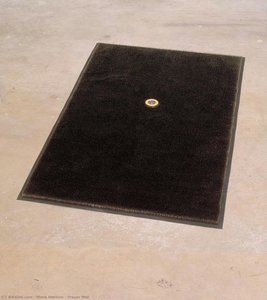
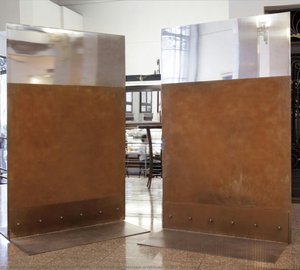
In the quiet intersection where industrial grit meets poetic contemplation, Jean-Luc Vilmouth’s 1980 masterpiece, Interaction avec marutteau et clous, resides. This evocative work serves as a profound testament to the artist's ability to breathe life into the discarded and the mundane. At first glance, the viewer is confronted by a striking sculptural form—a metal umbrella, seemingly forged from salvaged scrap, featuring a singular, intentional void at its center. The piece does not merely sit upon its wooden stage; it engages in a silent dialogue with the floor beneath it, creating a tension between the cold, unyielding nature of the metal and the organic warmth of the timber. It is an invitation to look closer, to find the extraordinary within the wreckage of the everyday.
The technique employed by Vilmouth reflects a deep-seated connection to the principles of Minimalism and Conceptual Art. Rather than imposing a heavy-handed transformation upon his materials, he practices what can be described as a subtle augmentation. The texture of the metal, marked by the traces of its previous existence, tells a story of utility and decay, while the deliberate puncture in the umbrella’s canopy acts as a focal point for light and shadow. This interplay of negative space and solid mass creates a rhythmic visual experience, drawing the eye into the heart of the object. For the collector or interior designer, this piece offers a sophisticated textural element that brings a sense of intellectual depth and structural intrigue to any curated space.
A Legacy of Perceptual Transformation
To understand the emotional resonance of Interaction avec marteau et clous, one must look toward the historical context of late 20th-century French sculpture. Emerging from his training at the Metz Fine Arts School, Vilmouth was deeply influenced by the burgeoning movements of the 1970s, which sought to challenge the boundaries between art and life. His work does not demand awe through scale, but rather through a quiet, persistent questioning of our relationship with the environment. The title itself—suggesting an interaction involving a hammer and nails—hints at a process of construction and intervention, reminding us that our perception of reality is often shaped by the tools and actions we use to navigate it.
For those seeking to integrate fine art into a contemporary interior, a high-quality reproduction of this work offers more than mere decoration; it provides a conversational centerpiece. The piece embodies a rugged elegance that complements both minimalist modernism and industrial chic aesthetics. It evokes a sense of nostalgia for the tactile world while remaining firmly rooted in the avant-garde tradition. By bringing this sculpture into a home or gallery, one invites the spirit of Vilmouth’s philosophy: the belief that beauty is not something to be manufactured, but something to be rediscovered through a more mindful way of seeing.
Похожие произведения

Биография художника
The Art of Augmentation: The Visionary World of Jean-Luc Vilmouth
In the quiet intersection where the mundane meets the monumental, the work of Jean-Luc Vilmouth resides. Born in 1952 in Creutzwald, France, Vilmouth did not seek to shatter the world through radical destruction or overwhelming spectacle; instead, he practiced what he called augmentateur—the art of augmenting. His creative journey was a lifelong pursuit of finding the hidden potential within the everyday, a mission to supplement the existing reality with new layers of meaning, memory, and social significance. To encounter a Vilmouth piece is to experience a subtle shift in perception, where a simple object is no longer just an item of utility but a vessel for contemplating our place within the environment.
Vilmouth’s artistic DNA was forged through a rich tapestry of European influences. After honing his foundational skills at the Fine Arts School in Metz, his trajectory was profoundly altered by his time in England during the 1970s. Immersed in the vibrant energy of the New English Sculpture movement, he drew inspiration from masters such as Tony Cragg and Bill Woodrow. From them, he inherited a fascination with Minimalism and Conceptual Art, yet he departed from pure formalism to focus on the soul of the object. He believed that every item—be it a block of wood, a metal sheet, or a textile—carged within it a history of design and social evolution. His work became a dialogue between the physical presence of these materials and the invisible threads of human history they represent.
A Sculptural Dialogue with the Everyday
The essence of Vilmouth’s practice lay in his ability to reinterpret the quotidien. He did not aim for dramatic metamorphosis; rather, he sought to amplify the inherent qualities of his subjects. Through a technique of diversion and scaling, he would manipulate objects to challenge our relationship with them. His installations often functioned as interventions in space, where the boundaries between architecture, nature, and human habitation began to blur. Whether through sculpture, photography, drawing, or video, Vilmouth’s work acted as a mirror to the world's malfunctions and beauties alike, inviting the viewer to step forward not merely as an observer, but as an active participant in the unfolding narrative.
His later career saw him expanding his reach far beyond the galleries of Paris. His explorations took him through Asia, North and South America, and deep into the Amazon, experiences that enriched his understanding of the link between habitat and its occupants. This global perspective manifested in works that bridged the gap between the natural landscape and man-made structures. Notable achievements include:
- Public Interventions: His ability to transform public spaces, turning urban environments into sites of contemplation and community engagement.
- Institutional Recognition: Significant exhibitions at prestigious venues such as the Centre Pompidou in Paris, the Musée d’Art moderne de la ville de Paris, and the Institute of Contemporary Arts in London.
- Global Presence: Participation in landmark international events including the Venice and Sydney Biennials, as well as Documenta.
- Ecological Connection: Projects like the "Honey Towers," which explored the symbiotic relationship between human architecture and bee communities, highlighting his deep concern for the environment.
Legacy of a Transcendent Observer
Though Jean-Luc Vilmouth passed away in 2015 in Taipei, his artistic legacy remains a vital part of contemporary sculptural discourse. He left behind a body of work that continues to question the stability of our surroundings. By focusing on the "nuclei" of experience—the small, essential points of contact between humans and their world—he taught us to look closer at the objects we often overlook. His significance lies in his refusal to ignore the beauty of the ordinary, proving that through subtle refinement and conceptual depth, even the most commonplace element can be elevated to a state of profound grace.
Jean-Luc Vilmouth
1952 - 2015 , France
Основные сведения
- Artistic Movement Or Style: Minimalism & Conceptual Art
- Artists Or Movements Influenced By This Artist: ['Contemporary Sculpture']
- Artists Who Influenced This Artist:
- Tony Cragg
- Bill Woodrow
- Date Of Birth: March 5, 1952
- Date Of Death: December 19, 2015
- Full Name: Jean-Luc Vilmouth
- Nationality: French
- Notable Artworks:
- Reclining Youth
- Sleep
- A Musical Party
- Place Of Birth: Creutzwald, France