 Предпросмотр
 Поделиться
 Поделиться
 Детали произведения

 Скачать
 Похожие работы
 Рентгенография
 Слайд-шоу
 Статистика
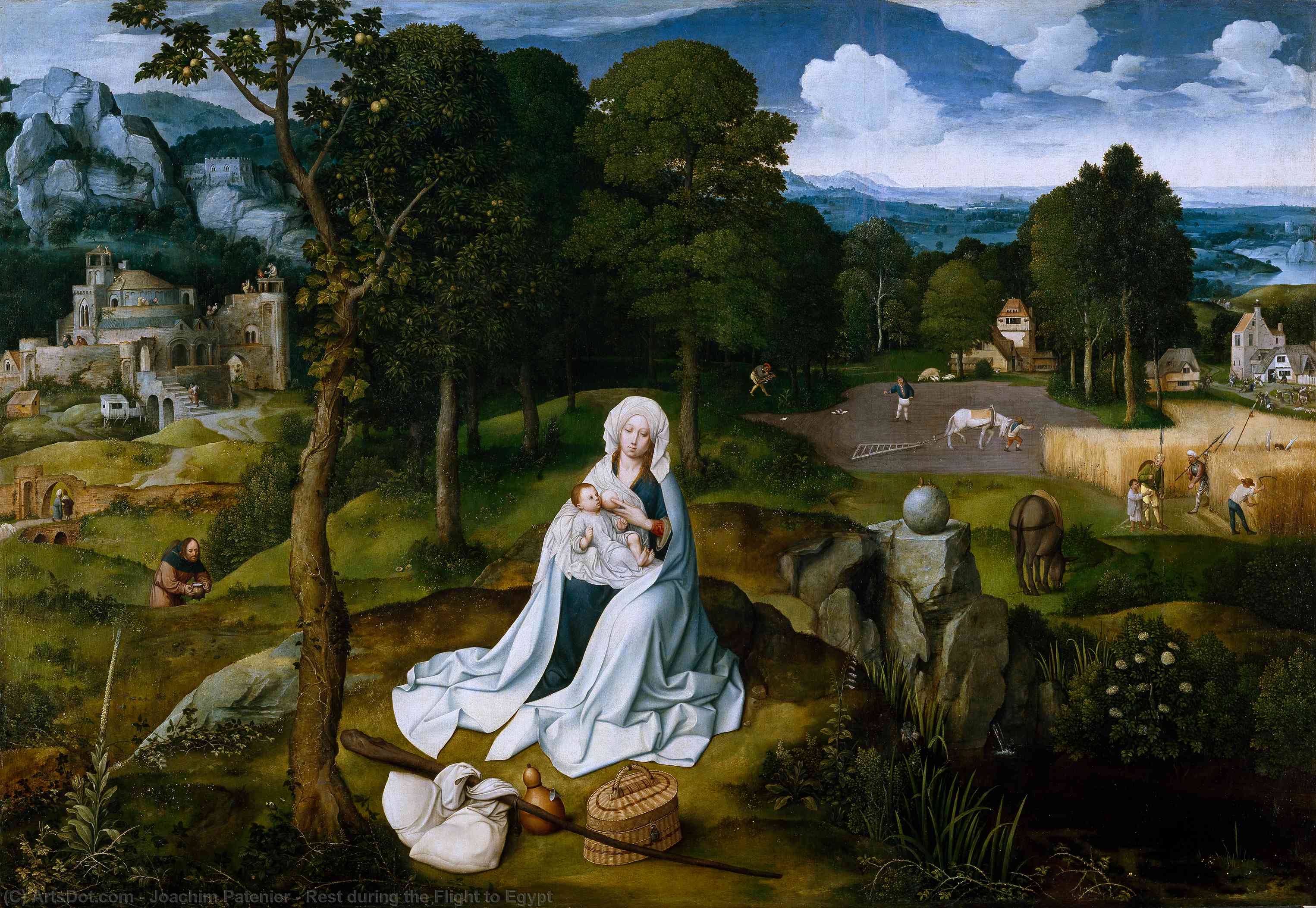
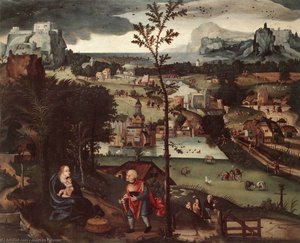
Rest during the Flight to Egypt
 Oil On Canvas
- WallArt
- Early Netherlandish
 121.0 x 177.0 cm
 Музей Прадо
 Читать далее
Масляная репродукция ручной работы
Картина маслом на холсте в выбранном вами размере и раме, написанная на заказ нашими художниками. ( Перейти к печати Перейти к цифровым изображениям)




P118B $10

P118H $10

P118W $10

P438Z $10

P508JH $12

P508YH $12

P805H $10

P805Z $10

P919BZ $10

P919G $10

P919XJ $10

P959ZH $10

P968JZ $12

W106C $8

W218G $10

W218JH $8

W218Y $10

W307PJ $10

W316G $10

W316PJ $8

W316Y $10

W398PJ $8

W4111J $10

W500HY $15

W500JH $15

W692G $12

W849H $8

W940BG $15

W953PJ $8




Выберите один из наших стандартных размеров, соответствующих оригинальным пропорциям произведения искусства.

Вы можете указать собственные размеры, чтобы картина идеально вписалась в выбранную раму или пространство. Если выбранный вами размер не соответствует пропорциям оригинала, мы либо обрежем полотно, либо расширим его за счет дополнительных элементов, написанных вручную. Цифровой макет будет отправлен вам на утверждение перед началом производства.
Обратите внимание, что предварительный просмотр на экране не отражает фактическую обрезку или расширение. Только макет точно покажет окончательную композицию.
Хотя доступны индивидуальные размеры, мы рекомендуем выбирать вариант из предопределенного списка, чтобы сохранить исходные пропорции.
После оформления заказа команда ArtsDot.com свяжется с клиентом по электронной почте для уточнения деталей и предоставит предварительный макет
Доставка по всему миру () за 3–4 недели вместо стандартных 5 недель. (11 Сентябрь). Без компромиссов в качестве.

Бесплатная экспресс-доставка по всему миру

Высококачественный льняной холст

Полное страхование доставки

Гарантия возмещения таможенных пошлин

Гарантия точного соответствия цветов

100-дневная политика возврата (только при обнаружении дефектов)

Гарантия возврата 100% средств

Предложение оптовых скидок
 Вариант со стеклом доступен только для размеров менее 110 см

Rest during the Flight to Egypt
Техника репродукции
Размер репродукции
-


Итоговая стоимость
$ 313
A Moment of Sacred Repose: Unveiling Joachim Patenier’s “Rest during the Flight to Egypt”
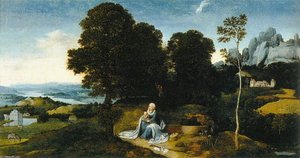
This captivating oil on panel painting by Flemish master Joachim Patenier (1481-1524) offers a serene yet subtly dramatic depiction of the Holy Family's respite during their perilous journey to Egypt. Measuring 121 x 177 cm, and currently residing in the prestigious Museo del Prado, Madrid, this work exemplifies Patenier’s unique blend of detailed realism, atmospheric landscape painting, and religious narrative.The Narrative & Composition
Patenier portrays Mary cradling the infant Jesus while Joseph stands protectively nearby. The scene isn't one of grand spectacle, but rather a quiet moment of human vulnerability amidst divine purpose. Thirteen figures populate the background, including travelers and horsemen, suggesting the ongoing urgency of their flight from Herod’s decree. The composition is remarkably balanced; Patenier skillfully uses receding planes – rolling hills, distant mountains, and a glimmering body of water – to create depth and draw the viewer into the landscape. Noticeable details like the bowl and cup near Mary and Joseph hint at hospitality received along their journey, while a soaring bird symbolizes hope and freedom. The inclusion of two horses adds a sense of movement and reinforces the idea of travel.Artistic Style & Technique
Patenier was a pioneer in landscape painting, moving beyond simply providing backdrops for religious scenes to making the *landscape itself* a significant element of the narrative. His style is characterized by meticulous detail – evident in the rendering of foliage, fabrics, and facial expressions – combined with a somewhat fantastical quality. He masterfully employs oil paint layering glazes to achieve rich colors and luminosity. The painting’s linear quality defines forms while simultaneously creating perspective. The textures are palpable, particularly in Mary's drapery and the natural elements surrounding the Holy Family.Historical Context & Patenier’s Legacy
Joachim Patenier flourished during the High Renaissance in the Netherlands, a period marked by artistic innovation and religious upheaval. He was influenced by earlier Flemish Primitives but developed his own distinctive style, often collaborating with other artists like Albrecht Dürer. His landscapes were groundbreaking for their time, anticipating later developments in landscape painting throughout the 17th century. Patenier’s work reflects a broader cultural fascination with both religious devotion and exploration of the natural world.Symbolism & Emotional Resonance
Beyond its literal depiction of the Flight into Egypt, the painting is rich in symbolism. The landscape itself can be interpreted as representing a safe haven – a temporary refuge for the Holy Family. The serene atmosphere evokes feelings of peace and tranquility, contrasting with the underlying threat that prompted their flight. The careful attention to detail invites contemplation on themes of faith, family, and resilience. “Rest during the Flight to Egypt” isn’t merely a historical or religious painting; it's an emotionally resonant work that speaks to universal human experiences.Collecting & Interior Design Considerations
A reproduction of this masterpiece would be a stunning addition to any art collection or interior space. Its earthy tones and balanced composition lend themselves well to various décor styles, from traditional to contemporary. The painting’s size makes it suitable for larger rooms, serving as a focal point that invites conversation and contemplation. Consider pairing it with warm-toned furniture and natural textures to complement its inherent serenity. The availability of high-quality reproductions allows art enthusiasts to experience the beauty and historical significance of Patenier's work firsthand.Further Exploration
- Explore other notable works by Joachim Patenier, such as Landscape with St Jerome and Charon, also housed at the Museo del Prado.
- Delve deeper into the artistic characteristics of Early Netherlandish painting to understand the context in which Patenier worked.
- Research the historical significance of the Flight into Egypt as a recurring theme in Christian art.
Похожие произведения


Биография художника
A Pioneer of the Inner Landscape: Joachim Patenier and the Dawn of Atmospheric Painting
Joachim Patenier, a name often whispered alongside those of Jan van Eyck and Rogier van der Weyden, occupies a unique position in the history of Flemish painting. Born around 1480 in Dinant or Bouvignes – the precise location remains shrouded in some mystery – his artistic vision marked a pivotal shift away from the meticulous detail of earlier Netherlandish masters towards an exploration of landscape as not merely a backdrop, but as a powerful emotional and narrative force. While biographical details remain scarce, piecing together fragments from contemporary accounts, particularly those of Albrecht Dürer, reveals a man deeply engaged with the artistic currents of his time, yet forging a path distinctly his own. Dürer’s description of Patenier as “the good painter of landscapes” is remarkably prescient; it acknowledges not just technical skill but an innovative sensibility that would redefine how artists approached the representation of the natural world. He wasn't simply *depicting* landscapes, he was imbuing them with a sense of atmosphere and psychological depth previously unseen.The Flemish Primitives and the Italian Echo
Patenier’s artistic foundations were firmly rooted in the traditions of the Early Netherlandish masters. The influence of Jan van Eyck's painstaking realism and Rogier van der Weyden’s expressive figures is evident in his early works, particularly in the meticulous rendering of textures and details. He absorbed the lessons of Northern precision – the ability to capture light and shadow with astonishing accuracy, the detailed portrayal of fabrics and objects – but yearned for something more expansive. The burgeoning Italian Renaissance, with its emphasis on classical forms and perspective, also exerted a subtle influence, though filtered through a distinctly Flemish lens. This wasn’t a wholesale adoption of Italian ideals; rather, Patenier selectively incorporated elements – a sense of spatial depth, a greater use of aerial perspective – while retaining the Northern penchant for intricate detail and symbolic resonance. His landscapes weren't simply imitations of nature but carefully constructed allegories, often imbued with religious meaning. The vastness of his skies, the jagged peaks of distant mountains, and the winding paths through dense forests all served to amplify the spiritual drama unfolding within his paintings. He was a master of creating a sense of distance and depth, using techniques borrowed from Italian artists while maintaining his own distinctive style.Landscapes as Spiritual Realms: Major Works and Artistic Development
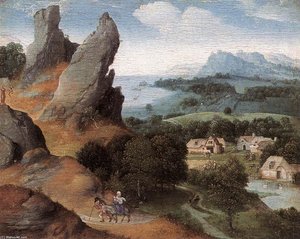
Patenier’s most celebrated works are those that showcase his innovative approach to landscape. Paintings like *Landscape with St Jerome*, of which several versions exist, exemplify his mastery. Here, the figure of Saint Jerome is dwarfed by the immensity of the surrounding wilderness, a stark contrast to earlier depictions where figures dominated the composition. The landscape isn’t merely a setting; it's an active participant in the narrative, reflecting Jerome’s solitude, contemplation, and spiritual struggle. Similarly, *Rest during the Flight into Egypt* presents a sweeping panorama that emphasizes the Holy Family’s vulnerability and their journey through a world both beautiful and perilous. The dramatic skies, often filled with swirling clouds and ominous shadows, foreshadow the trials to come.- The Deposition*, showcasing his masterful use of chiaroscuro – the dramatic contrast between light and dark – and his ability to convey profound emotional depth.
- The Holy Family* demonstrates his skill in composition, color harmony, and the depiction of intimate familial scenes.
- *Temptation of St Anthony* showcases his imaginative and often unsettling depictions of spiritual struggles.
A Lasting Legacy: Patenier’s Influence on Art History
Joachim Patenier died relatively young in 1524, but his impact on art history is undeniable. He was a true innovator, pioneering landscape as an independent genre and paving the way for later artists to explore the expressive potential of nature. His work bridged the gap between the late medieval traditions of the Flemish Primitives and the emerging Renaissance styles of the 16th century. He influenced generations of painters, inspiring them to see landscapes not just as backdrops but as powerful vehicles for conveying emotion, symbolism, and spiritual meaning. His legacy extends beyond technical innovation; he fundamentally altered how artists perceived their relationship with the natural world. Today, Patenier’s paintings can be found in prominent museums worldwide, including the Musées royaux des Beaux-Arts de Belgique in Brussels and the Prado Museum in Madrid, serving as a testament to his enduring artistic vision. His work continues to captivate viewers with its breathtaking beauty, profound symbolism, and the haunting sense of mystery that permeates his atmospheric landscapes – a true master who dared to look beyond the surface and explore the inner landscape of the soul. He remains a pivotal figure in the development of Western art, a testament to the power of innovation and the enduring allure of the natural world.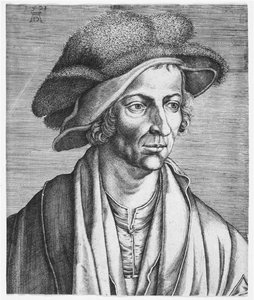
Якоим Патенир
1481 - 1524 , Бельгия
Основные сведения
- Artistic Movement Or Style: Ренессанс, Пейзаж
- Artists Or Movements Influenced By This Artist: ['Поздние фламандские художники']
- Artists Who Influenced This Artist:
- Ян ван Эйк
- Робер ван дер Вейден
- Date Of Birth: 1480-е гг.
- Date Of Death: 1524 г.
- Full Name: Joachim Patinier
- Nationality: Фламандский
- Notable Artworks:
- Снятие с креста
- Семейство Святого Лоренца
- Пейзаж со Святым Иеронимам
- Взятие из Египта
- Узы искушения святого Антония
- Place Of Birth: Динан, Бельгия
Похожие статьи

Oil on Canvas: A Historical & Technical Exploration of a Timeless Artistic Medium
Explore the rich history & enduring techniques of oil painting on canvas. Discover the science behind its longevity, conservation practices, and contemporary relevance. Expert insights for art enthusiasts.

The Enduring Legacy of Oil on Canvas: Technique, History & Aesthetic Impact
Explore the rich history & techniques of oil painting – from Renaissance masters to Impressionism. Discover pigments, layering methods, and why this timeless medium endures. Expert insights for artists & art enthusiasts.
Oil on Board: A Historical Survey of Technique, Aesthetic Qualities & Enduring Appeal
Explore the rich history of oil on board painting! Discover techniques, aesthetic qualities & enduring appeal from early masters to modern practice. Expert insights for collectors and art enthusiasts.

The Enduring Power of Painting: A Historical & Contemporary Exploration of Form and Emotion
Explore the rich history & enduring techniques of oil painting with ArtsDot. Discover masterpieces, learn about art collecting, and find authentic handmade reproductions crafted by skilled artists.

Масляная живопись: История, техника и непреходящее наследие
Узнайте все о масляной живописи: история техники, секреты мастеров и современные тенденции. Погрузитесь в мир искусства с экспертами !