

 Предпросмотр
 Поделиться
 Поделиться
 Детали произведения

 Скачать
 Похожие работы
 Рентгенография
 Слайд-шоу
 Статистика
February
 Oil
Oil- WallArt
- Baroque
 1642
1642- Early Modern
 149.0 x 123.0 cm
 Staatsgalerie Stuttgart
 Читать далее
Приобретите цифровое изображение высокого разрешения в улучшенном качестве, которое значительно превосходит онлайн-превью.
Каждый файл тщательно подготавливается нашими специалистами с использованием передовых инструментов и экспертной ручной ретуши. Мы гарантируем исключительную четкость, точную цветопередачу и детальную проработку каждого изображения.
Финальный файл доставляется по электронной почте в течение 72 часов и оптимизирован для немедленного использования в профессиональной среде, при верстке и печати. Это тот же уровень качества, которому доверяют ведущие дизайнерские студии, издательства и галереи.
Цифровое изображение
Скачайте файл высокого разрешения для личного использования, печати и творческих проектов. ( Перейти к печати Купить картину ручной работы)
Включено в каждый заказ цифровых изображений
Гарантия экспертной цифровой доставки
Выбирая ArtsDot.com, вы получаете не просто изображение — вы приобретаете профессионально обработанное цифровое произведение искусства, созданное с безупречной точностью и под защитой гарантии качества. Вот всё, что автоматически входит в ваш заказ:

Мгновенная доставка по e-mail
Ваш цифровой файл в высоком разрешении будет отправлен вам по электронной почте в течение 72 часов после оформления заказа — и сразу станет доступен для использования.

Цифровой файл с ИИ-улучшением
Ваше произведение искусства проходит профессиональную оптимизацию с использованием передовых инструментов ИИ и ручной обработки, что гарантирует максимальную детализацию, четкость и точность цветопередачи.

Бессрочная бесплатная повторная доставка
Случайно удалили или потеряли файл? Не беспокойтесь — мы отправим его вам повторно в любое время и совершенно бесплатно.

Без импортных пошлин — навсегда
Наслаждайтесь вашим произведением искусства мгновенно без таможенных пошлин, сборов или затрат на доставку — цифровые загрузки всегда не облагаются налогом.

Гарантия точности цветопередачи
Мы гарантируем, что ваше цифровое изображение максимально точно передает оригинальные цвета благодаря использованию профессиональных инструментов и систем управления цветом.

Гарантия удовлетворенности 100 дней
Если вы не будете удовлетворены своим цифровым изображением, мы внесем правки или вернем 100% стоимости в течение 100 дней — без лишних вопросов.

100% Гарантия возврата средств
Не удовлетворены покупкой? Получите полный возврат средств в течение 100 дней после получения цифрового файла — без лишних вопросов.

Скидки на оптовые заказы
Купите 3 изображения, сэкономьте 10% — Купите 5, сэкономьте 15% — Купите 10+, сэкономьте 20%. Отличное решение для творческих проектов, галерей и агентств.
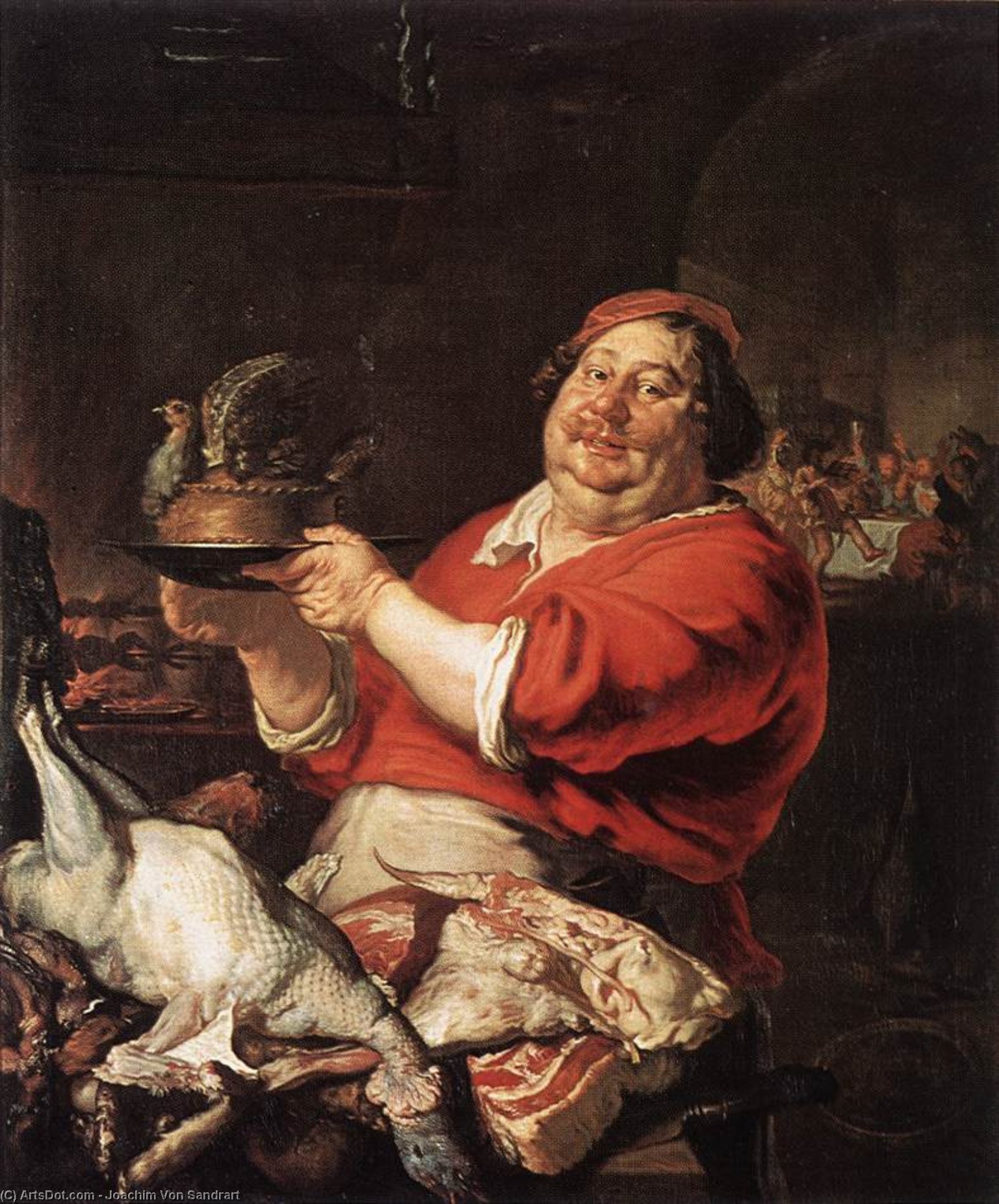
A Vivacious Encounter in Baroque Splendor
In the evocative masterpiece February, painted in 1642, Joachim von Sandrart invites us into a world of bustling vitality and intricate social drama. At the heart of this grand composition stands a bearded man, his presence commanding yet strangely intimate, clad in a striking red shirt that serves as a warm, pulsating anchor for the eye. As he holds a plate, perhaps offering sustenance or participating in a ritual of hospitality, a delicate bird perches upon his shoulder, its gaze fixed upon him in a moment of quiet connection. This central duo acts as a focal point of tenderness amidst a much larger, more chaotic tapestry of life. The scene is far from solitary; the background breathes with the movement of various figures, some lost in deep conversation and others observing the man with curious intensity, creating a sense of a lively, communal gathering that feels both timeless and immediate.
The technique employed by Sandrart showcases the profound mastery characteristic of the German Baroque period. Through a sophisticated use of light and shadow, often referred to as chiaroscuro, the artist breathes life into the textures of the scene—from the soft plumage of the birds scattered throughout the composition to the heavy, tactile quality of the man's garments. The painter’s ability to layer depth is remarkable; while the central figures possess a sharp, sculptural clarity, the background figures dissolve into a more atmospheric, painterly haze, pulling the viewer deeper into the social landscape. This careful manipulation of focus ensures that while the eye wanders through the crowd, it is always drawn back to the emotional core of the man and his avian companion.
Symbolism and the Rhythm of the Seasons
Beyond its surface-level charm, February carries a weight of symbolic meaning that resonates with the seasonal themes often explored in seventeenth-century allegorical art. The title itself suggests a period of transition—a time when the cold of winter begins to yield to the subtle stirrings of spring. The presence of birds, creatures often associated with the return of warmth and life, serves as a poignant metaphor for this seasonal shift. The interaction between the man and the bird can be interpreted as a harmony between humanity and the natural world, a theme that would have been deeply resonant to a contemporary audience navigating the complexities of their own environment. The plate he holds may further symbolize the bounty of the earth or the necessity of preparation during the waning months of winter.
For the discerning collector or interior designer, this artwork offers much more than mere decoration; it provides a window into a sophisticated historical consciousness. The painting’s ability to evoke a sense of "lively sociality" makes it an extraordinary piece for creating atmosphere in a room. Whether placed in a grand library or a curated dining space, the work introduces a narrative depth that sparks conversation. A high-quality reproduction of this piece allows one to bring the warmth, the drama, and the historical prestige of Sandrart’s vision into a modern setting, offering an enduring sense of elegance and a profound connection to the golden age of Baroque storytelling.
Похожие произведения
Биография художника
Joachim von Sandrart: A Bridge Between Baroque Vision and Artistic History
Joachim von Sandrart, a figure often overshadowed by the titans of the Baroque era, nevertheless stands as a pivotal artist and intellectual whose legacy extends far beyond his captivating paintings. Born in Frankfurt am Main in 1606 to a family with deep roots in Mons, Belgium, he wasn’t merely a painter; he was a conduit between artistic creation and meticulous historical documentation – a rare convergence of talent that shaped the course of 17th-century art history.
Sandrart's early life laid the groundwork for his future pursuits. He received initial instruction in drawing, nurtured by familial connections to artists and scholars. However, it was a youthful ambition to master engraving that propelled him towards Prague at the tender age of fifteen. There, under the tutelage of Aegidius Sadeler, a prominent member of a renowned family of engravers, Sandrart honed his technical skills and began to understand the power of visual representation. Sadeler recognized Sandrart’s potential, encouraging him to explore painting – a decision that would irrevocably alter the trajectory of his career.
The Caravaggisti Influence and Italian Awakening
Utrecht in 1625 marked a transformative period for Sandrart. He became a pupil of Gerrit van Honthorst, a leading figure within the Utrecht *Caravaggisti* movement – a group known for their dramatic use of light and shadow, echoing the style pioneered by Caravaggio. This immersion in the *tenebrismo*, the stark contrast between light and dark, profoundly influenced Sandrart’s artistic sensibilities. A particularly significant event occurred in 1627 when Peter Paul Rubens himself sought out Honthorst for collaboration on his monumental *Marie de' Medici* cycle in London. Sandrart accompanied Honthorst on this venture, gaining invaluable experience working alongside one of the Baroque period’s most celebrated masters – a direct exposure to the dynamism and expressive power of Rubens’ style.
Driven by an insatiable curiosity, Sandrart embarked on a grand tour of Italy in 1627. He immersed himself in the artistic heartland of Europe, exploring Venice, Bologna, Florence, and Rome. He joined the *Bentvueghels* brotherhood – a vibrant society of predominantly Dutch and Flemish artists who embraced a spirit of artistic freedom and often adopted satirical nicknames – providing him with access to a network of fellow artists and a unique perspective on the art world. During this period, he developed his skills as a portrait painter, capturing the likenesses of prominent figures while simultaneously refining his technique and absorbing the diverse influences of Italian art.
Amsterdam’s Recognition and the *Teutsche Academie*
By 1637, political instability and the threat of plague prompted Sandrart and his wife to seek refuge in Amsterdam. This relocation proved to be a turning point in his career. He flourished as both a painter of genre scenes and portraits, quickly gaining recognition within the city’s thriving artistic community. The culmination of this success arrived with a prestigious commission from the Bicker Company of the Amsterdam *Schutterij* (militia). He was tasked with creating a monumental commemorative piece celebrating the state visit of Maria de' Medici in 1638 – a painting now housed within the Rijksmuseum that stands as a testament to his artistic prowess and the city’s growing prominence on the European stage. The commission not only showcased Sandrart’s skill but also symbolized Amsterdam’s formal recognition through its connection with France.
However, after the death of his wife in 1672, Sandrart shifted his focus to a monumental undertaking: the writing of art history. This endeavor culminated in the publication of the *Teutsche Academie der edlen Bau-, Bild- und Mahlerey-Künste* (The German Academy of Noble Arts of Architecture, Sculpture and Painting) between 1675 and 1680. Inspired by Karel van Mander’s *Schilder-boeck* and Giorgio Vasari's biographies, Sandrart compiled a comprehensive collection of biographical sketches of Dutch and German artists – a groundbreaking work that became an invaluable resource for understanding the artistic landscape of the time. The *Teutsche Academie* is not without its imperfections—notably his misattribution regarding Hendrick ter Brugghen—but it remains a vital primary source for scholars studying 17th-century art, offering insights into the lives, techniques, and influences of numerous painters, sculptors, and architects.
A Lasting Legacy
Sandrart’s dedication to documenting the contributions of his contemporaries ensured that their achievements would not be forgotten. He died in Nuremberg in 1688, leaving behind a legacy that extends far beyond his paintings – a legacy rooted in his commitment to preserving and celebrating the artistic heritage of his time. His *Teutsche Academie* stands as a testament to his intellectual curiosity and his profound understanding of art history, solidifying his place as one of the earliest systematic art historians of the German-speaking world.
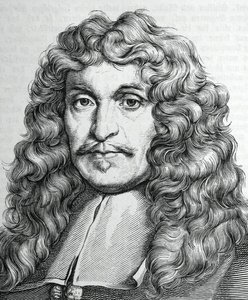
Йоахим Фон Сандрарт
1606 - 1688 , Германия
Основные сведения
- Artistic Movement Or Style: Барокко
- Artists Or Movements Influenced By This Artist: ['Голландская школа живописи']
- Artists Who Influenced This Artist:
- Герерт ван Хонторст
- Рубенс
- Аэгидийс Саделер
- Date Of Birth: 1606
- Date Of Death: 1688
- Full Name: Joachim von Sandrart
- Nationality: Немецкий
- Notable Artworks:
- Герцог Максимилиан I
- Офицеры и городская гвардия
- Питер Корнелиссионс Хуорстт
- Place Of Birth: Франкфурт-на-Майне, Германия