

 Предпросмотр
 Поделиться
 Поделиться
 Детали произведения

 Скачать
 Похожие работы
 Рентгенография
 Слайд-шоу
 Статистика
Child


 Читать далее
Жикле / Арт-принт
Печать (жикле) или холст музейного качества с быстрыми сроками изготовления и широким выбором вариантов отделки. ( Купить картину ручной работы Перейти к цифровым изображениям)




P118B $10

P118H $10

P118W $10

P438Z $10

P508JH $12

P508YH $12

P805H $10

P805Z $10

P919BZ $10

P919G $10

P919XJ $10

P959ZH $10

P968JZ $12

W106C $8

W218G $10

W218JH $8

W218Y $10

W307PJ $10

W316G $10

W316PJ $8

W316Y $10

W398PJ $8

W4111J $10

W500HY $15

W500JH $15

W692G $12

W849H $8

W940BG $15

W953PJ $8




Выберите один из наших стандартных размеров, соответствующих оригинальным пропорциям произведения искусства.

Вы можете указать свои собственные размеры, чтобы репродукция идеально подошла под конкретную раму или пространство. Если выбранный вами размер не будет соответствовать пропорциям оригинала, мы либо обрежем произведение, либо дополним изображение зеркальным отражением краев или однотонной заливкой. Перед началом производства вам будет отправлен цифровой макет для утверждения.
Пожалуйста, обратите внимание, что предварительный просмотр на экране не отображает фактическую обрезку или расширение изображения. Только макет точно покажет финальную композицию.
Несмотря на возможность заказа индивидуальных размеров, мы рекомендуем выбирать размер из предопределенного списка, чтобы сохранить оригинальные пропорции.
Доставка по всему миру () за 2 недели вместо стандартных 4/5 недель. (11 Сентябрь)

Бесплатная экспресс-доставка по всему миру

Высококачественный льняной холст

Полное страхование доставки

Гарантия возмещения таможенных пошлин

Гарантия точного соответствия цветов

100-дневная политика возврата (только при обнаружении дефектов)

Гарантия возврата 100% средств

Предложение оптовых скидок
 Вариант со стеклом доступен только для размеров менее 110 см

Child
Жикле / Арт-принт
Размер репродукции
-


Итоговая стоимость
$ 62
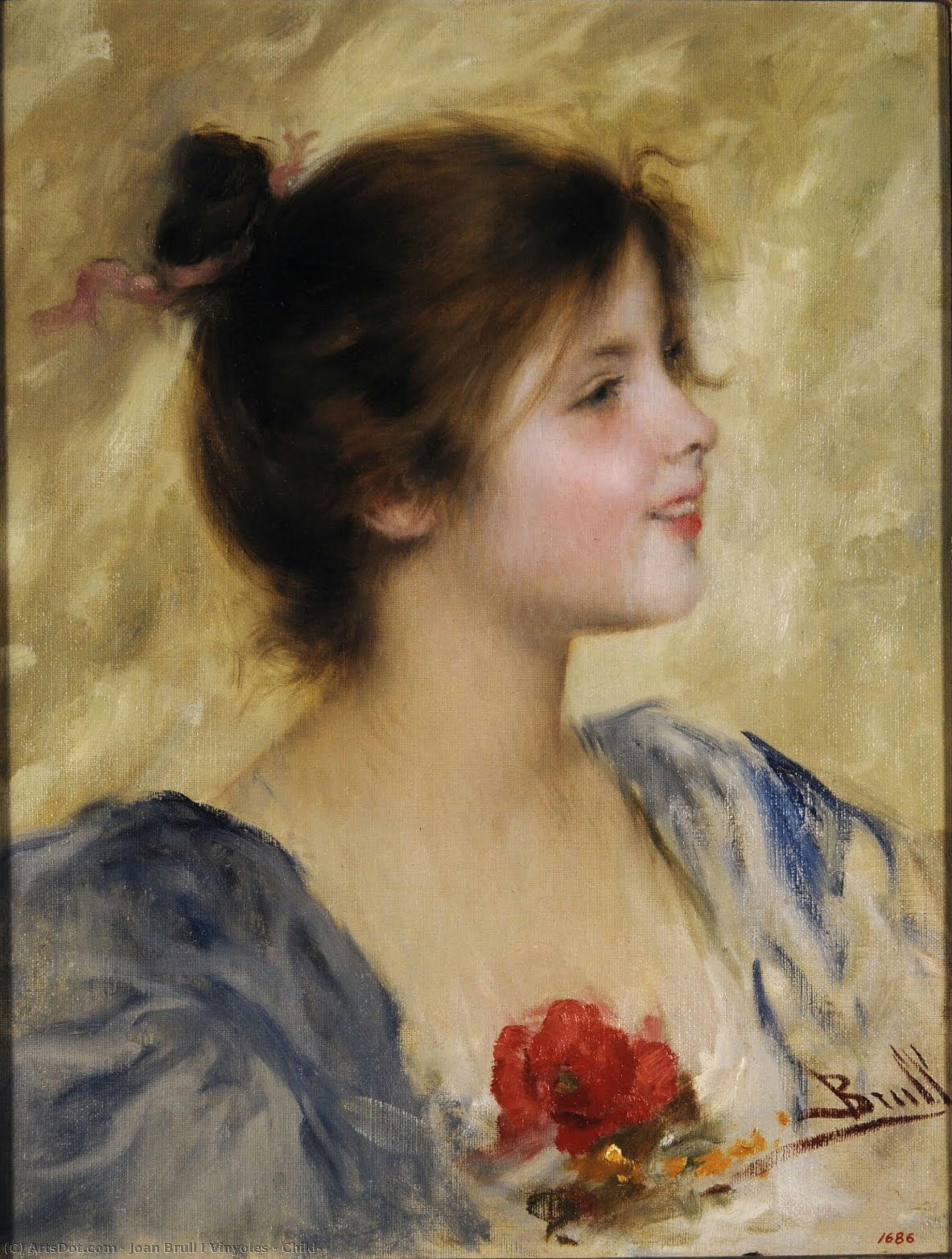
A Moment Frozen in Time: The Luminous Presence of Brull’s Child
In the delicate strokes of Joan Brull i Vinyoles’ 1912 masterpiece, Child, we encounter more than a mere portrait; we step into a whispered memory of innocence. The painting captures a young girl, her brown hair framing a face of quiet contemplation, as she gazes toward an unseen point beyond the canvas. Clad in a soft blue dress that anchors the composition, she holds a single red flower—a vibrant, singular pulse of color that serves as the emotional heartbeat of the work. This small, crimson detail acts as a symbolic bridge between the earthly realm and the ephemeral beauty of youth, suggesting a fleeting moment of joy captured just before the complexities of adulthood arrive.
The atmosphere of the piece is bathed in a warm, amber glow, achieved through a background of yellowish-orange tones that envelop the subject in a nostalgic haze. This choice of palette does more than provide depth; it creates an intimate, almost sacred space around the child. While the girl remains our primary focus, the subtle presence of figures in the periphery adds a layer of narrative mystery, hinting at a larger, bustling world that exists just out of focus. It is this interplay between the sharp clarity of the subject and the soft, atmospheric background that defines the captivating charm of the work.
The Mastery of Catalan Symbolism
To understand Child, one must look to the soul of its creator. Joan Brull i Vinyoles was a pivotal figure in the Catalan Symbolist movement, an era where artists sought to move beyond the literal constraints of realism to capture the essence of the human spirit. In this painting, we see the culmination of his journey from technical precision to evocative expression. The technique is masterful, utilizing light not merely to illuminate form, but to evoke a sense of longing and dreamlike stillness. The way the light catches the texture of the blue fabric and the delicate petals of the flower demonstrates a profound command over medium and mood.
For the discerning collector or interior designer, this artwork offers a sophisticated balance of warmth and tranquility. Its composition is inherently versatile, possessing the ability to anchor a room with its historical weight while providing a soft, inviting focal point that complements both classical and contemporary settings. The painting does not demand attention through aggression, but rather invites it through a gentle, persistent beauty. It is an ideal acquisition for those looking to infuse their space with a sense of timelessness, storytelling, and the profound, quiet elegance of early 20th-century Spanish art.
Похожие произведения
Биография художника
Joan Brull i Vinyoles: A Catalan Visionary of Symbolism
Born in Barcelona in 1863, Joan Brull i Vinyoles emerged as a pivotal figure within the vibrant and often turbulent artistic landscape of late 19th-century Catalonia. His life coincided with a period of intense cultural ferment, marked by burgeoning Catalan nationalism and a growing interest in Symbolism – an aesthetic movement that sought to express inner emotions and ideas through evocative imagery rather than direct representation. Brull’s journey as an artist wasn't simply one of technical skill; it was a deeply personal exploration of the human condition, rendered with a haunting beauty and imbued with the spirit of his homeland.
Initially trained at the Escola de la Llotja in Barcelona, Brull’s early work demonstrated a solid grounding in realism. However, he quickly moved beyond mere imitation, drawn to the expressive potential of color, light, and form. This shift became increasingly pronounced as he spent time studying in Paris, immersing himself in the artistic currents of the French capital – particularly the Symbolist circles that were gaining momentum. This Parisian sojourn proved transformative, laying the foundation for his later embrace of symbolism and its associated techniques.
The Catalan Symbolist Circle
Brull’s artistic development was inextricably linked to his participation in the burgeoning Catalan Symbolist movement. This group, comprised of artists like Adrià Gual, Josep Maria Tamburini, and Alexandre de Riquer, sought to create an art that reflected the unique cultural identity of Catalonia – its history, folklore, and spirit. They rejected the prevailing academic styles of the time, opting instead for a more subjective and emotionally charged approach. The group’s intellectual hub was the *Els Quatre Gats*, a café that served as a meeting place for artists, writers, and intellectuals, fostering a dynamic exchange of ideas.
Brull's connection to these circles extended beyond mere association; he actively contributed to their shared aesthetic vision. His work frequently explored themes of mythology, dreams, and the darker aspects of human experience – subjects that resonated deeply with the Symbolist impulse. He wasn’t simply copying mythological figures; he was imbuing them with a distinctly Catalan sensibility, often portraying them within domestic settings or alongside everyday people, creating a poignant juxtaposition between the fantastical and the familiar.
Notable Works and Recognition
Brull's artistic career gained significant recognition in 1896 when he won first prize at the International Exposition of Barcelona with his painting *Ensomni* (Dream). This victory catapulted him to prominence within the Catalan art world, solidifying his reputation as a talented and innovative artist. *Ensomni*, depicting a solitary figure lost in contemplation beneath a swirling night sky, exemplifies Brull’s signature style – a blend of realism and Symbolist expression, characterized by rich colors, evocative lighting, and a palpable sense of melancholy.
Among his most celebrated works is *Child* (1912), currently housed at the Biblioteca Museo Víctor Balaguer in Vilanova i la Geltrú. This intimate portrait captures the innocence and vulnerability of childhood with remarkable sensitivity. The painting’s muted palette, delicate brushwork, and subtle emotional cues contribute to its enduring power. Other notable works include *La tonsura del rei Wamba* (The Tonsure of King Wamba) and numerous portraits of beggars and children in Barcelona's streets – a testament to Brull’s compassionate eye and his fascination with the marginalized members of society.
Symbolism, Technique, and Legacy
Brull’s later works are characterized by an intensified use of symbolism, often incorporating elements of Catalan folklore and mythology. He skillfully employed color—particularly blues, purples, and greens—to create a mood of mystery and introspection. His brushwork is loose and expressive, conveying a sense of movement and emotion. He was particularly adept at capturing the fleeting effects of light and shadow, lending his paintings an ethereal quality.
Despite dying prematurely in 1912, Brull’s legacy endures. He remains a significant figure in Catalan art history, representing a crucial bridge between realism and Symbolism. His work continues to be exhibited at prestigious museums such as the Museo de Bellas Artes de Bilbao and the Colección Mateu, ensuring that his unique vision and artistic contributions are celebrated for generations to come. Brull’s exploration of the human psyche through evocative imagery and his deep connection to Catalan identity solidify his place as a truly remarkable artist.

joan brull i vinyoles
1863 - 1912 , Spain
Основные сведения
- Artistic Movement Or Style: Catalan Symbolism
- Artists Or Movements Influenced By This Artist: ['Els Quatre Gats']
- Artists Who Influenced This Artist:
- Adrià Gual
- Josep Maria Tamburini
- Alexandre de Riquer
- Date Of Birth: January 25, 1863
- Date Of Death: February 1912
- Full Name: Joan Brull i Vinyoles
- Nationality: Spanish
- Notable Artworks:
- Child
- Ensomni
- Place Of Birth: Barcelona, Spain
Похожие статьи

Топ-10 знаменитых картин в оттенках серо-голубого: искусство и декор от ArtsDot
Погрузитесь в мир серо-голубых оттенков! От Моне до Ренуара – 10 знаменитых картин, вдохновляющих на создание уникального интерьера. Репродукции высокого качества от ArtsDot.com. Explore the full collection online!
Топ-25 шедевров Анри Матисса: Цвет и форма в интерьере с ArtsDot
Погрузитесь в мир Анри Матисса! 25 шедевров фовизма, ярких красок и новаторских техник. Узнайте историю создания культовых картин художника и вдохновитесь для интерьера с ArtsDot.com – музейное качество репродукций.

Crimson Threads of Narrative: Exploring Symbolism & Representation in Artworks Featuring the Red Dress
Explore the rich symbolism of the red dress in art history! From ancient power displays to iconic portraits like Cézanne’s 'Madame Cezanne', discover the cultural and artistic significance behind this captivating color. Expert analysis & insights.
Azure Visions: Exploring Representations of the Blue Dress in Western Art History
Explore the rich history of the blue dress in Western art! Discover its symbolism, from Renaissance masterpieces to modern interpretations by artists like Martin & Schiele. Uncover cultural meanings and artistic techniques.
The Allure of Azure: Exploring the Symbolic & Aesthetic Depths of Blue in Art History
Explore the rich history of blue in art! Discover its symbolism, from ancient pigments to modern masterpieces by Kandinsky & Seurat. Uncover the psychological impact and cultural meanings behind this captivating hue.