

 Поделиться
 Поделиться
 Детали произведения

 Скачать
 Похожие работы
 Слайд-шоу
 Статистика
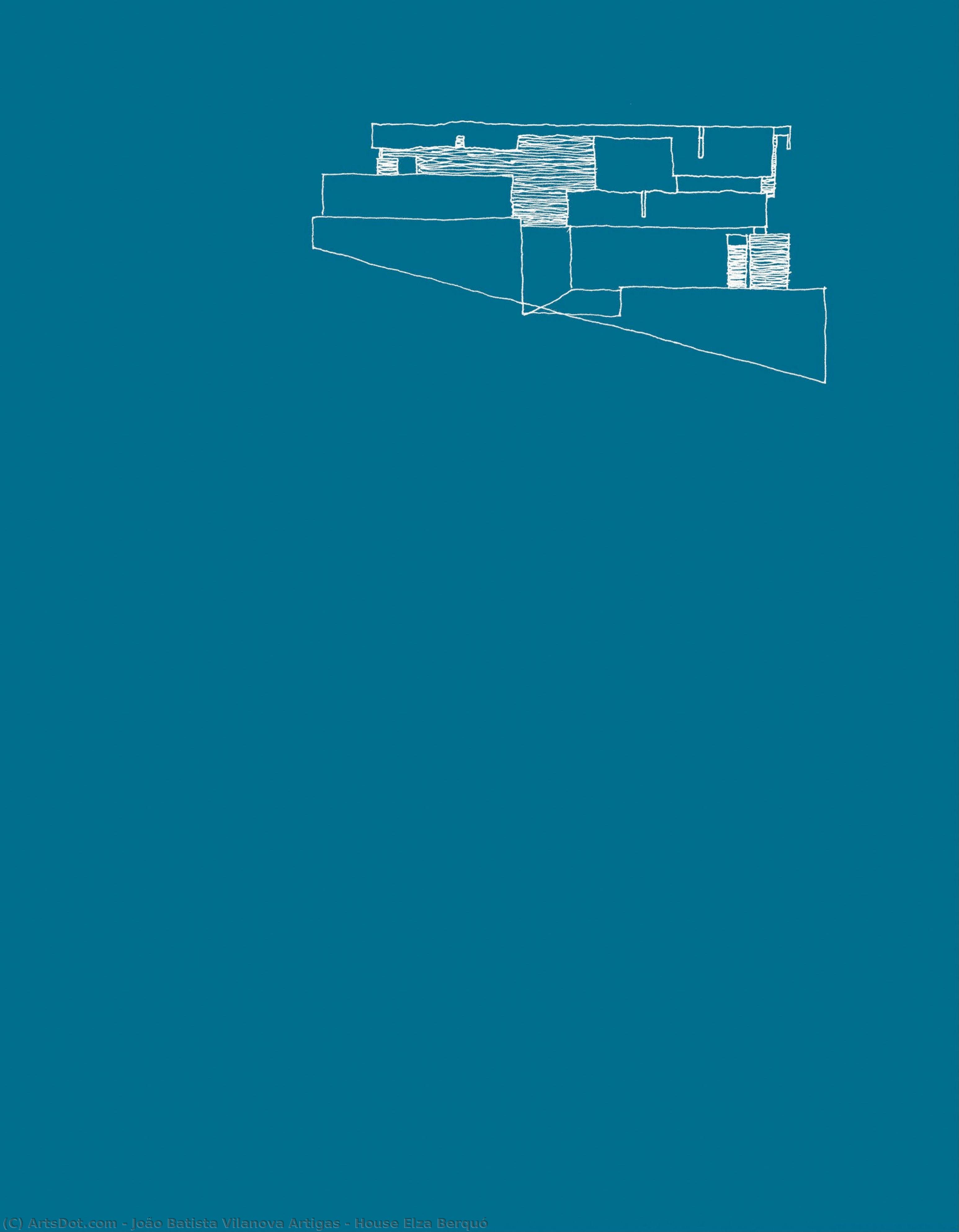
House Elza Berquó


 Читать далее
Жикле / Арт-принт
Печать (жикле) или холст музейного качества с быстрыми сроками изготовления и широким выбором вариантов отделки. ( Купить картину ручной работы Перейти к цифровым изображениям)




































Выберите один из наших стандартных размеров, соответствующих оригинальным пропорциям произведения искусства.

Вы можете указать свои собственные размеры, чтобы репродукция идеально подошла под конкретную раму или пространство. Если выбранный вами размер не будет соответствовать пропорциям оригинала, мы либо обрежем произведение, либо дополним изображение зеркальным отражением краев или однотонной заливкой. Перед началом производства вам будет отправлен цифровой макет для утверждения.
Пожалуйста, обратите внимание, что предварительный просмотр на экране не отображает фактическую обрезку или расширение изображения. Только макет точно покажет финальную композицию.
Несмотря на возможность заказа индивидуальных размеров, мы рекомендуем выбирать размер из предопределенного списка, чтобы сохранить оригинальные пропорции.
Доставка по всему миру () за 2 недели вместо стандартных 4/5 недель. (12 Сентябрь)

Бесплатная экспресс-доставка по всему миру

Высококачественный льняной холст

Полное страхование доставки

Гарантия возмещения таможенных пошлин

Гарантия точного соответствия цветов

100-дневная политика возврата (только при обнаружении дефектов)

Гарантия возврата 100% средств

Предложение оптовых скидок
 Вариант со стеклом доступен только для размеров менее 110 см

House Elza Berquó
Жикле / Арт-принт
Размер репродукции
-


Итоговая стоимость
$ 62
The Geometry of Being: An Encounter with Modernist Abstraction
To stand before this depiction of "House Elza Berquó" is to confront an exercise in pure form. It is not merely a drawing of a building; it is a meditation on structure, space, and the eloquent silence that can emanate from clean lines. The composition presents a facade rendered with almost ascetic precision—a stark white linearity set against a deep, enveloping teal field. This immediate contrast arrests the viewer, forcing an engagement that bypasses mere recognition and moves straight into contemplation. The overall impression is one of rigorous minimalism, where every drawn edge feels deliberate, essential to the whole.
Echoes of Brazilian Modernism
While the subject matter speaks to a specific architectural moment, the spirit animating this piece resonates deeply with the monumental vision of João Batista Vilanova Artigas. Artigas, a titan of Brazilian Modernism, understood that architecture was never just about shelter; it was a social statement, an articulation of progress and human potential. This work echoes that modernist impulse—the belief in clarity, function, and the beauty inherent in simplified geometry. The clean abstraction recalls the intellectual rigor of the Paulista School, suggesting a dialogue between art theory and built reality. It speaks to a time when form was liberated from superfluous ornamentation, finding its truth in the purity of its own structure.
Technique and Visual Dialogue
The technique employed here is strikingly graphic. The piece eschews texture entirely; it exists purely in the realm of line weight and planar contrast. This flatness, this two-dimensionality, is perhaps its most captivating feature. Depth is not achieved through illusionistic perspective but through thoughtful layering—the roofline resting above the wall plane. The artist utilizes the negative space of the teal background as actively as they use the white lines. It is a masterful study in positive and negative space, where the void becomes an integral, structural component of the artwork itself.
Symbolism of Simplicity and Space
What does this starkness communicate? Symbolically, the piece speaks to clarity amidst complexity. In our visually saturated modern world, such restrained art offers a profound visual palate cleanser. The limited palette of white and teal evokes both tranquility and intellectual coolness—a sense of ordered calm. It suggests an ideal state: one where function dictates beauty, and where the emotional weight is lifted by sheer structural elegance. For the collector or designer, this piece functions as more than decoration; it acts as a visual anchor, grounding a space with thoughtful, unwavering composure.
Похожие произведения
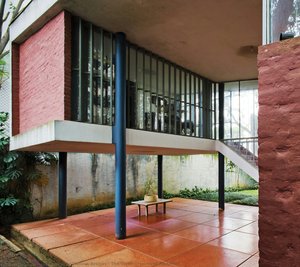
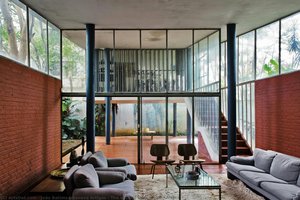
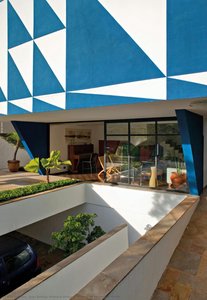
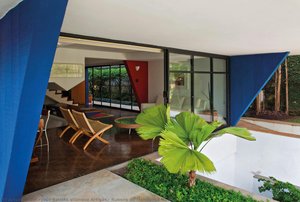
Биография художника
A Pioneer of Brazilian Modernism: The Life and Legacy of João Batista Vilanova Artigas
João Batista Vilanova Artigas, born in Curitiba, Brazil, in 1915, stands as a monumental figure in the evolution of Brazilian architecture. More than simply a builder of structures, Artigas was a visionary who sought to imbue his designs with social responsibility and artistic expression, ultimately becoming the founding father of the Paulista School. His journey began at the Polytechnic School of the University of São Paulo, where he earned his degree in 1937, an education that would serve as the bedrock for a career defined by innovation and a deep commitment to the Brazilian people. An early formative experience was his collaboration with Gregori Warchavchik on the ambitious remodeling of Praça da República, a project that hinted at the modernist sensibilities he would soon champion. From 1941 to 1947, Artigas dedicated himself to academia, shaping young minds as a professor of aesthetics, architecture, and planning at the University of São Paulo. This period culminated in the prestigious Guggenheim Fellowship awarded in 1946, solidifying his growing reputation within architectural circles and providing him with invaluable opportunities for international exposure.Early Influences and Architectural Style
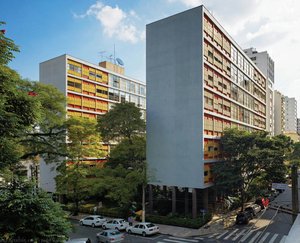
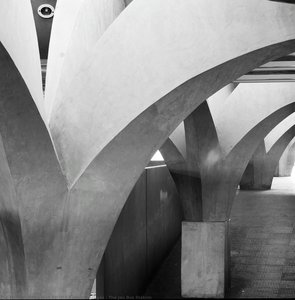
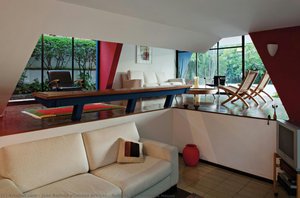
Artigas’s architectural style wasn't static; it was a dynamic process of exploration and refinement, reflecting both the changing currents of global design and his own evolving artistic vision. His work is generally understood through three distinct phases. The initial period, from 1937 to 1945, clearly demonstrates the influence of Frank Lloyd Wright, particularly in his residential designs—a focus on organic forms and a harmonious integration with the surrounding landscape. This was followed by a transitional phase, spanning roughly from 1945 to the mid-1950s, where Artigas began incorporating elements of the International Style, experimenting with curtain walls and pilotis in larger projects. However, it was during his final period, from the 1960s through the 1970s, that he truly found his voice—a dramatic style heavily influenced by Brutalism, characterized by its raw concrete aesthetic and monumental scale. This phase saw him tackle large-scale public buildings with a boldness and expressiveness that would become his signature. Among his most celebrated works are the House Ariosto Martirani, an early example showcasing Wright’s influence; the House Elza Berquó, demonstrating a minimalist aesthetic infused with striking geometric abstraction and Brutalist undertones; and the Guarulhos Gymnasium, representing his later, more dramatic style characterized by concrete expressionism. These projects collectively highlight his mastery of materials—particularly reinforced concrete—and his unwavering commitment to addressing social needs through thoughtful architectural design.Academic Contributions and Recognition
From 1941 to 1947, Artigas devoted himself to academia, shaping young minds as a professor of aesthetics, architecture, and planning at the University of São Paulo. This period solidified his understanding of architectural theory and practice, fostering a generation of Brazilian architects who would carry forward his vision. The Guggenheim Fellowship awarded in 1946 provided him with unparalleled access to European avant-garde movements and broadened his intellectual horizons. He championed the importance of artistic expression within the built environment, arguing that architecture should serve as a vehicle for conveying cultural values and promoting social progress. His influence extended beyond the classroom, shaping debates about architectural innovation and ethical responsibility.Major Projects and The Paulista School
Artigas’s prolific career produced over 700 projects—ranging from residential buildings to urban spaces to monumental structures—that exemplify his distinctive style and commitment to social ideals. Notable among these are the House Ariosto Martirani, reflecting Wright's organic principles; the House Elza Berquó, embodying minimalist geometric abstraction; and the Guarulhos Gymnasium, showcasing Brutalist concrete expressionism. These buildings stand as testaments to Artigas’s ability to synthesize artistic vision with functional practicality—a hallmark of the Paulista School he founded. This school emphasized structural elements—particularly reinforced concrete—and a profound concern for social needs, challenging conventional architectural norms and paving the way for a new generation of Brazilian architects to explore innovative forms and materials.Legacy and Enduring Influence
João Batista Vilanova Artigas’s legacy extends far beyond his buildings. He was a teacher, a political activist, and a cultural icon who helped define the identity of Brazil—a nation that continues to grapple with questions of social justice and artistic creativity. His belief in “minutiae”—the small details—to elevate a building from mere structure to a work of art, infusing each project with a unique character and sense of place. Artigas’s work stands as a powerful reminder of the potential of architecture to reflect artistic vision, societal values, and a deep commitment to improving the lives of those it serves. He left behind not just buildings, but a philosophy—a belief that architecture could be a force for positive change in the world. His influence continues to inspire architects today, urging them to embrace innovation while upholding ethical considerations.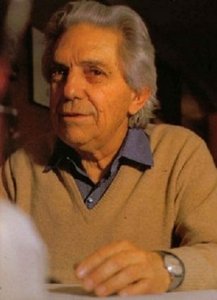
Жоао Батиста Виланова Артигас
1915 - 1985 , Бразилия
Основные сведения
- Artistic Movement Or Style: Modernism, Brutalism
- Artists Or Movements Influenced By This Artist: ['Paulista School']
- Artists Who Influenced This Artist: ['Frank Lloyd Wright']
- Date Of Birth: 1915
- Date Of Death: 1985
- Full Name: João Batista Vilanova Artigas
- Nationality: Brazilian
- Notable Artworks:
- House Ariosto Martirani
- House Elza Berquó
- Guarulhos Gymnasium
- Place Of Birth: Curitiba, Brazil
Похожие статьи

The Enduring Power of Line: Exploring Themes & Techniques in Drawing Across Art History
Explore the rich history of drawing! Discover key techniques like linear perspective & iconic artists from the Renaissance to modern times. Enhance your art appreciation with ArtsDot.
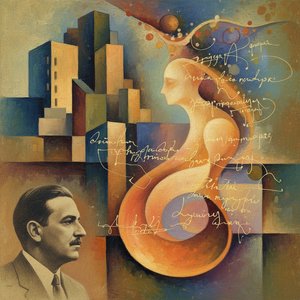
Alceu de Paula Penna: A Synthesis of Brazilian Modernism & Poetic Abstraction
Explore the captivating world of Alceu de Paula Penna, a pivotal figure in Brazilian Modernism. Discover his innovative concrete poetry & influence on Latin American art history. Expert insights for collectors.

The Nuances of Graphite: Exploring Emotional Depth & Technical Mastery in Pencil Drawing
Explore the captivating world of graphite drawing! Discover its rich history, master essential techniques like chiaroscuro, and learn how artists evoke emotion through this timeless medium. Expert insights for art enthusiasts.

Benedito Calixto: A Brazilian Modernist's Landscape of Memory & National Identity
Explore the captivating world of Benedito Calixto, a pivotal Brazilian Modernist painter. Discover his iconic landscapes, the story behind the famous Bandeirante portrait, and his lasting impact on Brazilian national identity. Learn more at ArtsDot.
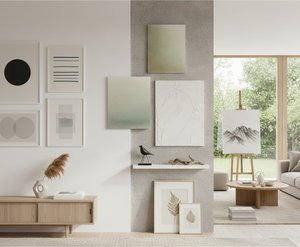
Минимализм в искусстве: 10 шедевров для элегантного интерьера | ArtsDot
Погрузитесь в мир минимализма! 10 шедевров от Ротко, Кандинского и других гениев. Узнайте историю создания культовых картин и найдите идеальную репродукцию для вашего интерьера на ArtsDot.com.