

 Предпросмотр
 Поделиться
 Поделиться
 Детали произведения

 Скачать
 Похожие работы
 Рентгенография
 Слайд-шоу
 Статистика
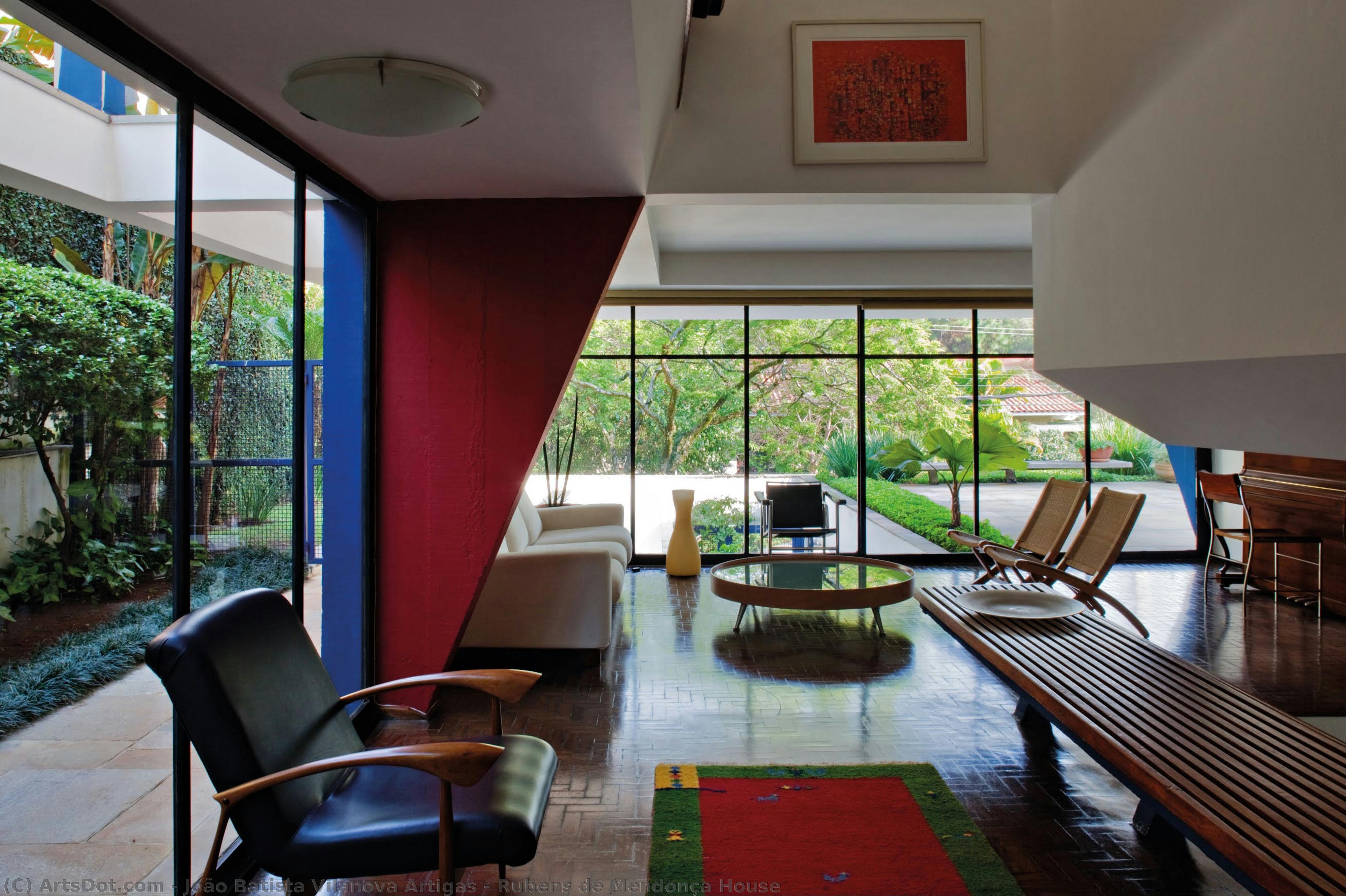
Rubens de Mendonça House


 Читать далее
Приобретите цифровое изображение высокого разрешения в улучшенном качестве, которое значительно превосходит онлайн-превью.
Каждый файл тщательно подготавливается нашими специалистами с использованием передовых инструментов и экспертной ручной ретуши. Мы гарантируем исключительную четкость, точную цветопередачу и детальную проработку каждого изображения.
Финальный файл доставляется по электронной почте в течение 72 часов и оптимизирован для немедленного использования в профессиональной среде, при верстке и печати. Это тот же уровень качества, которому доверяют ведущие дизайнерские студии, издательства и галереи.
Цифровое изображение
Скачайте файл высокого разрешения для личного использования, печати и творческих проектов. ( Перейти к печати Купить картину ручной работы)
Включено в каждый заказ цифровых изображений
Гарантия экспертной цифровой доставки
Выбирая ArtsDot.com, вы получаете не просто изображение — вы приобретаете профессионально обработанное цифровое произведение искусства, созданное с безупречной точностью и под защитой гарантии качества. Вот всё, что автоматически входит в ваш заказ:

Мгновенная доставка по e-mail
Ваш цифровой файл в высоком разрешении будет отправлен вам по электронной почте в течение 72 часов после оформления заказа — и сразу станет доступен для использования.

Цифровой файл с ИИ-улучшением
Ваше произведение искусства проходит профессиональную оптимизацию с использованием передовых инструментов ИИ и ручной обработки, что гарантирует максимальную детализацию, четкость и точность цветопередачи.

Бессрочная бесплатная повторная доставка
Случайно удалили или потеряли файл? Не беспокойтесь — мы отправим его вам повторно в любое время и совершенно бесплатно.

Без импортных пошлин — навсегда
Наслаждайтесь вашим произведением искусства мгновенно без таможенных пошлин, сборов или затрат на доставку — цифровые загрузки всегда не облагаются налогом.

Гарантия точности цветопередачи
Мы гарантируем, что ваше цифровое изображение максимально точно передает оригинальные цвета благодаря использованию профессиональных инструментов и систем управления цветом.

Гарантия удовлетворенности 100 дней
Если вы не будете удовлетворены своим цифровым изображением, мы внесем правки или вернем 100% стоимости в течение 100 дней — без лишних вопросов.

100% Гарантия возврата средств
Не удовлетворены покупкой? Получите полный возврат средств в течение 100 дней после получения цифрового файла — без лишних вопросов.

Скидки на оптовые заказы
Купите 3 изображения, сэкономьте 10% — Купите 5, сэкономьте 15% — Купите 10+, сэкономьте 20%. Отличное решение для творческих проектов, галерей и агентств.
The Architect’s Dialogue: João Batista Vilanova Artigas' "Rubens de Mendonça House"
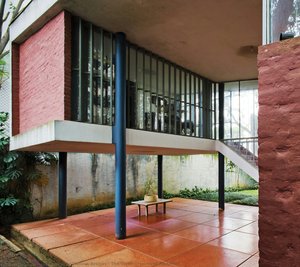
João Batista Vilanova Artigas, a pivotal figure in Brazilian modernism, didn’t merely construct buildings; he sculpted dialogues between form, function, and social consciousness. His “Rubens de Mendonça House,” completed in 1958-1959, stands as a potent testament to this philosophy – a bold declaration of architectural intent housed within the walls of a São Paulo living room. More than just a residence, it’s an exploration of geometric abstraction, a subtle critique of societal norms, and a vibrant embodiment of the Brutalist aesthetic that would soon define much of 20th-century architecture.
The house itself is a deceptively simple rectangle, yet within its restrained geometry lies a complex interplay of influences. Artigas drew inspiration from Frank Lloyd Wright’s organizational architecture, particularly his emphasis on integrating form and function. However, he wasn't simply replicating Wright’s style; instead, he took the core principles – clear spatial relationships, a connection to nature, and an appreciation for honest materials – and filtered them through his uniquely Brazilian lens. The absence of traditional servants’ quarters, a deliberate choice reflecting Artigas’s commitment to social justice and challenging ingrained societal hierarchies, immediately establishes the house as more than just a dwelling; it's a statement.
Concrete Poetry: Form and Technique
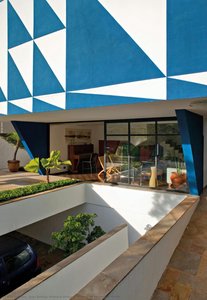
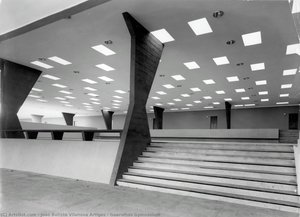
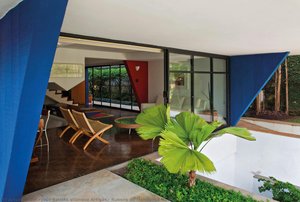
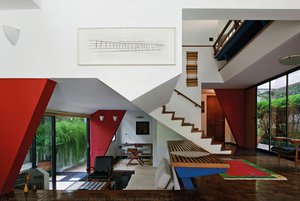
The most striking element of the “Rubens de Mendonça House” is undoubtedly its façade. Rather than relying on conventional columns, Artigas employed a series of interlocking triangular concrete elements – a radical departure from the rectangular supports typically associated with modern architecture. These triangles, reminiscent of the sharp angles found in geometric abstraction and echoing the works of artists like Piet Mondrian, create a dynamic visual rhythm that draws the eye and disrupts traditional notions of stability. This deliberate fragmentation isn’t merely decorative; it represents a rejection of rigid formality and an embrace of dynamism and change.
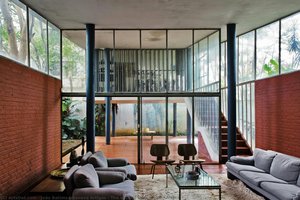
The interior continues this exploration of form. The living room, bathed in natural light, features a carefully considered arrangement of furniture – two comfortable couches, three chairs strategically positioned around the dining table, and a potted plant adding a touch of organic life to the space. The walls are painted a vibrant blue, contrasting sharply with the raw concrete surfaces, further emphasizing the interplay between structure and decoration. The use of exposed concrete is not concealed or softened; it’s celebrated as an integral part of the design, reflecting Artigas's commitment to honesty and transparency in his materials.
A Social Statement: Context and Symbolism
To fully appreciate the “Rubens de Mendonça House,” one must consider its historical context. Constructed during a period of significant social and political upheaval in Brazil – following the 1964 military coup – the house can be interpreted as a subtle act of resistance. Artigas, a committed communist, was forced into exile after his involvement with the party. The deliberate rejection of traditional domestic arrangements, particularly the absence of servants’ quarters, symbolized a challenge to the deeply ingrained social inequalities that persisted in Brazilian society.
The house's design also reflects the broader trends of the Paulista School – a movement that sought to create architecture that was both aesthetically sophisticated and socially responsible. Artigas’s work during this period is characterized by an embrace of Brutalism, a style known for its raw concrete surfaces and unadorned forms. This aesthetic choice wasn't simply about visual impact; it represented a rejection of superficial ornamentation and a commitment to the inherent beauty of materials.
A Legacy in Concrete
The “Rubens de Mendonça House” remains a powerful example of Artigas’s innovative spirit and his unwavering dedication to architectural ideals. It's a building that invites contemplation, challenging viewers to reconsider their assumptions about form, function, and the role of architecture in society. Reproductions of this iconic residence offer a unique opportunity to bring this bold vision into any space, serving as a constant reminder of Artigas’s legacy – a testament to the power of architecture to shape not only our physical environment but also our social consciousness.
Похожие произведения
Биография художника
A Pioneer of Brazilian Modernism: The Life and Legacy of João Batista Vilanova Artigas
João Batista Vilanova Artigas, born in Curitiba, Brazil, in 1915, stands as a monumental figure in the evolution of Brazilian architecture. More than simply a builder of structures, Artigas was a visionary who sought to imbue his designs with social responsibility and artistic expression, ultimately becoming the founding father of the Paulista School. His journey began at the Polytechnic School of the University of São Paulo, where he earned his degree in 1937, an education that would serve as the bedrock for a career defined by innovation and a deep commitment to the Brazilian people. An early formative experience was his collaboration with Gregori Warchavchik on the ambitious remodeling of Praça da República, a project that hinted at the modernist sensibilities he would soon champion. From 1941 to 1947, Artigas dedicated himself to academia, shaping young minds as a professor of aesthetics, architecture, and planning at the University of São Paulo. This period culminated in the prestigious Guggenheim Fellowship awarded in 1946, solidifying his growing reputation within architectural circles and providing him with invaluable opportunities for international exposure.Early Influences and Architectural Style
Artigas’s architectural style wasn't static; it was a dynamic process of exploration and refinement, reflecting both the changing currents of global design and his own evolving artistic vision. His work is generally understood through three distinct phases. The initial period, from 1937 to 1945, clearly demonstrates the influence of Frank Lloyd Wright, particularly in his residential designs—a focus on organic forms and a harmonious integration with the surrounding landscape. This was followed by a transitional phase, spanning roughly from 1945 to the mid-1950s, where Artigas began incorporating elements of the International Style, experimenting with curtain walls and pilotis in larger projects. However, it was during his final period, from the 1960s through the 1970s, that he truly found his voice—a dramatic style heavily influenced by Brutalism, characterized by its raw concrete aesthetic and monumental scale. This phase saw him tackle large-scale public buildings with a boldness and expressiveness that would become his signature. Among his most celebrated works are the House Ariosto Martirani, an early example showcasing Wright’s influence; the House Elza Berquó, demonstrating a minimalist aesthetic infused with striking geometric abstraction and Brutalist undertones; and the Guarulhos Gymnasium, representing his later, more dramatic style characterized by concrete expressionism. These projects collectively highlight his mastery of materials—particularly reinforced concrete—and his unwavering commitment to addressing social needs through thoughtful architectural design.Academic Contributions and Recognition
From 1941 to 1947, Artigas devoted himself to academia, shaping young minds as a professor of aesthetics, architecture, and planning at the University of São Paulo. This period solidified his understanding of architectural theory and practice, fostering a generation of Brazilian architects who would carry forward his vision. The Guggenheim Fellowship awarded in 1946 provided him with unparalleled access to European avant-garde movements and broadened his intellectual horizons. He championed the importance of artistic expression within the built environment, arguing that architecture should serve as a vehicle for conveying cultural values and promoting social progress. His influence extended beyond the classroom, shaping debates about architectural innovation and ethical responsibility.Major Projects and The Paulista School
Artigas’s prolific career produced over 700 projects—ranging from residential buildings to urban spaces to monumental structures—that exemplify his distinctive style and commitment to social ideals. Notable among these are the House Ariosto Martirani, reflecting Wright's organic principles; the House Elza Berquó, embodying minimalist geometric abstraction; and the Guarulhos Gymnasium, showcasing Brutalist concrete expressionism. These buildings stand as testaments to Artigas’s ability to synthesize artistic vision with functional practicality—a hallmark of the Paulista School he founded. This school emphasized structural elements—particularly reinforced concrete—and a profound concern for social needs, challenging conventional architectural norms and paving the way for a new generation of Brazilian architects to explore innovative forms and materials.Legacy and Enduring Influence
João Batista Vilanova Artigas’s legacy extends far beyond his buildings. He was a teacher, a political activist, and a cultural icon who helped define the identity of Brazil—a nation that continues to grapple with questions of social justice and artistic creativity. His belief in “minutiae”—the small details—to elevate a building from mere structure to a work of art, infusing each project with a unique character and sense of place. Artigas’s work stands as a powerful reminder of the potential of architecture to reflect artistic vision, societal values, and a deep commitment to improving the lives of those it serves. He left behind not just buildings, but a philosophy—a belief that architecture could be a force for positive change in the world. His influence continues to inspire architects today, urging them to embrace innovation while upholding ethical considerations.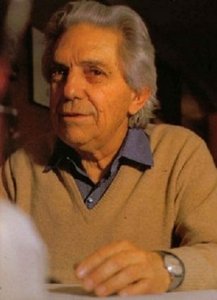
Жоао Батиста Виланова Артигас
1915 - 1985 , Бразилия
Основные сведения
- Artistic Movement Or Style: Modernism, Brutalism
- Artists Or Movements Influenced By This Artist: ['Paulista School']
- Artists Who Influenced This Artist: ['Frank Lloyd Wright']
- Date Of Birth: 1915
- Date Of Death: 1985
- Full Name: João Batista Vilanova Artigas
- Nationality: Brazilian
- Notable Artworks:
- House Ariosto Martirani
- House Elza Berquó
- Guarulhos Gymnasium
- Place Of Birth: Curitiba, Brazil