


 Поделиться
 Поделиться
 Детали произведения

 Скачать
 Похожие работы
 Слайд-шоу
 Статистика
Padrão e partenaire
 Decorative Wall Panels
- Contemporary Art
 1986
1986- Modern
 205.0 x 123.0 cm
 Culturgest - Fundação Caixa Geral de Depósitos
 Читать далее
Приобретите цифровое изображение высокого разрешения в улучшенном качестве, которое значительно превосходит онлайн-превью.
Каждый файл тщательно подготавливается нашими специалистами с использованием передовых инструментов и экспертной ручной ретуши. Мы гарантируем исключительную четкость, точную цветопередачу и детальную проработку каждого изображения.
Финальный файл доставляется по электронной почте в течение 72 часов и оптимизирован для немедленного использования в профессиональной среде, при верстке и печати. Это тот же уровень качества, которому доверяют ведущие дизайнерские студии, издательства и галереи.
Цифровое изображение
Скачайте файл высокого разрешения для личного использования, печати и творческих проектов. ( Перейти к печати Купить картину ручной работы)
Включено в каждый заказ цифровых изображений
Гарантия экспертной цифровой доставки
Выбирая ArtsDot.com, вы получаете не просто изображение — вы приобретаете профессионально обработанное цифровое произведение искусства, созданное с безупречной точностью и под защитой гарантии качества. Вот всё, что автоматически входит в ваш заказ:

Мгновенная доставка по e-mail
Ваш цифровой файл в высоком разрешении будет отправлен вам по электронной почте в течение 72 часов после оформления заказа — и сразу станет доступен для использования.

Цифровой файл с ИИ-улучшением
Ваше произведение искусства проходит профессиональную оптимизацию с использованием передовых инструментов ИИ и ручной обработки, что гарантирует максимальную детализацию, четкость и точность цветопередачи.

Бессрочная бесплатная повторная доставка
Случайно удалили или потеряли файл? Не беспокойтесь — мы отправим его вам повторно в любое время и совершенно бесплатно.

Без импортных пошлин — навсегда
Наслаждайтесь вашим произведением искусства мгновенно без таможенных пошлин, сборов или затрат на доставку — цифровые загрузки всегда не облагаются налогом.

Гарантия точности цветопередачи
Мы гарантируем, что ваше цифровое изображение максимально точно передает оригинальные цвета благодаря использованию профессиональных инструментов и систем управления цветом.

Гарантия удовлетворенности 100 дней
Если вы не будете удовлетворены своим цифровым изображением, мы внесем правки или вернем 100% стоимости в течение 100 дней — без лишних вопросов.

100% Гарантия возврата средств
Не удовлетворены покупкой? Получите полный возврат средств в течение 100 дней после получения цифрового файла — без лишних вопросов.

Скидки на оптовые заказы
Купите 3 изображения, сэкономьте 10% — Купите 5, сэкономьте 15% — Купите 10+, сэкономьте 20%. Отличное решение для творческих проектов, галерей и агентств.
The Interwoven Fabric of Selfhood
João Penalva’s striking piece, Padrão e partenaire, immediately confronts the viewer with a visual proposition that is both deceptively simple and profoundly complex. At first glance, one might perceive merely a geometric pattern—a grid of blue and yellow squares punctuated by black accents. Yet, to mistake this work for mere decoration would be to overlook the deep philosophical currents running beneath its surface. The composition itself, reminiscent of tiled artistry or perhaps even a stylized national banner, draws the eye across its rhythmic expanse. It is an object that demands contemplation, inviting us not just to look at color and shape, but to consider the very nature of relationship and definition.
A Dialogue in Blue and Yellow
The visual language employed by Penalva here speaks volumes through restraint. The interplay between the larger blue squares and the smaller yellow ones creates a dynamic tension across the canvas. This careful arrangement is not arbitrary; it mirrors the inherent structure of human connection that the artist explores so masterfully. As one reads the accompanying context, we understand that the title, Eu como tu (I as you), encapsulates this entire visual dialogue. It suggests that the self—the "I"—can never truly exist in isolation from the other, the "you." The pattern thus becomes a potent metaphor: our identity is always relational, defined by its counterpart.
Technique and Material Resonance
The apparent medium, suggesting tiles or a similar hard-edged material, lends the work an enduring, almost architectural quality. This choice of texture grounds the ephemeral nature of subjective experience in something solid and tangible. Penalva’s technique allows the underlying structure—the grid—to carry the weight of the narrative. The precision required to execute such a pattern elevates it beyond mere craft; it becomes a carefully constructed visual argument. For those considering bringing this piece into a space, understanding its tiled resonance suggests an ideal pairing with environments that appreciate artisanal detail and structured elegance.
The Poetics of Identity
To truly appreciate Padrão e partenaire is to engage with Penalva’s poetics—a deep dive into the awareness of definition. The artist uses this seemingly straightforward pattern to explore radical subjectivity, suggesting that every point of view, every self-definition, is inherently a narrative built in relation to something else. It challenges the notion of the autonomous individual. This painting whispers stories of mutual dependence, transforming what looks like a decorative flag into a profound meditation on existence itself. It asks us: how much of who we are is merely a reflection?
An Emotional Anchor for Modern Spaces
For the collector or designer, this piece offers more than just aesthetic appeal; it provides an intellectual anchor. Its vibrant yet controlled palette—the cool depth of blue against the warm optimism of yellow—injects energy into any room without overwhelming it. It is a conversation starter that rewards prolonged viewing. Owning Padrão e partenaire means curating not just a wall, but a point of philosophical contemplation, reminding all who enter that we are what we are, always in relation to someone.
Похожие произведения
Биография художника
Early Life and Influences – A Pittsburgh Boy’s Artistic Awakening
Paul Jackson Pollock, born Paul Wilhelm Pollak on January 28, 1912, in Cody, Wyoming, was the youngest of five children in a family rooted in Iowa. His parents, LeRoy and Stella May Pollock, were of Irish and Scots-Irish descent, immigrants who had settled in Tingley, Iowa, seeking opportunity. This humble beginning, far removed from the bustling art scene of New York City, would profoundly shape his artistic trajectory. Early exposure to a diverse range of influences – from his father’s practical nature to his mother's appreciation for the arts – laid the groundwork for his unconventional approach to painting. His childhood in Tingley, with its rural landscape and close-knit community, instilled a deep connection to the natural world that would later find expression in his vibrant color palettes and dynamic compositions. The family’s Presbyterian faith also played a role, providing a framework of values that informed his perspective on life and art. Crucially, he received formal artistic training at the Chicago Institute of Technology, graduating in 1948 with a degree in graphic design – an education that would prove surprisingly influential in shaping his later techniques.The Rise of Action Painting and the Drip Technique
Pollock’s arrival in New York City in 1948 marked a pivotal moment in his artistic development. He quickly immersed himself in the burgeoning post-war art scene, encountering artists like Jackson Ruebush and Lee Krasner, who became important mentors and collaborators. It was during this period that Pollock began to develop what would become known as “action painting,” a revolutionary approach characterized by spontaneity, process, and the physical engagement of the artist with the canvas. Rejecting traditional easel-and-brush techniques, he pioneered the "drip technique," famously pouring and flinging paint directly onto canvases laid flat on the floor. This method, initially met with skepticism from critics who questioned its artistic merit, allowed him to create works that were both dynamic and immersive, capturing a sense of movement and energy rarely seen in previous art forms. The influence of European Surrealism, particularly the automatism championed by artists like Jean Arp, is evident in Pollock’s embrace of chance and intuition, while his work also reflects the broader experimentation with materials and processes that characterized mid-20th century art.Betty Parsons and a Champion for His Vision
A crucial figure in Pollock's life and career was Betty Parsons (1900-1982), an astute art dealer who recognized his unique talent early on. Parsons opened her gallery, Betty Parsons Gallery, in 1946, becoming one of the leading champions of Abstract Expressionism and a steadfast advocate for Pollock’s work. She provided him with crucial exposure, representing him throughout much of his career and offering invaluable guidance as he navigated the complexities of the art world. Beyond her role as a dealer, Parsons was herself an artist, sharing a deep understanding of the creative process and providing a supportive environment where Pollock could freely explore his ideas. Her influence extended beyond mere representation; she actively encouraged him to push boundaries and develop his distinctive style, solidifying her position as a key figure in shaping Pollock’s artistic legacy.Major Works and Lasting Legacy
Pollock's output during his relatively short career was remarkably prolific, encompassing a vast range of canvases that demonstrate the evolution of his technique and vision. Key works such as *Number 17A* (1948), *No. 5, 1948*, *Mural on Indian Red Ground* (1950), *Autumn Rhythm (Number 30)* (1952), *Convergence* (1952), and the iconic *Blue Poles* (*Number 11, 1952*) are considered cornerstones of Abstract Expressionism. *Blue Poles*, with its vibrant blue fields punctuated by dynamic black lines, exemplifies Pollock’s masterful use of color and his ability to convey a sense of both chaos and control. His later works, like *The Deep* (1953), further explored the possibilities of all-over painting, creating immersive experiences for the viewer. Tragically, Pollock's life was cut short in August 1956 when he died in a car accident at age 44, likely due to alcohol-related complications. Despite his untimely death, his work continued to gain recognition and influence, solidifying his place as one of the most important artists of the 20th century. His legacy extends beyond individual paintings; he fundamentally altered our understanding of what art could be, paving the way for subsequent generations of abstract painters and challenging conventional notions of artistic skill and representation. His work remains a powerful testament to the transformative potential of process and the expressive power of color and movement.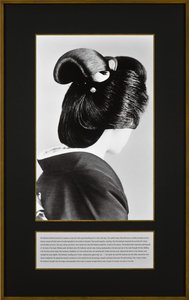
joão penalva
1949 - , Portugal
Основные сведения
- Artistic Movement Or Style: Abstract expressionism
- Artists Or Movements Influenced By This Artist: ['Joan Mitchell']
- Artists Who Influenced This Artist:
- Jean-Michel Basquiat
- Keith Haring
- Date Of Birth: January 28, 1912
- Date Of Death: August 11, 1956
- Full Name: Paul Jackson Pollock
- Nationality: American
- Notable Artworks:
- Number 17A
- No. 5, 1948
- Mural on Indian Red Ground
- Autumn Rhythm (Number 30)
- Convergence (Pollock)
- *Blue Poles*
- The Deep (painting)
- Place Of Birth: Cody, Wyoming, USA