

 Предпросмотр
 Поделиться
 Поделиться
 Детали произведения

 Скачать
 Похожие работы
 Рентгенография
 Слайд-шоу
 Статистика
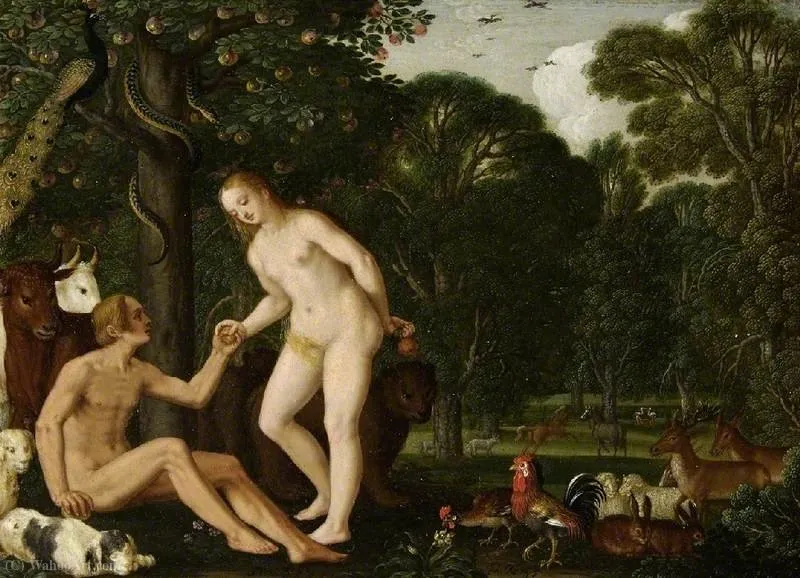
Adam and Eve in Paradise
 Читать далее
Приобретите цифровое изображение высокого разрешения в улучшенном качестве, которое значительно превосходит онлайн-превью.
Каждый файл тщательно подготавливается нашими специалистами с использованием передовых инструментов и экспертной ручной ретуши. Мы гарантируем исключительную четкость, точную цветопередачу и детальную проработку каждого изображения.
Финальный файл доставляется по электронной почте в течение 72 часов и оптимизирован для немедленного использования в профессиональной среде, при верстке и печати. Это тот же уровень качества, которому доверяют ведущие дизайнерские студии, издательства и галереи.
Цифровое изображение
Скачайте файл высокого разрешения для личного использования, печати и творческих проектов. ( Перейти к печати Купить картину ручной работы)
Включено в каждый заказ цифровых изображений
Гарантия экспертной цифровой доставки
Выбирая ArtsDot.com, вы получаете не просто изображение — вы приобретаете профессионально обработанное цифровое произведение искусства, созданное с безупречной точностью и под защитой гарантии качества. Вот всё, что автоматически входит в ваш заказ:

Мгновенная доставка по e-mail
Ваш цифровой файл в высоком разрешении будет отправлен вам по электронной почте в течение 72 часов после оформления заказа — и сразу станет доступен для использования.

Цифровой файл с ИИ-улучшением
Ваше произведение искусства проходит профессиональную оптимизацию с использованием передовых инструментов ИИ и ручной обработки, что гарантирует максимальную детализацию, четкость и точность цветопередачи.

Бессрочная бесплатная повторная доставка
Случайно удалили или потеряли файл? Не беспокойтесь — мы отправим его вам повторно в любое время и совершенно бесплатно.

Без импортных пошлин — навсегда
Наслаждайтесь вашим произведением искусства мгновенно без таможенных пошлин, сборов или затрат на доставку — цифровые загрузки всегда не облагаются налогом.

Гарантия точности цветопередачи
Мы гарантируем, что ваше цифровое изображение максимально точно передает оригинальные цвета благодаря использованию профессиональных инструментов и систем управления цветом.

Гарантия удовлетворенности 100 дней
Если вы не будете удовлетворены своим цифровым изображением, мы внесем правки или вернем 100% стоимости в течение 100 дней — без лишних вопросов.

100% Гарантия возврата средств
Не удовлетворены покупкой? Получите полный возврат средств в течение 100 дней после получения цифрового файла — без лишних вопросов.

Скидки на оптовые заказы
Купите 3 изображения, сэкономьте 10% — Купите 5, сэкономьте 15% — Купите 10+, сэкономьте 20%. Отличное решение для творческих проектов, галерей и агентств.
Похожие произведения
Биография художника
The Luminous Miniature: The Life and Legacy of Johann König
In the twilight of the Renaissance and the dawn of the Baroque, a period defined by dramatic shifts in light and shadow, the German painter Johann König carved out a niche of extraordinary intimacy. Born in Nuremberg around 1586, König emerged from a world where the meticulous precision of goldsmithing met the burgeoning expressive freedom of the seventeenth century. As the son of the goldsmith Arnold König, his early exposure to fine craftsmanship likely laid the foundation for his later mastery of the small-scale medium. His artistic journey was not merely one of technical skill but a profound engagement with the great masters of his era, creating works that functioned as windows into both the divine and the natural world.
König’s development was deeply shaped by his travels through the artistic heartlands of Europe. Between 1610 and 1614, his presence in Venice and Rome allowed him to breathe the same air as the masters who were redefining European aesthetics. It was in Rome that he encountered the hauntingly beautiful works of Adam Elsheimer, a connection that would become the cornerstone of his stylistic identity. The influence of Elsheimer, along with the subtle nuances of Paul Bril and the early works of Carlo Saraceni, infused König’s compositions with a sense of atmospheric depth and narrative tension. This period of wandering was transformative, as he absorbed the Italian penchant for dramatic lighting and classical composition, which he would later translate into his uniquely German sensibility.
Mastery on Copper: Technique and Vision
What truly distinguishes König within the pantheon of German Baroque artists is his specialized command over painted copper panels. This choice of support required an unparalleled level of discipline; the smooth, non-absorbent surface of copper demands a precise application of pigment to prevent blurring and to achieve the jewel-like luminosity that characterizes his best work. His technique allowed for a microscopic level of detail, enabling him to render the delicate textures of foliage, the shimmering surface of water, and the subtle expressions of biblical figures with breathtaking clarity.
His repertoire was a sophisticated blend of the sacred and the secular, often merging landscape art with profound religious narratives. In works such as Landscape with Tobias and the Angel or his various depictions of St. John the Baptist, König utilized the landscape not merely as a backdrop, but as an active participant in the spiritual drama. Through his use of light—often filtering through dense canopies or reflecting off quiet rivers—he created a sense of sacred atmosphere that invited the viewer into a state of quiet contemplation. His ability to scale grand theological themes down to the size of a cabinet painting allowed for a personal, almost devotional experience between the art and the observer.
A Legacy of Detail and Devotion
Though history occasionally overlooks those who worked in miniature compared to the titans of large-scale fresco or canvas, König’s significance remains undeniable. He served as a vital bridge between the meticulous traditions of the late sixteenth century and the more emotive, expansive Baroque style. His professional life in Augsburg, where he achieved guild membership and contributed to the decoration of the Augsburg Town Hall, demonstrates his integration into the highest levels of civic and artistic society.
The enduring value of Johann König’s oeuvre lies in its ability to evoke wonder through the small and the subtle. His works remind us that greatness is not measured by the breadth of a canvas, but by the depth of the vision contained within its borders. Today, his paintings stand as precious relics of a time when art was a meticulous pursuit of capturing the infinite within the infinitesimal, leaving behind a legacy of light, landscape, and lasting spiritual resonance.

johann könig
1586 - 1642 , Germany
Основные сведения
- Artistic Movement Or Style: Baroque art
- Artists Or Movements Influenced By This Artist: ['Johann Samuel König']
- Artists Who Influenced This Artist:
- Adam Elsheimer
- Italian masters
- Date Of Birth: Nuremberg, Germany (1586)
- Date Of Death: 1642
- Full Name: Johann König
- Nationality: German
- Notable Artworks:
- Landscape with Tobias and the angel
- The Death of Niobe's Children
- Latona Changing the Lycian Peasants into Frogs
- Place Of Birth: Nuremberg