

 Предпросмотр
 Поделиться
 Поделиться
 Детали произведения

 Скачать
 Похожие работы
 Рентгенография
 Слайд-шоу
 Статистика
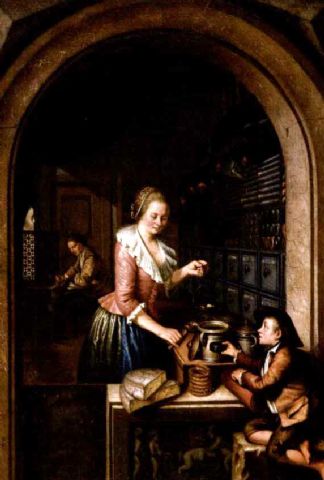
Interior Scene
 Читать далее
Приобретите цифровое изображение высокого разрешения в улучшенном качестве, которое значительно превосходит онлайн-превью.
Каждый файл тщательно подготавливается нашими специалистами с использованием передовых инструментов и экспертной ручной ретуши. Мы гарантируем исключительную четкость, точную цветопередачу и детальную проработку каждого изображения.
Финальный файл доставляется по электронной почте в течение 72 часов и оптимизирован для немедленного использования в профессиональной среде, при верстке и печати. Это тот же уровень качества, которому доверяют ведущие дизайнерские студии, издательства и галереи.
Цифровое изображение
Скачайте файл высокого разрешения для личного использования, печати и творческих проектов. ( Перейти к печати Купить картину ручной работы)
Включено в каждый заказ цифровых изображений
Гарантия экспертной цифровой доставки
Выбирая ArtsDot.com, вы получаете не просто изображение — вы приобретаете профессионально обработанное цифровое произведение искусства, созданное с безупречной точностью и под защитой гарантии качества. Вот всё, что автоматически входит в ваш заказ:

Мгновенная доставка по e-mail
Ваш цифровой файл в высоком разрешении будет отправлен вам по электронной почте в течение 72 часов после оформления заказа — и сразу станет доступен для использования.

Цифровой файл с ИИ-улучшением
Ваше произведение искусства проходит профессиональную оптимизацию с использованием передовых инструментов ИИ и ручной обработки, что гарантирует максимальную детализацию, четкость и точность цветопередачи.

Бессрочная бесплатная повторная доставка
Случайно удалили или потеряли файл? Не беспокойтесь — мы отправим его вам повторно в любое время и совершенно бесплатно.

Без импортных пошлин — навсегда
Наслаждайтесь вашим произведением искусства мгновенно без таможенных пошлин, сборов или затрат на доставку — цифровые загрузки всегда не облагаются налогом.

Гарантия точности цветопередачи
Мы гарантируем, что ваше цифровое изображение максимально точно передает оригинальные цвета благодаря использованию профессиональных инструментов и систем управления цветом.

Гарантия удовлетворенности 100 дней
Если вы не будете удовлетворены своим цифровым изображением, мы внесем правки или вернем 100% стоимости в течение 100 дней — без лишних вопросов.

100% Гарантия возврата средств
Не удовлетворены покупкой? Получите полный возврат средств в течение 100 дней после получения цифрового файла — без лишних вопросов.

Скидки на оптовые заказы
Купите 3 изображения, сэкономьте 10% — Купите 5, сэкономьте 15% — Купите 10+, сэкономьте 20%. Отличное решение для творческих проектов, галерей и агентств.
Похожие произведения

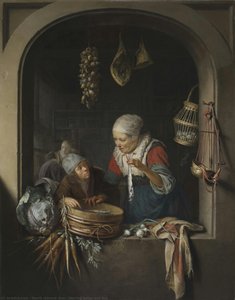
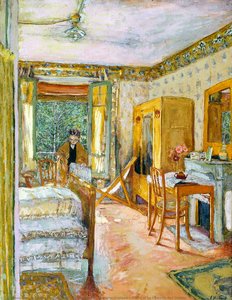
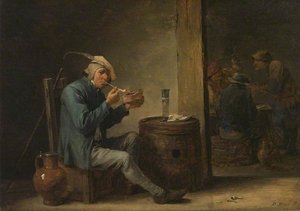
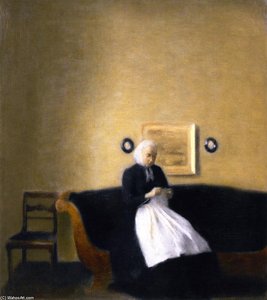
Биография художника
The Chronicles of Conflict: The Life and Legacy of Johann Nepomuk Hoechle
In the grand tapestry of nineteenth-century European art, few threads are as vibrant or as fraught with tension as those woven by Johann Nepomuk Hoechle. A painter whose brush seemed to pulse with the very heartbeat of war, Hoechle possessed a rare ability to translate the chaotic energy of the battlefield into moments of profound historical resonance. Born in Munich in 1790, he was an artist shaped by both a prestigious lineage and the turbulent political landscape of the Napoleonic era. As the son of Johann Baptist Hoechle, a Swiss-born painter who served the Habsburg monarchy, young Johann was immersed in an environment where visual storytelling was inextricably linked to the service of the state. This early exposure to the grandeur of courtly life provided him with a foundational appreciation for meticulous observation and the dramatic potential of historical narrative.
The trajectory of Hoechle’s talent took a decisive turn through his early training, beginning with an apprenticeship under the skilled engraver Ferdinand Kobell. Though Kobell’s untimely death in 1800 forced a relocation to Vienna, it was within the hallowed halls of the Academy of Fine Arts that Hoechle truly found his voice. Under the guidance of masters such as Heinrich Friedrich Füger, who specialized in history painting, and Michael Wutky, an expert in landscapes, Hoechle learned to marry the epic scale of historical events with the atmospheric nuances of the natural world. This dual mastery would become the hallmark of his career, allowing him to place human drama within vast, often unforgiving, environments.
A Vision Forged in Fire and Shadow
While his academic training provided the technical scaffolding, it was the influence of the French marine and military artist Ignace Duvivier that ignited Hoechle’s passion for the theater of war. Duvivier’s mastery of light, movement, and psychological depth offered Hoechle a blueprint for capturing the visceral reality of combat. This inspiration led to one of the most harrowing and legendary episodes of his life. In 1809, during the height of the Battle of Aspern, Hoechle ventured onto a hillside near Heiligenstadt to sketch the unfolding carnage. His daring—or perhaps his recklessness—nearly cost him his life when he was apprehended by French soldiers who mistook him for a spy. It was only through his fluency in French that he managed to charm his captors and escape the firing squad, an event that undoubtedly deepened the emotional gravity of his subsequent works.
Hoechle’s artistry reached its zenith when he began documenting major military maneuvers on behalf of the Austrian Emperor Francis I. His ability to render the textures of war—the glint of steel, the heavy breath of cavalry, and the suffocating smoke of artillery—set him apart from his contemporaries. One of his most celebrated achievements, The Crossing of the Vosges, stands as a testament to his skill in capturing the aftermath of Napoleon's defeat at Leipzig. In such works, he does not merely record history; he orchestrates it. He utilizes chiaroscuro to punctuate the darkness of night or the gloom of battle with sudden, violent bursts of light, creating a sense of breathless anticipation and impending doom.
The Enduring Impression of a Military Master
Beyond the smoke of the battlefield, Hoechle’s repertoire extended into genre scenes and portraits that showcased his versatility. Whether he was capturing the quiet intimacy of an interior scene or the dignified presence of figures like Beethoven, his work remained anchored in a profound sense of realism. His later years, which saw him traveling through Italy and attending military maneuvers in Hungary, continued to feed his hunger for subject matter that combined movement with historical significance.
Though his life was tragically short, ending in Vienna in 1835, the impact of Johann Nepomuk Hoechle remains palpable. He stands as a pioneer of military art, a painter who refused to look away from the shadows of conflict. His legacy is found in:
- Technical Precision: The remarkable rendering of textures, from the heavy leather of saddles to the cold metal of cannons.
- Atmospheric Drama: A sophisticated use of light and shadow that transformed static battle scenes into living, breathing chronicles of upheaval.
- Historical Witness: His role as a visual chronicler for the Habsburg monarchy, preserving the monumental shifts of the Napoleonic era for posterity.
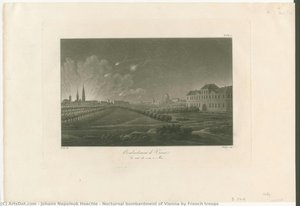
Today, when we gaze upon his depictions of nocturnal bombardments or the movement of troops through rugged terrain, we are not merely looking at art; we are witnessing the captured pulse of an era defined by change, courage, and the relentless march of history.
Johann Nepomuk Hoechle
1790 - 1835 , Germany
Основные сведения
- Artistic Movement Or Style: Military art
- Artists Or Movements Influenced By This Artist: ['French marine and military art']
- Artists Who Influenced This Artist: ['Ignace Duvivier']
- Date Of Birth: 1790, Munich
- Date Of Death: 1835, Vienna
- Full Name: Johann Nepomuk Hoechle
- Nationality: Austrian
- Notable Artworks:
- Crossing Vosges
- Beethoven's Room
- Place Of Birth: Germany (Munich)