


 Предпросмотр
 Поделиться
 Поделиться
 Детали произведения

 Скачать
 Похожие работы
 Рентгенография
 Слайд-шоу
 Статистика
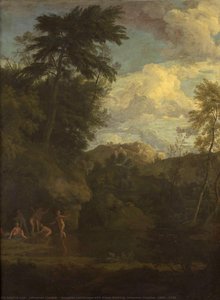
Arcadian Landscape with Jupiter and Io, Johannes Glauber, 1680 - 1726
 1726
1726 160.0 x 132.0 cm
 Читать далее
Жикле / Арт-принт
Печать (жикле) или холст музейного качества с быстрыми сроками изготовления и широким выбором вариантов отделки. ( Купить картину ручной работы Перейти к цифровым изображениям)




































Выберите один из наших стандартных размеров, соответствующих оригинальным пропорциям произведения искусства.

Вы можете указать свои собственные размеры, чтобы репродукция идеально подошла под конкретную раму или пространство. Если выбранный вами размер не будет соответствовать пропорциям оригинала, мы либо обрежем произведение, либо дополним изображение зеркальным отражением краев или однотонной заливкой. Перед началом производства вам будет отправлен цифровой макет для утверждения.
Пожалуйста, обратите внимание, что предварительный просмотр на экране не отображает фактическую обрезку или расширение изображения. Только макет точно покажет финальную композицию.
Несмотря на возможность заказа индивидуальных размеров, мы рекомендуем выбирать размер из предопределенного списка, чтобы сохранить оригинальные пропорции.
Доставка по всему миру () за 2 недели вместо стандартных 4/5 недель. (14 Сентябрь)

Бесплатная экспресс-доставка по всему миру

Высококачественный льняной холст

Полное страхование доставки

Гарантия возмещения таможенных пошлин

Гарантия точного соответствия цветов

100-дневная политика возврата (только при обнаружении дефектов)

Гарантия возврата 100% средств

Предложение оптовых скидок
 Вариант со стеклом доступен только для размеров менее 110 см

Arcadian Landscape with Jupiter and Io, Johannes Glauber, 1680 - 1726
Жикле / Арт-принт
Размер репродукции
-


Итоговая стоимость
$ 62
Похожие произведения










Биография художника
Johannes Glauber: A Quiet Master of Italianate Landscapes
In the vibrant tapestry of the Dutch Golden Age, where grand narratives often competed for the attention of a prosperous merchant class, Johannes Glauber carved out a space defined by serenity and meticulous grace. Born in 1646 in Utrecht, Glauber’s entry into the world of fine art was marked by a quiet rebellion against the scientific legacy of his father, the renowned chemist Johann Rudolph Glauber. While his father sought to unlock the secrets of the natural world through alchemy and chemical engineering, Johannes turned his gaze toward capturing its aesthetic splendor. This tension between the empirical and the evocative would define much of his early development, as he moved away from the rigid structures of scientific observation toward the fluid, atmospheric beauty of the landscape genre.
Glauber’s artistic foundation was laid under the tutelage of Nicolaes Berchem, a titan of the Utrecht school whose work epitomized the Italianate style. Through Berchem, Glauber learned to master the art of the "Italianate" landscape—a beloved Dutch tradition that reimagined the rugged, sun-drenched vistas of Italy through a Northern lens. This training was further refined during his time living with Gerrit van Uylenburgh, where he honed the delicate skill of producing high-quality copies of Mediterranean scenes. Such work was not merely derivative; it was an essential practice for a growing market of Amsterdam connoisseurs who craved the warmth and classical grandeur of Venetian villas and Tuscan hills, even while residing in the cooler climates of the Netherlands.
The Journey Through Light and Atmosphere
The evolution of Glauber’s style was profoundly shaped by his travels, most notably a transformative voyage to Paris alongside his brother, Johannes Gottlieb Glauber. This period of exposure to the French artistic landscape introduced a subtle shift in his technique, moving toward a more delicate, almost Rococo-like sensibility. The influence of Parisian elegance breathed new life into his compositions, encouraging a greater emphasis on atmospheric perspective and a softer, more luminous handling of light. His landscapes began to transcend simple topographical depictions, becoming instead poetic meditations on nature, where the interplay of shadow and sun created a sense of profound stillness.
His oeuvre is characterized by several key technical and thematic elements:
- The Italianate Vision: A masterful ability to recreate the warmth of Mediterranean light, featuring classical ruins, ancient temples, and sprawling vistas that evoke an idealized Arcadia.
- Atmospheric Precision: An expert use of oil on canvas to capture the hazy horizons and shifting skies that suggest depth and infinite space.
- Narrative Subtlety: The integration of small, often mythological figures—such as Diana or Jupiter—which serve not to dominate the scene but to anchor the landscape within a classical, timeless context.
- Meticulous Craftsmanship: A dedication to the fine details of nature, from the texture of rocky outcrops to the gentle movement of water in forest lakes.
Legacy and Historical Significance
Though he may not have sought the explosive fame of his more dramatic contemporaries, Johannes Glauber’s significance lies in his role as a custodian of the Italianate tradition. He represented the sophisticated taste of the Dutch Golden Age—a period where art was intimately connected to the domestic and emotional lives of its viewers. His works provided a window into an idealized world, offering solace and contemplation through their balanced compositions and tranquil subject matter. By bridging the gap between the rigorous training of the Utrecht school and the burgeoning elegance of French influence, Glauber helped sustain a genre that would continue to resonate throughout European art history.
Today, his paintings stand as enduring testaments to a period of unparalleled artistic flourishing. Whether depicting an Arcadian landscape with figures kneeling in worship or a quiet scene of Diana bathing among rocks, Glauber’s work invites the viewer into a realm of quiet beauty. His ability to capture the ephemeral quality of light and the eternal stillness of nature ensures his place as a respected master of the Dutch landscape tradition, reminding us that true artistic greatness often resides in the most subtle and serene of expressions.
johannes glauber
1646 - 1726 , Netherlands
Основные сведения
- Artistic Movement Or Style: Golden Age
- Artists Or Movements Influenced By This Artist: Italianate Landscape Painting
- Artists Who Influenced This Artist: Nicolaes Berchem
- Date Of Birth: Utrecht, Netherlands (1646)
- Date Of Death: c. 1726
- Full Name: Johannes Glauber
- Nationality: Dutch
- Notable Artworks: ['Arcadian Landscape with Diana Bathing']
- Place Of Birth: Utrecht