

 Предпросмотр
 Поделиться
 Поделиться
 Детали произведения

 Скачать
 Похожие работы
 Рентгенография
 Слайд-шоу
 Статистика
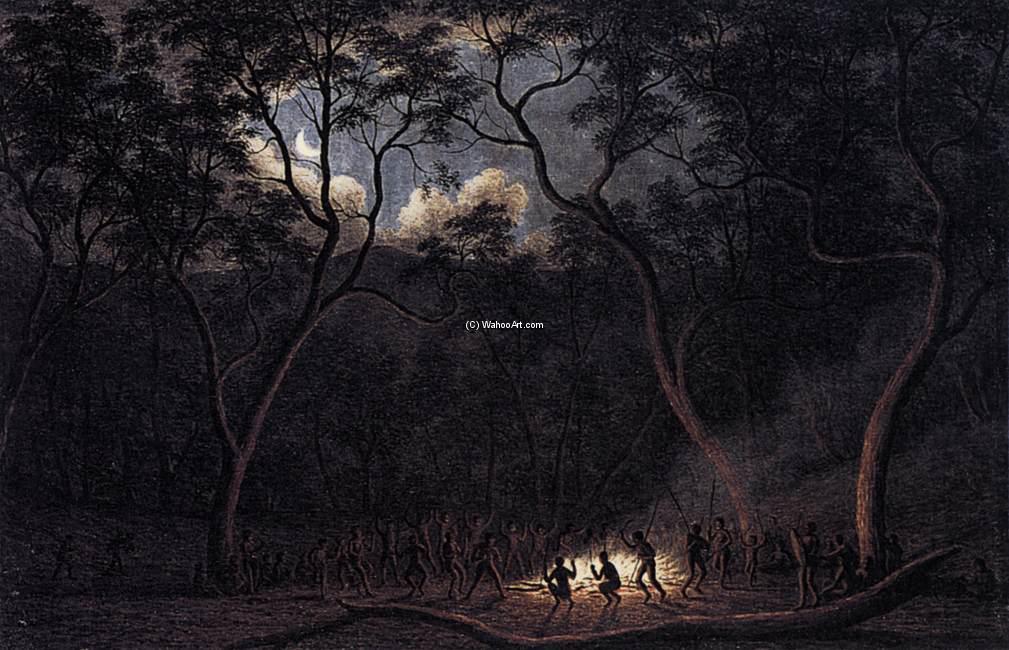
A Corroboree in Van Diemen's Land
 Oil On Canvas
- WallArt
- Romanticism
 1840
1840- 19th Century
 77.0 x 115.0 cm
 Лувр
Лувр
 Читать далее
Жикле / Арт-принт
Печать (жикле) или холст музейного качества с быстрыми сроками изготовления и широким выбором вариантов отделки. ( Купить картину ручной работы Перейти к цифровым изображениям)




P118B $10

P118H $10

P118W $10

P438Z $10

P508JH $12

P508YH $12

P805H $10

P805Z $10

P919BZ $10

P919G $10

P919XJ $10

P959ZH $10

P968JZ $12

W106C $8

W218G $10

W218JH $8

W218Y $10

W307PJ $10

W316G $10

W316PJ $8

W316Y $10

W398PJ $8

W4111J $10

W500HY $15

W500JH $15

W692G $12

W849H $8

W940BG $15

W953PJ $8




Выберите один из наших стандартных размеров, соответствующих оригинальным пропорциям произведения искусства.

Вы можете указать свои собственные размеры, чтобы репродукция идеально подошла под конкретную раму или пространство. Если выбранный вами размер не будет соответствовать пропорциям оригинала, мы либо обрежем произведение, либо дополним изображение зеркальным отражением краев или однотонной заливкой. Перед началом производства вам будет отправлен цифровой макет для утверждения.
Пожалуйста, обратите внимание, что предварительный просмотр на экране не отображает фактическую обрезку или расширение изображения. Только макет точно покажет финальную композицию.
Несмотря на возможность заказа индивидуальных размеров, мы рекомендуем выбирать размер из предопределенного списка, чтобы сохранить оригинальные пропорции.
Доставка по всему миру () за 2 недели вместо стандартных 4/5 недель. (12 Сентябрь)

Бесплатная экспресс-доставка по всему миру

Высококачественный льняной холст

Полное страхование доставки

Гарантия возмещения таможенных пошлин

Гарантия точного соответствия цветов

100-дневная политика возврата (только при обнаружении дефектов)

Гарантия возврата 100% средств

Предложение оптовых скидок
 Вариант со стеклом доступен только для размеров менее 110 см

A Corroboree in Van Diemen's Land
Жикле / Арт-принт
Размер репродукции
-


Итоговая стоимость
$ 62
The Mystique of Moonlight and Ceremony
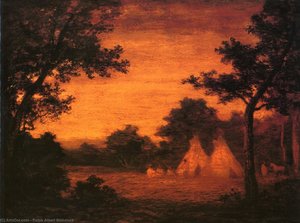
This evocative canvas, depicting A Corroboree in Van Diemen's Land, transports the viewer into a moment suspended between the earthly and the spiritual. It is more than a mere depiction of an Aboriginal gathering; it is a profound meditation on culture, resilience, and the enduring power of ritual set against the vast, mysterious backdrop of the Australian wilderness. The scene unfolds under a luminous, ethereal moonlight, casting the central clearing into a soft, dramatic glow that seems to emanate from the very heart of the ceremony itself. One can almost hear the rhythmic beat of unseen drums and feel the warmth radiating from the communal fire, anchoring the human drama within the grandeur of nature.
Romantic Echoes in Technique and Tone
The style is deeply rooted in Romanticism, a movement that prized emotion and the sublime over mere objective reality. John Glover, whose hand graces this work, masterfully employs an atmospheric approach to capture mood rather than just form. Observe how the artist handles the light: moonlight serves as the primary illuminator, diffusing shadows across the figures engaged in their sacred dance. The palette is a rich tapestry of deep forest greens, earthy browns, and velvety blacks, punctuated by the warm, vital contrast of the firelight. Technically, the layering of oil paint suggests an almost palpable texture—the rough bark of the surrounding trees, the density of the foliage, and the ephemeral wisps of smoke rising into the cool night air. The visible yet blended brushwork speaks to a skilled hand at work, building depth through subtle gradations rather than harsh outlines.
Compositional Harmony and Depth
The composition guides the eye with an almost deliberate grace. Tall, framing trees flank the scene, acting as natural proscenium arches that direct our gaze inexorably toward the central action. The artist achieves a breathtaking sense of depth through atmospheric perspective; the foreground figures are richly detailed, while the background recedes into softer, hazier tones, enhancing the illusion of immense space. This careful structuring—the horizontal sweep across the clearing balanced by the vertical thrust of the surrounding trunks—creates a visual harmony that feels both encompassing and intimate at the same time.
Symbolism and Enduring Resonance
To view this painting is to engage with layers of symbolism. The corroboree itself represents cultural continuity, a vital thread of tradition woven into the fabric of the land. Set against the backdrop of early colonial encounters, the scene carries an undercurrent of poignant significance—a portrayal of deep-rooted culture persisting beneath the gaze of history. The moonlight often symbolizes the spiritual or the eternal, lending the entire gathering an air of reverence and mystery. For the collector or designer, this piece offers not just decoration, but a narrative anchor; it speaks to themes of connection, primal ritual, and the enduring spirit of place.
Похожие произведения

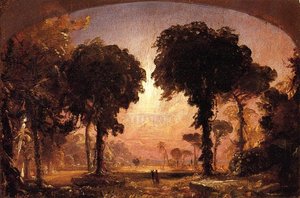
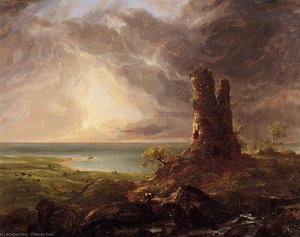
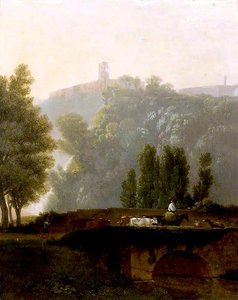
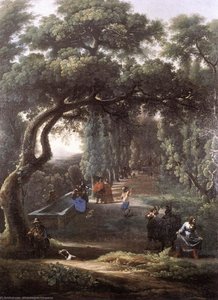
Биография художника
Early Life and Artistic Foundations
John Glover, born February 18, 1767, in the tranquil Leicestershire countryside of England, possessed an innate artistic sensibility that blossomed early in life. From humble beginnings as the youngest son of a farming family at Houghton-on-the-Hill, young John demonstrated a remarkable talent for both drawing and calligraphy. This skill led to his appointment as a writing master at the Free School in Appleby, a position that provided him with a stable foundation while nurturing his burgeoning artistic inclinations. It was during this period that Glover began to explore painting in both oil and watercolour, receiving instruction from notable artists of the time such as William Payne and potentially John 'Warwick' Smith. These early lessons instilled within him a deep appreciation for picturesque views and a dedication to capturing the beauty of the natural world through sketching tours – a practice that would define his artistic journey for decades to come. He quickly developed an eye for composition, light, and atmosphere, skills he honed while meticulously documenting the landscapes around him.A Rising Star in the British Art World
Glover’s dedication and talent did not go unnoticed. In 1805, he became a member of the prestigious Old Water Colour Society, quickly ascending to the position of president in 1807. This marked a significant turning point in his career, solidifying his reputation within the British art establishment. He exhibited extensively at both the Royal Academy and the Society of British Artists, showcasing his evolving style and captivating audiences with his romantic landscapes. Glover became particularly known for what were termed “Italianate” scenes – not literal depictions of Italy, but rather idealized visions of Britain and Southern Europe infused with a distinctly classical sensibility. His work drew heavily from the influence of Claude Lorrain, earning him the affectionate moniker "the English Claude." This comparison was apt; like his admired predecessor, Glover masterfully employed luminous skies, harmonious compositions, and an overall sense of idyllic beauty in his paintings. By 1820, he had established his own gallery in London, a testament to his growing success and artistic independence.A New World, A Transformed Vision
In 1831, at the age of sixty-four, John Glover made a bold decision that would irrevocably alter both his life and his art: he emigrated with his family to Van Diemen’s Land (now Tasmania), Australia. This was not merely a relocation; it was a leap into the unknown, driven by a desire for new opportunities and a fascination with the untamed beauty of the Antipodes. Upon arrival, Glover acquired a substantial land grant at Mills Plains, which he christened Patterdale after a cherished location in the Lake District – a poignant reminder of his English roots. However, Australia was unlike anything he had ever encountered. The landscape demanded a new approach, and Glover responded with remarkable adaptability. He gradually moved away from the idealized romanticism of his earlier work, embracing a more naturalistic and atmospheric style that reflected the unique qualities of the Tasmanian environment. His palette underwent a transformation, incorporating olive greens, ochres, misty greys, and intense blues to capture the distinctive light and atmosphere of the Australian bush, particularly the majestic eucalyptus trees.Legacy as the “Father of Australian Landscape Painting”
Glover’s pioneering depictions of the Australian landscape cemented his place in art history. Notable works such as "Launceston and the River Tamar," "At Matlock - mist rising," and perhaps most significantly, "Natives on the Ouse River, Van Diemen’s Land" stand as testaments to his artistic vision and historical importance. “Natives on the Ouse River” is particularly noteworthy for its reflection of European perceptions of an idyllic Antipodean landscape, a complex portrayal that invites critical examination. He is rightfully considered the "father of Australian landscape painting," not simply because he was among the first to depict the continent’s natural beauty, but because he established a new approach – one that moved beyond colonial art styles and embraced the unique character of the land. His influence extended far beyond his lifetime; The John Glover Society was founded to honor his legacy, commissioning a statue in his likeness and awarding an annual prize for Tasmanian landscape paintings. Today, Glover’s paintings are held in major art galleries throughout Australia and internationally, continuing to inspire artists and captivate audiences with their beauty, technical skill, and enduring historical significance. He remains a pivotal figure in the development of Australian art, a testament to the power of artistic vision and the transformative potential of embracing a new world.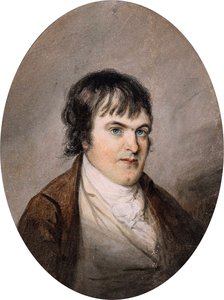
John Glover
1767 - 1849 , United Kingdom
Основные сведения
- Artistic Movement Or Style: Romanticism, Landscape
- Artists Or Movements Influenced By This Artist: ['Australian Landscape Painting']
- Artists Who Influenced This Artist:
- Claude Lorrain
- William Payne
- John 'Warwick' Smith
- Date Of Birth: Feb 18, 1767
- Date Of Death: Dec 9, 1849
- Full Name: John Glover
- Nationality: British-Australian
- Notable Artworks:
- Launceston & River Tamar
- At Matlock - mist rising
- Natives on the Ouse River
- Place Of Birth: Leicester, UK
Похожие статьи
The Sublime and the Picturesque: Exploring Emotion & Nature in Romantic Landscape Painting
Explore the emotional power of Romantic landscape painting! Discover the sublime & picturesque traditions, key artists like Friedrich & Cole, and find your perfect artwork at ArtsDot.
John Varley I: Intimate Observation & the British Romantic Landscape
Explore the serene landscapes of John Varley I, a key figure in British Romanticism. Discover his unique watercolour style, collaboration with William Blake & lasting artistic legacy. Learn about collecting Varley's work.

Романтический пейзаж: 10 шедевров, изменивших искусство | ArtsDot.com
Погрузитесь в мир романтического пейзажа! 10 шедевров Фридриха, Тёрнера и других гениев. Узнайте историю создания культовых картин и вдохновитесь для декора интерьера. Репродукции высокого качества на ArtsDot.com.

Джон Сингер Сарджент: 25 шедевров портретной живописи для вашего интерьера | ArtsDot
Погрузитесь в мир Джона Сингера Сарджента! 25 шедевров импрессионизма и реализма, раскрывающих элегантность эпохи Gilded Age. Купите репродукции картин Сарджента музейного качества для вашего интерьера на ArtsDot.com.

Джон Констебль: 25 шедевров английского пейзажа для вашего интерьера
Погрузитесь в мир английского пейзажа с Джоном Констеблом! 25 шедевров романтизма, история создания картин и вдохновение для вашего интерьера. Репродукции высокого качества на ArtsDot.com – искусство для ценителей.