

 Предпросмотр
 Поделиться
 Поделиться
 Детали произведения

 Скачать
 Похожие работы
 Рентгенография
 Слайд-шоу
 Статистика
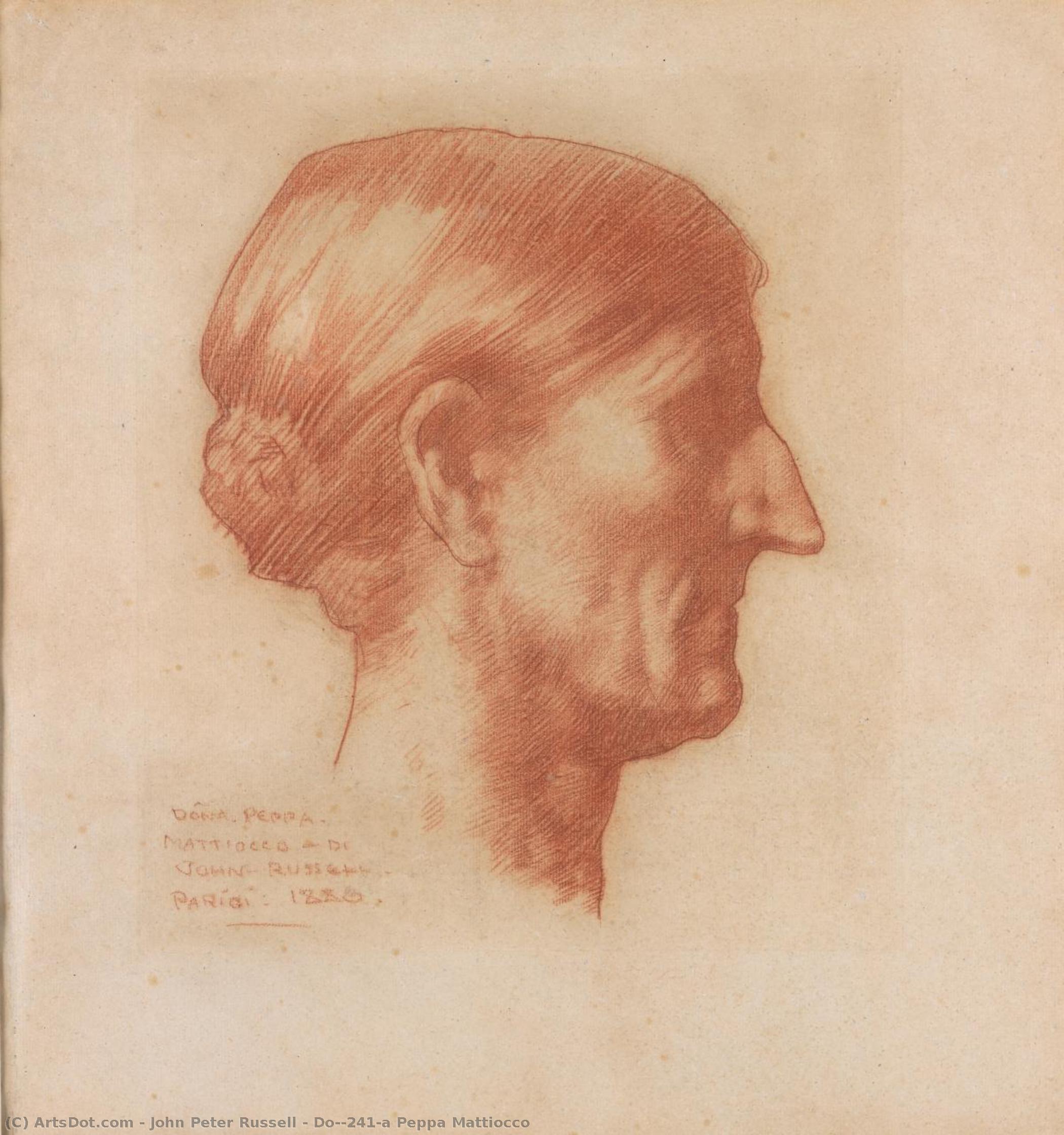
Doña Peppa Mattiocco
 Chalk
Chalk- WallArt
- Australian Impressionism
 1886
1886 31.0 x 24.0 cm
 Национальная галерея Виктории
 Читать далее
Масляная репродукция ручной работы
Картина маслом на холсте в выбранном вами размере и раме, написанная на заказ нашими художниками. ( Перейти к печати Перейти к цифровым изображениям)




P118B $10

P118H $10

P118W $10

P438Z $10

P508JH $12

P508YH $12

P805H $10

P805Z $10

P919BZ $10

P919G $10

P919XJ $10

P959ZH $10

P968JZ $12

W106C $8

W218G $10

W218JH $8

W218Y $10

W307PJ $10

W316G $10

W316PJ $8

W316Y $10

W398PJ $8

W4111J $10

W500HY $15

W500JH $15

W692G $12

W849H $8

W940BG $15

W953PJ $8




Выберите один из наших стандартных размеров, соответствующих оригинальным пропорциям произведения искусства.

Вы можете указать собственные размеры, чтобы картина идеально вписалась в выбранную раму или пространство. Если выбранный вами размер не соответствует пропорциям оригинала, мы либо обрежем полотно, либо расширим его за счет дополнительных элементов, написанных вручную. Цифровой макет будет отправлен вам на утверждение перед началом производства.
Обратите внимание, что предварительный просмотр на экране не отражает фактическую обрезку или расширение. Только макет точно покажет окончательную композицию.
Хотя доступны индивидуальные размеры, мы рекомендуем выбирать вариант из предопределенного списка, чтобы сохранить исходные пропорции.
После оформления заказа команда ArtsDot.com свяжется с клиентом по электронной почте для уточнения деталей и предоставит предварительный макет
Доставка по всему миру () за 3–4 недели вместо стандартных 5 недель. (11 Сентябрь). Без компромиссов в качестве.

Бесплатная экспресс-доставка по всему миру

Высококачественный льняной холст

Полное страхование доставки

Гарантия возмещения таможенных пошлин

Гарантия точного соответствия цветов

100-дневная политика возврата (только при обнаружении дефектов)

Гарантия возврата 100% средств

Предложение оптовых скидок
 Вариант со стеклом доступен только для размеров менее 110 см

Doña Peppa Mattiocco
Техника репродукции
Размер репродукции
-


Итоговая стоимость
$ 263
Doña Peppa Mattiocco: A Glimpse of Victorian Italy Through an Australian Eye
John Peter Russell’s “Doña Peppa Mattiocco,” painted in 1886, is more than just a portrait; it's a captivating window into the vibrant cultural exchange that defined late 19th-century Europe. This intimate study of a woman from Monte Cassino, Italy, reveals a masterful blend of realism and impressionistic technique, reflecting Russell’s journey through artistic movements and his profound connections with some of history’s most influential artists.
The subject herself, Doña Peppa Mattiocco, remains somewhat enigmatic. Records suggest she was a local figure in the region, likely a woman of considerable character and presence. Russell's depiction isn't one of idealized beauty but rather a carefully observed portrayal of her features – the strong jawline, the intelligent gaze, and the subtle curve of her nose all contribute to an image that feels both immediate and deeply personal. The red background, a bold and unexpected choice for the era, serves not merely as a backdrop but as a visual anchor, drawing attention to Mattiocco’s face and intensifying the emotional impact of the portrait.
A Meeting of Artistic Worlds
Russell's artistic trajectory is itself a fascinating story. Born in Sydney, Australia, he embarked on a transformative journey to Europe at eighteen, initially pursuing engineering but quickly discovering his true calling within the burgeoning world of art. His early training with Alphonse Legros at the Slade School of Fine Art in London provided him with a solid foundation in draughtsmanship, yet it was his time in Paris that truly shaped his style. There, under the tutelage of Fernand Cormon, he embraced the principles of Impressionism – capturing fleeting moments and emphasizing the effects of light and color.
Crucially, Russell’s Parisian years coincided with a period of intense artistic ferment. He forged close friendships with Vincent van Gogh and Claude Monet, both pivotal figures in the Impressionist movement. The influence of these masters is evident in “Doña Peppa Mattiocco,” particularly in the loose brushwork, the broken color palette, and the emphasis on capturing the atmosphere of the scene. Interestingly, Russell’s connection to Van Gogh is particularly significant; he was one of the first artists to paint a portrait of the troubled genius, a testament to their shared artistic sensibilities.
Technique and Materials
The painting itself is executed in chalk on buff paper, a technique that lends it a remarkable sense of immediacy and intimacy. Russell’s use of red chalk – a traditional drawing medium – allows for subtle gradations of tone and texture, creating a remarkably realistic depiction of Mattiocco's features. The loose brushwork, characteristic of Impressionism, suggests a fleeting moment captured on paper, as if the artist was working quickly to capture the essence of his subject.
The choice of red chalk is also noteworthy. Red chalk was often used for portraiture in Italy during this period, and Russell’s decision to employ it here subtly connects the painting to its Italian setting. The paper itself, buffed to a smooth finish, provides a luminous surface that enhances the vibrancy of the colors.
Symbolism and Emotional Resonance
Beyond its technical merits, “Doña Peppa Mattiocco” possesses a quiet emotional resonance. The direct gaze of the subject invites the viewer into her world, creating a sense of connection and intimacy. The red background, while bold, doesn’t feel jarring; instead, it subtly amplifies the intensity of her expression. It's a portrait that speaks not just to Mattiocco’s appearance but also to her character – a woman of strength, intelligence, and perhaps even a touch of mystery.
Russell’s decision to paint this portrait in Italy reflects his own immersion in European culture and his desire to capture the beauty and spirit of the region. “Doña Peppa Mattiocco” is therefore not simply a likeness; it's a testament to the power of art to transcend cultural boundaries and connect us with individuals from different times and places.
A Legacy Rediscovered
For decades, John Peter Russell’s work was largely forgotten. His artistic output was scattered across Europe, and his story remained untold. However, in recent years, there has been a growing recognition of his importance as an Australian Impressionist. “Doña Peppa Mattiocco” is now part of the National Gallery of Victoria's collection, offering a valuable glimpse into the life and art of this remarkable artist – a man who bridged continents and left behind a legacy of vibrant color and captivating portraits.
Похожие произведения
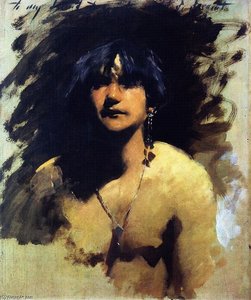
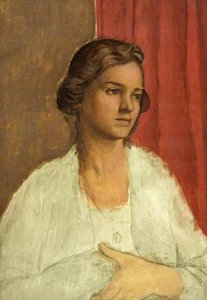
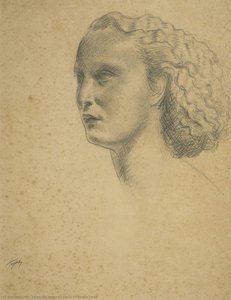
Биография художника
John Peter Russell (Australian painter) - Wikipedia
John Peter Russell remains a compelling, almost paradoxical figure in the history of Australian art. Often dubbed “Australia’s Lost Impressionist,” his story is one of transatlantic artistic exchange, personal tragedy, and eventual rediscovery. Born in Sydney in 1858, Russell's path diverged from the typical colonial trajectory when, at eighteen, he embarked for Europe – initially to pursue engineering, but swiftly drawn into the vibrant world of art. This decision would place him at the very heart of the burgeoning Impressionist movement and forge connections with some of its most iconic figures. His early education at Goulburn School provided a foundation, yet it was his studies under Alphonse Legros at the Slade School of Fine Art in London (1881-1883) that truly ignited his artistic ambitions. This formal training instilled in him a strong draughtsmanship, but it was his subsequent move to Paris and tutelage under Fernand Cormon that unlocked his passion for color and light.Parisian Circles and the Dawn of Impressionism
Paris in the 1880s was a crucible of artistic innovation, and Russell quickly immersed himself within its dynamic circles. It was here he formed a particularly close friendship with Vincent van Gogh, a relationship documented by Russell’s striking 1886 portrait of the artist – considered one of the most important depictions of Van Gogh created by a contemporary. This portrait offers a poignant glimpse into Van Gogh's character and foreshadows the emotional intensity that would come to define his work. Beyond Van Gogh, Russell’s artistic development was profoundly shaped by his encounter with Claude Monet. Spending time painting alongside Monet at Belle Île, he absorbed the techniques of *plein air* painting, embracing broken brushstrokes and a heightened sensitivity to atmospheric effects. This period marked a turning point in Russell's style, as he began to fully embrace the principles of Impressionism. He wasn’t merely replicating what he saw; he was interpreting it through the lens of his own unique sensibility. Henri Matisse himself credited Russell with introducing him to impressionist techniques and colour theory during a visit to Belle Île in 1890s – a testament to Russell's understanding and articulation of these artistic principles. ## Belle Île: A Sanctuary of Light and Color The island of Belle Île, off the coast of Brittany, became central to Russell’s life and art. He settled there with his wife, Marianna Mattiocco – a model for Auguste Rodin – and established a home that served as both studio and sanctuary. The rugged coastline, dramatic cliffs, and ever-changing light of Belle Île provided endless inspiration. His seascapes from this period are particularly noteworthy, capturing the raw energy and beauty of the Atlantic Ocean with vibrant color and loose brushwork. Works like *Les aiguilles de Coton, Belle-Île* (1897), a delicate watercolour depicting the island’s distinctive rock formations, exemplify his ability to translate fleeting impressions into enduring images. Russell's style during this time was characterized by an optimistic portrayal of landscapes and figures, infused with a joyful sense of light and color. He wasn’t merely replicating what he saw; he was interpreting it through the lens of his own unique temperament. Paintings like *Mon Ami 'Polite'* (c. 1900), a portrait of a local fisherman, demonstrate his skill in capturing not only physical likeness but also the character and atmosphere of his subjects. ## Life ### Early Years Russell was born on June 16, 1858, in Darlinghurst, Sydney, Australia, the eldest son of Scottish engineer John Russell and Charlotte Elizabeth Nicholl. His father’s engineering firm produced much of Sydney's colonial-era ironwork. Russell attended Goulburn School providing him with a solid foundation for his artistic pursuits. From eighteen he trained as a 'gentleman apprentice' with Robey & Co., Lincoln, England, where he became a qualified engineer (later he was able to cast the keel of his yacht himself at Belle Ile). He maintained his childhood interest in art and made his first experiments with water-colour, delineating the Gothic outlines of Lincoln Cathedral in a misty light. ### European Education and Artistic Influences Russell enrolled at the Slade School of Fine Art, University College, London from 1881 to 1883 under Alphonse Legros. He spent four terms spread over three years emphasizing draughtsmanship and memory training. Russell travelled to Spain in 1883 with Tom Roberts and Dr William Maloney, updating him on developments in French Impressionism. He visited plein air painting colonies in Cornwall in 1885. Moving to Paris, he trained at Cormon’s Atelier from 1885 to 1887 where he formed a friendship with Vincent van Gogh, whose portrait, now held at the Van Gogh Museum, Amsterdam, he painted in 1886. This portrait offers a poignant glimpse into Van Gogh's character and foreshadows the emotional intensity that would come to define his work. Russell’s artistic development was profoundly shaped by Claude Monet, whom he encountered at Belle Île in 1886. Spending time painting alongside Monet at Belle Île, he absorbed the techniques of *plein air* painting, embracing broken brushstrokes and a heightened sensitivity to atmospheric effects. ### Belle Île Period Russell settled into Belle Île with Marianna Mattiocco – a model for Auguste Rodin – and established a home that served as both studio and sanctuary. The rugged coastline, dramatic cliffs, and ever-changing light of Belle Île provided endless inspiration. His seascapes from this period are particularly noteworthy, capturing the raw energy and beauty of the Atlantic Ocean with vibrant color and loose brushwork. He painted *Les aiguilles de Coton, Belle-Île* (1897), a delicate watercolour depicting the island’s distinctive rock formations, exemplifying his ability to translate fleeting impressions into enduring images. Russell's style during this time was characterized by an optimistic portrayal of landscapes and figures, infused with a joyful sense of light and color. He wasn’t merely replicating what he saw; he was interpreting it through the lens of his own unique temperament. Paintings like *Mon Ami 'Polite'* (c. 1900), a portrait of a local fisherman, demonstrate his skill in capturing not only physical likeness but also the character and atmosphere of his subjects. ### Later Years and Legacy Russell left Belle Île in 1890 to see the Midi and Riviera, where van Gogh and Monet had worked. He travelled France in a horse-drawn cart and took a house for the winter in the ancient seaport of Antibes. Russell returned to Sydney in old age where he died in 1930 of a heart attack brought on by lifting rocks to make a harbour for his second yacht. His cousin, Australian artist Thea Proctor, did much to posthumously promote Russell's art, and by the late 20th-century, a number of biographies and exhibitions had helped to restore his reputation as a significant artist. Today his works are held in major galleries in Australia and Europe, including Musée d’Orsay and Musée Rodin in Paris.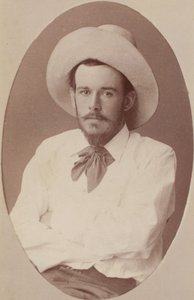
Джон Петер Расселль
1858 - 1930 , Австралия
Основные сведения
- Artistic Movement Or Style: Импрессионизм
- Artists Who Influenced This Artist:
- Клод Моне
- Винсент ван Гог
- Date Of Birth: 16 июня 1858 г.
- Date Of Death: 30 апреля 1930 г.
- Full Name: John Peter Russell
- Nationality: Австралиец
- Notable Artworks:
- Портрет Ван Гога (1886)
- Морские пейзажи Бель-Эйле
- Мой друг 'Полите' (окр. 1900)
- Place Of Birth: Сидней, Австралия
Похожие статьи

Charles Marion Russell: Capturing the American West Through a Romantic Lens
Explore the captivating world of Charles Marion Russell, 'the cowboy artist.' Discover his life, iconic paintings, advocacy for Native Americans, and investment potential. A guide for discerning art collectors.

Джон Сингер Сарджент: 25 шедевров портретной живописи для вашего интерьера | ArtsDot
Погрузитесь в мир Джона Сингера Сарджента! 25 шедевров импрессионизма и реализма, раскрывающих элегантность эпохи Gilded Age. Купите репродукции картин Сарджента музейного качества для вашего интерьера на ArtsDot.com.
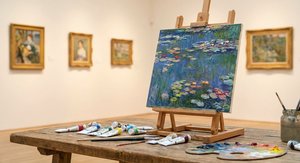
Топ-10 шедевров импрессионизма: искусство мгновения для вашего интерьера
Погрузитесь в мир импрессионизма! Откройте для себя 10 шедевров Моне, Ренуара и других великих мастеров. Узнайте историю создания культовых картин и вдохновитесь для декора интерьера. Репродукции музейного качества на ArtsDot.com.

Джон Констебль: 25 шедевров английского пейзажа для вашего интерьера
Погрузитесь в мир английского пейзажа с Джоном Констеблом! 25 шедевров романтизма, история создания картин и вдохновение для вашего интерьера. Репродукции высокого качества на ArtsDot.com – искусство для ценителей.

25 Шедевров Поля Сезанна: Открывая Новую Эру в Искусстве | ArtsDot
Откройте для себя 25 величайших шедевров Поля Сезанна! Узнайте истории создания картин импрессионизма и постимпрессионизма, технику художника и вдохновение для вашего интерьера. Репродукции картин Сезанна высокого качества на ArtsDot.com.