

 Предпросмотр
 Поделиться
 Поделиться
 Детали произведения

 Скачать
 Похожие работы
 Рентгенография
 Слайд-шоу
 Статистика
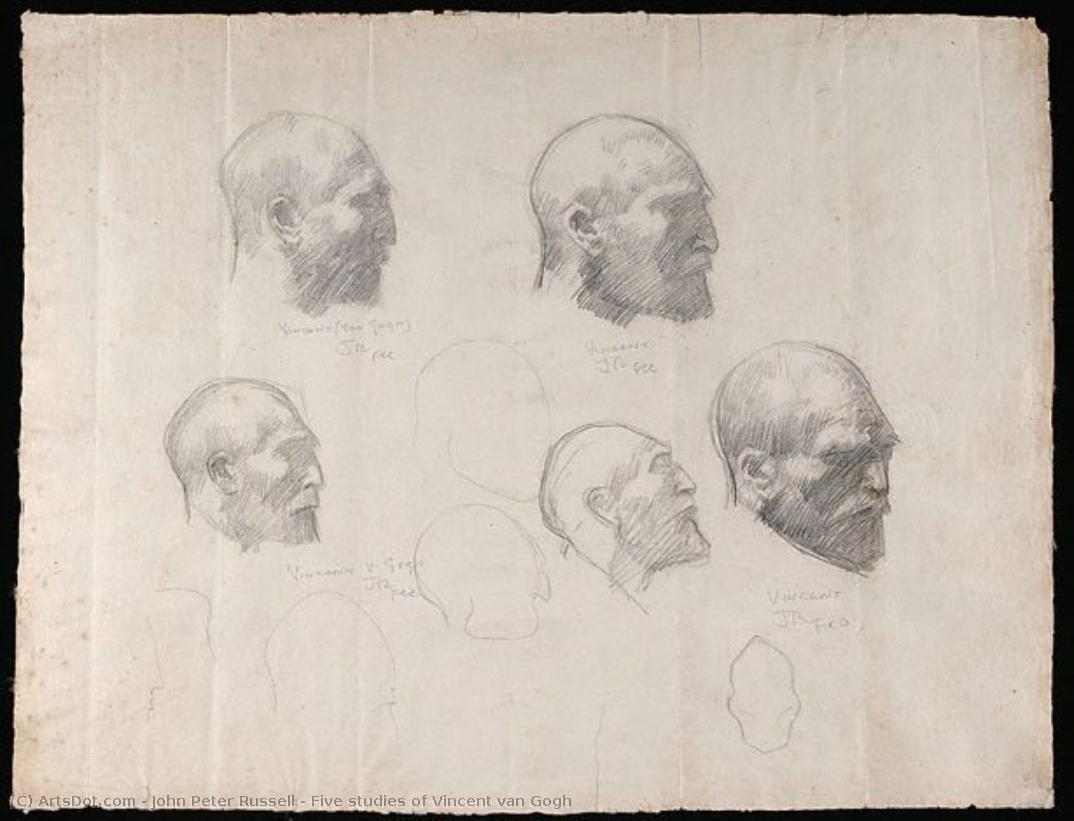
Five studies of Vincent van Gogh
 Charcoal
- WallArt
- Realism Impressionism
 1888
1888- 19th Century
 47.0 x 62.0 cm
 Галерея Нового Южного Уэльса
 Читать далее
Приобретите цифровое изображение высокого разрешения в улучшенном качестве, которое значительно превосходит онлайн-превью.
Каждый файл тщательно подготавливается нашими специалистами с использованием передовых инструментов и экспертной ручной ретуши. Мы гарантируем исключительную четкость, точную цветопередачу и детальную проработку каждого изображения.
Финальный файл доставляется по электронной почте в течение 72 часов и оптимизирован для немедленного использования в профессиональной среде, при верстке и печати. Это тот же уровень качества, которому доверяют ведущие дизайнерские студии, издательства и галереи.
Цифровое изображение
Скачайте файл высокого разрешения для личного использования, печати и творческих проектов. ( Перейти к печати Купить картину ручной работы)
Включено в каждый заказ цифровых изображений
Гарантия экспертной цифровой доставки
Выбирая ArtsDot.com, вы получаете не просто изображение — вы приобретаете профессионально обработанное цифровое произведение искусства, созданное с безупречной точностью и под защитой гарантии качества. Вот всё, что автоматически входит в ваш заказ:

Мгновенная доставка по e-mail
Ваш цифровой файл в высоком разрешении будет отправлен вам по электронной почте в течение 72 часов после оформления заказа — и сразу станет доступен для использования.

Цифровой файл с ИИ-улучшением
Ваше произведение искусства проходит профессиональную оптимизацию с использованием передовых инструментов ИИ и ручной обработки, что гарантирует максимальную детализацию, четкость и точность цветопередачи.

Бессрочная бесплатная повторная доставка
Случайно удалили или потеряли файл? Не беспокойтесь — мы отправим его вам повторно в любое время и совершенно бесплатно.

Без импортных пошлин — навсегда
Наслаждайтесь вашим произведением искусства мгновенно без таможенных пошлин, сборов или затрат на доставку — цифровые загрузки всегда не облагаются налогом.

Гарантия точности цветопередачи
Мы гарантируем, что ваше цифровое изображение максимально точно передает оригинальные цвета благодаря использованию профессиональных инструментов и систем управления цветом.

Гарантия удовлетворенности 100 дней
Если вы не будете удовлетворены своим цифровым изображением, мы внесем правки или вернем 100% стоимости в течение 100 дней — без лишних вопросов.

100% Гарантия возврата средств
Не удовлетворены покупкой? Получите полный возврат средств в течение 100 дней после получения цифрового файла — без лишних вопросов.

Скидки на оптовые заказы
Купите 3 изображения, сэкономьте 10% — Купите 5, сэкономьте 15% — Купите 10+, сэкономьте 20%. Отличное решение для творческих проектов, галерей и агентств.
An Intimate Encounter with a Legend
In the quiet, charcoal-smudged pages of John Peter Russell’s "Five studies of Vincent van Gogh," we are invited into a deeply personal moment of artistic observation. Created in 1888, this series of sketches transcends mere portraiture, offering instead a raw and unvarnished glimpse into the soul of one of history's most turbulent geniuses. Rather than presenting a single, polished image, Russell has arranged five distinct studies around a central, frontal view of Van Gogh’s face, creating a circular composition that feels both spontaneous and profoundly focused. It is as if we are witnessing the artist’s hand moving rapidly across the paper, capturing the shifting light and the heavy weight of thought upon his subject's features.
The emotional resonance of this work lies in its intimacy. There is no distance between the viewer and the subject; instead, we feel the presence of a shared history between two masters. Russell, an Australian Impressionist who moved within the most vibrant circles of Paris, captures not just the likeness of his friend, but the very essence of Van Gogh’s character. The sketches move from profile to angled perspectives, suggesting a restless energy—a search for truth through the repetition of form and the exploration of different facets of a single, iconic identity.
The Mastery of Line and Shadow
Technically, this work is a masterclass in the economy of means. Utilizing the primal medium of charcoal on paper, Russell eschews the distraction of color to focus entirely on the architecture of the human face. The palette is strictly monochromatic, relying on a sophisticated range of grays, blacks, and the warm, off-white tones of the paper itself. This limited spectrum forces the eye to find depth within the texture of the strokes. Through the expert use of hatching and cross-hatching, Russell builds volume and weight, defining the rugged contours of the nose, the hollows of the eyes, and the thick, textured hair that became so synonymous with Van Gogh.
The linework is remarkably fluid, possessing a certain "sketch-like" quality that celebrates the process of creation. Some lines are bold and assertive, carving out the structural boundaries of the skull, while others are light and ethereal, suggesting the soft play of diffused light across skin. This variation in pressure creates a tactile sensation, making the graininess of the charcoal almost palpable to the viewer. For the collector or interior designer, this piece offers a sophisticated textural element, providing a sense of depth and organic movement that complements both minimalist and classical environments.
A Timeless Legacy for the Modern Collector
Beyond its technical brilliance, "Five studies of Vincent van Gogh" serves as a poignant historical document. It captures a moment in time when the boundaries of modern art were being redrawn by figures like Russell and Van Gogh. The work embodies the spirit of the late 19th-century avant-garde—a period defined by experimentation, raw emotion, and the breaking of traditional academic constraints. To possess a reproduction of this piece is to hold a fragment of art history, a tribute to the enduring friendship and mutual influence that shaped the trajectory of Impressionism.
For those seeking to curate a space with intellectual depth and emotional gravity, these studies offer an unparalleled opportunity. The artwork’s understated elegance makes it a versatile choice for high-end decor; its monochromatic nature allows it to integrate seamlessly into diverse color schemes, while its subject matter provides an immediate point of conversation. It is more than a drawing; it is an evocative window into the creative struggle and the profound beauty found in the simplest of marks.
Похожие произведения
Биография художника
John Peter Russell (Australian painter) - Wikipedia
John Peter Russell remains a compelling, almost paradoxical figure in the history of Australian art. Often dubbed “Australia’s Lost Impressionist,” his story is one of transatlantic artistic exchange, personal tragedy, and eventual rediscovery. Born in Sydney in 1858, Russell's path diverged from the typical colonial trajectory when, at eighteen, he embarked for Europe – initially to pursue engineering, but swiftly drawn into the vibrant world of art. This decision would place him at the very heart of the burgeoning Impressionist movement and forge connections with some of its most iconic figures. His early education at Goulburn School provided a foundation, yet it was his studies under Alphonse Legros at the Slade School of Fine Art in London (1881-1883) that truly ignited his artistic ambitions. This formal training instilled in him a strong draughtsmanship, but it was his subsequent move to Paris and tutelage under Fernand Cormon that unlocked his passion for color and light.Parisian Circles and the Dawn of Impressionism
Paris in the 1880s was a crucible of artistic innovation, and Russell quickly immersed himself within its dynamic circles. It was here he formed a particularly close friendship with Vincent van Gogh, a relationship documented by Russell’s striking 1886 portrait of the artist – considered one of the most important depictions of Van Gogh created by a contemporary. This portrait offers a poignant glimpse into Van Gogh's character and foreshadows the emotional intensity that would come to define his work. Beyond Van Gogh, Russell’s artistic development was profoundly shaped by his encounter with Claude Monet. Spending time painting alongside Monet at Belle Île, he absorbed the techniques of *plein air* painting, embracing broken brushstrokes and a heightened sensitivity to atmospheric effects. This period marked a turning point in Russell's style, as he began to fully embrace the principles of Impressionism. He wasn’t merely replicating what he saw; he was interpreting it through the lens of his own unique sensibility. Henri Matisse himself credited Russell with introducing him to impressionist techniques and colour theory during a visit to Belle Île in 1890s – a testament to Russell's understanding and articulation of these artistic principles. ## Belle Île: A Sanctuary of Light and Color The island of Belle Île, off the coast of Brittany, became central to Russell’s life and art. He settled there with his wife, Marianna Mattiocco – a model for Auguste Rodin – and established a home that served as both studio and sanctuary. The rugged coastline, dramatic cliffs, and ever-changing light of Belle Île provided endless inspiration. His seascapes from this period are particularly noteworthy, capturing the raw energy and beauty of the Atlantic Ocean with vibrant color and loose brushwork. Works like *Les aiguilles de Coton, Belle-Île* (1897), a delicate watercolour depicting the island’s distinctive rock formations, exemplify his ability to translate fleeting impressions into enduring images. Russell's style during this time was characterized by an optimistic portrayal of landscapes and figures, infused with a joyful sense of light and color. He wasn’t merely replicating what he saw; he was interpreting it through the lens of his own unique temperament. Paintings like *Mon Ami 'Polite'* (c. 1900), a portrait of a local fisherman, demonstrate his skill in capturing not only physical likeness but also the character and atmosphere of his subjects. ## Life ### Early Years Russell was born on June 16, 1858, in Darlinghurst, Sydney, Australia, the eldest son of Scottish engineer John Russell and Charlotte Elizabeth Nicholl. His father’s engineering firm produced much of Sydney's colonial-era ironwork. Russell attended Goulburn School providing him with a solid foundation for his artistic pursuits. From eighteen he trained as a 'gentleman apprentice' with Robey & Co., Lincoln, England, where he became a qualified engineer (later he was able to cast the keel of his yacht himself at Belle Ile). He maintained his childhood interest in art and made his first experiments with water-colour, delineating the Gothic outlines of Lincoln Cathedral in a misty light. ### European Education and Artistic Influences Russell enrolled at the Slade School of Fine Art, University College, London from 1881 to 1883 under Alphonse Legros. He spent four terms spread over three years emphasizing draughtsmanship and memory training. Russell travelled to Spain in 1883 with Tom Roberts and Dr William Maloney, updating him on developments in French Impressionism. He visited plein air painting colonies in Cornwall in 1885. Moving to Paris, he trained at Cormon’s Atelier from 1885 to 1887 where he formed a friendship with Vincent van Gogh, whose portrait, now held at the Van Gogh Museum, Amsterdam, he painted in 1886. This portrait offers a poignant glimpse into Van Gogh's character and foreshadows the emotional intensity that would come to define his work. Russell’s artistic development was profoundly shaped by Claude Monet, whom he encountered at Belle Île in 1886. Spending time painting alongside Monet at Belle Île, he absorbed the techniques of *plein air* painting, embracing broken brushstrokes and a heightened sensitivity to atmospheric effects. ### Belle Île Period Russell settled into Belle Île with Marianna Mattiocco – a model for Auguste Rodin – and established a home that served as both studio and sanctuary. The rugged coastline, dramatic cliffs, and ever-changing light of Belle Île provided endless inspiration. His seascapes from this period are particularly noteworthy, capturing the raw energy and beauty of the Atlantic Ocean with vibrant color and loose brushwork. He painted *Les aiguilles de Coton, Belle-Île* (1897), a delicate watercolour depicting the island’s distinctive rock formations, exemplifying his ability to translate fleeting impressions into enduring images. Russell's style during this time was characterized by an optimistic portrayal of landscapes and figures, infused with a joyful sense of light and color. He wasn’t merely replicating what he saw; he was interpreting it through the lens of his own unique temperament. Paintings like *Mon Ami 'Polite'* (c. 1900), a portrait of a local fisherman, demonstrate his skill in capturing not only physical likeness but also the character and atmosphere of his subjects. ### Later Years and Legacy Russell left Belle Île in 1890 to see the Midi and Riviera, where van Gogh and Monet had worked. He travelled France in a horse-drawn cart and took a house for the winter in the ancient seaport of Antibes. Russell returned to Sydney in old age where he died in 1930 of a heart attack brought on by lifting rocks to make a harbour for his second yacht. His cousin, Australian artist Thea Proctor, did much to posthumously promote Russell's art, and by the late 20th-century, a number of biographies and exhibitions had helped to restore his reputation as a significant artist. Today his works are held in major galleries in Australia and Europe, including Musée d’Orsay and Musée Rodin in Paris.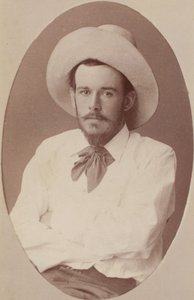
Джон Петер Расселль
1858 - 1930 , Австралия
Основные сведения
- Artistic Movement Or Style: Импрессионизм
- Artists Who Influenced This Artist:
- Клод Моне
- Винсент ван Гог
- Date Of Birth: 16 июня 1858 г.
- Date Of Death: 30 апреля 1930 г.
- Full Name: John Peter Russell
- Nationality: Австралиец
- Notable Artworks:
- Портрет Ван Гога (1886)
- Морские пейзажи Бель-Эйле
- Мой друг 'Полите' (окр. 1900)
- Place Of Birth: Сидней, Австралия