

 Предпросмотр
 Поделиться
 Поделиться
 Детали произведения

 Скачать
 Похожие работы
 Рентгенография
 Слайд-шоу
 Статистика
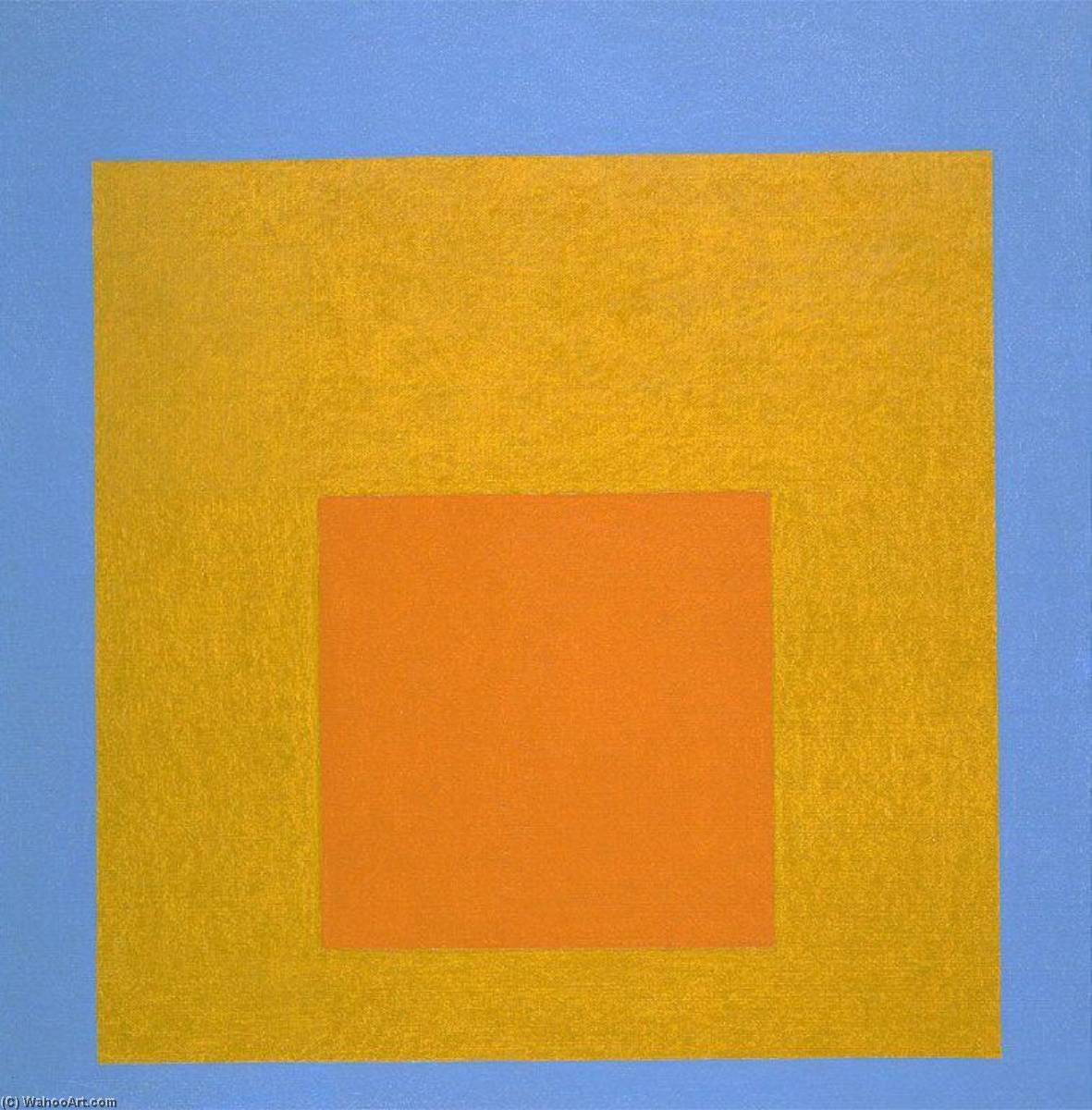
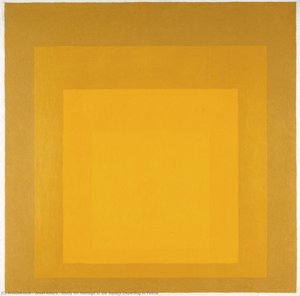
Homage to the Square Midday
 Painting
- Abstract Art
 1957
1957 102.0 x 102.0 cm
 Читать далее
Масляная репродукция ручной работы
Картина маслом на холсте в выбранном вами размере и раме, написанная на заказ нашими художниками. ( Перейти к печати Перейти к цифровым изображениям)




P118B $10

P118H $10

P118W $10

P438Z $10

P508JH $12

P508YH $12

P805H $10

P805Z $10

P919BZ $10

P919G $10

P919XJ $10

P959ZH $10

P968JZ $12

W106C $8

W218G $10

W218JH $8

W218Y $10

W307PJ $10

W316G $10

W316PJ $8

W316Y $10

W398PJ $8

W4111J $10

W500HY $15

W500JH $15

W692G $12

W849H $8

W940BG $15

W953PJ $8




Выберите один из наших стандартных размеров, соответствующих оригинальным пропорциям произведения искусства.

Вы можете указать собственные размеры, чтобы картина идеально вписалась в выбранную раму или пространство. Если выбранный вами размер не соответствует пропорциям оригинала, мы либо обрежем полотно, либо расширим его за счет дополнительных элементов, написанных вручную. Цифровой макет будет отправлен вам на утверждение перед началом производства.
Обратите внимание, что предварительный просмотр на экране не отражает фактическую обрезку или расширение. Только макет точно покажет окончательную композицию.
Хотя доступны индивидуальные размеры, мы рекомендуем выбирать вариант из предопределенного списка, чтобы сохранить исходные пропорции.
После оформления заказа команда ArtsDot.com свяжется с клиентом по электронной почте для уточнения деталей и предоставит предварительный макет
Доставка по всему миру () за 3–4 недели вместо стандартных 5 недель. (12 Сентябрь). Без компромиссов в качестве.

Бесплатная экспресс-доставка по всему миру

Высококачественный льняной холст

Полное страхование доставки

Гарантия возмещения таможенных пошлин

Гарантия точного соответствия цветов

100-дневная политика возврата (только при обнаружении дефектов)

Гарантия возврата 100% средств

Предложение оптовых скидок
 Вариант со стеклом доступен только для размеров менее 110 см

Homage to the Square Midday
Техника репродукции
Размер репродукции
-


Итоговая стоимость
$ 263
The Geometry of Perception: Exploring Albers's Midday Study
To stand before Josef Albers’s Homage to the Square Midday is not merely to observe paint on canvas; it is to engage in a profound, almost meditative dialogue with color itself. This 1957 composition, executed at a commanding size of 102 x 102 cm, immediately arrests the viewer with its bold, structured simplicity. The piece presents a central square, vibrant with warm yellows and oranges, set against a deep, contrasting blue field. It is an exercise in optical illusion rendered tangible—a visual puzzle where the eye is invited to wander, to question what it sees, and ultimately, to appreciate the delicate dance between adjacent hues.
A Masterclass in Color Theory and Materiality
Albers, whose life was deeply informed by the practical beauty of materials—from carpentry to stained glass—translated this reverence for substance into his abstract explorations. Here, the technique is deceptively simple: a meticulous arrangement of color planes. The central yellow-and-orange square is not monolithic; rather, it is subdivided into four smaller quadrants, each shade subtly modulated from its neighbor. This division forces the viewer’s attention to the juxtaposition. It is in the meeting points, where one tone bleeds imperceptibly into another, that the true magic resides. The blue background acts as both a grounding anchor and an amplifier, making the warm core seem to vibrate with contained energy.
Historical Echoes: Bauhaus Influence Meets Abstract Depth
Emerging from the mid-20th century art world, this work carries the intellectual weight of its time. While rooted in the rigorous principles of design education—echoing his formative years influenced by movements like the Bauhaus—Albers always pushed beyond mere academic exercise. His commitment to understanding how color affects perception elevated abstraction from a decorative whim to a philosophical inquiry. Homage to the Square Midday suggests that even within rigid geometric boundaries, there is boundless emotional resonance waiting to be discovered.
Emotional Resonance and Interior Harmony
For the collector or designer, this piece offers more than just striking visual appeal; it offers a focal point of contemplation. The interplay between the vibrant, sun-drenched yellows and oranges suggests moments of intense clarity—a perfect 'midday' captured in pigment. Yet, the surrounding cool blue provides necessary repose, ensuring the overall effect is one of balanced dynamism rather than overwhelming brightness. Reproducing this work allows one to bring a sophisticated dialogue of light and shadow into any space, transforming a mere wall into an active participant in the room’s atmosphere.
CLASSIFICATION: AbstractПохожие произведения
Биография художника
A Life Forged in Material: The Early Years and Bauhaus Formation
Josef Albers’s artistic journey began not amidst the rarefied air of established academies, but within the pragmatic world of his father’s contracting business in Bottrop, Germany. Born in 1888, young Josef absorbed a deep respect for materials – carpentry, plumbing, house-painting – skills that would fundamentally shape his aesthetic sensibility. This wasn't merely vocational training; it was an immersion into the very essence of making, understanding how forms materialized and the inherent qualities within each medium. He learned to appreciate the subtle textures of wood grain, the precise angles required for a perfect joint, the transformative power of color in a freshly painted wall. Before dedicating himself fully to art, Albers spent five years as a schoolteacher, honing patience and pedagogical skill—attributes that would later define his influential teaching career. This early experience instilled in him a profound understanding of observation, careful measurement, and the importance of clear communication – qualities he would bring to his artistic practice. Formal artistic training commenced at the Königliche Kunstschule in Berlin between 1913 and 1915, where he explored printmaking, painting, and, crucially, stained glass. His early commission, “Rosa Mystica Ora Pro Nobis” (1918), a stunning stained-glass window for a church in Munich, foreshadowed his lifelong fascination with the interplay of light and color, hinting at the abstract explorations to come. This initial work wasn’t simply decorative; it was an investigation into how light *transformed* material, a theme that would resonate throughout his career – a delicate dance between pigment and illumination.The Bauhaus Crucible: Color as Subject
A pivotal moment arrived in 1922 when Albers joined the faculty of the Bauhaus, a revolutionary school seeking to unify all artistic disciplines under Walter Gropius’s visionary leadership. Initially tasked with teaching the preliminary course – *Werklehre* (workshop practice) – he immersed himself in its core principles: functionalism, geometric abstraction, and material exploration. This period proved transformative. Albers began a systematic investigation into color perception, moving away from representational art towards an increasingly abstract vocabulary. He wasn’t interested merely in *what* colors were, but *how* they interacted, how they influenced each other, and how our eyes perceived them. The influence of fellow Bauhaus masters like Paul Klee and Wassily Kandinsky is discernible in his early work, yet Albers charted a unique course, prioritizing empirical observation over metaphysical interpretation. He wasn’t seeking spiritual truths through color; he was meticulously documenting its physical effects – a scientific rigor that became the hallmark of his artistic method. This focus on perception, on how we *see*, rather than what is *seen*, set him apart and laid the groundwork for his future explorations. The Bauhaus environment fostered experimentation with unconventional materials—glass, metal, wood—and encouraged students to challenge traditional notions of art and design. Albers embraced this spirit of innovation, pushing the boundaries of material manipulation and exploring new ways to represent visual relationships.Homage to the Square: A Laboratory of Perception
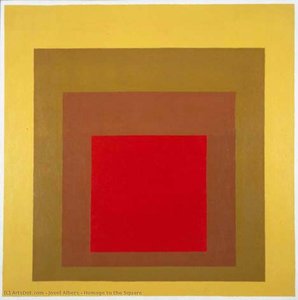
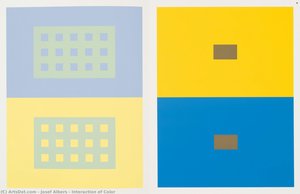
Following a period teaching at Black Mountain College – where he fostered a generation of American artists including Robert Rauschenberg and Cy Twombly – Albers embarked on what would become his most iconic series in 1949: “Homage to the Square.” This ongoing project consisted of paintings featuring nested squares within squares, each iteration exploring subtle variations in color relationships. It’s a deceptively simple premise, but one that belies an incredibly complex and rigorous investigation. Albers meticulously documented his experiments, revealing how colors aren't static entities but dynamic forces governing each other through internal logic – often misleading to the eye. A seemingly brighter square might appear to recede while a darker one advances, defying intuitive understanding. The series wasn’t intended as a celebration of geometry; rather, it was a laboratory for studying color perception. He used a systematic approach, varying the size and placement of squares, and carefully documenting the resulting visual effects. This research culminated in his seminal book, “Interaction of Color” (1963), a foundational text still studied by artists and designers today – a testament to Albers’ belief that seeing is not passive, but an active process of interpretation. The book isn't a treatise on color theory; it's a series of exercises designed to demonstrate how our perception of color is relative and contextual – a profound exploration of the subjective nature of visual experience.Legacy and Enduring Influence
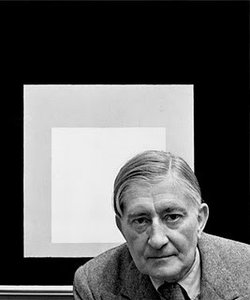
Josef Albers’s impact extends far beyond his paintings. His tenure as head of the design department at Yale University, from 1950 until his retirement in 1958, cemented his reputation as a profoundly influential teacher. He emphasized hands-on experimentation, critical observation, and relentless questioning of assumptions. Students weren't simply taught *what* to paint; they were taught *how* to see – to analyze, to deconstruct, and to understand the underlying principles governing visual experience. Albers’s approach fostered independent thinking and encouraged students to develop their own unique artistic voices. “Homage to the Square” remains iconic for its exploration of perceptual phenomena, demonstrating that even within seemingly simple forms, there exists an infinite complexity waiting to be discovered. His work continues to inspire artists, designers, and educators alike – a testament to the power of observation, experimentation, and the enduring mystery of color. Albers died on March 25, 1976, in New Haven, Connecticut, leaving behind a legacy that continues to illuminate the world of art and design.Notable Works
- Gray Instrumentation I Prospectus (1975): A minimalist monochrome painting exemplifying geometric balance and subtle tonal variations.
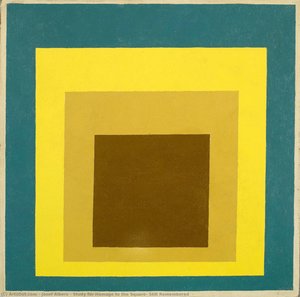
- Study for Homage to the Square – Beaming (Date Unknown): A classic example of Albers’s exploration of color interaction within nested squares, evoking a sense of calm and spatial depth.
- Rosa Mystica Ora Pro Nobis (1918): His early stained-glass commission, foreshadowing his lifelong fascination with light and color.
Йозеф Альберс
1888 - 1976 , Германия
Основные сведения
- Artistic Movement Or Style: Геометрическое абстракционизм
- Artists Or Movements Influenced By This Artist:
- Минимализм
- Полевая живопись
- Artists Who Influenced This Artist:
- Клее
- Кандинский
- Date Of Birth: 19 марта 1888 г.
- Date Of Death: 25 марта 1976 г.
- Full Name: Josef Albers
- Nationality: Немецко-американец
- Notable Artworks:
- Homage to the Square
- Gray Instrumentation I Prospectus
- Rosa Mystica Ora Pro Nobis
- Place Of Birth: Боттруп, Германия
Похожие статьи

Геометрическая абстракция: 10 шедевров, изменивших искусство | ArtsDot.com
Погрузитесь в мир геометрической абстракции! От Кандинского до Малевича – 10 шедевров, изменивших искусство. Узнайте историю создания и значение культовых картин. Репродукции музейного качества на ArtsDot.com. Вдохновение для вашего интерьера!
Beyond Form & Color: Geometric Abstraction's Evolution in 20th/21st Century Art
Explore the evolution of geometric abstraction from Cubism to contemporary art. Discover key artists like Malevich & Mondrian, investment insights, and expert collecting advice at ArtsDot.
Beyond Form & Color: Geometric Abstraction's Enduring Legacy in Art History
Explore the captivating world of geometric abstraction! Discover its origins, key artists like Malevich & Mondrian, and why this movement remains highly valued by art collectors today. Expert insights at ArtsDot.
Топ-10 шедевров абстрактного экспрессионизма: искусство для вашего интерьера от ArtsDot.com
Погрузитесь в мир абстрактного экспрессионизма! Откройте для себя 10 шедевров Поллока, Ротко и других гениев. История искусства, техники живописи и вдохновение для вашего интерьера от ArtsDot.com. Explore the full collection online!

Топ-25 шедевров Василия Кандинского: Абстрактное искусство для вашего интерьера
Погрузитесь в мир абстрактного искусства с Василием Кандинским! 25 шедевров экспрессионизма, баухауса и русского авангарда. Репродукции картин Кандинского для вдохновения и декора вашего интерьера. Откройте всю коллекцию на ArtsDot.com