

 Предпросмотр
 Поделиться
 Поделиться
 Детали произведения

 Скачать
 Похожие работы
 Рентгенография
 Слайд-шоу
 Статистика
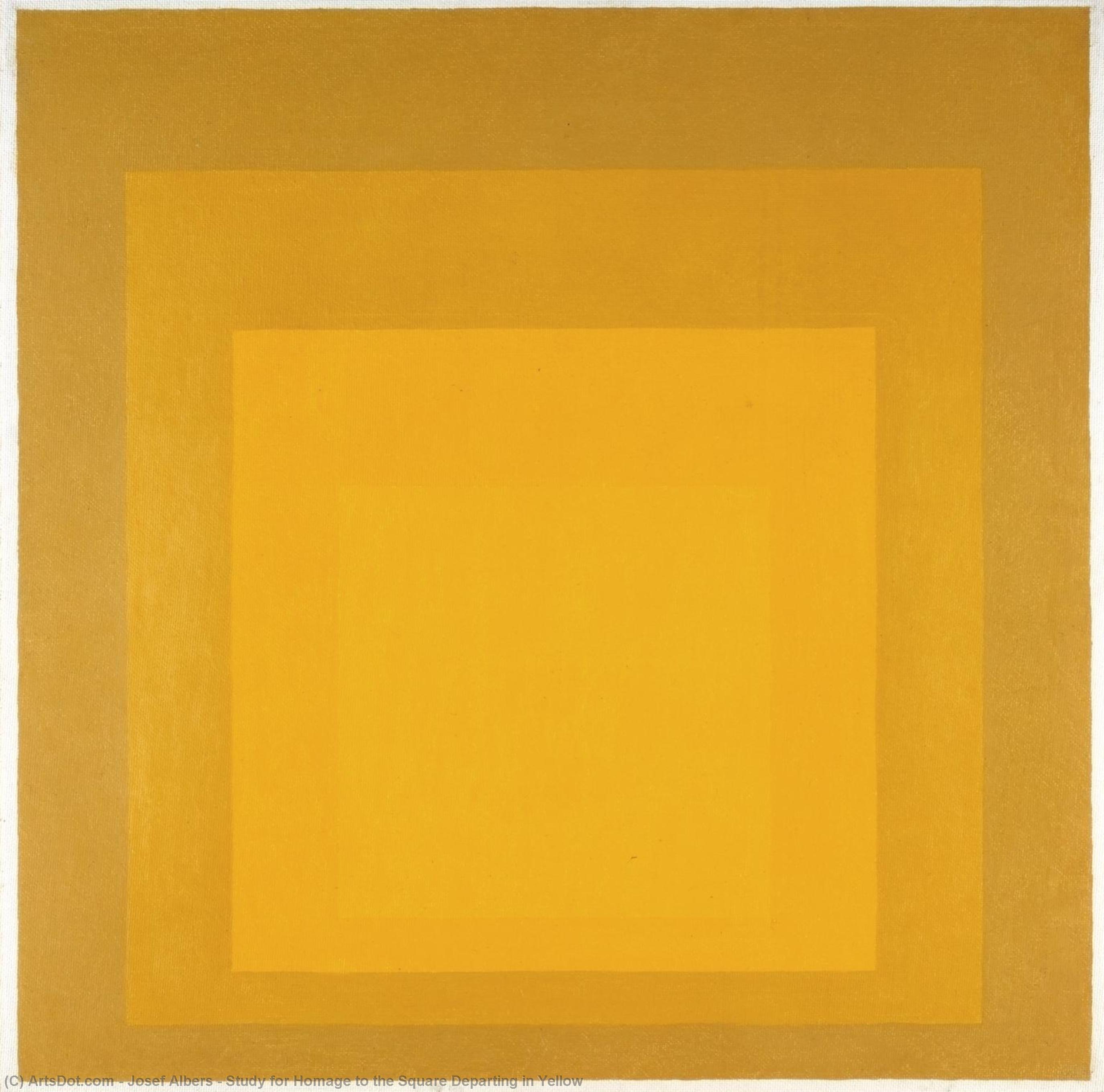
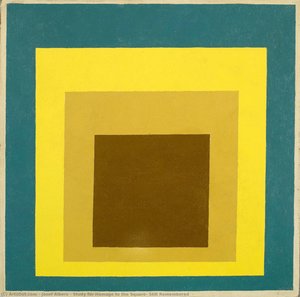
Study for Homage to the Square Departing in Yellow


 Читать далее
Приобретите цифровое изображение высокого разрешения в улучшенном качестве, которое значительно превосходит онлайн-превью.
Каждый файл тщательно подготавливается нашими специалистами с использованием передовых инструментов и экспертной ручной ретуши. Мы гарантируем исключительную четкость, точную цветопередачу и детальную проработку каждого изображения.
Финальный файл доставляется по электронной почте в течение 72 часов и оптимизирован для немедленного использования в профессиональной среде, при верстке и печати. Это тот же уровень качества, которому доверяют ведущие дизайнерские студии, издательства и галереи.
Цифровое изображение
Скачайте файл высокого разрешения для личного использования, печати и творческих проектов. ( Перейти к печати Купить картину ручной работы)
Включено в каждый заказ цифровых изображений
Гарантия экспертной цифровой доставки
Выбирая ArtsDot.com, вы получаете не просто изображение — вы приобретаете профессионально обработанное цифровое произведение искусства, созданное с безупречной точностью и под защитой гарантии качества. Вот всё, что автоматически входит в ваш заказ:

Мгновенная доставка по e-mail
Ваш цифровой файл в высоком разрешении будет отправлен вам по электронной почте в течение 72 часов после оформления заказа — и сразу станет доступен для использования.

Цифровой файл с ИИ-улучшением
Ваше произведение искусства проходит профессиональную оптимизацию с использованием передовых инструментов ИИ и ручной обработки, что гарантирует максимальную детализацию, четкость и точность цветопередачи.

Бессрочная бесплатная повторная доставка
Случайно удалили или потеряли файл? Не беспокойтесь — мы отправим его вам повторно в любое время и совершенно бесплатно.

Без импортных пошлин — навсегда
Наслаждайтесь вашим произведением искусства мгновенно без таможенных пошлин, сборов или затрат на доставку — цифровые загрузки всегда не облагаются налогом.

Гарантия точности цветопередачи
Мы гарантируем, что ваше цифровое изображение максимально точно передает оригинальные цвета благодаря использованию профессиональных инструментов и систем управления цветом.

Гарантия удовлетворенности 100 дней
Если вы не будете удовлетворены своим цифровым изображением, мы внесем правки или вернем 100% стоимости в течение 100 дней — без лишних вопросов.

100% Гарантия возврата средств
Не удовлетворены покупкой? Получите полный возврат средств в течение 100 дней после получения цифрового файла — без лишних вопросов.

Скидки на оптовые заказы
Купите 3 изображения, сэкономьте 10% — Купите 5, сэкономьте 15% — Купите 10+, сэкономьте 20%. Отличное решение для творческих проектов, галерей и агентств.
The Geometry of Perception: Exploring Josef Albers's Study
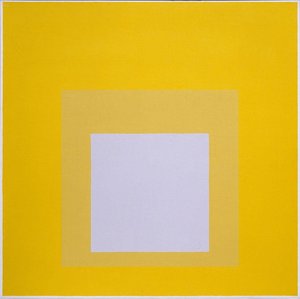
To stand before a work like Study for Homage to the Square Departing in Yellow is not merely to observe paint on canvas; it is to engage in a quiet, almost meditative dialogue with color itself. This piece by Josef Albers, dating from 1964, strips away the clutter of narrative and representation, leaving behind an architecture built solely from hue and form. The composition is breathtakingly simple: two nested squares, one enveloping the other, rendered in variations of yellow and yellow-orange. There are no dramatic gestures, no visible struggle of the brush—only the pure, unwavering declaration of boundaries. It forces the viewer to slow down, to look past what they think they know about art, and instead, simply *see*.
A Masterclass in Color Theory and Minimalism
Albers’s genius lay in his ability to elevate the most fundamental elements—color and shape—into profound subjects of study. This work is a quintessential example of Minimalism, a movement that championed reduction, urging artists to pare down their subject matter until only the essential remained. The relationship between the outer, saturated yellow field and the slightly deeper, inner square becomes the entire universe of the painting. It speaks volumes about how adjacent colors interact, how one shade modifies the perceived value of another. For those drawn to contemporary design or interior aesthetics, this piece offers a sophisticated anchor—a visual palate cleanser that adds intellectual depth without overwhelming a space.
Technique and Materiality: The Illusion of Depth
The technical execution is remarkably controlled. The surface appears flawlessly smooth, suggesting the meticulous application of oil or acrylic paint, allowing the flatness of the support to become part of the artwork’s statement. Because there are no discernible lines other than the edges themselves, depth is not achieved through traditional perspective, but rather through the subtle interplay of overlapping planes. This implied depth—the way one square seems to recede slightly behind another—is what gives the piece its quiet tension. It suggests a mathematical precision underlying an emotional experience.
Symbolism and Emotional Resonance
What does this geometric dialogue suggest? Symbolically, these nested squares can be interpreted as explorations of order, harmony, or perhaps even the relationship between self and environment. The act of "homage" in the title suggests a paying tribute to structure itself. For the collector or admirer, owning such a piece is acquiring more than decoration; it is acquiring an intellectual anchor—a reminder that profound beauty can be found in rigorous simplicity. It invites contemplation on balance, proportion, and the inherent poetry within pure geometry.
Bringing Albers Home: A Decorative Statement
For those considering a reproduction for your home or gallery, remember that this artwork functions as sophisticated visual punctuation. Its restrained palette ensures it complements rather than competes with surrounding furnishings. It speaks to an appreciation for modern masters who understood that the most powerful statements are often made in whispers of color and perfect form. It is art that rewards close looking, offering a moment of pure, chromatic contemplation.
Похожие произведения
Биография художника
A Life Forged in Material: The Early Years and Bauhaus Formation
Josef Albers’s artistic journey began not amidst the rarefied air of established academies, but within the pragmatic world of his father’s contracting business in Bottrop, Germany. Born in 1888, young Josef absorbed a deep respect for materials – carpentry, plumbing, house-painting – skills that would fundamentally shape his aesthetic sensibility. This wasn't merely vocational training; it was an immersion into the very essence of making, understanding how forms materialized and the inherent qualities within each medium. He learned to appreciate the subtle textures of wood grain, the precise angles required for a perfect joint, the transformative power of color in a freshly painted wall. Before dedicating himself fully to art, Albers spent five years as a schoolteacher, honing patience and pedagogical skill—attributes that would later define his influential teaching career. This early experience instilled in him a profound understanding of observation, careful measurement, and the importance of clear communication – qualities he would bring to his artistic practice. Formal artistic training commenced at the Königliche Kunstschule in Berlin between 1913 and 1915, where he explored printmaking, painting, and, crucially, stained glass. His early commission, “Rosa Mystica Ora Pro Nobis” (1918), a stunning stained-glass window for a church in Munich, foreshadowed his lifelong fascination with the interplay of light and color, hinting at the abstract explorations to come. This initial work wasn’t simply decorative; it was an investigation into how light *transformed* material, a theme that would resonate throughout his career – a delicate dance between pigment and illumination.The Bauhaus Crucible: Color as Subject
A pivotal moment arrived in 1922 when Albers joined the faculty of the Bauhaus, a revolutionary school seeking to unify all artistic disciplines under Walter Gropius’s visionary leadership. Initially tasked with teaching the preliminary course – *Werklehre* (workshop practice) – he immersed himself in its core principles: functionalism, geometric abstraction, and material exploration. This period proved transformative. Albers began a systematic investigation into color perception, moving away from representational art towards an increasingly abstract vocabulary. He wasn’t interested merely in *what* colors were, but *how* they interacted, how they influenced each other, and how our eyes perceived them. The influence of fellow Bauhaus masters like Paul Klee and Wassily Kandinsky is discernible in his early work, yet Albers charted a unique course, prioritizing empirical observation over metaphysical interpretation. He wasn’t seeking spiritual truths through color; he was meticulously documenting its physical effects – a scientific rigor that became the hallmark of his artistic method. This focus on perception, on how we *see*, rather than what is *seen*, set him apart and laid the groundwork for his future explorations. The Bauhaus environment fostered experimentation with unconventional materials—glass, metal, wood—and encouraged students to challenge traditional notions of art and design. Albers embraced this spirit of innovation, pushing the boundaries of material manipulation and exploring new ways to represent visual relationships.Homage to the Square: A Laboratory of Perception
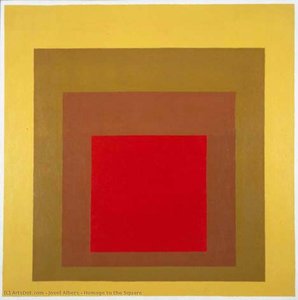
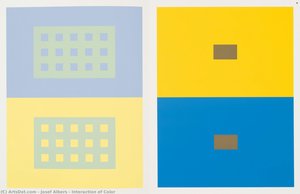
Following a period teaching at Black Mountain College – where he fostered a generation of American artists including Robert Rauschenberg and Cy Twombly – Albers embarked on what would become his most iconic series in 1949: “Homage to the Square.” This ongoing project consisted of paintings featuring nested squares within squares, each iteration exploring subtle variations in color relationships. It’s a deceptively simple premise, but one that belies an incredibly complex and rigorous investigation. Albers meticulously documented his experiments, revealing how colors aren't static entities but dynamic forces governing each other through internal logic – often misleading to the eye. A seemingly brighter square might appear to recede while a darker one advances, defying intuitive understanding. The series wasn’t intended as a celebration of geometry; rather, it was a laboratory for studying color perception. He used a systematic approach, varying the size and placement of squares, and carefully documenting the resulting visual effects. This research culminated in his seminal book, “Interaction of Color” (1963), a foundational text still studied by artists and designers today – a testament to Albers’ belief that seeing is not passive, but an active process of interpretation. The book isn't a treatise on color theory; it's a series of exercises designed to demonstrate how our perception of color is relative and contextual – a profound exploration of the subjective nature of visual experience.Legacy and Enduring Influence
Josef Albers’s impact extends far beyond his paintings. His tenure as head of the design department at Yale University, from 1950 until his retirement in 1958, cemented his reputation as a profoundly influential teacher. He emphasized hands-on experimentation, critical observation, and relentless questioning of assumptions. Students weren't simply taught *what* to paint; they were taught *how* to see – to analyze, to deconstruct, and to understand the underlying principles governing visual experience. Albers’s approach fostered independent thinking and encouraged students to develop their own unique artistic voices. “Homage to the Square” remains iconic for its exploration of perceptual phenomena, demonstrating that even within seemingly simple forms, there exists an infinite complexity waiting to be discovered. His work continues to inspire artists, designers, and educators alike – a testament to the power of observation, experimentation, and the enduring mystery of color. Albers died on March 25, 1976, in New Haven, Connecticut, leaving behind a legacy that continues to illuminate the world of art and design.Notable Works
- Gray Instrumentation I Prospectus (1975): A minimalist monochrome painting exemplifying geometric balance and subtle tonal variations.
- Study for Homage to the Square – Beaming (Date Unknown): A classic example of Albers’s exploration of color interaction within nested squares, evoking a sense of calm and spatial depth.
- Rosa Mystica Ora Pro Nobis (1918): His early stained-glass commission, foreshadowing his lifelong fascination with light and color.
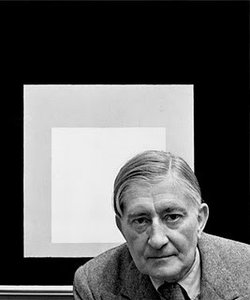
Йозеф Альберс
1888 - 1976 , Германия
Основные сведения
- Artistic Movement Or Style: Геометрическое абстракционизм
- Artists Or Movements Influenced By This Artist:
- Минимализм
- Полевая живопись
- Artists Who Influenced This Artist:
- Клее
- Кандинский
- Date Of Birth: 19 марта 1888 г.
- Date Of Death: 25 марта 1976 г.
- Full Name: Josef Albers
- Nationality: Немецко-американец
- Notable Artworks:
- Homage to the Square
- Gray Instrumentation I Prospectus
- Rosa Mystica Ora Pro Nobis
- Place Of Birth: Боттруп, Германия