

 Предпросмотр
 Поделиться
 Поделиться
 Детали произведения

 Скачать
 Похожие работы
 Рентгенография
 Слайд-шоу
 Статистика
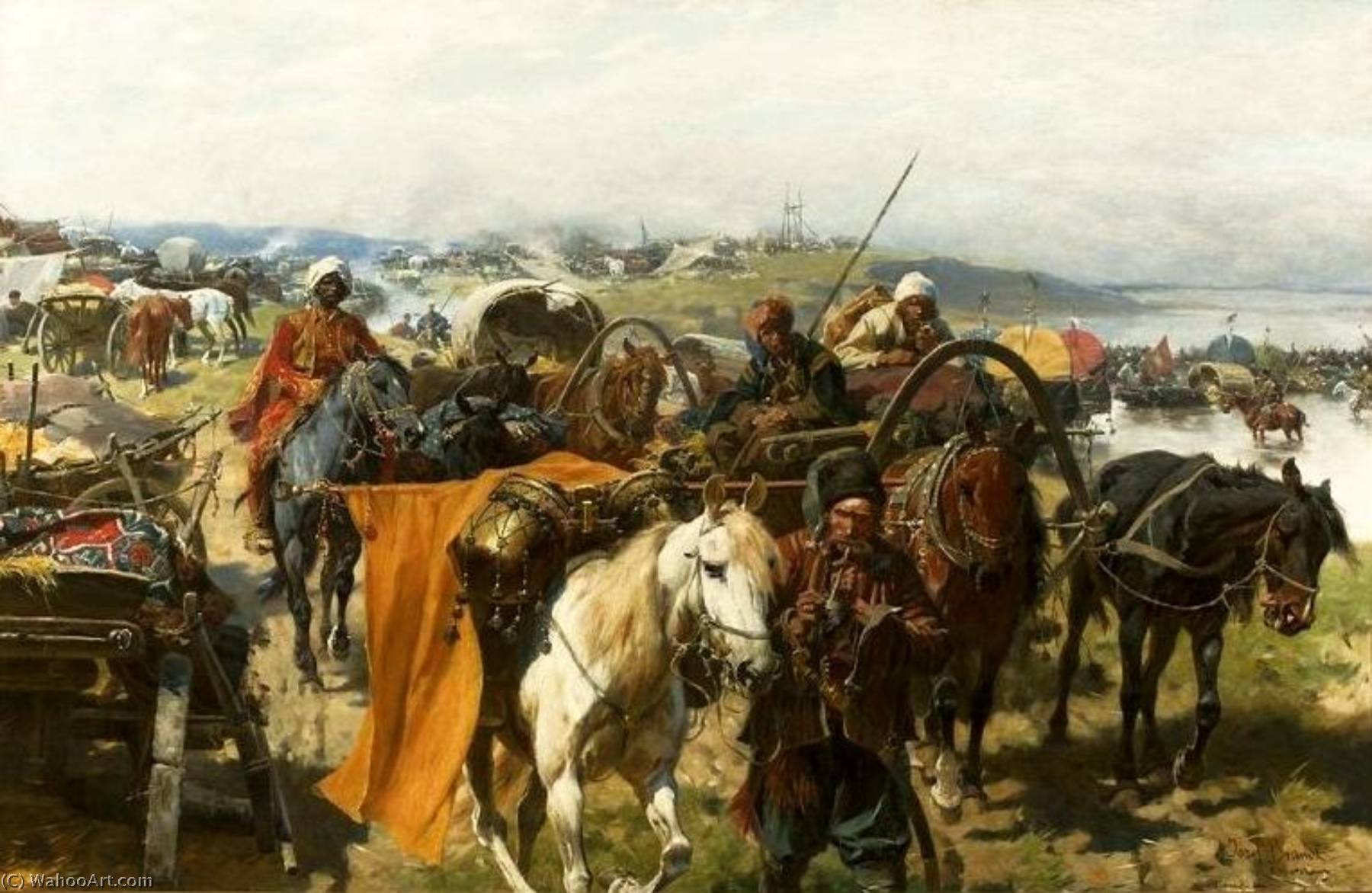
Zaporizhian Camp
 1880
1880 73.0 x 113.0 cm
 Читать далее
Приобретите цифровое изображение высокого разрешения в улучшенном качестве, которое значительно превосходит онлайн-превью.
Каждый файл тщательно подготавливается нашими специалистами с использованием передовых инструментов и экспертной ручной ретуши. Мы гарантируем исключительную четкость, точную цветопередачу и детальную проработку каждого изображения.
Финальный файл доставляется по электронной почте в течение 72 часов и оптимизирован для немедленного использования в профессиональной среде, при верстке и печати. Это тот же уровень качества, которому доверяют ведущие дизайнерские студии, издательства и галереи.
Цифровое изображение
Скачайте файл высокого разрешения для личного использования, печати и творческих проектов. ( Перейти к печати Купить картину ручной работы)
Включено в каждый заказ цифровых изображений
Гарантия экспертной цифровой доставки
Выбирая ArtsDot.com, вы получаете не просто изображение — вы приобретаете профессионально обработанное цифровое произведение искусства, созданное с безупречной точностью и под защитой гарантии качества. Вот всё, что автоматически входит в ваш заказ:

Мгновенная доставка по e-mail
Ваш цифровой файл в высоком разрешении будет отправлен вам по электронной почте в течение 72 часов после оформления заказа — и сразу станет доступен для использования.

Цифровой файл с ИИ-улучшением
Ваше произведение искусства проходит профессиональную оптимизацию с использованием передовых инструментов ИИ и ручной обработки, что гарантирует максимальную детализацию, четкость и точность цветопередачи.

Бессрочная бесплатная повторная доставка
Случайно удалили или потеряли файл? Не беспокойтесь — мы отправим его вам повторно в любое время и совершенно бесплатно.

Без импортных пошлин — навсегда
Наслаждайтесь вашим произведением искусства мгновенно без таможенных пошлин, сборов или затрат на доставку — цифровые загрузки всегда не облагаются налогом.

Гарантия точности цветопередачи
Мы гарантируем, что ваше цифровое изображение максимально точно передает оригинальные цвета благодаря использованию профессиональных инструментов и систем управления цветом.

Гарантия удовлетворенности 100 дней
Если вы не будете удовлетворены своим цифровым изображением, мы внесем правки или вернем 100% стоимости в течение 100 дней — без лишних вопросов.

100% Гарантия возврата средств
Не удовлетворены покупкой? Получите полный возврат средств в течение 100 дней после получения цифрового файла — без лишних вопросов.

Скидки на оптовые заказы
Купите 3 изображения, сэкономьте 10% — Купите 5, сэкономьте 15% — Купите 10+, сэкономьте 20%. Отличное решение для творческих проектов, галерей и агентств.
The Artist's Style
Josef Von Brandt was a Polish painter known for his paintings of battles in Polish history. His style is characterized by detailed and realistic depictions of historical scenes, and the Zaporizhian Camp is no exception. The painting is a testament to Brandt's skill in capturing the essence of his subjects with profound emotion and depth.The Painting's Composition
The image depicts a woman dressed in elaborate attire, her hands raised to her face as if in contemplation, surrounded by horses and riders. The scene also includes several carts and wagons, which are likely being used for transportation or storage purposes. A boat can be seen in the background, possibly indicating that this scene takes place near a body of water.- The painting is housed in the National Museum in Poland, where it remains one of the most popular attractions.
- Josef Von Brandt was awarded the Order of Isabella the Catholic in 1893 and the Bavarian Maximilian Order for Science and Art in 1898.
- The Zaporizhian Camp is just one example of Brandt's work, which can be found on ArtsDot.com.
The National Museum in Poland is home to many other notable works, including paintings by Rembrandt Van Rijn and Abraham Cooper, which can be found on ArtsDot.com.
Похожие произведения









Биография художника
A Life Immersed in Polish Valor: The World of Józef von Brandt
Józef von Brandt, born in the small Polish town of Szczebrzeszyn in 1841 and passing away in Radom in 1915, was more than just a painter; he was a chronicler of a nation’s spirit. His canvases breathe with the drama of 17th-century battles, the vibrant energy of Cossack life, and an unwavering dedication to Polish history and cultural identity. Brandt's artistic journey began not in the studio but in the classrooms of Warsaw’s school of J.N. Leszczynski and the Noblemen's Institute, a path seemingly destined for engineering when he moved to Paris in 1858 to study at the Ecole centrale. However, fate – or perhaps a keen eye for talent – intervened in the form of Juliusz Kossak, who recognized Brandt’s true calling and steered him away from blueprints towards brushes and pigments. This pivotal moment redirected his life toward an artistic pursuit that would immortalize Poland's past.From Munich to Mastery: The Shaping of a Historical Painter
The move to Munich in 1863 proved transformative. Under the tutelage of Franz Adam and Karl Piloty at the Academy of Fine Arts, Brandt honed his skills, absorbing techniques that would become hallmarks of his style. He wasn’t merely learning to paint; he was learning to narrate history visually. The influence of Theodor Horschelt, a specialist in battle scenes who had accompanied the Russian army, further refined his understanding of military life and composition. By 1867, Brandt established his own studio, becoming a central figure within the thriving Polish artistic community in Munich – a haven for artists displaced by political turmoil. He quickly became a mentor to many aspiring Polish painters, fostering a sense of national pride through art. His early works, while conventional, laid the foundation for the dramatic and emotionally charged scenes that would define his career.The Essence of 17th-Century Poland: Themes and Techniques
Brandt’s paintings are not simply depictions of battles; they are immersive experiences. He focused intently on the military life of the 17th century, a period steeped in Polish glory and conflict. However, he didn't limit himself to warfare. Scenes of Polish peasant life also found their way onto his canvases, offering glimpses into the everyday existence that underpinned the nation’s heroic narratives. His most celebrated works center around the *hussars*, those iconic winged cavalrymen, and the fierce Cossack warriors, rendered with meticulous detail in their elaborate uniforms and dynamic poses. Brandt possessed an exceptional ability to capture movement and energy, bringing a sense of immediacy to his large-scale compositions. He masterfully combined realism with symbolic depth, using color, light, and shadow to evoke emotion and convey historical significance. While adhering to academic standards through studio work, he also undertook field studies in Poland and Ukraine, ensuring the authenticity of his landscapes and figures.Notable Works and Lasting Legacy
Several paintings stand as testaments to Brandt’s artistic prowess. “Battle of Vienna” is a sweeping panorama of conflict, capturing the intensity and chaos of this pivotal historical moment. "Jan Karol Chodkiewicz during the Battle of Khotyn" exemplifies his skill in portraying individual heroism within a larger military context. And “Polish Hussar,” perhaps his most iconic work, embodies the spirit of Polish valor and national pride. These paintings, along with others like “Zaporozhian Camp” and "Call to Arms", are not merely historical records; they are powerful statements about identity, courage, and resilience. Today, Brandt’s works grace the walls of prestigious institutions such as the National Museum in Warsaw and the Museum Pomorskie in Danzig (Gdansk), serving as enduring reminders of Poland's rich cultural heritage. His legacy extends beyond museums, with reproductions available through platforms like ArtsDot.com and ArtsDot.com, allowing a wider audience to experience the grandeur and emotional depth of his masterpieces. He remains a pivotal figure in Polish art history, celebrated for his ability to transform historical events into captivating visual narratives that continue to resonate with audiences today.
josef von brandt
1841 - 1915