

 Предпросмотр
 Поделиться
 Поделиться
 Детали произведения

 Скачать
 Похожие работы
 Рентгенография
 Слайд-шоу
 Статистика
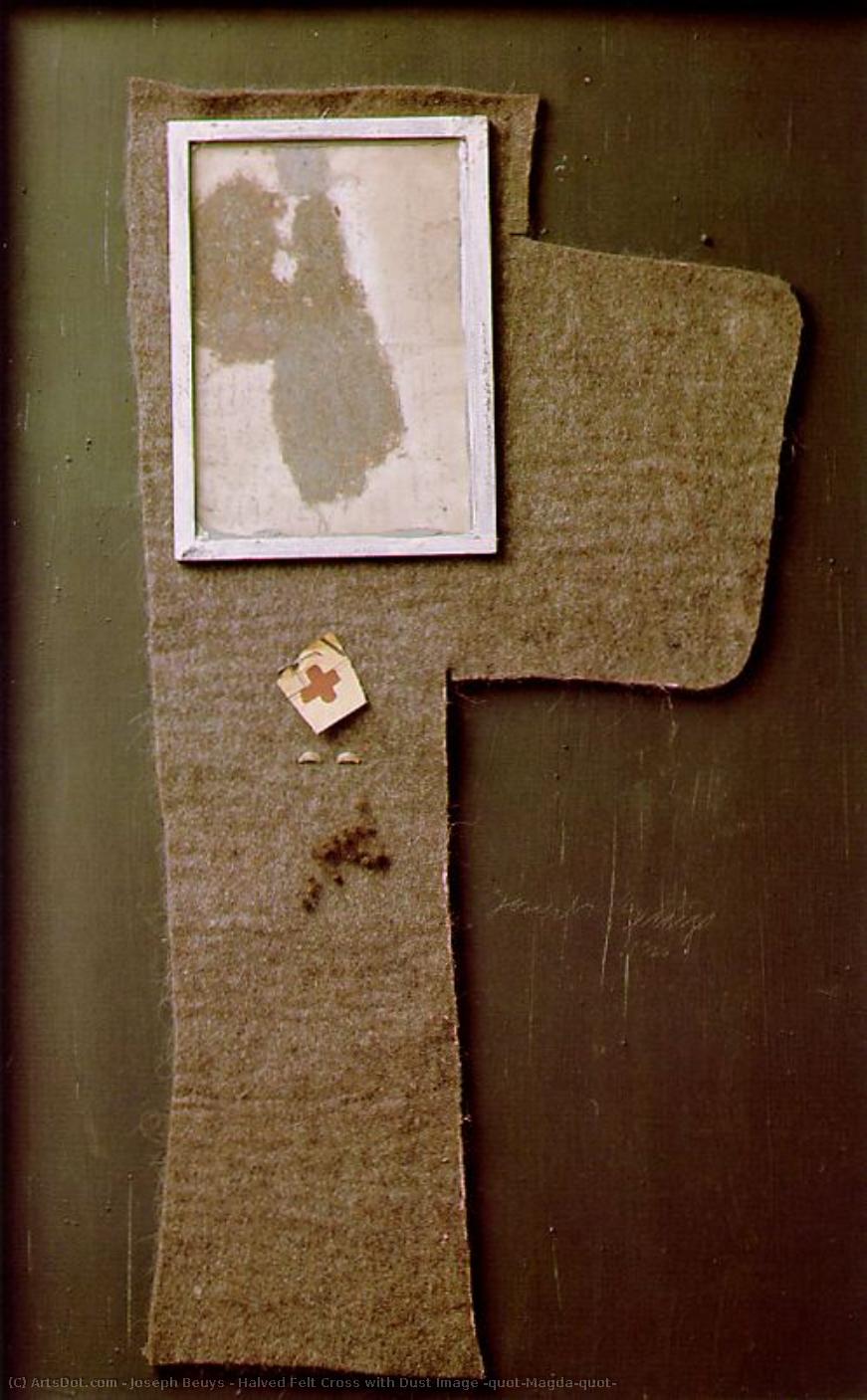
Halved Felt Cross with Dust Image "Magda"
 Acrylic On Canvas
- WallArt
- Fluxus
 1965
1965 108.0 x 68.0 cm
 Музей Людвига
 Читать далее
Приобретите цифровое изображение высокого разрешения в улучшенном качестве, которое значительно превосходит онлайн-превью.
Каждый файл тщательно подготавливается нашими специалистами с использованием передовых инструментов и экспертной ручной ретуши. Мы гарантируем исключительную четкость, точную цветопередачу и детальную проработку каждого изображения.
Финальный файл доставляется по электронной почте в течение 72 часов и оптимизирован для немедленного использования в профессиональной среде, при верстке и печати. Это тот же уровень качества, которому доверяют ведущие дизайнерские студии, издательства и галереи.
Цифровое изображение
Скачайте файл высокого разрешения для личного использования, печати и творческих проектов. ( Перейти к печати Купить картину ручной работы)
Включено в каждый заказ цифровых изображений
Гарантия экспертной цифровой доставки
Выбирая ArtsDot.com, вы получаете не просто изображение — вы приобретаете профессионально обработанное цифровое произведение искусства, созданное с безупречной точностью и под защитой гарантии качества. Вот всё, что автоматически входит в ваш заказ:

Мгновенная доставка по e-mail
Ваш цифровой файл в высоком разрешении будет отправлен вам по электронной почте в течение 72 часов после оформления заказа — и сразу станет доступен для использования.

Цифровой файл с ИИ-улучшением
Ваше произведение искусства проходит профессиональную оптимизацию с использованием передовых инструментов ИИ и ручной обработки, что гарантирует максимальную детализацию, четкость и точность цветопередачи.

Бессрочная бесплатная повторная доставка
Случайно удалили или потеряли файл? Не беспокойтесь — мы отправим его вам повторно в любое время и совершенно бесплатно.

Без импортных пошлин — навсегда
Наслаждайтесь вашим произведением искусства мгновенно без таможенных пошлин, сборов или затрат на доставку — цифровые загрузки всегда не облагаются налогом.

Гарантия точности цветопередачи
Мы гарантируем, что ваше цифровое изображение максимально точно передает оригинальные цвета благодаря использованию профессиональных инструментов и систем управления цветом.

Гарантия удовлетворенности 100 дней
Если вы не будете удовлетворены своим цифровым изображением, мы внесем правки или вернем 100% стоимости в течение 100 дней — без лишних вопросов.

100% Гарантия возврата средств
Не удовлетворены покупкой? Получите полный возврат средств в течение 100 дней после получения цифрового файла — без лишних вопросов.

Скидки на оптовые заказы
Купите 3 изображения, сэкономьте 10% — Купите 5, сэкономьте 15% — Купите 10+, сэкономьте 20%. Отличное решение для творческих проектов, галерей и агентств.
Halved Felt Cross with Dust Image “Magda”: A Meditation on Remembrance
The artwork "Halved Felt Cross with Dust Image ‘Magda’” by Joseph Beuys stands as a poignant testament to the artist’s profound engagement with themes of memory, loss, and social responsibility—a cornerstone of his influential Neo-Dada movement. Created in 1965, this striking assemblage transcends mere visual representation; it invites contemplation on the ephemeral nature of existence and the enduring power of symbolic gesture. Beuys's meticulous crafting process—incorporating unconventional materials like wool felt, metal nails, paper, and wire—reflects his belief that art could serve as a catalyst for societal transformation, mirroring the spirit of his broader artistic philosophy.Compositional Layers & Material Exploration
At first glance, the piece presents a deceptively simple visual arrangement: a large expanse of grey felt dominates the canvas, meticulously folded to form a stylized cross silhouette—a deliberate reference to Christian iconography and, crucially, to the title itself, “Magda,” which is believed to be derived from Beuys’s wife's name. Adjacent to this textural centerpiece is a framed photograph depicting dust—a material imbued with symbolic significance for Beuys, representing decay, transformation, and the fundamental elements of life. Scattered across the felt are metal nails, anchoring the composition and adding an element of rigidity against the softness of the fabric. The subtle inclusion of wire reinforces these structural considerations while simultaneously hinting at connections between disparate components.Technique & Artistic Style: Neo-Dada’s Embrace of Chance
Beuys's technique is characterized by a deliberate rejection of traditional artistic conventions—a hallmark of Neo-Dada, which emerged in the wake of World War II as a reaction against prevailing aesthetic norms. Rather than striving for polished realism, he embraced chance and improvisation, allowing materials to dictate the form and expression of his artwork. The photographic documentation of the piece underscores this commitment to capturing the physical qualities of the object itself—a method that prioritizes tactile experience and invites viewers to engage with the materiality of art. The artist’s meticulous attention to detail—evident in the precise folding of the felt and the careful positioning of the photograph—contrasts sharply with the seemingly random arrangement of elements, creating a dynamic tension that embodies the core tenets of Neo-Dada's aesthetic vision.Symbolism & Conceptual Depth: Remembrance as Resistance
Beyond its formal qualities, “Halved Felt Cross with Dust Image ‘Magda’” carries profound symbolic weight. The cross motif speaks to themes of faith and sacrifice—yet Beuys’s appropriation of Christian iconography isn’t intended as a literal depiction but rather as a vehicle for conveying ideas about mortality and resilience. Simultaneously, the photograph of dust symbolizes decay and impermanence—a reminder that all things eventually return to their origins. However, this acknowledgement of loss is tempered by an implicit assertion of resistance—the artist's refusal to succumb to despair and his insistence on confronting difficult truths. The overall mood conveyed by the artwork is somber yet imbued with a quiet dignity—reflecting Beuys’s belief that art could serve as a means of articulating profound emotional experiences and fostering social engagement.Concluding Reflection: An Echo of Social Sculpture
“Halved Felt Cross with Dust Image ‘Magda’” exemplifies Beuys's broader artistic project known as Social Sculpture, which aimed to transform urban spaces into sites of collective reflection and action. Like many of his works—characterized by their unconventional materials and conceptual depth—this piece invites viewers to consider the relationship between art, memory, and social responsibility. It stands as a powerful reminder that true creativity resides not merely in technical skill but also in the ability to grapple with existential questions and to express profound emotional truths—a legacy that continues to inspire artists and thinkers today.Похожие произведения
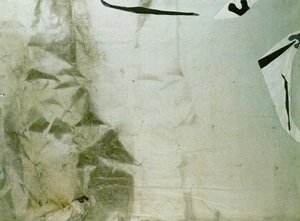
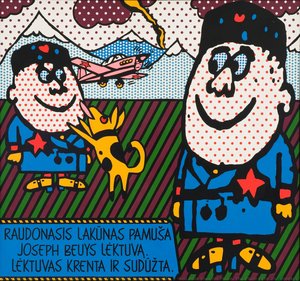
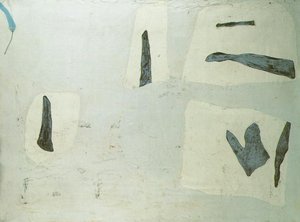
Биография художника
A Life Sculpted in Society
Joseph Beuys, a name synonymous with the expansion of artistic boundaries, was more than just an artist; he was a visionary who believed creativity held the key to societal transformation. Born in Krefeld, Germany, in 1921, his life unfolded against a backdrop of immense political and social upheaval, profoundly shaping his artistic philosophy. From a childhood marked by relocation and early exposure to both natural sciences and the burgeoning darkness of Nazism—an event crystallized by rescuing Carl Linnaeus’s *Systema Naturae* from a book burning—Beuys developed a sensitivity to the fragility of existence and the power of symbolic action. His formative years were steeped in an intellectual curiosity that spanned music, mythology, and history, laying the groundwork for his later multidisciplinary approach. Though briefly involved with the Hitler Youth as a teenager – a common experience for German youth at the time – Beuys’s trajectory would ultimately lead him to challenge established norms and advocate for radical social change through art.The Crucible of War and the Birth of an Iconography
World War II proved a pivotal, almost mythic, turning point in Beuys's life. Volunteering for the Luftwaffe in 1941, he experienced a near-fatal plane crash in Crimea in 1944. The story that emerged from this event—his rescue by Tatar tribesmen who wrapped his broken body in felt and fat to preserve warmth and aid healing—became central to his artistic identity. While historical accounts dispute the details of this narrative, Beuys embraced it as a foundational myth, imbuing these materials with profound symbolic weight. Felt, representing protection, insulation, and connection to nature; and fat, symbolizing energy, healing, and transformation—these became recurring motifs in his work, acting as potent metaphors for the human condition and the potential for renewal. Following the war, Beuys formally studied sculpture at the Düsseldorf Academy of Fine Arts, but it was his engagement with anthroposophy, the spiritual philosophy developed by Rudolf Steiner, that truly ignited his artistic vision. This encounter profoundly influenced his belief in the interconnectedness of all things and his desire to use art as a tool for social healing.Social Sculpture: Art as a Revolutionary Force
Beuys’s most significant contribution to art history is arguably his concept of “Social Sculpture” (*Soziale Plastik*). This wasn't merely about creating physical objects; it was a holistic vision where creativity played a vital role in shaping society and politics. He believed that every individual possessed creative potential, and that this potential could be unlocked through participation—blurring the lines between artist, artwork, and audience. Social Sculpture wasn’t confined to galleries or museums; it extended into everyday life, encompassing political activism, educational initiatives, and public performances. He envisioned a “Gesamtkunstwerk”—a total work of art—where all aspects of human existence could be creatively engaged to foster positive social change. This philosophy underpinned his numerous actions, installations, and pedagogical endeavors, challenging the traditional role of the artist as a solitary creator and positioning them instead as a catalyst for collective transformation.Performance, Materials, and Political Engagement
Beuys’s artistic practice was remarkably diverse, encompassing performance art, installations, drawings, sculptures, and political activism. His performances were often ritualistic, involving direct engagement with the public and unconventional materials. Iconic works like his felt suits, which he wore during numerous actions, symbolized warmth, protection, and a primal connection to nature. Fat Installations explored themes of energy, healing, and transformation, while performances such as “I Like to Learn” (1965), where he sat in a gallery window with stones and honey inviting dialogue, emphasized the importance of knowledge sharing and open communication. Sculptures like “Lightning with Stag in Its Glare” represented primal forces and human consciousness. Beyond his artistic creations, Beuys actively participated in political debates, founding the Free International Zone (FIZ) at documenta 7—a space for artistic experimentation and social dialogue—and becoming a vocal supporter of the German Green Party. He saw art as a means to address pressing social issues such as environmental degradation and political injustice.A Lasting Legacy
Joseph Beuys died in 1986, leaving behind a legacy that continues to inspire artists, activists, and thinkers today. He radically challenged conventional notions of creativity and authorship, emphasizing participation and social engagement. His work expanded the definition of art beyond aesthetic concerns to encompass political, environmental, and spiritual dimensions. His concept of Social Sculpture remains profoundly relevant, urging us to recognize the creative potential within ourselves and to actively participate in shaping a more just and sustainable future. Beuys wasn’t simply an artist; he was a prophet of possibility, reminding us that art has the power not only to reflect society but also to transform it. His work continues to be studied and debated, solidifying his position as one of the most influential artists of the 20th century.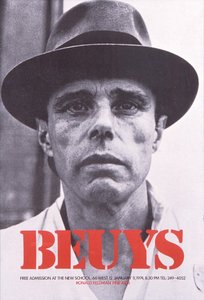
Йозеф Буйс
1921 - 1986 , Германия
Основные сведения
- Artistic Movement Or Style: Флукс, перформанс
- Artists Or Movements Influenced By This Artist:
- Перформанс
- Социальная скульптура
- Artists Who Influenced This Artist:
- Рудольф Штайнер
- Эвальд Матэре
- Date Of Birth: 12 мая 1921
- Date Of Death: 23 января 1986
- Full Name: Joseph Heinrich Beuys
- Nationality: Германец
- Notable Artworks:
- Семинар с Йозефом Бюемсом
- Правда о...
- Я люблю учиться
- Молния со зверя в блеске
- Костюмы из льна
- Place Of Birth: Крефельд, Германия