

 Предпросмотр
 Поделиться
 Поделиться
 Детали произведения

 Скачать
 Похожие работы
 Рентгенография
 Слайд-шоу
 Статистика
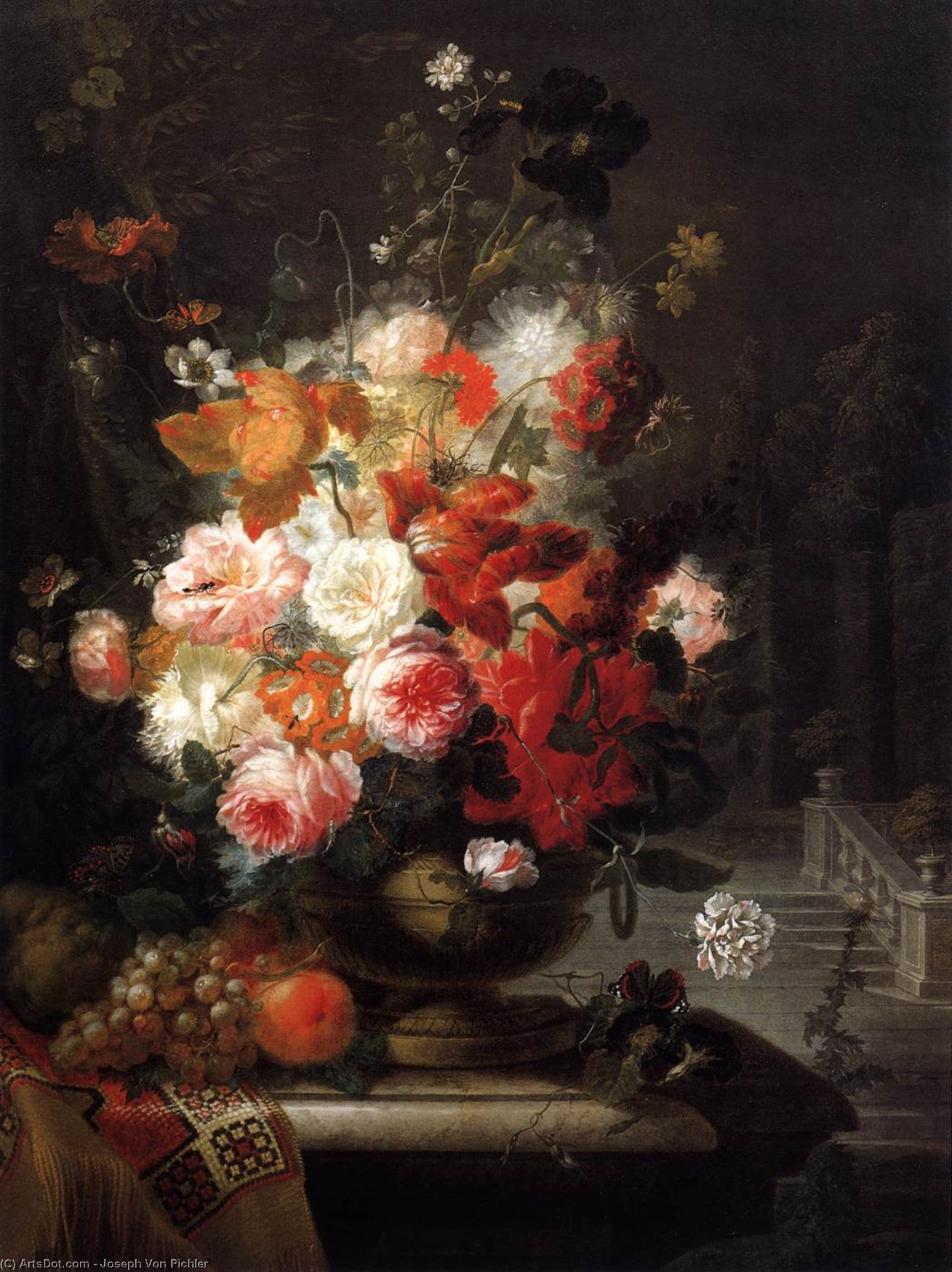
Flower Piece
 Oil On Canvas
- WallArt
- Rococo
 1778
1778- Early Modern
 94.0 x 71.0 cm
 Academy of Fine Arts Vienna
 Читать далее
Приобретите цифровое изображение высокого разрешения в улучшенном качестве, которое значительно превосходит онлайн-превью.
Каждый файл тщательно подготавливается нашими специалистами с использованием передовых инструментов и экспертной ручной ретуши. Мы гарантируем исключительную четкость, точную цветопередачу и детальную проработку каждого изображения.
Финальный файл доставляется по электронной почте в течение 72 часов и оптимизирован для немедленного использования в профессиональной среде, при верстке и печати. Это тот же уровень качества, которому доверяют ведущие дизайнерские студии, издательства и галереи.
Цифровое изображение
Скачайте файл высокого разрешения для личного использования, печати и творческих проектов. ( Перейти к печати Купить картину ручной работы)
Включено в каждый заказ цифровых изображений
Гарантия экспертной цифровой доставки
Выбирая ArtsDot.com, вы получаете не просто изображение — вы приобретаете профессионально обработанное цифровое произведение искусства, созданное с безупречной точностью и под защитой гарантии качества. Вот всё, что автоматически входит в ваш заказ:

Мгновенная доставка по e-mail
Ваш цифровой файл в высоком разрешении будет отправлен вам по электронной почте в течение 72 часов после оформления заказа — и сразу станет доступен для использования.

Цифровой файл с ИИ-улучшением
Ваше произведение искусства проходит профессиональную оптимизацию с использованием передовых инструментов ИИ и ручной обработки, что гарантирует максимальную детализацию, четкость и точность цветопередачи.

Бессрочная бесплатная повторная доставка
Случайно удалили или потеряли файл? Не беспокойтесь — мы отправим его вам повторно в любое время и совершенно бесплатно.

Без импортных пошлин — навсегда
Наслаждайтесь вашим произведением искусства мгновенно без таможенных пошлин, сборов или затрат на доставку — цифровые загрузки всегда не облагаются налогом.

Гарантия точности цветопередачи
Мы гарантируем, что ваше цифровое изображение максимально точно передает оригинальные цвета благодаря использованию профессиональных инструментов и систем управления цветом.

Гарантия удовлетворенности 100 дней
Если вы не будете удовлетворены своим цифровым изображением, мы внесем правки или вернем 100% стоимости в течение 100 дней — без лишних вопросов.

100% Гарантия возврата средств
Не удовлетворены покупкой? Получите полный возврат средств в течение 100 дней после получения цифрового файла — без лишних вопросов.

Скидки на оптовые заказы
Купите 3 изображения, сэкономьте 10% — Купите 5, сэкономьте 15% — Купите 10+, сэкономьте 20%. Отличное решение для творческих проектов, галерей и агентств.
The Luminous Poetry of Bloom: An Encounter with Joseph Von Pichler's "Flower Piece"
To stand before Joseph Von Pichler’s Flower Piece is to step into a moment suspended in time, a breath held by the exquisite abundance of nature. This stunning still life, executed in 1778, transcends mere depiction; it is a celebration of ephemeral beauty rendered permanent upon canvas. The composition immediately draws the eye into a lavish gathering of blossoms, dominated by the rich dialogue between crimson reds and pristine whites, punctuated by warm bursts of orange. It speaks to an era of refined taste, where the domestic elegance of nature was elevated to the highest form of art.
Rococo Grace and Technical Mastery
The painting is a quintessential embodiment of the Rococo period's love for ornamentation and delicate naturalism. Pichler’s technique in this oil on canvas masterpiece is nothing short of breathtaking. Observe how the artist has treated light; it does not merely illuminate, it sculpts. A masterful source of illumination, seemingly descending from above, catches every curve of the petal and every veining of the leaf, creating a palpable sense of depth and three-dimensionality. The interplay between highlight and shadow is so exquisitely managed that the bouquet appears ready to spill its fragrant contents onto the draped table below. This meticulous attention to the play of light speaks volumes about Pichler's virtuosity as an observer and a painter.
Symbolism in Still Life
In the tradition of still life painting, flowers have always carried layers of meaning. Here, the sheer profusion suggests opulence and the fleeting nature of earthly joy—a beautiful memento mori veiled in vibrant color. The specific arrangement, gathered within a stately vase, invites contemplation on cycles: the peak bloom represents glory, while the very act of capturing it reminds us of its inevitable passing. For the modern collector or designer, this piece offers not just decoration, but a philosophical anchor—a reminder to savor the present moment's delicate perfection.
Bringing Salon Splendor Home
The original scale of 94 x 71 cm commands attention, making it a breathtaking focal point for any grand salon or formal drawing-room. For those who wish to capture this historical grandeur without acquiring an original masterpiece, our hand-painted reproductions allow you to integrate the spirit of Rococo luxury into your own space. Imagine the soft glow of these painted petals against rich velvet upholstery or beside antique mahogany furniture. It is an investment in enduring beauty, a piece that whispers tales of Habsburg elegance and botanical splendor across centuries.
Похожие произведения
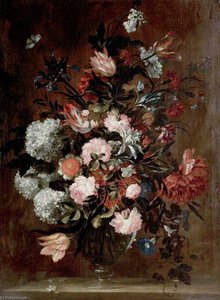
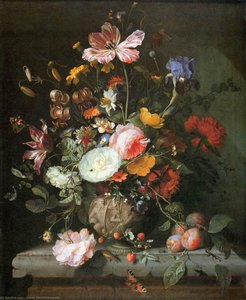
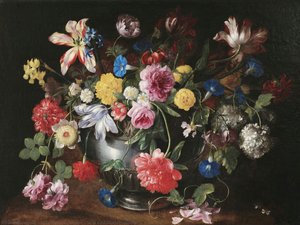
Биография художника
The Luminous Legacy of Joseph von Pichler
To encounter the work of Joseph von Pichler is to step into a moment suspended in time, where the ephemeral beauty of the natural world is rendered permanent through a delicate, masterful hand. Born on May 9, 1730, in the Carinthian village of Kötschach, Pichler would eventually emerge as a singular figure in Austrian art history. His journey from the quiet landscapes of his youth to the opulent halls of the Habsburg court was fueled by an ambition nurtured at the prestigious Academy of Fine Arts Vienna. It was here, under the guidance of masters like Vinzenz Fischer, that he honed the technical precision and tonal harmony that would become his hallmark, establishing himself as a painter capable of transforming mere surfaces into windows of botanical splendor.
Pichler’s artistic identity was deeply intertwined with the Rococo aesthetic, an era defined by grace, pastel palettes, and an idealized vision of nature. While many of his contemporaries sought to capture the dramatic tension of historical narratives or the heroic weight of mythological themes, Pichler found his calling in the subtle nuances of the organic world. He possessed a rare ability to prioritize botanical accuracy alongside a sense of poetic movement. His flower studies, such as the breathtaking Flower Piece of 1778, demonstrate a profound engagement with light; he did not merely illuminate his subjects but used light to sculpt them, catching every curve of a petal and every delicate vein of a leaf to create a palpable sense of three-dimensionality.
A Painter of Palaces and Grandeur
The true scale of Pichler’s talent was most vibrantly realized through his monumental fresco commissions. He became the preferred artist for Wenzel Anton, Prince of Kaunitz-Rietberg, a patron whose architectural projects provided the perfect stage for Pichler’s expansive visions. In the legendary Slavkov Castle, Pichler executed frescoes that transformed walls into fantastical gardens, teeming with exotic flora that reflected the Prince’s own scientific curiosity and botanical passion. These works were far more than mere decoration; they were emblems of Habsburg power and refinement, designed to evoke a sense of cultivated elegance and intellectual wonder in all who walked through their halls.
His mastery extended to the Palais Kaunitz-Wittgenstein, where his frescoes in the stairwell and banquet hall showcased his ability to manipulate space and atmosphere. In these settings, Pichler utilized panoramic landscapes bathed in golden light to convey both a sense of imperial grandeur and a profound, meditative tranquility. His reach even touched the very heart of the Habsburg royal family, as evidenced by his decorative work in the Blauer Hof. Through these large-scale projects, Pichler bridged the gap between the intimate observation of a single blossom and the sweeping, architectural majesty required by the highest echelons of European nobility.
Symbolism and Artistic Significance
Beyond the technical virtuosity of his brushwork, Pichler’s oeuvre carries deep symbolic resonance. In the tradition of still life painting, his lush arrangements often served as a memento mori—a gentle reminder of the fleeting nature of earthly joy. The very abundance he depicted, while celebrating peak bloom and glory, simultaneously whispered of the inevitable passing of time. This duality allowed his work to function both as an object of aesthetic pleasure and a subject for philosophical contemplation.
The historical significance of Joseph von Pichler lies in his ability to capture the spirit of an age transitioning between the ornamental joy of the Rococo and the burgeoning scientific observation of the Enlightenment. His legacy remains etched in the grandest corners of Austrian heritage, reminding us of a period when art served as a bridge between the wild beauty of nature and the structured elegance of human civilization. Today, his works continue to inspire, offering a window into a world of:
- Botanical Precision: A meticulous devotion to the anatomical truth of flora.
- Luminous Atmosphere: The use of light to create depth, texture, and emotion.
- Architectural Harmony: The seamless integration of painting with grand imperial spaces.
- Refined Elegance: An enduring contribution to the aesthetic identity of the Habsburg era.
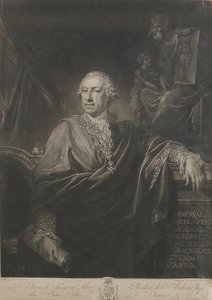
joseph von pichler
1730 - 1808 , Austria
Основные сведения
- Artistic Movement Or Style: Rococo Painting
- Artists Or Movements Influenced By This Artist: ['Anton von Werner']
- Artists Who Influenced This Artist: ['Vinzenz Fischer']
- Date Of Birth: May 9, 1730
- Full Name: Joseph von Pichler
- Nationality: Austrian
- Notable Artworks:
- Flower Studies
- Slavkov Castle Frescoes
- Place Of Birth: Kötschach, Austria