

 Предпросмотр
 Поделиться
 Поделиться
 Детали произведения

 Скачать
 Похожие работы
 Рентгенография
 Слайд-шоу
 Статистика
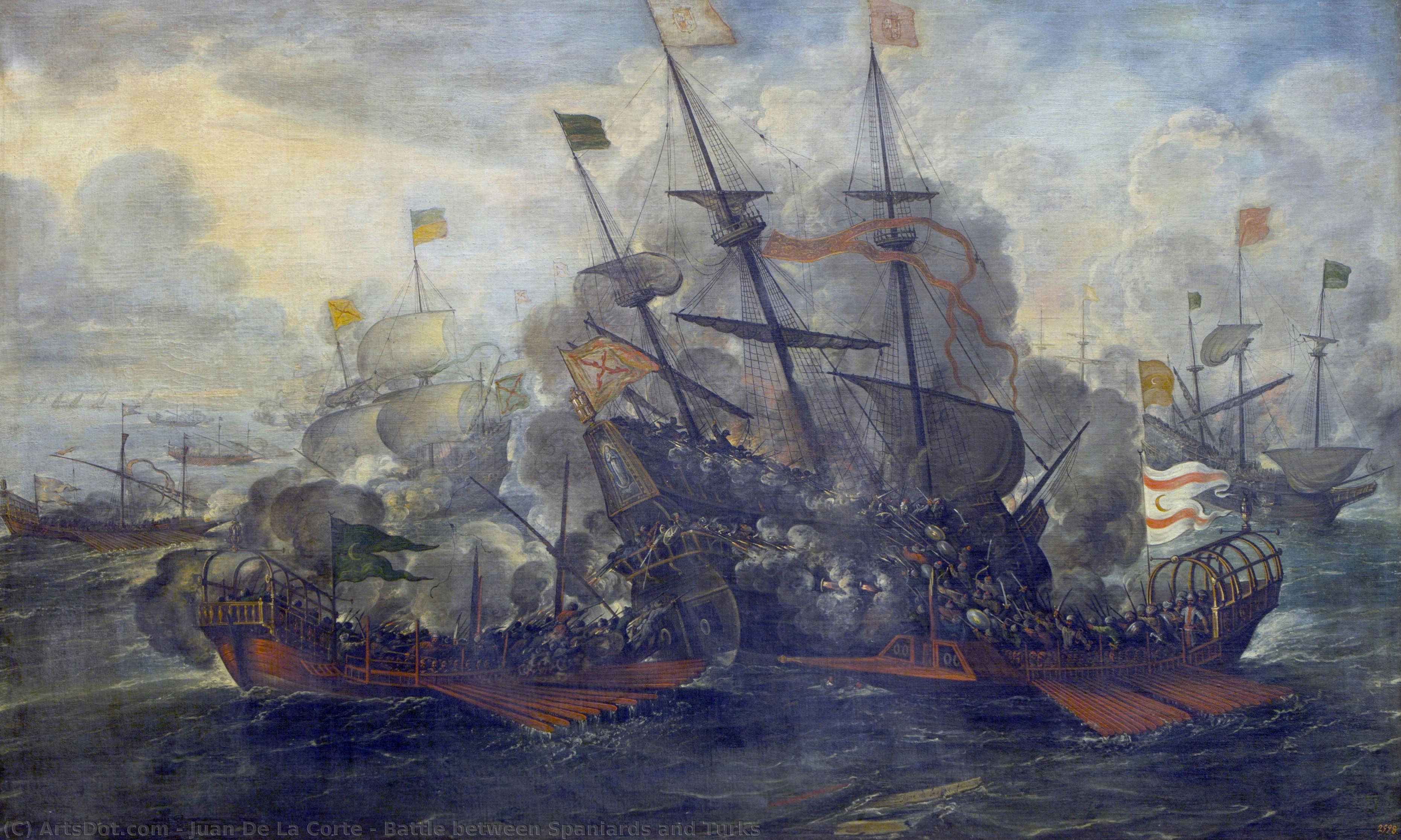
Battle between Spaniards and Turks
 150.0 x 247.0 cm
 Морской музей
 Читать далее
Приобретите цифровое изображение высокого разрешения в улучшенном качестве, которое значительно превосходит онлайн-превью.
Каждый файл тщательно подготавливается нашими специалистами с использованием передовых инструментов и экспертной ручной ретуши. Мы гарантируем исключительную четкость, точную цветопередачу и детальную проработку каждого изображения.
Финальный файл доставляется по электронной почте в течение 72 часов и оптимизирован для немедленного использования в профессиональной среде, при верстке и печати. Это тот же уровень качества, которому доверяют ведущие дизайнерские студии, издательства и галереи.
Цифровое изображение
Скачайте файл высокого разрешения для личного использования, печати и творческих проектов. ( Перейти к печати Купить картину ручной работы)
Включено в каждый заказ цифровых изображений
Гарантия экспертной цифровой доставки
Выбирая ArtsDot.com, вы получаете не просто изображение — вы приобретаете профессионально обработанное цифровое произведение искусства, созданное с безупречной точностью и под защитой гарантии качества. Вот всё, что автоматически входит в ваш заказ:

Мгновенная доставка по e-mail
Ваш цифровой файл в высоком разрешении будет отправлен вам по электронной почте в течение 72 часов после оформления заказа — и сразу станет доступен для использования.

Цифровой файл с ИИ-улучшением
Ваше произведение искусства проходит профессиональную оптимизацию с использованием передовых инструментов ИИ и ручной обработки, что гарантирует максимальную детализацию, четкость и точность цветопередачи.

Бессрочная бесплатная повторная доставка
Случайно удалили или потеряли файл? Не беспокойтесь — мы отправим его вам повторно в любое время и совершенно бесплатно.

Без импортных пошлин — навсегда
Наслаждайтесь вашим произведением искусства мгновенно без таможенных пошлин, сборов или затрат на доставку — цифровые загрузки всегда не облагаются налогом.

Гарантия точности цветопередачи
Мы гарантируем, что ваше цифровое изображение максимально точно передает оригинальные цвета благодаря использованию профессиональных инструментов и систем управления цветом.

Гарантия удовлетворенности 100 дней
Если вы не будете удовлетворены своим цифровым изображением, мы внесем правки или вернем 100% стоимости в течение 100 дней — без лишних вопросов.

100% Гарантия возврата средств
Не удовлетворены покупкой? Получите полный возврат средств в течение 100 дней после получения цифрового файла — без лишних вопросов.

Скидки на оптовые заказы
Купите 3 изображения, сэкономьте 10% — Купите 5, сэкономьте 15% — Купите 10+, сэкономьте 20%. Отличное решение для творческих проектов, галерей и агентств.
Похожие произведения








Биография художника
Juan de la Corte: Master of the Spanish Naval Battle
Juan de la Corte (1597-1660) stands as a pivotal figure in 17th-century Spanish art, renowned for his dramatic and meticulously rendered depictions of naval battles. Born in Madrid, he emerged from the workshop of Francisco Velázquez, inheriting a legacy of artistic skill and a deep understanding of composition and perspective – qualities that would define his unique style. While often overshadowed by other Golden Age masters, Corte’s contribution to Spanish art lies primarily in his unparalleled ability to capture the chaos, dynamism, and sheer scale of maritime warfare, offering viewers an intimate glimpse into historical conflicts.
Corte's artistic journey began under Velázquez, a master known for his realism and mastery of light. This early training instilled in him a rigorous attention to detail and a commitment to portraying subjects with remarkable accuracy. However, Corte quickly distinguished himself through his specialization in battle scenes – a genre relatively unexplored by Spanish painters at the time. He wasn’t simply illustrating historical events; he was striving to convey the visceral experience of combat, the clash of steel, the roar of cannons, and the desperate courage of sailors and soldiers alike.
His most celebrated work, “Naval Combat of Pernambuco or of Albrolhos (September 12, 1631),” exemplifies his artistic prowess. This monumental painting, commissioned to commemorate the decisive victory by the Spanish fleet against the Dutch in Pernambuco, is a testament to Corte’s technical skill and dramatic vision. The sheer size of the canvas—over six meters long—allows him to depict hundreds of ships engaged in furious combat, each vessel rendered with astonishing detail. The composition is brilliantly balanced, guiding the viewer's eye through the swirling mass of vessels, exploding gunpowder, and struggling figures. It’s not merely a record of a battle; it’s an immersive experience that transports the observer directly into the heart of the fray.
A Royal Patronage and Artistic Development
Corte’s career was significantly shaped by his patronage under King Philip III and later, King Philip IV. These royal commissions provided him with financial stability and access to resources, allowing him to undertake ambitious projects and develop his artistic skills further. He also served as a court painter, producing portraits of nobility and documenting significant events – a role that honed his observational abilities and deepened his understanding of human psychology.
Interestingly, Corte’s early career was marked by a shift in perspective. Initially influenced by the prevailing conservative views of the Spanish court, he later embraced more liberal ideals, reflecting the changing political landscape of Spain. This evolution is evident in his artistic style, which became increasingly nuanced and expressive over time. His work during this period demonstrates a growing interest in portraying not just the spectacle of war but also the human cost – the bravery, sacrifice, and suffering endured by those involved.
Despite his royal connections, Corte’s artistic development wasn't solely dictated by courtly demands. He was known to study historical accounts and engravings to ensure accuracy in his depictions of battles. Furthermore, he meticulously researched naval tactics and ship designs, incorporating these details into his paintings with remarkable precision. This dedication to realism contributed significantly to the authenticity and impact of his work.
Technique and Style
Corte’s artistic style is characterized by a masterful command of perspective, dynamic composition, and a vibrant use of color. He employed a technique known as “aerial perspective,” subtly blurring distant objects to create a sense of depth and atmosphere. His brushwork is loose and expressive, conveying the movement and energy of the battle with remarkable immediacy.
Color plays a crucial role in his paintings, particularly in depicting the smoke, flames, and explosions that characterize naval combat. He skillfully used contrasting colors to highlight key elements – the brilliant white of sails against the dark blue of the sea, the fiery red of cannonballs against the gray of the warships. His palette is rich and varied, reflecting the diverse range of subjects he tackled.
Corte’s influence extends beyond his individual works. He helped to establish naval battle painting as a significant genre within Spanish art, inspiring subsequent generations of artists to explore this dramatic subject matter. His meticulous attention to detail, dynamic compositions, and expressive brushwork set a new standard for depicting historical conflicts.
Legacy and Historical Significance
Juan de la Corte’s paintings offer invaluable insights into the history of Spain during the 17th century – a period marked by intense political and military rivalry with other European powers. His depictions of naval battles, such as the Battle of Pernambuco, provide a visual record of these conflicts, capturing the strategic importance of maritime power in shaping Spanish dominance.
Today, Corte’s works are housed in prestigious museums around the world, including the Museo Nacional del Prado in Madrid and the Art Institute of Chicago. His paintings continue to fascinate viewers with their dramatic intensity, technical skill, and historical significance. Juan de la Corte remains a vital figure in Spanish art history, celebrated for his ability to transform historical events into compelling visual narratives.
juan de la corte
1597 - 1660