 Предпросмотр
 Поделиться
 Поделиться
 Детали произведения

 Скачать
 Похожие работы
 Рентгенография
 Слайд-шоу
 Статистика
Violin and guitar - -
 Oil On Canvas
- WallArt
- Synthetic Cubism
 1913
1913 100.0 x 66.0 cm
 Читать далее
Масляная репродукция ручной работы
Картина маслом на холсте в выбранном вами размере и раме, написанная на заказ нашими художниками. ( Перейти к печати Перейти к цифровым изображениям)




P118B $10

P118H $10

P118W $10

P438Z $10

P508JH $12

P508YH $12

P805H $10

P805Z $10

P919BZ $10

P919G $10

P919XJ $10

P959ZH $10

P968JZ $12

W106C $8

W218G $10

W218JH $8

W218Y $10

W307PJ $10

W316G $10

W316PJ $8

W316Y $10

W398PJ $8

W4111J $10

W500HY $15

W500JH $15

W692G $12

W849H $8

W940BG $15

W953PJ $8




Выберите один из наших стандартных размеров, соответствующих оригинальным пропорциям произведения искусства.

Вы можете указать собственные размеры, чтобы картина идеально вписалась в выбранную раму или пространство. Если выбранный вами размер не соответствует пропорциям оригинала, мы либо обрежем полотно, либо расширим его за счет дополнительных элементов, написанных вручную. Цифровой макет будет отправлен вам на утверждение перед началом производства.
Обратите внимание, что предварительный просмотр на экране не отражает фактическую обрезку или расширение. Только макет точно покажет окончательную композицию.
Хотя доступны индивидуальные размеры, мы рекомендуем выбирать вариант из предопределенного списка, чтобы сохранить исходные пропорции.
После оформления заказа команда ArtsDot.com свяжется с клиентом по электронной почте для уточнения деталей и предоставит предварительный макет
Доставка по всему миру () за 3–4 недели вместо стандартных 5 недель. (11 Сентябрь). Без компромиссов в качестве.

Бесплатная экспресс-доставка по всему миру

Высококачественный льняной холст

Полное страхование доставки

Гарантия возмещения таможенных пошлин

Гарантия точного соответствия цветов

100-дневная политика возврата (только при обнаружении дефектов)

Гарантия возврата 100% средств

Предложение оптовых скидок
 Вариант со стеклом доступен только для размеров менее 110 см

Violin and guitar - -
Техника репродукции
Размер репродукции
-


Итоговая стоимость
$ 263
A Symphony in Geometric Fragments: Exploring Juan Gris’s Violin and Guitar
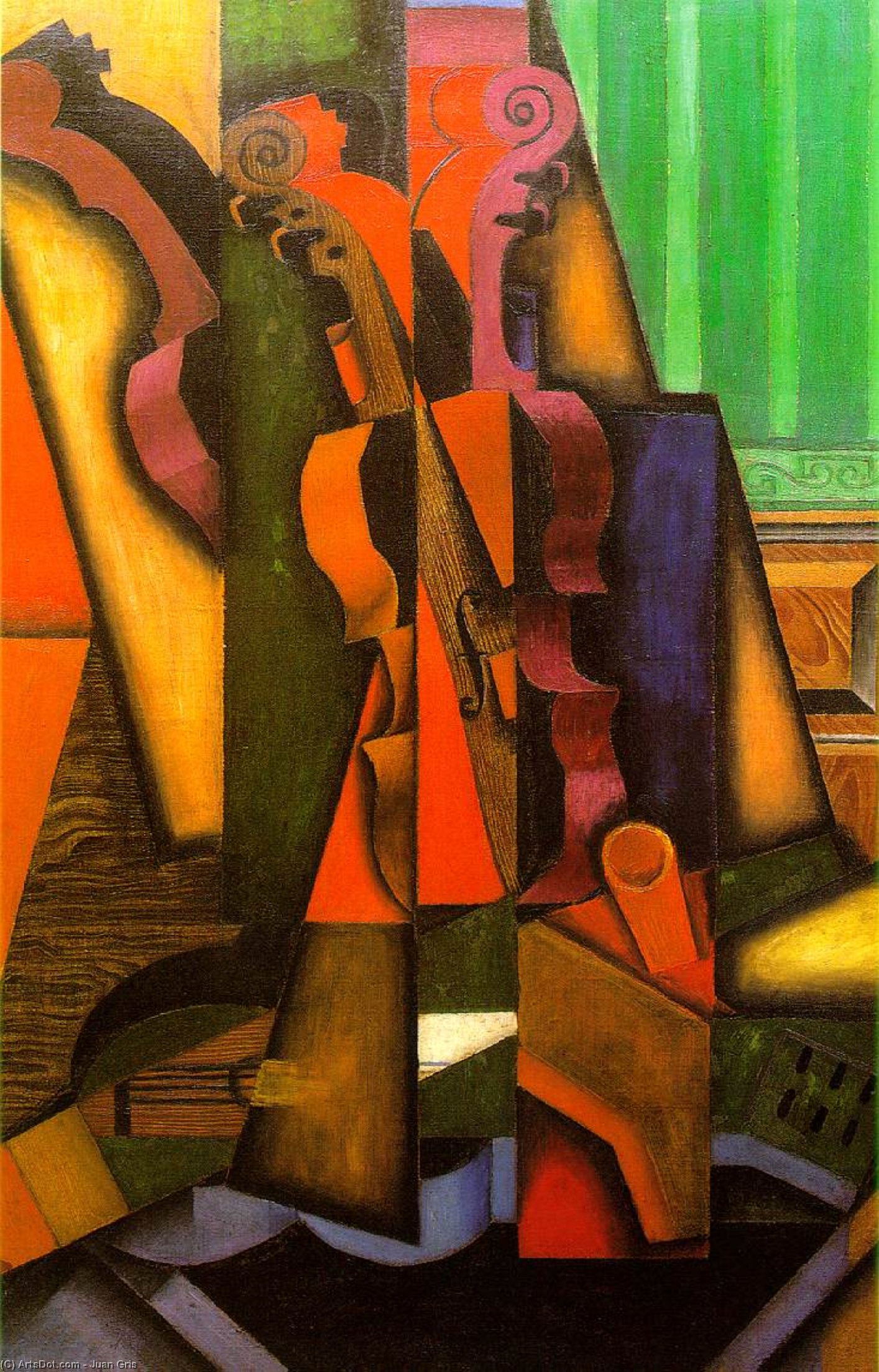
The painting “Violin and Guitar” by Juan Gris stands as an emblem of Synthetic Cubism, a movement that irrevocably altered the landscape of artistic expression during the heady years of the early 2000s. Created in 1913, this deceptively simple composition—measuring precisely 100 x 66 cm—holds within it layers of intellectual and aesthetic complexity, reflecting the anxieties and aspirations of its time while simultaneously establishing a cornerstone for modern art’s visual language.The Genesis of Geometric Cubism
Born José Victoriano González-Pérez in Madrid in 1887, Gris’s artistic journey began not with easel and pigment but with an inquisitive mind drawn to the precision of engineering at the School of Arts and Sciences. Yet, even amidst these scientific pursuits, a creative impulse persisted—evident in his contributions to local periodicals where sketches foreshadowed his burgeoning talent for visual representation. It was in 1905 that he adopted the moniker “Juan Gris,” signifying a deliberate assertion of artistic identity as he embarked on formal painting studies under José Moreno Carbonero. This pivotal decision propelled him toward experimentation and innovation, ultimately aligning him with Pablo Picasso and André Breton—the vanguard figures who championed Synthetic Cubism.Deconstructing Reality: Style and Technique
Synthetic Cubism wasn’t merely about depicting objects; it was about reimagining them. Unlike Analytical Cubism's meticulous dissection into overlapping planes, Gris embraced a bolder approach – fracturing forms into geometric shapes like cubes, spheres, and cylinders—juxtaposing them against a muted tonal palette. The violin and guitar aren’t rendered realistically but are fragmented and reconstructed according to these principles, creating an illusion of depth and dimensionality through spatial ambiguity. Gris meticulously applied oil paint onto canvas with brushstrokes that convey texture and subtly suggest movement, capturing not just the visual appearance but also the essence of the instruments themselves.A Reflection of Its Time: Historical Context
The painting emerged during a period marked by profound intellectual ferment—the rise of psychoanalysis, the burgeoning fascination with scientific discoveries like Einstein’s theory of relativity, and a palpable disillusionment with traditional artistic conventions. Synthetic Cubism responded to these currents by rejecting illusionistic representation in favor of abstraction, mirroring the broader cultural shift toward questioning established norms. Gris's work served as a visual manifesto for the avant-garde spirit of the era, aligning him firmly within the circle of artists challenging the boundaries of perception and expression.Symbolic Resonance: Beyond Representation
While seemingly devoid of recognizable imagery, “Violin and Guitar” is laden with symbolic significance. The violin represents musical harmony and intellect—themes central to Gris’s artistic worldview—whereas the guitar embodies passion and emotion. Their placement within the composition underscores the tension between reason and feeling, a dichotomy that preoccupied artists and thinkers alike during this transformative period. Furthermore, the inclusion of two figures adds an element of human presence, suggesting contemplation and interaction with these symbols of artistic ideals.An Enduring Legacy: Emotional Impact
Ultimately, “Violin and Guitar” transcends its formal constraints to evoke a powerful emotional response. The muted colors and geometric forms create a sense of serenity and detachment, inviting viewers to consider the instruments not as objects but as conduits for profound ideas. It’s a painting that speaks to the enduring fascination with art's ability to capture intangible concepts—beauty, intellect, emotion—leaving an indelible mark on anyone who encounters its understated grandeur.Похожие произведения
Биография художника
A Spanish Visionary of Cubism: The Life and Art of Juan Gris
José Victoriano González-Pérez, a name that would become synonymous with artistic innovation, was born in Madrid on March 23, 1887. This young man, destined to be known as Juan Gris, embarked on a journey that would not only establish him as one of the most significant figures of early 20th-century art but also profoundly reshape our understanding of visual perception. Initially pursuing an engineering degree at the School of Arts and Sciences in Madrid, a logical mind began to develop alongside a burgeoning creative spirit. Even during his studies, glimpses of his artistic talent emerged – contributions to local periodicals hinted at a future dedicated to capturing the world through a unique lens. It was in 1905 that he adopted the pseudonym Juan Gris, a name imbued with a newfound sense of identity and purpose, marking a deliberate step towards embracing his artistic aspirations.Parisian Awakening and the Embrace of Cubism
The year 1906 proved to be a pivotal moment in Gris’s life – he relocated to Paris, a city then brimming with an unparalleled concentration of artistic energy. This move was not merely a geographical shift; it represented a complete immersion into a vibrant cultural landscape. He quickly established connections with luminaries such as Henri Matisse, Georges Braque, and Fernand Léger, forging friendships that would profoundly influence his artistic development. Initially, Gris engaged in the demanding world of satirical illustration for publications like *L'Assiette au Beurre*, honing his observational skills and developing a keen eye for detail – a skill he would later translate into his groundbreaking paintings. However, it was Pablo Picasso who exerted the most significant impact on his artistic trajectory. Around 1910, Gris began to dedicate himself wholeheartedly to painting, moving away from caricature and embracing the revolutionary language of Cubism. This wasn’t simply imitation; it was a deliberate quest to distill the essence of form and space, seeking a new visual order – a radical departure from traditional representation.The Geometry of Perception: Style and Key Works
Juan Gris's artistic output is characterized by an extraordinary clarity and intellectual rigor. He didn’t merely deconstruct objects; he meticulously reconstructed them, emphasizing geometric forms and employing a carefully considered palette. This approach led to what became known as his “crystal period,” exemplified in masterpieces such as *Still Life Before an Open Window* (1912) and *Place Ravignan* (1915). These works showcase a remarkable interplay of planes and angles, creating a sense of depth and solidity while simultaneously challenging conventional notions of perspective. The influence of Picasso is undeniable, yet Gris developed his own distinct style – one characterized by a precise geometric structure, a harmonious color scheme, and an innovative use of *papier collé* (collage). He incorporated real-world materials like newspaper clippings and textured papers into his compositions, blurring the boundaries between painting and sculpture. Notable examples include *Guitar in front of the sea* (1925), a testament to his simplified forms and adherence to cubist principles, and *Homage à Pablo Picasso* (1912), which signaled his growing recognition within the avant-garde art world.Synthetic Cubism and Lasting Influence
Following the initial explorations of Analytical Cubism, Gris transitioned to Synthetic Cubism around 1913, a period marked by a shift towards greater simplification and a vibrant use of color. He pioneered the extensive use of *papier collé*, incorporating fragments of everyday life – advertisements, fabrics, and even pieces of fruit – into his paintings. This technique added layers of complexity and tactile richness to his work, transforming his canvases into dynamic visual dialogues. Unlike Picasso and Braque, whose Cubist works were often monochromatic, Gris employed bold, harmonious color palettes, creating a distinctive aesthetic that resonated with the principles of Matisse’s art. His emphasis on geometric forms, combined with his innovative use of collage, established him as a pivotal figure in 20th-century art. His legacy extends beyond mere stylistic innovation; he brought a unique intellectual depth and structural clarity to the movement, profoundly influencing the Purist style championed by Amédée Ozenfant and Charles Edouard Jeanneret (Le Corbusier). Juan Gris’s work continues to inspire artists today, demonstrating the enduring power of Cubism and the visionary genius of a Spanish master who reshaped our understanding of perception and representation.Key Facts
- Full Name: José Victoriano González-Pérez
- Born: March 23, 1887, Madrid, Spain
- Died: May 11, 1927, Paris, France
- Artistic Movement: Cubism (Analytical and Synthetic)
- Influenced By: Pablo Picasso, Henri Matisse
- Notable Works: *Still Life Before an Open Window*, *Place Ravignan*, *Guitar in front of the sea*, *Homage à Pablo Picasso*
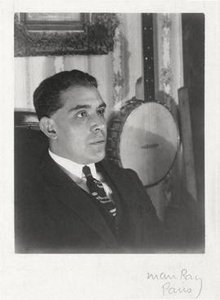
Хуан Грис
1887 - 1927 , Испания
Основные сведения
- Artistic Movement Or Style: Кубизм, Синтетический кубизм
- Artists Or Movements Influenced By This Artist:
- Пуризм
- Озенфан
- Artists Who Influenced This Artist:
- Пикассо
- Матисс
- Брак
- Date Of Birth: 23 марта 1887
- Date Of Death: 11 мая 1927
- Full Name: José Victoriano González-Pérez
- Nationality: Испанский
- Notable Artworks:
- «Гитара перед морем»
- «Художественный коллаж»
- «Дом с сине-зелеными окнами»
- Place Of Birth: Мадрид, Испания
Похожие статьи
Deconstructing Reality: Cubism's Revolutionary Impact on 20th-Century Art
Explore the revolutionary world of Cubism with ArtsDot. Discover Picasso & Braque's groundbreaking techniques, its philosophical roots, and lasting impact on modern art. Expert insights for collectors.

Геометрическая абстракция: 10 шедевров, изменивших искусство | ArtsDot.com
Погрузитесь в мир геометрической абстракции! От Кандинского до Малевича – 10 шедевров, изменивших искусство. Узнайте историю создания и значение культовых картин. Репродукции музейного качества на ArtsDot.com. Вдохновение для вашего интерьера!
Harmonies on Canvas: Exploring the Visual Representation of Music in Art History
Explore the fascinating history of music's visual representation in art! From ancient symbolism to modern abstraction, discover how artists have captured sound and emotion on canvas. Expert insights & stunning examples.
Жорж Брак: 25 шедевров кубизма для ценителей искусства и интерьера
Откройте для себя 25 шедевров Жоржа Брака – пионера кубизма! Узнайте историю создания культовых картин, технику и влияние французского художника на искусство XX века. Репродукции высокого качества для вашего интерьера на ArtsDot.com.
Juan Gris: Cubist Deconstruction & Synthesis – A Comprehensive Exploration
Explore the revolutionary art of Juan Gris – a master of Cubism. Discover his unique approach to deconstruction, vibrant Synthetic Cubist works, and lasting influence on modern art. Expert analysis for collectors.