

 Предпросмотр
 Поделиться
 Поделиться
 Детали произведения

 Скачать
 Похожие работы
 Рентгенография
 Слайд-шоу
 Статистика
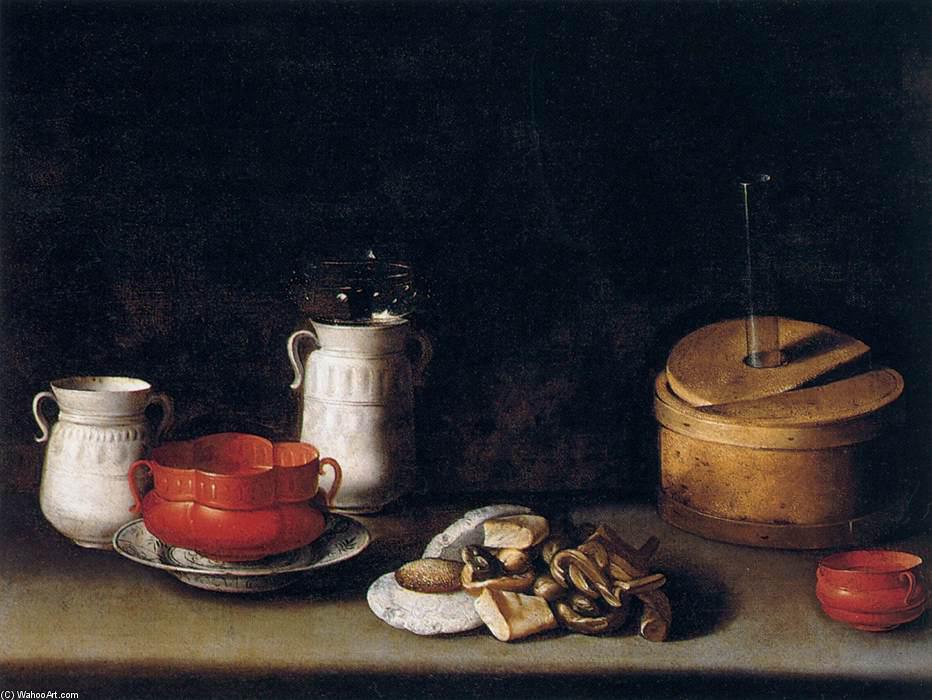
Still-Life with Crockery and Cakes
 Acrylic On Canvas
- WallArt
- Baroque Spanish Painting
 1627
1627 77.0 x 100.0 cm
 Музей Тиссен-Борнмизеса
 Читать далее
Масляная репродукция ручной работы
Картина маслом на холсте в выбранном вами размере и раме, написанная на заказ нашими художниками. ( Перейти к печати Перейти к цифровым изображениям)




P118B $10

P118H $10

P118W $10

P438Z $10

P508JH $12

P508YH $12

P805H $10

P805Z $10

P919BZ $10

P919G $10

P919XJ $10

P959ZH $10

P968JZ $12

W106C $8

W218G $10

W218JH $8

W218Y $10

W307PJ $10

W316G $10

W316PJ $8

W316Y $10

W398PJ $8

W4111J $10

W500HY $15

W500JH $15

W692G $12

W849H $8

W940BG $15

W953PJ $8




Выберите один из наших стандартных размеров, соответствующих оригинальным пропорциям произведения искусства.

Вы можете указать собственные размеры, чтобы картина идеально вписалась в выбранную раму или пространство. Если выбранный вами размер не соответствует пропорциям оригинала, мы либо обрежем полотно, либо расширим его за счет дополнительных элементов, написанных вручную. Цифровой макет будет отправлен вам на утверждение перед началом производства.
Обратите внимание, что предварительный просмотр на экране не отражает фактическую обрезку или расширение. Только макет точно покажет окончательную композицию.
Хотя доступны индивидуальные размеры, мы рекомендуем выбирать вариант из предопределенного списка, чтобы сохранить исходные пропорции.
После оформления заказа команда ArtsDot.com свяжется с клиентом по электронной почте для уточнения деталей и предоставит предварительный макет
Доставка по всему миру () за 3–4 недели вместо стандартных 5 недель. (10 Сентябрь). Без компромиссов в качестве.

Бесплатная экспресс-доставка по всему миру

Высококачественный льняной холст

Полное страхование доставки

Гарантия возмещения таможенных пошлин

Гарантия точного соответствия цветов

100-дневная политика возврата (только при обнаружении дефектов)

Гарантия возврата 100% средств

Предложение оптовых скидок
 Вариант со стеклом доступен только для размеров менее 110 см

Still-Life with Crockery and Cakes
Техника репродукции
Размер репродукции
-


Итоговая стоимость
$ 263
A Still Life Bathed in Light – Juan van der Hamen’s ‘Still-Life with Crockery and Cakes’
Juan van der Hamen y León's “Still-Life with Crockery and Cakes,” painted in 1627, is more than a simple arrangement of food; it’s a meticulously crafted meditation on abundance, mortality, and the fleeting beauty of earthly pleasures. Born into a unique heritage – his father, a Flemish courtier who had settled in Spain, and his mother descended from Toledan nobility – van der Hamen inherited a blend of Northern European precision and Spanish artistic sensibility, a combination that profoundly shaped his distinctive style. This painting exemplifies this fusion, showcasing the artist’s mastery of light, shadow, and detail within the burgeoning Baroque tradition.
The scene unfolds on a dark wooden table, its surface subtly illuminated by an unseen source, creating a dramatic chiaroscuro effect characteristic of the period. Van der Hamen doesn't merely depict objects; he renders them with astonishing realism – the delicate folds of the linen cloth beneath the dishes, the glistening sheen of the fruit, and the textured surfaces of the cakes. The artist’s attention to detail is relentless, capturing not just the appearance but also the implied weight and volume of each item. Notice particularly how he uses subtle variations in tone to suggest the dampness of the bread or the ripeness of the peaches.
The Language of Still Life
Still life painting, or ‘bodegón’ as it was known in Spain, held a complex and layered significance during the 17th century. It wasn't simply about recording objects; it served as a vehicle for exploring philosophical and religious themes. Van der Hamen masterfully employs this tradition here. The abundance of food – the cakes, fruits, and earthenware – can be interpreted as a symbol of earthly prosperity and the pleasures of life, but also as a poignant reminder of their transient nature. The presence of decaying fruit and wilted flowers hints at mortality and the inevitability of decay, a common motif in Baroque art reflecting the Counter-Reformation’s emphasis on human vulnerability.
Furthermore, the arrangement itself is carefully considered. The placement of each object – the central cake, slightly off-center; the bottles flanking the scene; the varied heights and textures – creates a dynamic composition that draws the eye through the painting. The artist utilizes perspective to create depth and spatial relationships, inviting the viewer into this intimate tableau.
A Master’s Technique
Van der Hamen's technique is characterized by his painstaking layering of glazes—thin, translucent layers of paint applied over each other to build up color and luminosity. This method allowed him to achieve a remarkable level of detail and richness in his palette. Observe how he uses subtle shifts in hue – the warm browns of the earthenware contrasting with the cool greens of the foliage – to create visual harmony. The artist’s brushwork is remarkably controlled, demonstrating a deep understanding of color theory and light.
He was particularly adept at capturing the reflective qualities of surfaces—the sheen on the polished pewter, the gleam of the fruit, and the subtle highlights on the fabrics. This mastery of light and reflection elevates the painting beyond a simple depiction of objects, transforming it into a luminous and captivating experience for the viewer.
A Window to 17th-Century Spain
“Still-Life with Crockery and Cakes” offers a valuable glimpse into the artistic and cultural landscape of 17th-century Madrid. It reflects the growing interest in realism and naturalism that characterized the Baroque period, while also retaining elements of Northern European influence. Van der Hamen’s work is considered a cornerstone of Spanish still life painting, influencing generations of artists who followed. Today, reproductions of this exquisite piece continue to captivate art lovers with its beauty, detail, and profound symbolism.
Consider how the painting's rich colors and intricate details would enhance any interior space – bringing warmth, elegance, and a touch of historical sophistication. A high-quality reproduction offers a remarkable opportunity to experience the artistry of Juan van der Hamen in your own home.
Похожие произведения
Биография художника
Juan van der Hamen y León: A Life Bathed in Light
Juan van der Hamen y León (1596 – 1631) stands as a singular figure within the tapestry of Spanish Baroque art, recognized primarily for his pioneering role in establishing still life painting—the *bodegón*—as a genre worthy of serious artistic consideration. Born into a family steeped in aristocratic heritage and Flemish connections, his formative years were shaped by an environment that fostered both intellectual curiosity and artistic ambition. His father, Jan van der Hamen, was a courtier hailing from Flanders who had successfully integrated into Spanish society decades prior, instilling in young Juan a profound appreciation for the traditions of Northern European art. Dorotea Witman Gómez de León, his mother, descended from Toledan nobility, further enriched the family’s cultural pedigree. This dual lineage subtly influenced Van der Hamen's artistic sensibility, bridging Flemish precision with a distinctly Spanish spirit.Early Artistic Beginnings and Patronage
Van der Hamen’s formal artistic training commenced in Madrid around 1619 when he received a commission to create a still life for the royal palace of El Pardo—a pivotal moment marking his initial foray into what would become his defining vocation. While biographical details concerning Jan van der Hamen's own artistic pursuits remain scarce, the family’s commitment to fostering Juan’s talent ensured access to influential circles and opportunities within Philip III’s court. Serving as an unsalaried painter—a role that prioritized creative freedom alongside financial stability—allowed him to hone his craft amidst a vibrant intellectual milieu. This patronage fostered experimentation and encouraged exploration of diverse artistic styles, propelling Van der Hamen toward mastery.Versatility Across Genres: Painting Beyond Still Life
Despite his enduring fame as a still life painter, Juan van der Hamen’s artistic repertoire extended far beyond this singular genre. He demonstrated remarkable proficiency across a spectrum of subjects—religious history paintings depicting biblical narratives with meticulous detail and dramatic lighting; allegorical scenes conveying moral lessons through symbolic imagery; and landscapes imbued with atmospheric perspective—reflecting the broader artistic currents circulating throughout Spain during his lifetime. His ability to navigate these varied stylistic conventions speaks to an unwavering dedication to artistic excellence and a willingness to embrace innovation. Notably, he served both Philip III and Philip IV, cementing his position as one of the most respected artists of his era.The Flemish Influence and Sánchez Cotán’s Legacy
Initially influenced by the meticulous technique and spacious compositions characteristic of Flemish painting traditions—particularly those championed by artists like Sánchez Cotán—Van der Hamen gradually assimilated Spanish Baroque aesthetics. He adopted asymmetrical arrangements within his still lifes, creating dynamic spatial constructions that prioritized visual impact and capturing the essence of light and shadow with unparalleled realism. This stylistic evolution solidified his contribution to shaping a distinctly Iberian artistic idiom. His meticulous attention to detail—evident in works such as *Offering to Flora*—demonstrated an unwavering commitment to portraying reality with breathtaking accuracy.A Masterpiece of Allegory and Portraiture: Defining Achievements
Among Van der Hamen’s most celebrated achievements are his monumental allegorical paintings, which explore complex philosophical themes through symbolic representations—a testament to his intellectual engagement alongside artistic skill. Furthermore, he achieved considerable renown as a portraitist, capturing the likenesses of prominent intellectuals and writers with sensitivity and psychological insight—figures like Lope de Vega, Francisco de Quevedo, and Luis de Góngora. His *Portrait of a Dwarf*, executed around 1623, exemplifies his ability to convey character through subtle gestures and facial expressions. The commission to paint Cardinal Francesco Barberini in 1626 underscored Van der Hamen’s reputation as one of the foremost artists of his time; the resulting portrait—a masterpiece of Baroque realism—became a symbol of artistic excellence and cemented his legacy as a pivotal figure in Spanish art history. His contribution to elevating still life painting to the level of high art is undeniable, establishing it as a genre worthy of serious contemplation and admiration. Juan van der Hamen y León’s tragically premature death in 1631 curtailed his creative journey but ensured that his artistic legacy would endure—a testament to his unwavering dedication to mastering his craft and shaping the visual landscape of Spain during its golden age.
Juan van der Hamen
1596 - 1631 , Испания
Основные сведения
- Artistic Movement Or Style: Барокко, Живопись изысканных предметов
- Artists Or Movements Influenced By This Artist: ['Веласкес']
- Artists Who Influenced This Artist:
- Салвадор Санчес Котан
- Фландрийские художники
- Date Of Birth: 1596 г.
- Date Of Death: 1631 г.
- Full Name: Juan van der Hamen y León
- Nationality: Испанский
- Notable Artworks:
- Поклонение Младенцу
- Портрет Дварфа
- Многочисленные живописные произведения
- Place Of Birth: Мадрид, Испания
Похожие статьи
Abraham Hendricksz van Beyeren: Pioneering Dutch Still Life & the Banquet Tradition
Explore the captivating world of Dutch Golden Age still life with Abraham van Beyeren. Discover his innovative techniques, symbolic banquet scenes & lasting influence on art history. Learn about collecting these masterpieces.

Рембрандт ван Рейн: Топ-25 шедевров великого голландского мастера | ArtsDot
Погрузитесь в мир великого Рембрандта! 25 шедевров голландского барокко, истории создания картин и уникальные техники художника. Купите репродукции картин Рембрандта высочайшего качества для вашего интерьера на ArtsDot.com
Hugo van der Goes: Devotion, Innovation & the Psychological Depth of Early Netherlandish Painting
Explore the revolutionary art of Hugo van der Goes – a master of Early Netherlandish painting renowned for his dramatic realism, psychological depth & profound influence on Renaissance artists. Discover his iconic works and lasting legacy.

Топ-10 шедевров Раннего Нидерландского Возрождения: искусство для вашего дома
Погрузитесь в мир Раннего Нидерландского Возрождения! Узнайте истории создания шедевров Яна ван Эйка, Кампена и других великих мастеров. Купите высококачественные репродукции картин для вашего интерьера на ArtsDot.com.
Топ-25 шедевров Прадо: Искусство Веласкеса, Гойи и Эль Греко для вашего интерьера
Погрузитесь в мир шедевров Прадо! От Веласкеса до Гойи – история искусства Испании, барокко и знаменитые картины. Купите репродукции высокого качества для вашего интерьера на ArtsDot.com.