 Предпросмотр
 Поделиться
 Поделиться
 Детали произведения

 Скачать
 Похожие работы
 Рентгенография
 Слайд-шоу
 Статистика
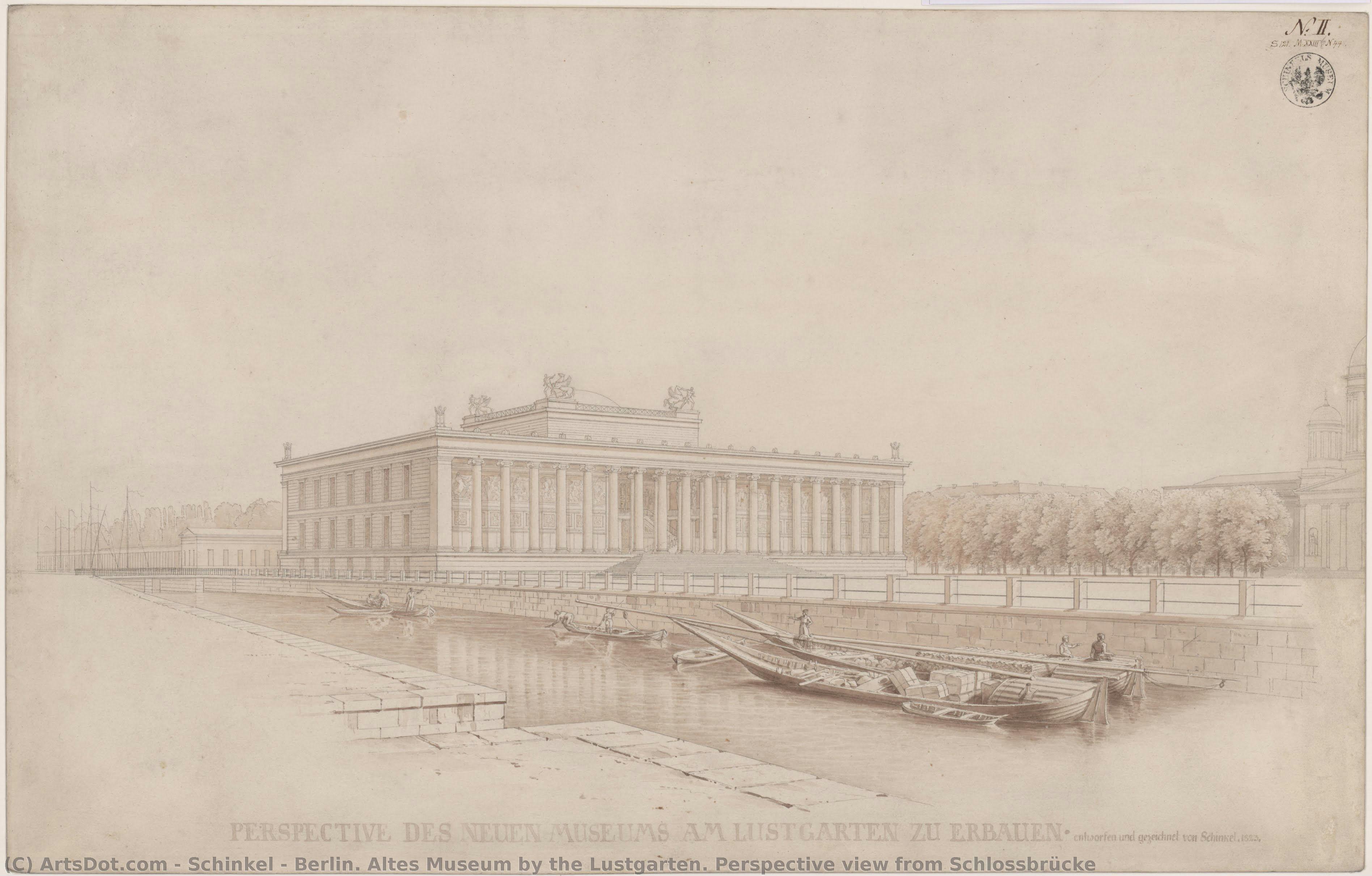
Berlin. Altes Museum by the Lustgarten. Perspective view from Schlossbrücke
 Graphite Pencil
- Neoclassical Style
 19th Century
 63.0 x 40.0 cm
 Кюпперстихкабинетт
 Читать далее
Масляная репродукция ручной работы
Картина маслом на холсте в выбранном вами размере и раме, написанная на заказ нашими художниками. ( Перейти к печати Перейти к цифровым изображениям)




P118B $10

P118H $10

P118W $10

P438Z $10

P508JH $12

P508YH $12

P805H $10

P805Z $10

P919BZ $10

P919G $10

P919XJ $10

P959ZH $10

P968JZ $12

W106C $8

W218G $10

W218JH $8

W218Y $10

W307PJ $10

W316G $10

W316PJ $8

W316Y $10

W398PJ $8

W4111J $10

W500HY $15

W500JH $15

W692G $12

W849H $8

W940BG $15

W953PJ $8




Выберите один из наших стандартных размеров, соответствующих оригинальным пропорциям произведения искусства.

Вы можете указать собственные размеры, чтобы картина идеально вписалась в выбранную раму или пространство. Если выбранный вами размер не соответствует пропорциям оригинала, мы либо обрежем полотно, либо расширим его за счет дополнительных элементов, написанных вручную. Цифровой макет будет отправлен вам на утверждение перед началом производства.
Обратите внимание, что предварительный просмотр на экране не отражает фактическую обрезку или расширение. Только макет точно покажет окончательную композицию.
Хотя доступны индивидуальные размеры, мы рекомендуем выбирать вариант из предопределенного списка, чтобы сохранить исходные пропорции.
После оформления заказа команда ArtsDot.com свяжется с клиентом по электронной почте для уточнения деталей и предоставит предварительный макет
Доставка по всему миру () за 3–4 недели вместо стандартных 5 недель. (12 Сентябрь). Без компромиссов в качестве.

Бесплатная экспресс-доставка по всему миру

Высококачественный льняной холст

Полное страхование доставки

Гарантия возмещения таможенных пошлин

Гарантия точного соответствия цветов

100-дневная политика возврата (только при обнаружении дефектов)

Гарантия возврата 100% средств

Предложение оптовых скидок
 Вариант со стеклом доступен только для размеров менее 110 см

Berlin. Altes Museum by the Lustgarten. Perspective view from Schlossbrücke
Техника репродукции
Размер репродукции
-


Итоговая стоимость
$ 263
A Vision of Neoclassical Grandeur: Berlin's Altes Museum
To gaze upon this depiction of the Altes Museum in Berlin, viewed across the tranquil expanse from Schlossbrücke, is to step directly into the ordered elegance of 19th-century Prussian ambition. This work transcends mere architectural documentation; it captures a moment where civic pride met artistic precision. The composition itself is a masterclass in perspective, drawing the eye with an almost irresistible pull toward the monumental facade of the museum. One can almost hear the hushed echoes of scholarly discourse mingling with the gentle lapping of water against the stone embankments. It speaks to a time when classical ideals—symmetry, proportion, and enduring form—were not just aesthetic choices, but foundational pillars of cultural identity.
Mastery in Graphite: Technique and Detail
The technical brilliance evident in this piece is breathtaking. Executed with the meticulous hand of an architectural draughtsman, likely using graphite or charcoal on paper, the artist has achieved a remarkable depth through line alone. Observe how the fine, controlled lines define every column, window molding, and structural joint; they possess a crispness that speaks to rigorous training. The rendering is not simply about outlining shapes, but about conveying substance. Through expert hatching and cross-hatching techniques, subtle gradations of grey and brown build texture—the smooth polish of the stone contrasting beautifully with the delicate foliage along the Lustgarten banks. This monochromatic palette forces the viewer to appreciate form through value, making light and shadow play a central character in the narrative.
The Symbolism of Order and Enlightenment
Beyond its function as a beautiful vista, this artwork is steeped in symbolism. The Neoclassical style, championed by masters like Karl Friedrich Schinkel, inherently celebrates the perceived perfection of antiquity. The strong one-point perspective anchors the entire scene in stability and rationality—a visual metaphor for the Age of Enlightenment itself. The geometric dominance of the museum structure suggests human intellect imposing beautiful order upon the natural world. Even the gentle curve of the canal and the placement of the small boat introduce a necessary organic counterpoint, reminding us that even the grandest structures exist within the flow of life.
An Heirloom for the Discerning Collector
For the collector or designer whose taste leans toward historical gravitas and refined artistry, this reproduction offers an unparalleled connection to architectural history. It is more than wall décor; it is a conversation piece that whispers tales of Prussian cultural zenith. The sense of quiet grandeur pervading the image—the diffused light suggesting an overcast but bright day—lends itself perfectly to spaces demanding sophistication, whether in a grand library, a formal drawing-room, or a gallery setting. Owning this piece means curating not just art, but a tangible echo of enduring classical ideals.
Похожие произведения
![[the Cour Napoléon Looking Towards The Tuileries, Louvre, Paris] — Édouard-denis Baldus, Academic Realism](/media/artworks/images-thumb/9f/ab/9fab8474e3a2a9ec8f7fb1ba65878363.jpg)
Биография художника
Karl Friedrich Schinkel (1781–1841): Prussia’s Leading Architect & Painter
Karl Friedrich Schinkel, born in Neuruppin, Germany, in 1781, stands as an unparalleled figure within the panorama of 19th-century art and architecture. His life unfolded as a compelling chronicle interwoven with threads of personal adversity and professional triumph—a narrative unfolding against the backdrop of shifting political landscapes and burgeoning artistic movements. The devastating fire that consumed Neuruppin in 1787, tragically claiming his father’s life during Schinkel's formative years, instilled within him an indelible appreciation for order, permanence, and the enduring power of form—qualities that would subsequently define his artistic vision. This early experience undoubtedly nurtured a meticulous precision and emotional resonance characteristic of his mature oeuvre. He received initial mentorship under Friedrich Gilly and his father David Gilly, both influential architects in Berlin, absorbing their classical precepts while simultaneously encountering more experimental currents – a crucial confluence shaping his evolving aesthetic sensibilities. These foundational years furnished Schinkel with an unwavering grasp of architectural history and technique, preparing him for the momentous decisions that lay ahead.Early Influences and Artistic Aspirations
Schinkel’s artistic inclinations initially gravitated toward painting, demonstrating considerable talent in landscape and portraiture. However, a pivotal juncture arrived during an exhibition in Berlin in 1810—an encounter with Caspar David Friedrich’s iconic *Wanderer above the Sea of Fog*. The sheer emotive depth and masterful execution displayed by Friedrich’s artwork provoked a moment of profound self-assessment within Schinkel. Recognizing that his own artistic predilections did not align with attaining such heights in painting, he decisively pivoted toward architecture—a decision rooted not merely in professional practicality but in an instinctive understanding of where his true creative energies resided. This transition wasn't simply a change of vocation; it represented a testament to Schinkel’s intellectual honesty and unwavering commitment to pursuing excellence where his innate talents shone brightest. He possessed a keen awareness of artistic tradition, yet simultaneously harbored aspirations for innovation—a duality that would characterize his architectural endeavors throughout his illustrious career. His formative years under Gilly instilled in him not only technical proficiency but also an appreciation for the expressive potential inherent within geometric forms and spatial arrangements.From Classical Roots to Gothic Revival: A Synthesis of Styles
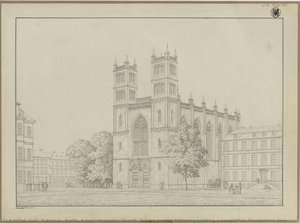
Schinkel’s architectural style is remarkably complex, embodying a sophisticated synthesis of diverse influences—a stylistic hallmark that distinguishes him from many contemporaries. While firmly anchored in Neoclassical principles—a reaction against the perceived excesses of Baroque and Rococo—he transcended mere stylistic imitation, embracing instead the grandeur and solemnity of Greek architectural ideals. This embrace of Greek Revival wasn’t solely driven by aesthetic preference; it reflected Schinkel's conviction that architecture should embody both structural integrity and poetic resonance—engaging with history while simultaneously evoking profound emotion. Yet, he refused to confine his artistic explorations to a single stylistic paradigm. He demonstrated an exceptional aptitude for the Gothic Revival style, exemplified in monumental structures such as Schloss Rosenau and Friedrichswerder Church—works that showcased his mastery of intricate ornamentation and spatial illusion. Schinkel’s designs were characterized by meticulous attention to detail, innovative utilization of materials, and a profound comprehension of spatial relationships—elements that elevated his creations beyond mere architectural constructions into immersive experiences for the viewer. He skillfully blended classical restraint with Gothic exuberance, creating buildings that captivated audiences with their grandeur and spiritual depth.Monumental Achievements: Shaping Berlin’s Identity
Schinkel’s legacy is indelibly imprinted upon the cityscape of Berlin—a testament to his transformative vision as state architect and urban planner. The Neue Wache (1816–1818), conceived as a memorial to Prussian soldiers who perished in Napoleonic Wars, stands as an exemplar of Neoclassical elegance and dignified solemnity—a building that embodies Schinkel’s belief in the power of architecture to commemorate history and inspire civic virtue. Similarly, the National Monument for the Liberation Wars (1818–1821) commemorates Prussia's triumph over Napoleon with monumental scale and sculptural grandeur—a testament to Schinkel’s ability to convey emotion through architectural form. The Schauspielhaus (1819–1821), rebuilt on Gendarmenmarkt following a devastating fire, exemplifies Schinkel’s refined theatrical design—a building that harmoniously blends classical aesthetics with functional considerations. Beyond these iconic landmarks, Schinkel spearheaded the ambitious redevelopment of Berlin's central squares and boulevards—transforming the city into a modern metropolis while preserving its historical character. His visionary planning ensured that Berlin would become a beacon of cultural innovation and civic pride for generations to come.A Lasting Influence: Beyond Form and Function
Karl Friedrich Schinkel’s influence extends far beyond the physical structures he erected—reaching into the realm of architectural theory and artistic practice. He disseminated his ideas through publications like *Sammlung architektonischer Entwürfe* (1820–1837) and *Werke der höheren Baukunst* (1840–1846)—works that provided invaluable insights into his design principles and construction techniques—influencing subsequent generations of architects. Though constrained by political circumstances and tragically cut short by his untimely demise in 1841, Schinkel remains a pivotal figure in German architectural history—a man who irrevocably shaped the aesthetic landscape of his era and whose legacy continues to inspire awe and admiration today. His buildings are not merely repositories of stone and mortar; they are embodiments of artistic vision—testaments to a creative genius that transcended temporal boundaries and cemented Schinkel’s place among the titans of nineteenth-century art and architecture.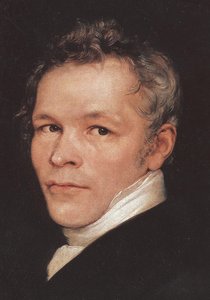
Карл Фридрих Шинкель
1781 - 1841 , Германия
Основные сведения
- Artistic Movement Or Style: Неоклассицизм и Готический ревиваль
- Artists Or Movements Influenced By This Artist: ['Современная архитектура']
- Artists Who Influenced This Artist:
- Фридрих Гилли
- Каспар Давид Фридрих
- Date Of Birth: 1781 г.
- Date Of Death: 1841 г.
- Full Name: Karl Friedrich Schinkel
- Nationality: Прусский
- Notable Artworks:
- Новая Ваха
- Альте Музеум
- Бауакадемия
- Place Of Birth: Берлин, Германия
Похожие статьи

Caspar David Friedrich: Romanticism's Master of Landscape & the Sublimity of Inner Experience
Explore the profound landscapes of Caspar David Friedrich, a master of German Romanticism. Discover the symbolism, themes & enduring influence of this iconic artist. A deep dive into his life and work.
25 Шедевров Государственных Музеев Берлина: Искусство для Вашего Дома
Откройте для себя 25 шедевров Государственных музеев Берлина! Узнайте истории Нефертити, Ван Гога и других великих художников. Репродукции картин премиум-качества для вашего интерьера на ArtsDot.com.

Романтический пейзаж: 10 шедевров, изменивших искусство | ArtsDot.com
Погрузитесь в мир романтического пейзажа! 10 шедевров Фридриха, Тёрнера и других гениев. Узнайте историю создания культовых картин и вдохновитесь для декора интерьера. Репродукции высокого качества на ArtsDot.com.
10 Шедевров Неоклассицизма: Искусство, Определившее Эпоху | ArtsDot
Погрузитесь в мир неоклассицизма! 10 шедевров от Давида, Кановы и других великих художников. Узнайте историю создания культовых картин и найдите идеальную репродукцию для вашего интерьера на ArtsDot.com
25 Шедевров Alte Pinakothek: Искусство Ренессанса и Барокко в Вашем Интерьере
Погрузитесь в мир искусства Alte Pinakothek! 25 шедевров Ренессанса и Барокко от Леонардо да Винчи, Рафаэля, Рубенса и других великих художников. Узнайте истории создания культовых картин и вдохновитесь для декора вашего интерьера. Откройте всю коллекцию на ArtsDot.com!