 Предпросмотр
 Поделиться
 Поделиться
 Детали произведения

 Скачать
 Похожие работы
 Рентгенография
 Слайд-шоу
 Статистика
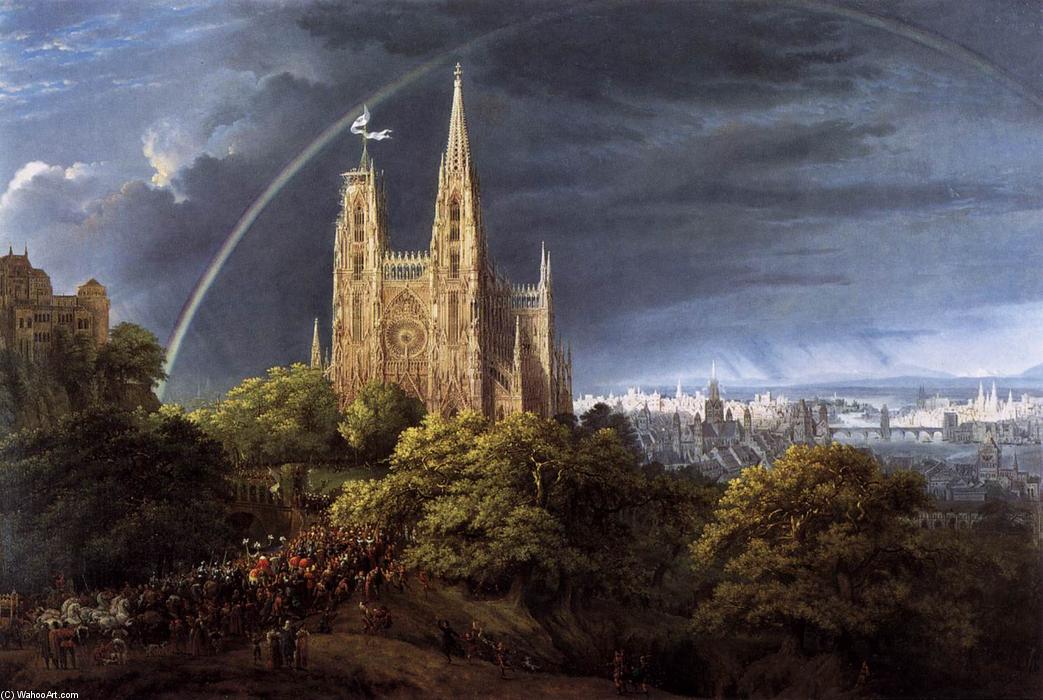
Gothic Cathedral with Imperial Palace
 Oil On Canvas
- WallArt
- Neoclassicism
 1815
1815- 19th Century
 94.0 x 140.0 cm
 Национальная галерея
 Читать далее
Масляная репродукция ручной работы
Картина маслом на холсте в выбранном вами размере и раме, написанная на заказ нашими художниками. ( Перейти к печати Перейти к цифровым изображениям)




P118B $10

P118H $10

P118W $10

P438Z $10

P508JH $12

P508YH $12

P805H $10

P805Z $10

P919BZ $10

P919G $10

P919XJ $10

P959ZH $10

P968JZ $12

W106C $8

W218G $10

W218JH $8

W218Y $10

W307PJ $10

W316G $10

W316PJ $8

W316Y $10

W398PJ $8

W4111J $10

W500HY $15

W500JH $15

W692G $12

W849H $8

W940BG $15

W953PJ $8




Выберите один из наших стандартных размеров, соответствующих оригинальным пропорциям произведения искусства.

Вы можете указать собственные размеры, чтобы картина идеально вписалась в выбранную раму или пространство. Если выбранный вами размер не соответствует пропорциям оригинала, мы либо обрежем полотно, либо расширим его за счет дополнительных элементов, написанных вручную. Цифровой макет будет отправлен вам на утверждение перед началом производства.
Обратите внимание, что предварительный просмотр на экране не отражает фактическую обрезку или расширение. Только макет точно покажет окончательную композицию.
Хотя доступны индивидуальные размеры, мы рекомендуем выбирать вариант из предопределенного списка, чтобы сохранить исходные пропорции.
После оформления заказа команда ArtsDot.com свяжется с клиентом по электронной почте для уточнения деталей и предоставит предварительный макет
Доставка по всему миру () за 3–4 недели вместо стандартных 5 недель. (12 Сентябрь). Без компромиссов в качестве.

Бесплатная экспресс-доставка по всему миру

Высококачественный льняной холст

Полное страхование доставки

Гарантия возмещения таможенных пошлин

Гарантия точного соответствия цветов

100-дневная политика возврата (только при обнаружении дефектов)

Гарантия возврата 100% средств

Предложение оптовых скидок
 Вариант со стеклом доступен только для размеров менее 110 см

Gothic Cathedral with Imperial Palace
Техника репродукции
Размер репродукции
-


Итоговая стоимость
$ 263
The Grandeur of Faith and Empire: A Vision in Stone and Pigment
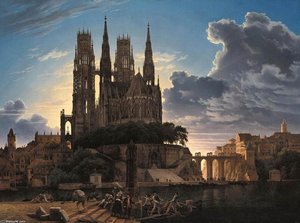
To stand before this depiction of a Gothic Cathedral juxtaposed with an Imperial Palace is to be transported across the veil of time, into an era where spiritual devotion and earthly power converged in breathtaking architectural statements. The scene itself is a magnificent overture to human ambition—the soaring verticality of the cathedral reaching toward the divine, while the palace anchors the composition with the undeniable weight of temporal authority. One can almost hear the echoes of footsteps on the cobblestones beneath the painted crowd, sensing the vibrant pulse of life that once animated these monumental structures. The artist has masterfully captured not just buildings, but an entire epoch's collective aspiration.
Mastery in Technique and Atmosphere
The execution speaks to a profound technical skill, characteristic of the grand academic tradition. Notice how the light does not merely illuminate; it sculpts. Deep shadows pool within the intricate tracery of the cathedral’s spires, lending an almost palpable sense of depth and mystery, while shafts of sunlight catch the domes of the palace in the distance. This careful interplay between chiaroscuro and diffused daylight gives the entire composition a three-dimensional resonance that belies its painted nature. The palette, dominated by rich earth tones—ochres, deep siennas, and muted blues against the dramatic backdrop of a cloudy sky—lends an immediate warmth, inviting the viewer into this historical tableau.
Historical Echoes: Life in the Age of Grand Architecture
Dating to 1815, this work captures a moment when European society was deeply invested in its monumental past and its burgeoning imperial future. The Gothic style, with its emphasis on height and divine aspiration, speaks to centuries of religious fervor, while the palace represents the consolidation of state power. The figures populating the foreground are dressed in period attire, serving as living footnotes to the grand narrative unfolding behind them. They ground the sublime architecture in relatable human experience, suggesting a society where faith dictated daily life, yet where courtly splendor also held sway.
Symbolism and Emotional Resonance for the Modern Collector
For the contemporary admirer or designer, this piece offers more than mere decoration; it is an emotional anchor. It speaks to the enduring human need for transcendence—the yearning symbolized by the cathedral’s upward thrust—balanced by the acknowledgment of worldly order represented by the palace. Reproducing such a work allows one to infuse a space with a sense of cultivated history and elevated drama. Imagine this piece gracing a grand hall or a library; it becomes a focal point, whispering tales of emperors, scholars, and devoted pilgrims alike. It is an object that demands contemplation, promising the viewer a moment suspended between the earthly bustle and the eternal sublime.
Похожие произведения

Биография художника
Karl Friedrich Schinkel (1781–1841): Prussia’s Leading Architect & Painter
Karl Friedrich Schinkel, born in Neuruppin, Germany, in 1781, stands as an unparalleled figure within the panorama of 19th-century art and architecture. His life unfolded as a compelling chronicle interwoven with threads of personal adversity and professional triumph—a narrative unfolding against the backdrop of shifting political landscapes and burgeoning artistic movements. The devastating fire that consumed Neuruppin in 1787, tragically claiming his father’s life during Schinkel's formative years, instilled within him an indelible appreciation for order, permanence, and the enduring power of form—qualities that would subsequently define his artistic vision. This early experience undoubtedly nurtured a meticulous precision and emotional resonance characteristic of his mature oeuvre. He received initial mentorship under Friedrich Gilly and his father David Gilly, both influential architects in Berlin, absorbing their classical precepts while simultaneously encountering more experimental currents – a crucial confluence shaping his evolving aesthetic sensibilities. These foundational years furnished Schinkel with an unwavering grasp of architectural history and technique, preparing him for the momentous decisions that lay ahead.Early Influences and Artistic Aspirations
Schinkel’s artistic inclinations initially gravitated toward painting, demonstrating considerable talent in landscape and portraiture. However, a pivotal juncture arrived during an exhibition in Berlin in 1810—an encounter with Caspar David Friedrich’s iconic *Wanderer above the Sea of Fog*. The sheer emotive depth and masterful execution displayed by Friedrich’s artwork provoked a moment of profound self-assessment within Schinkel. Recognizing that his own artistic predilections did not align with attaining such heights in painting, he decisively pivoted toward architecture—a decision rooted not merely in professional practicality but in an instinctive understanding of where his true creative energies resided. This transition wasn't simply a change of vocation; it represented a testament to Schinkel’s intellectual honesty and unwavering commitment to pursuing excellence where his innate talents shone brightest. He possessed a keen awareness of artistic tradition, yet simultaneously harbored aspirations for innovation—a duality that would characterize his architectural endeavors throughout his illustrious career. His formative years under Gilly instilled in him not only technical proficiency but also an appreciation for the expressive potential inherent within geometric forms and spatial arrangements.From Classical Roots to Gothic Revival: A Synthesis of Styles
Schinkel’s architectural style is remarkably complex, embodying a sophisticated synthesis of diverse influences—a stylistic hallmark that distinguishes him from many contemporaries. While firmly anchored in Neoclassical principles—a reaction against the perceived excesses of Baroque and Rococo—he transcended mere stylistic imitation, embracing instead the grandeur and solemnity of Greek architectural ideals. This embrace of Greek Revival wasn’t solely driven by aesthetic preference; it reflected Schinkel's conviction that architecture should embody both structural integrity and poetic resonance—engaging with history while simultaneously evoking profound emotion. Yet, he refused to confine his artistic explorations to a single stylistic paradigm. He demonstrated an exceptional aptitude for the Gothic Revival style, exemplified in monumental structures such as Schloss Rosenau and Friedrichswerder Church—works that showcased his mastery of intricate ornamentation and spatial illusion. Schinkel’s designs were characterized by meticulous attention to detail, innovative utilization of materials, and a profound comprehension of spatial relationships—elements that elevated his creations beyond mere architectural constructions into immersive experiences for the viewer. He skillfully blended classical restraint with Gothic exuberance, creating buildings that captivated audiences with their grandeur and spiritual depth.Monumental Achievements: Shaping Berlin’s Identity
Schinkel’s legacy is indelibly imprinted upon the cityscape of Berlin—a testament to his transformative vision as state architect and urban planner. The Neue Wache (1816–1818), conceived as a memorial to Prussian soldiers who perished in Napoleonic Wars, stands as an exemplar of Neoclassical elegance and dignified solemnity—a building that embodies Schinkel’s belief in the power of architecture to commemorate history and inspire civic virtue. Similarly, the National Monument for the Liberation Wars (1818–1821) commemorates Prussia's triumph over Napoleon with monumental scale and sculptural grandeur—a testament to Schinkel’s ability to convey emotion through architectural form. The Schauspielhaus (1819–1821), rebuilt on Gendarmenmarkt following a devastating fire, exemplifies Schinkel’s refined theatrical design—a building that harmoniously blends classical aesthetics with functional considerations. Beyond these iconic landmarks, Schinkel spearheaded the ambitious redevelopment of Berlin's central squares and boulevards—transforming the city into a modern metropolis while preserving its historical character. His visionary planning ensured that Berlin would become a beacon of cultural innovation and civic pride for generations to come.A Lasting Influence: Beyond Form and Function
Karl Friedrich Schinkel’s influence extends far beyond the physical structures he erected—reaching into the realm of architectural theory and artistic practice. He disseminated his ideas through publications like *Sammlung architektonischer Entwürfe* (1820–1837) and *Werke der höheren Baukunst* (1840–1846)—works that provided invaluable insights into his design principles and construction techniques—influencing subsequent generations of architects. Though constrained by political circumstances and tragically cut short by his untimely demise in 1841, Schinkel remains a pivotal figure in German architectural history—a man who irrevocably shaped the aesthetic landscape of his era and whose legacy continues to inspire awe and admiration today. His buildings are not merely repositories of stone and mortar; they are embodiments of artistic vision—testaments to a creative genius that transcended temporal boundaries and cemented Schinkel’s place among the titans of nineteenth-century art and architecture.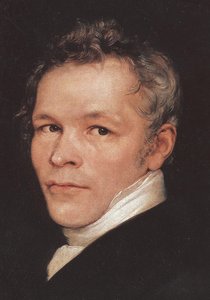
Карл Фридрих Шинкель
1781 - 1841 , Германия
Основные сведения
- Artistic Movement Or Style: Неоклассицизм и Готический ревиваль
- Artists Or Movements Influenced By This Artist: ['Современная архитектура']
- Artists Who Influenced This Artist:
- Фридрих Гилли
- Каспар Давид Фридрих
- Date Of Birth: 1781 г.
- Date Of Death: 1841 г.
- Full Name: Karl Friedrich Schinkel
- Nationality: Прусский
- Notable Artworks:
- Новая Ваха
- Альте Музеум
- Бауакадемия
- Place Of Birth: Берлин, Германия
Похожие статьи

Барочная драма: Искусство величия в современном интерьере
Погрузитесь в мир роскоши и величия барокко! Узнайте об истории стиля, ключевых элементах интерьера и архитектуре. Вдохновляйтесь с и создайте свой неповторимый дизайн.
Decoding Baroque Grandeur: A Guide to the Drama and Emotion of 17th-Century Art
Explore the breathtaking drama of 17th-century Baroque art. Our expert guide decodes the use of chiaroscuro, emotional intensity, and historical grandeur to help you appreciate and curate timeless masterpieces for your collection.

The Dramatic Flourish: Exploring the Baroque Movement's Enduring Legacy in Art History
Explore the dramatic world of Baroque art! Discover iconic artists like Caravaggio & Rubens, defining techniques, and its lasting impact on art history. Expert insights for collectors & enthusiasts at ArtsDot.

10 Шедевров Барокко: Искусство, изменившее мир | ArtsDot.com
Погрузитесь в мир барокко! 10 шедевров Караваджо, Рембрандта и других великих художников. Узнайте историю создания культовых картин и найдите идеальную репродукцию для вашего интерьера на ArtsDot.com

The Visceral Stage: Exploring Dramatic Narratives & Emotional Intensity in Baroque Art
Explore the dramatic world of Baroque art! Discover iconic masters like Caravaggio & Rembrandt, their techniques, and the movement's lasting impact. Expert insights for collectors & enthusiasts at ArtsDot.