 Поделиться
 Поделиться
 Детали произведения

 Скачать
 Похожие работы
 Слайд-шоу
 Статистика
The King Stephen Incident Obverse


 Читать далее
Масляная репродукция ручной работы
Картина маслом на холсте в выбранном вами размере и раме, написанная на заказ нашими художниками. ( Перейти к печати Перейти к цифровым изображениям)




































Выберите один из наших стандартных размеров, соответствующих оригинальным пропорциям произведения искусства.

Вы можете указать собственные размеры, чтобы картина идеально вписалась в выбранную раму или пространство. Если выбранный вами размер не соответствует пропорциям оригинала, мы либо обрежем полотно, либо расширим его за счет дополнительных элементов, написанных вручную. Цифровой макет будет отправлен вам на утверждение перед началом производства.
Обратите внимание, что предварительный просмотр на экране не отражает фактическую обрезку или расширение. Только макет точно покажет окончательную композицию.
Хотя доступны индивидуальные размеры, мы рекомендуем выбирать вариант из предопределенного списка, чтобы сохранить исходные пропорции.
После оформления заказа команда ArtsDot.com свяжется с клиентом по электронной почте для уточнения деталей и предоставит предварительный макет
Доставка по всему миру () за 3–4 недели вместо стандартных 5 недель. (11 Сентябрь). Без компромиссов в качестве.

Бесплатная экспресс-доставка по всему миру

Высококачественный льняной холст

Полное страхование доставки

Гарантия возмещения таможенных пошлин

Гарантия точного соответствия цветов

100-дневная политика возврата (только при обнаружении дефектов)

Гарантия возврата 100% средств

Предложение оптовых скидок
 Вариант со стеклом доступен только для размеров менее 110 см

The King Stephen Incident Obverse
Техника репродукции
Размер репродукции
-


Итоговая стоимость
$ 363
A Descent into Bronze Drama: The King Stephen Incident Obverse
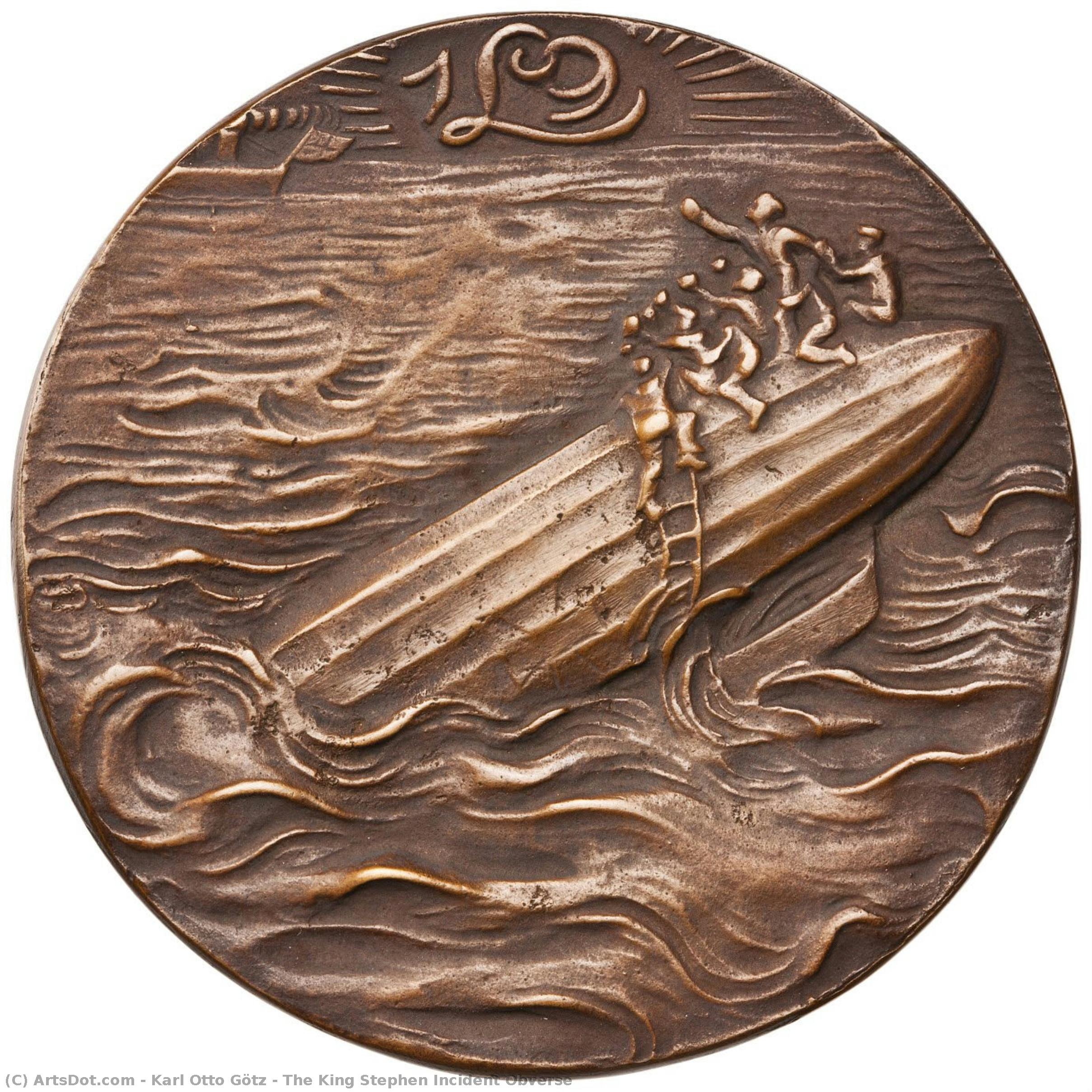
To stand before this bronze medallion is to be immediately enveloped by a palpable sense of historical drama and raw human struggle. The King Stephen Incident Obverse, executed in 1916, is far more than a mere depiction; it is a frozen moment of catastrophe rendered with breathtaking textural depth. The composition centers on the wreckage of a ship, its broken hull dominating the lower expanse as if bearing the weight of untold stories. One can almost hear the splintering wood and feel the icy spray of the turbulent waters surrounding it. This piece masterfully captures the chaos inherent in disaster, transforming a tragic event into an enduring work of commemorative art.
Mastery in Form and Texture: The Art of Relief Casting
The technical brilliance of this work lies in its execution as a high-relief bronze casting. Karl Otto Götz utilized the lost-wax technique to achieve a surface that speaks volumes about its age and subject matter. Observe the incredible texture; it is rough, uneven, and deeply worked, simulating the patina of time and the violence of the sea. The artist has given life to the water through undulating waves, each crest suggesting movement and instability. While the circular format inherently limits traditional perspective, Götz compensates by layering elements—the overlapping debris, the struggling figures—to create a profound sense of three-dimensionality. The interplay between the geometric solidity of the hull and the fluid chaos of the water is what gives the piece its dynamic tension.
Symbolism of Loss and Compassion
Beyond the immediate drama of the shipwreck, the medallion carries potent symbolic weight. Positioned above the turmoil, a stylized heart symbol emerges, acting as an emotional anchor for the entire scene. This heart serves as a poignant reminder—a universal emblem of love, remembrance, or perhaps the enduring compassion that guides humanity even in its darkest moments. The sinking vessel itself becomes a powerful metaphor for loss, for societal upheaval, or for personal crises. It invites the viewer to contemplate what is lost and what remains sacred amidst the wreckage.
A Touchstone of Early 20th Century Emotion
Created in 1916, this piece resonates with the fraught emotional landscape preceding and during periods of immense global change. While Götz’s later career explored the explosive abstraction characteristic of Art Informel, this earlier work demonstrates his profound ability to channel intense narrative emotion through a more classical, yet highly textured, medium. It speaks to an era grappling visibly with themes of fragility, survival, and the enduring bonds between people when faced with overwhelming natural or historical forces. Owning such a reproduction allows one to connect intimately with this powerful confluence of history, human vulnerability, and masterful craftsmanship.
Похожие произведения

Биография художника
The Explosive Legacy of Karl Otto Götz
Karl Otto Götz (1914 – 2017) stands as an unparalleled figure in the annals of twentieth-century art, a creator whose remarkable longevity—reaching over a century—was matched only by the sheer intensity and complexity of his artistic vision. Born in Aachen, Germany, Götz was far more than a mere painter; he was a filmmaker, draughtsman, printmaker, writer, and professor who profoundly shaped the artistic landscape of his era. His career was defined by explosive abstract forms that earned him international acclaim, most notably during his appearance at Documenta II in 1959, which cemented his place as one of the most vital members of the German Art Informel movement.
His journey began amidst the avant-garde currents of his youth, where he cultivated a deep fascination with Surrealism and Expressionism. The works of masters such as Max Ernst, Juan Gris, Wassily Kandinsky, and Paul Klee served as crucial early inspirations, shaping his initial stylistic explorations. While attending the School of Applied Arts in Aachen between 1932 and 1933, he honed the technical skills that would later serve his more radical experiments. However, the looming shadow of Nazism cast a profound darkness over his early trajectory; because the regime viewed abstract art with intense disapproval, Götz was banned from exhibiting. Yet, in an act of quiet defiance, he persevered, secretly continuing to create works that challenged the ideological constraints of the time.
The Spirit of Art Informel and Spontaneous Gesture
The post-war era brought a resurgence of artistic experimentation in Germany, fueled by a widespread disillusionment with traditional aesthetics and a desperate yearning for new forms of expression. It was within this fertile ground that Götz emerged as a pivotal champion of Deutsches Informel, or German Informal Art. This movement prioritized the raw power of gesture and spontaneity over the meticulous, controlled representation of the past. Götz’s work became a vessel for this energy, characterized by a rhythmic, almost frenetic application of paint that captured the psychological turbulence of the post-war period.
His mastery extended beyond the canvas into diverse mediums, where he explored the intersection of movement and image. His contributions to television art and his ability to translate the kinetic energy of painting into other formats demonstrated a relentless pursuit of innovation. This period of his life was marked by a refusal to be tethered to a single style, as he moved fluidly between:
- Abstract Expressionism: Utilizing rapid, gestural strokes to convey emotion.
- Printmaking and Medallion Work: Creating symbolic bronze pieces that reflected historical tensions and political symbolism.
- Experimental Film: Exploring the temporal dimension of visual abstraction.
Historical Significance and Lasting Influence
The significance of Karl Otto Götz lies not only in his individual achievements but in his role as a bridge between the early twentieth-century avant-garde and the contemporary era. His work provided a vital link for subsequent generations of artists, influencing titans of German art such as Sigmar Polke and Gerhard Richter. By championing an aesthetic that embraced the unpredictable and the unrefined, he helped redefine the boundaries of what painting could achieve in a modern, fractured world.
Even when working in more structured mediums, such as his striking bronze medallions, Götz infused his subjects with the bold, symbolic language of Art Informel. Whether depicting historical figures or commemorating naval incidents through powerful, symbolic imagery, his hand remained unmistakably his own—dynamic, authoritative, and deeply connected to the pulse of history. His legacy remains a testament to the power of artistic resilience, proving that even under the most restrictive regimes, the impulse toward abstract freedom can never be truly extinguished.
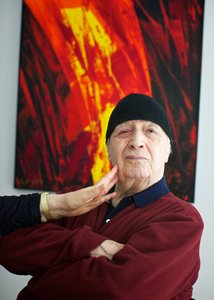
karl otto götz
1914 - 2017 , Germany
Основные сведения
- Artistic Movement Or Style: Art Informel
- Artists Or Movements Influenced By This Artist:
- Sigmar Polke
- Nam June Paik
- Gerhard Richter
- Artists Who Influenced This Artist:
- Max Ernst
- Juan Gris
- Wassily Kandinsky
- Paul Klee
- Date Of Birth: February 22nd, 1914
- Date Of Death: August 19th, 2017
- Full Name: Karl Otto Götz
- Nationality: German
- Notable Artworks:
- The King Stephen Incident Obverse
- The Sinking of the Lusitania Obverse
- German U-boats in America
- Place Of Birth: Aachen, Germany
Похожие статьи

10 легендарных бронзовых шедевров, изменивших искусство | ArtsDot
Погрузитесь в мир великих бронзовых шедевров! От Давида Донателло до Мыслителя Родена – узнайте историю создания, технику и значение легендарных скульптур. Вдохновение для интерьера и музейное качество репродукций на ArtsDot.com.
The Enduring Legacy of Bronze: History, Technique & Artistic Expression for the Collector
Explore the rich history & enduring appeal of bronze sculpture with expert insights for collectors at ArtsDot. Learn about casting techniques, iconic artists, and collecting tips.

The Enduring Legacy of Bronze Sculpture: A Collector's Guide to Form & Cultural Significance
Explore the rich history & enduring appeal of bronze sculpture with expert insights for collectors at ArtsDot. Learn about casting techniques, iconic artists, and collecting tips to build a discerning art collection.

10 легендарных бронзовых скульптур, изменивших искусство навсегда | ArtsDot
Погрузитесь в мир великих бронзовых скульптур! От Давида Микеланджело до работ Родена – история искусства, техники и вдохновения. Купите репродукции шедевров для вашего интерьера на ArtsDot.com

The Enduring Legacy of Bronze: A Historical & Artistic Exploration for the Collector
Explore the rich history & enduring appeal of bronze sculpture with expert insights for collectors at ArtsDot. Learn about casting techniques, iconic artists, collecting tips & contemporary interpretations.