

 Поделиться
 Поделиться
 Детали произведения

 Скачать
 Похожие работы
 Слайд-шоу
 Статистика
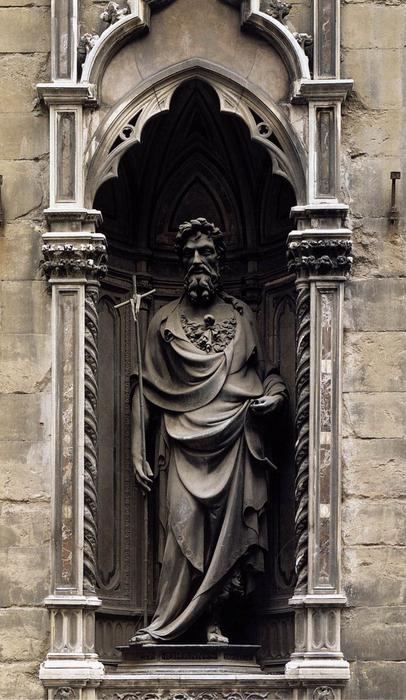
St John the Baptist


 Читать далее
Масляная репродукция ручной работы
Картина маслом на холсте в выбранном вами размере и раме, написанная на заказ нашими художниками. ( Перейти к печати Перейти к цифровым изображениям)




































Выберите один из наших стандартных размеров, соответствующих оригинальным пропорциям произведения искусства.

Вы можете указать собственные размеры, чтобы картина идеально вписалась в выбранную раму или пространство. Если выбранный вами размер не соответствует пропорциям оригинала, мы либо обрежем полотно, либо расширим его за счет дополнительных элементов, написанных вручную. Цифровой макет будет отправлен вам на утверждение перед началом производства.
Обратите внимание, что предварительный просмотр на экране не отражает фактическую обрезку или расширение. Только макет точно покажет окончательную композицию.
Хотя доступны индивидуальные размеры, мы рекомендуем выбирать вариант из предопределенного списка, чтобы сохранить исходные пропорции.
После оформления заказа команда ArtsDot.com свяжется с клиентом по электронной почте для уточнения деталей и предоставит предварительный макет
Доставка по всему миру () за 3–4 недели вместо стандартных 5 недель. (11 Сентябрь). Без компромиссов в качестве.

Бесплатная экспресс-доставка по всему миру

Высококачественный льняной холст

Полное страхование доставки

Гарантия возмещения таможенных пошлин

Гарантия точного соответствия цветов

100-дневная политика возврата (только при обнаружении дефектов)

Гарантия возврата 100% средств

Предложение оптовых скидок
 Вариант со стеклом доступен только для размеров менее 110 см

St John the Baptist
Техника репродукции
Размер репродукции
-


Итоговая стоимость
$ 263
A Vision in Bronze: Lorenzo Ghiberti’s St John the Baptist
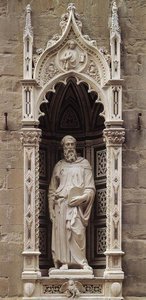
Lorenzo Ghiberti's "St John the Baptist," crafted in 1412, is more than just a sculpture; it’s a profound meditation on faith, sacrifice, and the nascent promise of redemption. This remarkable bronze figure, born from the skilled hands of one of Florence’s most celebrated Renaissance artists, stands as a testament to both Ghiberti's mastery of technique and his deep understanding of human emotion. The piece immediately commands attention with its dramatic pose – a youthful prophet, stripped bare not just physically but also symbolically, embodying vulnerability and spiritual intensity.
The sculpture’s setting is equally crucial to its impact. It isn’t presented in isolation, but rather within a meticulously constructed Gothic architectural framework. This deliberate choice elevates the work beyond a simple portrait; it situates St John within a broader narrative of religious devotion and civic pride. The pointed arches, intricate carvings, and overall grandeur of the structure speak to the power and importance of faith within Florentine society at the time – a period marked by burgeoning artistic innovation and a renewed interest in classical ideals.
The Art of Bronze: Technique and Innovation
Ghiberti’s skill as a bronze caster is undeniably evident. The surface of the sculpture possesses an extraordinary level of detail, from the delicate folds of St John's robe to the meticulously rendered texture of his skin. This wasn’t achieved through brute force; rather, Ghiberti employed a technique known as *cera perduta* – lost wax casting. This method involved creating a detailed wax model, covering it in plaster, and then melting away the wax to leave behind a hollow bronze shell. The resulting piece is remarkably lifelike, capturing not just the physical form but also the subtle nuances of expression.
Furthermore, Ghiberti’s understanding of perspective and anatomy was groundbreaking for his time. He masterfully conveys St John's youthful energy and contemplative gaze, utilizing a dynamic pose that draws the viewer into the scene. The upward tilt of his head, the outstretched hand holding the staff – each element contributes to a sense of movement and immediacy, as if witnessing a pivotal moment in the prophet’s life.
Symbolism and Spiritual Significance
The symbolism embedded within “St John the Baptist” is rich and layered. The figure's nudity represents vulnerability, purity, and his willingness to embrace sacrifice for his faith. He stands at the cusp of baptism, a symbolic act of cleansing and renewal – a potent image reflecting the spiritual journey undertaken by all believers. The staff he holds, often associated with John the Baptist, is not merely a prop but a symbol of authority and guidance, representing the voice that prepares the way for Christ.
Interestingly, St John’s gaze seems to pierce through time, inviting contemplation on themes of repentance, faith, and the promise of salvation. The sculpture's overall mood is one of solemnity and quiet reverence, encouraging viewers to reflect on their own spiritual path.
A Legacy in Art: Ghiberti and the Renaissance
Lorenzo Ghiberti’s “St John the Baptist” represents a pivotal moment in the development of Renaissance sculpture. His innovative use of bronze casting techniques, combined with his profound understanding of human anatomy and expressive power, set a new standard for artists working in Florence during this transformative era. His later work on the Baptistery doors – famously dubbed the “Gates of Paradise” – cemented his reputation as one of the greatest sculptors of all time.
Today, reproductions of Ghiberti’s "St John the Baptist" continue to captivate audiences worldwide, offering a glimpse into the artistic genius of the Renaissance and reminding us of the enduring power of faith and human expression. It remains a compelling example of how art can transcend its historical context and speak directly to the heart.
Похожие произведения
Биография художника
A Florentine Renaissance Forged in Bronze: The Life and Legacy of Lorenzo Ghiberti
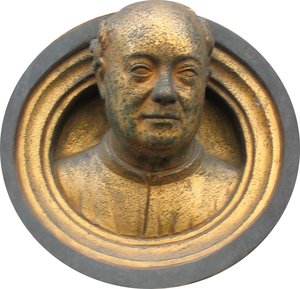
Lorenzo di Bartolo – a name destined to become synonymous with artistic innovation as Lorenzo Ghiberti – was born near Florence in 1378, into a world poised on the cusp of a transformative era. His early life, steeped in the practical artistry of goldsmithing under his stepfather, Bartolo di Michele, instilled within him an unparalleled mastery of metalwork, a foundation that would ultimately shape his extraordinary career. This apprenticeship wasn’t merely about crafting decorative objects; it was a rigorous training in observation, technique, and the fundamental principles of design – skills he would later elevate to breathtaking heights. Yet, Ghiberti's ambitions extended far beyond the confines of the workshop; formal painting lessons from Gherardo Starnina broadened his artistic horizons, laying the groundwork for a multifaceted talent that would soon captivate Florence and reshape the very definition of sculpture. A period spent assisting Carlo I Malatesta with frescoes during the devastating plague outbreak in Rimini in 1400 provided invaluable experience, exposing him to diverse artistic currents and honing his observational skills amidst a backdrop of profound human suffering. Little did he realize that these formative experiences were meticulously preparing him for a competition – a contest that would not only launch his career but also etch his name into the annals of art history.The Baptistery Doors: A Triumph of Skill and Vision
In 1401, Florence held a momentous competition: to select an artist to create new bronze doors for the city’s magnificent Baptistery – a commission considered the most prestigious in the entire region. Lorenzo Ghiberti, a young artisan barely past his twenties, entered this arena alongside some of the era's most formidable minds, including the renowned Filippo Brunelleschi. The challenge was audacious: to depict the *Sacrifice of Isaac* in relief, a biblical narrative brimming with symbolism and theological significance. Ghiberti’s panel wasn’t simply a demonstration of technical prowess; it was a revelation – a bold assertion of a new artistic sensibility. His innovative approach, characterized by graceful figures imbued with an almost ethereal quality, coupled with a sophisticated understanding of perspective and spatial relationships, secured his victory against seasoned masters. This triumph wasn't merely about winning a commission; it was a declaration of intent, a signal that Florence was on the verge of a new artistic dawn. He immediately began work on the North Doors, a project that would consume over two decades and fundamentally transform the Baptistery into a breathtaking showcase of Renaissance artistry. The scale of the undertaking demanded meticulous planning, unwavering dedication, and an extraordinary workshop – one that Ghiberti meticulously built, attracting talented apprentices from across Tuscany and beyond.The “Gates of Paradise”: A Masterpiece Unveiled
Following the resounding success of the North Doors, a commission he had initially considered merely a stepping stone, Ghiberti was entrusted with an even more ambitious undertaking: the creation of a second set of bronze doors for the Baptistery’s east entrance – doors that would ultimately become his magnum opus and earn him the enduring nickname “Gates of Paradise.” Completed in 1452, these panels represent the pinnacle of Ghiberti's artistic achievement. Each panel depicts scenes from the Old Testament with an unprecedented level of realism, detail, and emotional depth. The figures are not merely representations; they are imbued with a palpable sense of life – their gestures, expressions, and drapery rendered with breathtaking accuracy and sensitivity. Ghiberti’s mastery of bronze casting reached its zenith in these works, demonstrating an almost impossible command over the material. He pioneered the use of perspective to create a profound sense of depth and realism that was revolutionary for his time, drawing inspiration from classical antiquity while simultaneously forging a distinctly Renaissance style. The sheer scale and complexity of the “Gates of Paradise” demanded not only technical brilliance but also exceptional organizational skills – Ghiberti’s workshop became a bustling hub of activity, employing dozens of artisans who contributed to every aspect of the project.Style, Influences, and Lasting Impact
Ghiberti's artistic style represents a beautiful synthesis of Gothic elegance and the burgeoning principles of Renaissance humanism. While rooted in the traditions of medieval craftsmanship – particularly the intricate detailing and rich colors characteristic of Gothic sculpture – he embraced classical antiquity, incorporating elements of Roman art and sculpture into his work. This fusion created a unique aesthetic that was both refined and emotionally resonant. He wasn’t simply imitating the past; he was reinterpreting it through a distinctly Renaissance lens, seeking to capture not just the outward appearance but also the inner essence of human experience. Beyond his technical brilliance, Ghiberti possessed a keen intellectual curiosity, evident in *Commentarii*, an autobiographical treatise on art history, theory, and technique – one of the earliest examples of its kind by an artist. This meticulously documented work offers invaluable insights into the artistic practices of the time, revealing Ghiberti’s deep understanding of classical principles and his innovative approach to composition and perspective. His legacy extends far beyond his artistic achievements; he embodied the spirit of the Early Renaissance – a period marked by intellectual exploration, artistic innovation, and a renewed appreciation for human potential.A Legacy Cast in Bronze
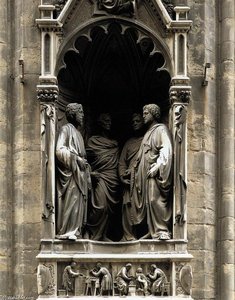
Lorenzo Ghiberti’s contributions were instrumental in establishing Florence as a leading artistic center during the Renaissance, and the “Gates of Paradise” remain an enduring symbol of Florentine civic pride and artistic achievement. His innovations paved the way for masters like Leonardo da Vinci and Michelangelo, solidifying his place as a pivotal figure in Western art history. Ghiberti’s meticulous attention to detail, his mastery of perspective, and his ability to imbue his sculptures with emotional depth set a new standard for artistic excellence. *His legacy continues to inspire artists and art lovers alike,* reminding us of the power of human creativity and the enduring beauty of Renaissance artistry.- Major Works: North Doors & East Doors (Gates of Paradise) – Florence Baptistery, Bronze Statues for Orsanmichele.
- Key Influences: Gothic Art, Classical Antiquity, Renaissance Humanism.
- Artistic Style: Blending Gothic elegance with emerging Renaissance principles; naturalistic depictions, innovative use of perspective.
Лорэнцо Гиберти
1378 - 1455 , Италия
Основные сведения
- Artistic Movement Or Style: Ренессанс
- Artists Or Movements Influenced By This Artist: ['Эразм Роттердамский']
- Artists Who Influenced This Artist:
- Геррардо Старнина
- Бартоло ди Микеле
- Date Of Birth: 1378
- Date Of Death: 1455
- Full Name: Lorenzo di Bartolo Ghiberti
- Nationality: Итальянский
- Notable Artworks:
- Врата Рая
- Святое Семейство
- Place Of Birth: Флоренция, Италия
Похожие статьи

10 легендарных бронзовых шедевров, изменивших искусство | ArtsDot
Погрузитесь в мир великих бронзовых шедевров! От Давида Донателло до Мыслителя Родена – узнайте историю создания, технику и значение легендарных скульптур. Вдохновение для интерьера и музейное качество репродукций на ArtsDot.com.

The Enduring Legacy of Bronze: History, Technique & Artistic Expression for the Collector
Explore the rich history & enduring appeal of bronze sculpture with expert insights for collectors at ArtsDot. Learn about casting techniques, iconic artists, and collecting tips.

10 легендарных бронзовых скульптур, изменивших искусство навсегда | ArtsDot
Погрузитесь в мир великих бронзовых скульптур! От Давида Микеланджело до работ Родена – история искусства, техники и вдохновения. Купите репродукции шедевров для вашего интерьера на ArtsDot.com

The Enduring Legacy of Bronze Sculpture: A Collector's Guide to Form & Cultural Significance
Explore the rich history & enduring appeal of bronze sculpture with expert insights for collectors at ArtsDot. Learn about casting techniques, iconic artists, and collecting tips to build a discerning art collection.

The Enduring Legacy of Bronze: A Historical & Artistic Exploration for the Collector
Explore the rich history & enduring appeal of bronze sculpture with expert insights for collectors at ArtsDot. Learn about casting techniques, iconic artists, collecting tips & contemporary interpretations.