

 Предпросмотр
 Поделиться
 Поделиться
 Детали произведения

 Скачать
 Похожие работы
 Рентгенография
 Слайд-шоу
 Статистика
ACHILLE DEVERIA


 Читать далее
Масляная репродукция ручной работы
Картина маслом на холсте в выбранном вами размере и раме, написанная на заказ нашими художниками. ( Перейти к печати Перейти к цифровым изображениям)




P118B $10

P118H $10

P118W $10

P438Z $10

P508JH $12

P508YH $12

P805H $10

P805Z $10

P919BZ $10

P919G $10

P919XJ $10

P959ZH $10

P968JZ $12

W106C $8

W218G $10

W218JH $8

W218Y $10

W307PJ $10

W316G $10

W316PJ $8

W316Y $10

W398PJ $8

W4111J $10

W500HY $15

W500JH $15

W692G $12

W849H $8

W940BG $15

W953PJ $8




Выберите один из наших стандартных размеров, соответствующих оригинальным пропорциям произведения искусства.

Вы можете указать собственные размеры, чтобы картина идеально вписалась в выбранную раму или пространство. Если выбранный вами размер не соответствует пропорциям оригинала, мы либо обрежем полотно, либо расширим его за счет дополнительных элементов, написанных вручную. Цифровой макет будет отправлен вам на утверждение перед началом производства.
Обратите внимание, что предварительный просмотр на экране не отражает фактическую обрезку или расширение. Только макет точно покажет окончательную композицию.
Хотя доступны индивидуальные размеры, мы рекомендуем выбирать вариант из предопределенного списка, чтобы сохранить исходные пропорции.
После оформления заказа команда ArtsDot.com свяжется с клиентом по электронной почте для уточнения деталей и предоставит предварительный макет
Доставка по всему миру () за 3–4 недели вместо стандартных 5 недель. (10 Сентябрь). Без компромиссов в качестве.

Бесплатная экспресс-доставка по всему миру

Высококачественный льняной холст

Полное страхование доставки

Гарантия возмещения таможенных пошлин

Гарантия точного соответствия цветов

100-дневная политика возврата (только при обнаружении дефектов)

Гарантия возврата 100% средств

Предложение оптовых скидок
 Вариант со стеклом доступен только для размеров менее 110 см

ACHILLE DEVERIA
Техника репродукции
Размер репродукции
-


Итоговая стоимость
$ 263
Louis Boulanger: A Romantic Visionary
Louis Boulanger (1806 – 1867) stands as a prominent figure in French Romantic painting, an artist whose dramatic canvases captured the spirit of his era and cemented his place within the artistic landscape of mid-century Paris. Born in Piedmont where his father, François-Louis Boulanger, Lieutenant colonel of the Napoleon Army met his mother, Marie-Magdeleine-Gertrude Archibbuggi., Boulanger’s formative years were steeped in classical training—he enrolled at the École des Beaux-Arts where he honed his skills under Guillaume Guillon Lethière—a foundation that would profoundly shape his artistic style and sensibility. This disciplined approach contrasted sharply with the burgeoning emotional fervor of Romanticism, yet Boulanger skillfully blended tradition with innovation to produce works imbued with both grandeur and psychological depth.- Early Influences & Training: Boulanger’s education instilled in him a meticulous attention to detail and an understanding of anatomical precision—traits evident throughout his oeuvre. He particularly admired the works of Ingres, whose classical ideal served as a guiding principle for Boulanger's artistic endeavors. The Prix de Rome Prize & Eugène Devéria: Recognizing his talent, Boulanger secured a prestigious Prix de Rome scholarship in 1824, allowing him to travel extensively throughout Italy and immerse himself in the artistic heritage of antiquity. His collaboration with Eugène Devéria fostered intellectual exchange and broadened his artistic horizons, influencing his stylistic choices.
- Salon Successes & Recognition: Boulanger achieved considerable acclaim at the Salon exhibitions of 1827 and 1831, notably securing a medal for “La naissance d’Henri IV” alongside Devéria's monumental canvas. These successes propelled him to prominence within the artistic community and solidified his reputation as a masterful storyteller. Notable Paintings: Among Boulanger’s most celebrated works are “Mazeppa,” a stirring depiction of Mickiewicz’s epic poem, showcasing his ability to convey heroism and pathos; “La mort de Sardanapale,” a collaborative effort with Delacroix that captures the horror and grandeur of Napoleonic warfare; and “Portrait d’Honoré de Balzac,” an iconic portrayal of Balzac rendered in exquisite detail—a testament to Boulanger's technical prowess and artistic sensitivity.
Style & Medium
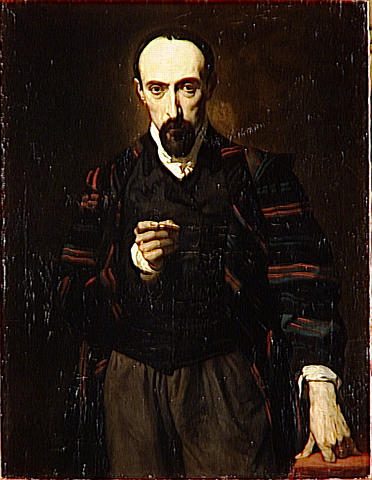
Boulanger’s style is realistic portraiture, executed in oil paint on canvas (assumed). He blended classical training with Romanticism, resulting in a distinctive aesthetic characterized by dramatic lighting, expressive brushwork, and meticulous observation of human anatomy. His canvases often depicted monumental figures—kings, generals, statesmen—infused with psychological complexity and conveying profound emotion. Boulanger’s technique involved layering paint to create subtle gradations of tone and texture, achieving remarkable depth and luminosity. He skillfully utilized chiaroscuro – the interplay of light and shadow – to sculpt form and heighten dramatic impact.- Composition: The composition is centered around Deveria, who occupies most of the frame. He is positioned slightly off-center, facing forward with a direct gaze towards the viewer. His hands are clasped in front of him, adding to the formal and dignified nature of the portrait. The background is dark and indistinct, drawing all attention to the subject.
- Color Palette: The color palette is dominated by muted tones – blacks, browns, grays, and subtle reds and blues. There's a contrast between the darker clothing and skin tone, with highlights on the face and hands.
Historical Context & Symbolism
Boulanger’s work emerged during the Romantic period (roughly 1800-1850), a movement that reacted against Enlightenment rationalism and championed emotion, imagination, and individualism. Influenced by Goethe's Faust and captivated by the heroic narratives of Mickiewicz, Boulanger sought to capture the essence of human experience—passion, courage, despair—amidst grand historical events. His paintings frequently explored themes of morality, spirituality, and national identity, reflecting the anxieties and aspirations of his time. The dramatic lighting employed in “La mort de Sardanapale,” for instance, symbolizes the overwhelming force of fate and the inevitability of destruction.Emotional Impact
Louis Boulanger’s portraits convey a palpable sense of dignity and solemnity, reflecting the artist's profound respect for his subjects and his unwavering belief in the power of art to illuminate the human condition. The gaze of Deveria—direct, unflinching, imbued with inner contemplation—commands attention and invites viewers to engage in an intimate dialogue with the depicted figure. Boulanger’s masterful technique—characterized by meticulous detail and expressive brushwork—transforms mere likeness into a compelling visual narrative, capturing not only physical appearance but also psychological character. His canvases linger in the memory long after viewing, prompting reflection on themes of heroism, morality, and human vulnerability.Technique & Materials
The technique appears to involve layering of paint to create subtle gradations of tone and texture. The materials are typical of 19th-century painting: oil paints, canvas, brushes. Boulanger’s meticulous attention to detail—evident in the rendering of drapery folds and facial expressions—demonstrates his mastery of artistic craftmanship. He skillfully utilized glazing techniques to achieve luminous effects and imbue his canvases with a sense of atmospheric depth.Похожие произведения
Биография художника
Louis Boulanger: A Romantic Visionary
Louis Boulanger (1806 – 1867) stands as a prominent figure in French Romantic painting, an artist whose dramatic canvases captured the spirit of his era and cemented his place within the artistic landscape of mid-century Paris. Born in Paris, Boulanger’s formative years were steeped in classical training—he enrolled at the École des Beaux-Arts where he honed his skills under Guillaume Guillon Lethière—a foundation that would profoundly shape his artistic style and sensibility. This disciplined approach contrasted sharply with the burgeoning emotional fervor of Romanticism, yet Boulanger skillfully blended tradition with innovation to produce works imbued with both grandeur and psychological depth.- Early Influences & Training: Boulanger’s education instilled in him a meticulous attention to detail and an understanding of anatomical precision—traits evident throughout his oeuvre. He particularly admired the works of Ingres, whose classical idealism served as a guiding principle for Boulanger's artistic endeavors.
- The Prix de Rome Prize & Eugène Devéria: Recognizing his talent, Boulanger secured a prestigious Prix de Rome scholarship in 1824, allowing him to travel extensively throughout Italy and immerse himself in the artistic heritage of antiquity. His collaboration with Eugène Devéria fostered intellectual exchange and broadened his artistic horizons, influencing his stylistic choices.
A Parisian Romantic Circle & Dramatic Narrative
Boulanger’s artistic career flourished within the vibrant Parisian Romantic circle—a milieu characterized by passionate debates about art and literature, fueled by political upheaval and social reform. He befriended Victor Hugo and numerous other writers and artists who championed expressive emotion and imaginative storytelling. This environment undeniably impacted Boulanger's artistic vision, encouraging him to prioritize dramatic narrative and theatrical composition. His paintings frequently depicted historical events with visceral intensity, conveying the emotional turmoil of the time—a hallmark of Romantic aesthetics.- Salon Successes & Recognition: Boulanger achieved considerable acclaim at the Salon exhibitions of 1827 and 1831, notably securing a medal for “La naissance d’Henri IV” alongside Devéria's monumental canvas. These successes propelled him to prominence within the artistic community and solidified his reputation as a masterful storyteller.
- Notable Paintings: Among Boulanger’s most celebrated works are "Mazeppa," a stirring depiction of Mickiewicz’s epic poem, showcasing his ability to convey heroism and pathos; “La mort de Sardanapale,” a collaborative effort with Delacroix that captures the horror and grandeur of Napoleonic warfare; and “Portrait d’Honoré de Balzac,” an iconic portrayal of Balzac rendered in exquisite detail—a testament to Boulanger's technical prowess and artistic sensitivity.
Illustrations & Artistic Style: Fantastical Visions
Beyond his easel paintings, Boulanger distinguished himself as a prolific illustrator, notably collaborating with Victor Hugo and Alexandre Dumas on literary adaptations. His lithographs—particularly “La ronde du sabbat”—embraced a distinctive stylistic approach characterized by fantastical imagery and unsettling atmosphere—a trend reflecting the anxieties of the Romantic period. Boulanger’s meticulous technique—characterized by smooth brushstrokes and subtle tonal gradations—created canvases imbued with luminosity and emotional resonance. He skillfully employed chiaroscuro to heighten dramatic impact, emphasizing contrasts between light and shadow and conveying psychological complexity.Legacy & Historical Significance
Louis Boulanger's contribution to French Romantic painting remains significant for its unflinching portrayal of human emotion and its masterful execution. His canvases continue to inspire admiration for their grandeur, dynamism, and psychological depth—qualities that resonate powerfully with audiences today. Furthermore, Boulanger’s association with literary giants like Hugo solidified his place within the cultural history of 19th-century France, ensuring that his artistic legacy would endure as a symbol of Romantic idealism and dramatic narrative. His work resides prominently in institutions such as Saint Louis Art Museum and Maison Victor Hugo, guaranteeing its accessibility to future generations eager to appreciate the enduring beauty and power of Romantic art.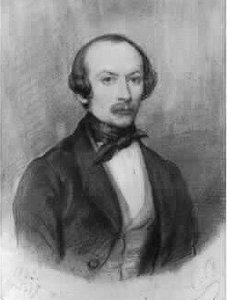
Louis Boulanger
1807 - 1867
Основные сведения
- Artistic Movement Or Style: Romanticism
- Artists Or Movements Influenced By This Artist: ['Victorian Art']
- Artists Who Influenced This Artist:
- Eugène Delacroix
- Eugène Devéria
- Date Of Birth: 1806
- Date Of Death: 1867
- Full Name: Louis Boulanger
- Nationality: French
- Notable Artworks:
- Mazeppa
- Portrait d’Honoré de Balzac
- La ronde du sabbat
- Place Of Birth: Paris, France
Похожие статьи

Топ-10 шедевров XIX века: искусство, история и декор от ArtsDot.com
Погрузитесь в мир искусства XIX века! От реализма до импрессионизма – 10 величайших картин, истории художников и вдохновение для вашего интерьера. Репродукции высокого качества на ArtsDot.com. Откройте всю коллекцию онлайн!

The Enduring Power of Painting: A Historical & Contemporary Exploration of Form and Emotion
Explore the rich history & enduring techniques of oil painting with ArtsDot. Discover masterpieces, learn about art collecting, and find authentic handmade reproductions crafted by skilled artists.

The Enduring Legacy of Oil on Canvas: Technique, History & Aesthetic Impact
Explore the rich history & techniques of oil painting – from Renaissance masters to Impressionism. Discover pigments, layering methods, and why this timeless medium endures. Expert insights for artists & art enthusiasts.

Oil on Canvas: A Historical & Technical Exploration of a Timeless Artistic Medium
Explore the rich history & enduring techniques of oil painting on canvas. Discover the science behind its longevity, conservation practices, and contemporary relevance. Expert insights for art enthusiasts.

Romantic Realism's Finest: 10 Masterpieces for Your Home | ArtsDot
Explore 10 defining masterpieces of Romantic Realism! Discover Courbet, Millet & Daumier's powerful paintings—capturing emotion and social realities. Find museum-quality reproductions for your home at ArtsDot.com.