

 Предпросмотр
 Поделиться
 Поделиться
 Детали произведения

 Скачать
 Похожие работы
 Рентгенография
 Слайд-шоу
 Статистика
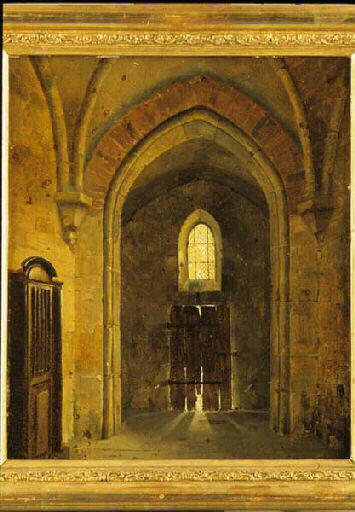
Intérieur d'église
 Читать далее
Масляная репродукция ручной работы
Картина маслом на холсте в выбранном вами размере и раме, написанная на заказ нашими художниками. ( Перейти к печати Перейти к цифровым изображениям)




































Выберите один из наших стандартных размеров, соответствующих оригинальным пропорциям произведения искусства.

Вы можете указать собственные размеры, чтобы картина идеально вписалась в выбранную раму или пространство. Если выбранный вами размер не соответствует пропорциям оригинала, мы либо обрежем полотно, либо расширим его за счет дополнительных элементов, написанных вручную. Цифровой макет будет отправлен вам на утверждение перед началом производства.
Обратите внимание, что предварительный просмотр на экране не отражает фактическую обрезку или расширение. Только макет точно покажет окончательную композицию.
Хотя доступны индивидуальные размеры, мы рекомендуем выбирать вариант из предопределенного списка, чтобы сохранить исходные пропорции.
После оформления заказа команда ArtsDot.com свяжется с клиентом по электронной почте для уточнения деталей и предоставит предварительный макет
Доставка по всему миру () за 3–4 недели вместо стандартных 5 недель. (12 Сентябрь). Без компромиссов в качестве.

Бесплатная экспресс-доставка по всему миру

Высококачественный льняной холст

Полное страхование доставки

Гарантия возмещения таможенных пошлин

Гарантия точного соответствия цветов

100-дневная политика возврата (только при обнаружении дефектов)

Гарантия возврата 100% средств

Предложение оптовых скидок
 Вариант со стеклом доступен только для размеров менее 110 см

Intérieur d'église
Техника репродукции
Размер репродукции
-


Итоговая стоимость
$ 263
Похожие произведения




Биография художника
Louis Daguerre: The Father of Photography
Louis Daguerre (1787-1851) stands as a monumental figure in the annals of art history, yet his legacy is inextricably linked to a medium he revolutionized – photography. Born in Cormeilles-en-Parisy, France, Daguerre’s early life was marked by an apprenticeship in architecture and theatre design, disciplines that instilled within him a meticulous attention to detail and perspective—skills that would prove invaluable as he embarked on his groundbreaking scientific pursuits. He wasn't merely interested in aesthetics; he possessed a profound understanding of optics and the manipulation of light, recognizing its potential for artistic expression long before it was widely accepted as a viable art form.- Early Life & Training: Daguerre’s formative years were spent honing his craft under Pierre Prévost, the pioneer of panoramic painting in France. This experience cultivated his mastery of theatrical illusion and instilled in him an appreciation for creating immersive visual experiences—a sensibility that would later translate into his innovative approach to diorama theatre.
- The Diorama Theatre: Daguerre’s contribution to the burgeoning Victorian entertainment landscape was truly transformative. He conceived and constructed the Diorama in Paris, a revolutionary theatrical spectacle that combined painted scenery with projected lighting effects to simulate realistic environments. This ambitious project cemented his reputation as a visionary artist and demonstrated his ability to synthesize artistic skill with technological innovation.
The Invention of Photography: A Paradigm Shift
Prior to Daguerre’s pivotal breakthrough, Nicéphore Niépce had painstakingly experimented with bitumen of Judea—a substance derived from asphalt—to produce the first surviving camera photograph. However, Niépce's process demanded exposures lasting for hours or even days, rendering it impractical for widespread adoption. Recognizing this limitation, Daguerre tirelessly pursued alternative methods utilizing silver salts, building upon earlier research by Johann Heinrich Schultz and others. His relentless dedication ultimately yielded a revolutionary technique—the daguerreotype—which dramatically shortened exposure times while preserving an astonishing level of detail.- The Daguerreotype Process: Daguerre’s ingenious innovation involved exposing a thin silver-plated copper sheet to iodine vapor, creating a coating of light-sensitive silver iodide. This plate was then exposed in the camera, and subsequently developed using mercury vapor and sodium thiosulfate—a process that captured an image with remarkable accuracy.
- Lateral Reversal & Artistic Implications: Perhaps the most striking characteristic of the daguerreotype was its lateral reversal—meaning that images appeared inverted compared to their reflection in a mirror. This peculiarity profoundly impacted artistic sensibilities, prompting artists to reconsider traditional notions of representation and exploring new avenues for visual expression.
A Legacy Beyond the Camera Lens
Daguerre’s impact extended far beyond the realm of photography itself. He championed the use of scientific instruments as tools for artistic exploration, arguing that “the most useful and extraordinary [...] instruments of science” were those capable of enhancing our perception of the world. His fascination with microscopy and telescopic imaging underscored his commitment to pushing the boundaries of visual observation—a spirit that resonated throughout the Victorian era and beyond.- Influence on Artistic Movements: Daguerre’s invention undeniably catalyzed significant shifts within artistic circles, fostering a new aesthetic sensibility known as Straight Photography. Artists embraced high contrast images that relied on size and context to convey their emotional impact—a departure from the meticulous realism championed by earlier generations of painters.
- Recognition & Remembrance: Daguerre's name is etched onto the Eiffel Tower, symbolizing France’s embrace of innovation and technological advancement. Furthermore, a monument commemorates his grave in Cormeilles-en-Parisy, ensuring that his contribution to art history—and indeed, to human understanding—remains vividly present for future generations.
Major Achievements & Artistic Output
Daguerre’s artistic output encompassed a diverse range of projects, including breathtaking dioramas depicting historical scenes and architectural marvels, as well as meticulously crafted panoramic paintings that captured the grandeur of landscapes and cities. His work exemplified his unparalleled skill in blending theatrical illusion with scientific precision—a testament to his visionary intellect and enduring influence on the visual arts. He is remembered not merely for inventing photography but for reshaping artistic conventions and inspiring countless artists to explore new frontiers of creative expression.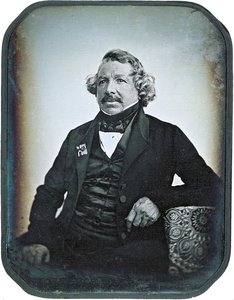
louis-jacques-mandé daguerre
1787 - 1851 , France
Основные сведения
- Artistic Movement Or Style: Romanticism
- Artists Or Movements Influenced By This Artist: ['Photography']
- Artists Who Influenced This Artist: ['Nicéphore Niépce']
- Date Of Birth: November 18, 1787
- Date Of Death: July 10, 1851
- Full Name: Louis-Jacques-Mandé Daguerre
- Nationality: French
- Notable Artworks:
- The Ruins of the Holyrood Chapel
- Interior de Rosslyn Chapel
- Vallée au soleil couchant
- Place Of Birth: Cormeilles-en-Parisy, France