

 Предпросмотр
 Поделиться
 Поделиться
 Детали произведения

 Скачать
 Похожие работы
 Рентгенография
 Слайд-шоу
 Статистика
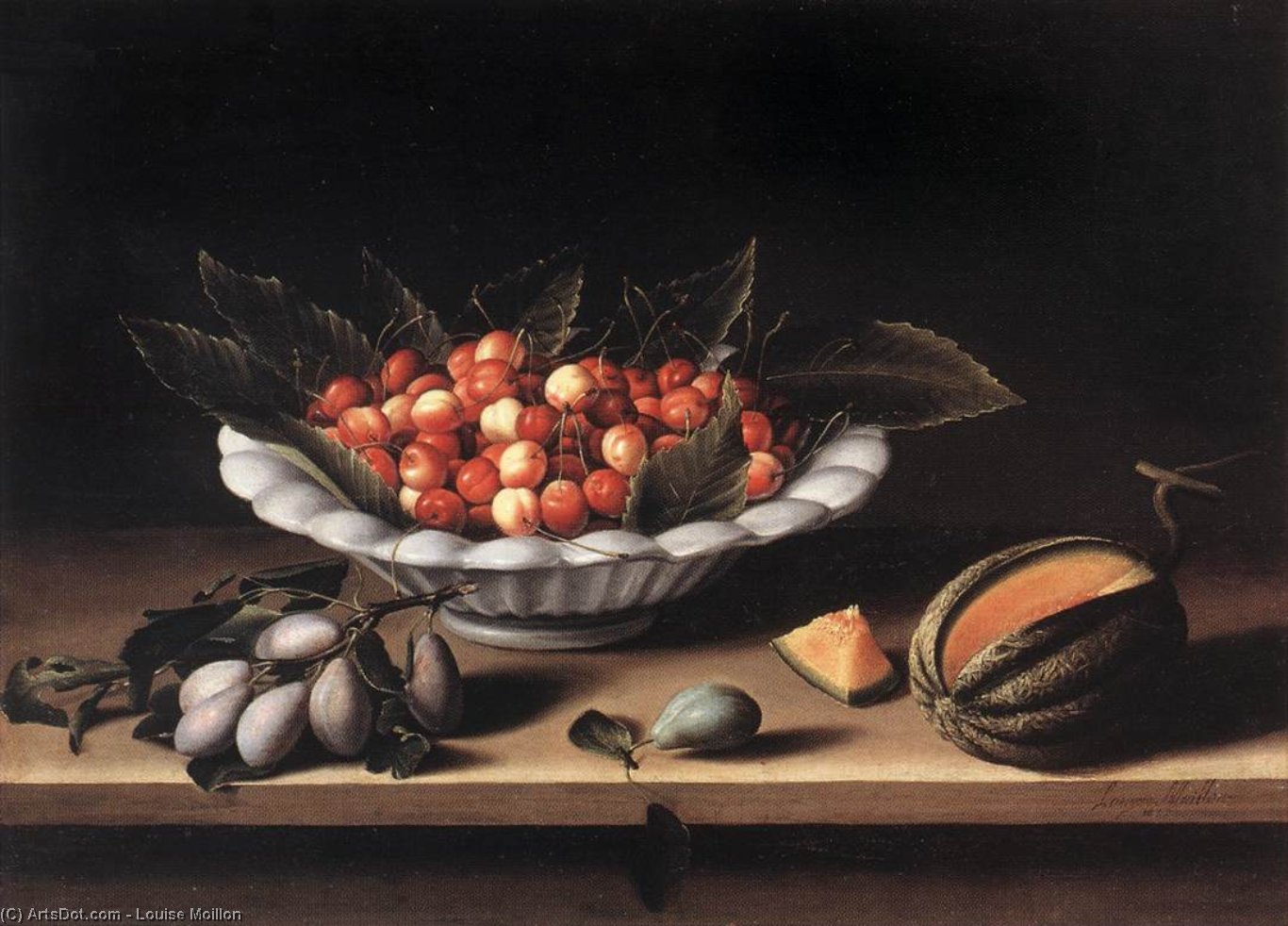
Cup of Cherries and Melon
 Oil On Canvas
- WallArt
- Baroque Still Life
 1633
1633- Early Modern
 48.0 x 65.0 cm
 Лувр
Лувр
 Читать далее
Приобретите цифровое изображение высокого разрешения в улучшенном качестве, которое значительно превосходит онлайн-превью.
Каждый файл тщательно подготавливается нашими специалистами с использованием передовых инструментов и экспертной ручной ретуши. Мы гарантируем исключительную четкость, точную цветопередачу и детальную проработку каждого изображения.
Финальный файл доставляется по электронной почте в течение 72 часов и оптимизирован для немедленного использования в профессиональной среде, при верстке и печати. Это тот же уровень качества, которому доверяют ведущие дизайнерские студии, издательства и галереи.
Цифровое изображение
Скачайте файл высокого разрешения для личного использования, печати и творческих проектов. ( Перейти к печати Купить картину ручной работы)
Включено в каждый заказ цифровых изображений
Гарантия экспертной цифровой доставки
Выбирая ArtsDot.com, вы получаете не просто изображение — вы приобретаете профессионально обработанное цифровое произведение искусства, созданное с безупречной точностью и под защитой гарантии качества. Вот всё, что автоматически входит в ваш заказ:

Мгновенная доставка по e-mail
Ваш цифровой файл в высоком разрешении будет отправлен вам по электронной почте в течение 72 часов после оформления заказа — и сразу станет доступен для использования.

Цифровой файл с ИИ-улучшением
Ваше произведение искусства проходит профессиональную оптимизацию с использованием передовых инструментов ИИ и ручной обработки, что гарантирует максимальную детализацию, четкость и точность цветопередачи.

Бессрочная бесплатная повторная доставка
Случайно удалили или потеряли файл? Не беспокойтесь — мы отправим его вам повторно в любое время и совершенно бесплатно.

Без импортных пошлин — навсегда
Наслаждайтесь вашим произведением искусства мгновенно без таможенных пошлин, сборов или затрат на доставку — цифровые загрузки всегда не облагаются налогом.

Гарантия точности цветопередачи
Мы гарантируем, что ваше цифровое изображение максимально точно передает оригинальные цвета благодаря использованию профессиональных инструментов и систем управления цветом.

Гарантия удовлетворенности 100 дней
Если вы не будете удовлетворены своим цифровым изображением, мы внесем правки или вернем 100% стоимости в течение 100 дней — без лишних вопросов.

100% Гарантия возврата средств
Не удовлетворены покупкой? Получите полный возврат средств в течение 100 дней после получения цифрового файла — без лишних вопросов.

Скидки на оптовые заказы
Купите 3 изображения, сэкономьте 10% — Купите 5, сэкономьте 15% — Купите 10+, сэкономьте 20%. Отличное решение для творческих проектов, галерей и агентств.
A Symphony of Stillness: The Luminous World of Louise Moillon
In the grand, sweeping narratives of the Baroque era, where drama and movement often dominate the canvas with thunderous intensity, Louise Moillon’s “Cup of Cherries and Melon” offers a profound and meditative alternative. Completed in 1633, this masterpiece serves as a quiet sanctuary of color and form. At first glance, the composition appears to be a simple arrangement of nature's bounty: a pristine white bowl overflowing with ruby-red cherries, nestled among the pale, textured flesh of a melon and scattered plums. Yet, beneath this unassuming surface lies a sophisticated dialogue between light and shadow that captures the very essence of 17th-century French elegance.
The painting is a masterclass in the Baroque technique of chiaroscuro, though Moillon employs it with a delicacy that avoids the heavy shadows of her contemporaries. Instead, she uses light to sculpt the fruit, giving each cherry a jewel-like translucency and the melon a palpable, succulent weight. Through the meticulous application of oil glazes—thin, translucent layers of pigment—she achieves a breathtaking luminosity. This painstaking process allows the viewer to almost sense the velvety sheen of the skins and the cool moisture of the fruit, creating an illusion of depth that invites the eye to linger on every meticulously rendered leaf and droplet.
Heritage, Symbolism, and the Art of Observation
Moillon’s artistic vision was deeply rooted in her unique cultural lineage. Born into a family of Huguenot refugees in Paris, she was immersed in a tradition that valued the meticulous observation of the natural world—a hallmark of the Dutch masters like Rembrandt and Frans Hals. This influence is visible in her trompe l'oeil effects, where the boundaries between the painted surface and reality begin to blur. While her technique draws from the Flemish tradition of hyper-realism, the soul of the work remains characteristically French: poised, balanced, and exquisitely refined.
Beyond its visual splendor, the painting carries a weight of symbolic meaning common to the 17th century. In the language of still life, the abundance of ripe fruit often served as a memento mori—a gentle reminder of the fleeting nature of life and the transient beauty of earthly pleasures. The sweetness of the cherries and the ripeness of the melon represent the peak of vitality, yet their very perfection hints at the inevitable passage of time. For the modern collector or interior designer, this duality offers a profound emotional resonance; it is a piece that celebrates the joy of the present moment while maintaining a sophisticated, contemplative grace.
An Enduring Inspiration for the Modern Interior
For those seeking to infuse a contemporary space with historical depth and quiet luxury, “Cup of Cherries and Melon” provides unparalleled inspiration. Its palette—a harmonious blend of deep reds, soft creams, and earthy tones—possesses a versatile elegance that complements both classical and modern decor. A high-quality reproduction of this work does more than merely decorate a wall; it introduces a focal point of stillness and intellectual curiosity into a room.
Whether placed in a sunlit breakfast nook to evoke the freshness of a summer morning or anchored in a formal study to provide a sense of timeless stability, Moillon’s work acts as a window into a more deliberate era. It is an invitation to slow down, to observe the intricate details of the world around us, and to appreciate the quiet brilliance found in the simplest of natural forms.
Похожие произведения




Биография художника
The Quiet Brilliance of Louise Moillon
In the grand, sweeping narratives of the Baroque era, where drama and movement often dominate the canvas, the work of Louise Moillon offers a profound and meditative alternative. Born in Paris in 1610, Moillon emerged from a world shaped by the intense religious and cultural shifts of 17th-century France. Her very lineage tells a story of resilience and artistic heritage; as a descendant of Huguenot refugees from Holland, she was immersed in a tradition that valued the meticulous observation of the natural world. This background provided more than just a family history—it offered a stylistic vocabulary rooted in the Dutch mastery of light, texture, and symbolic realism.
Moillon’s early life was marked by both loss and profound artistic mentorship. The death of her father, the landscape painter and dealer Nicolas Moillon, when she was only ten, could have altered her path, yet her upbringing remained deeply embedded in the arts. Under the guidance of her stepfather, François Garnier, a skilled artist and dealer, she refined a technique that would become her hallmark. Her education was not merely about the application of pigment to canvas, but an immersion into the humanist values of her time, learning to see the divine within the minute details of a ripening fruit or the delicate curve of a petal.
A Mastery of Texture and Light
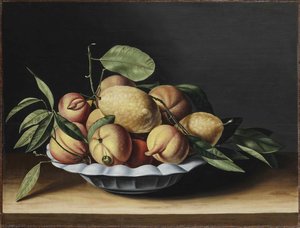
The true genius of Moillon lies in her ability to transform the mundane into the extraordinary. Her compositions are characterized by a serene stillness, a quietude that invites the viewer to linger and observe. She possessed an almost supernatural ability to capture the tactile qualities of her subjects—the waxy skin of a citron, the soft fuzz of a peach, or the translucent juice of a crushed berry. In works such as Still Life of Citrons and Curaçao Oranges in a White Polylobed Dish, one can sense the cool moisture of the fruit against the hard, glazed surface of the porcelain, creating a sensory experience that transcends the two-dimensional plane.
Her technique was deeply influenced by the naturalistic traditions of the Protestant circles in which she moved. This approach favored clarity and precision over the theatrical shadows of the more flamboyant Baroque masters. Instead, Moillon utilized light to sculpt her subjects, using subtle gradations of tone to create volume and depth. Her palette, while often focused on the vibrant hues of nature, was used with such restraint that each color felt luminous, as if lit from within. This mastery allowed her to bridge the gap between mere botanical illustration and high art, imbuing every piece with a sense of life and vitality.
Legacy and Historical Significance
Throughout her long life, which spanned nearly nine decades, Moillon achieved a level of renown that was rare for female artists of her era. Her ability to secure commissions from prestigious patrons, including members of the royal court, speaks to the undeniable quality and sophistication of her oeuvre. While her work often focused on the intimate scale of still life, its impact was expansive, contributing significantly to the development of the French still-life tradition.
The historical significance of Louise Moillon extends beyond her technical skill; she represents a vital link between the Dutch naturalistic tradition and the burgeoning French aesthetic of the 17th century. Her paintings serve as windows into a lost world of Parisian markets and private gardens, capturing a sense of abundance and ephemeral beauty. Today, her works remain cherished treasures in institutions such as the Louvre, standing as enduring testaments to a life dedicated to finding the extraordinary within the ordinary. Her legacy is found in every brushstroke that celebrates the quiet, breathtaking splendor of the natural world.
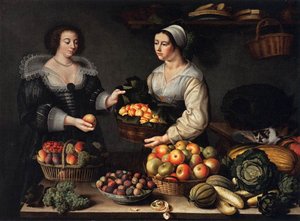
Louise Moillon
1610 - 1696