


 Поделиться
 Поделиться
 Детали произведения

 Скачать
 Похожие работы
 Слайд-шоу
 Статистика
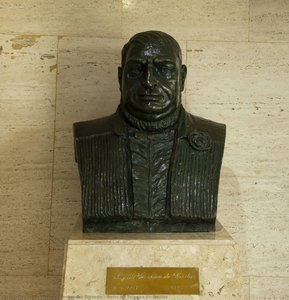
Busto do Ministro Ubaldino do Amaral
 Bronze
- Sculpture
 1942
1942- Modern
 67.0 x 60.0 cm
 Музей Вищого Суду Федерації
 Читать далее
Приобретите цифровое изображение высокого разрешения в улучшенном качестве, которое значительно превосходит онлайн-превью.
Каждый файл тщательно подготавливается нашими специалистами с использованием передовых инструментов и экспертной ручной ретуши. Мы гарантируем исключительную четкость, точную цветопередачу и детальную проработку каждого изображения.
Финальный файл доставляется по электронной почте в течение 72 часов и оптимизирован для немедленного использования в профессиональной среде, при верстке и печати. Это тот же уровень качества, которому доверяют ведущие дизайнерские студии, издательства и галереи.
Цифровое изображение
Скачайте файл высокого разрешения для личного использования, печати и творческих проектов. ( Перейти к печати Купить картину ручной работы)
Включено в каждый заказ цифровых изображений
Гарантия экспертной цифровой доставки
Выбирая ArtsDot.com, вы получаете не просто изображение — вы приобретаете профессионально обработанное цифровое произведение искусства, созданное с безупречной точностью и под защитой гарантии качества. Вот всё, что автоматически входит в ваш заказ:

Мгновенная доставка по e-mail
Ваш цифровой файл в высоком разрешении будет отправлен вам по электронной почте в течение 72 часов после оформления заказа — и сразу станет доступен для использования.

Цифровой файл с ИИ-улучшением
Ваше произведение искусства проходит профессиональную оптимизацию с использованием передовых инструментов ИИ и ручной обработки, что гарантирует максимальную детализацию, четкость и точность цветопередачи.

Бессрочная бесплатная повторная доставка
Случайно удалили или потеряли файл? Не беспокойтесь — мы отправим его вам повторно в любое время и совершенно бесплатно.

Без импортных пошлин — навсегда
Наслаждайтесь вашим произведением искусства мгновенно без таможенных пошлин, сборов или затрат на доставку — цифровые загрузки всегда не облагаются налогом.

Гарантия точности цветопередачи
Мы гарантируем, что ваше цифровое изображение максимально точно передает оригинальные цвета благодаря использованию профессиональных инструментов и систем управления цветом.

Гарантия удовлетворенности 100 дней
Если вы не будете удовлетворены своим цифровым изображением, мы внесем правки или вернем 100% стоимости в течение 100 дней — без лишних вопросов.

100% Гарантия возврата средств
Не удовлетворены покупкой? Получите полный возврат средств в течение 100 дней после получения цифрового файла — без лишних вопросов.

Скидки на оптовые заказы
Купите 3 изображения, сэкономьте 10% — Купите 5, сэкономьте 15% — Купите 10+, сэкономьте 20%. Отличное решение для творческих проектов, галерей и агентств.
A Bronze Legacy: The Presence of Ubaldino do Amaral
In the quiet corridors of history, certain figures command attention not through movement, but through the enduring weight of their presence. The Busto do Ministro Ubaldino do Amaral, a masterful bronze creation from 1942 by the renowned Lúcio Marçal Ferreira Ribeiro Lima Costa, serves as a profound testament to this enduring authority. This sculptural work captures more than just the likeness of a statesman; it encapsulates an era of political gravity and the dignified solemnity of mid-century Brazilian leadership. The bust presents a man of distinguished character, his features rendered with a meticulous attention to detail that brings the texture of his mustache and the formal crispness of his bow tie to life. Set against a neutral, contemplative backdrop, the bronze glows with a deep, warm patina, inviting the viewer into a silent dialogue with the past.
The artistry of Costa, an architect whose name is synonymous with the very soul of Brazilian Modernism, shines through in the structural integrity of this piece. While he is celebrated for shaping the urban landscape of Brasília, his ability to capture human essence in three dimensions reveals a profound sensitivity to form and volume. In this bust, we see the intersection of classical portraiture and modernist precision. The technique employed allows for a play of light and shadow that dances across the metallic surface, emphasizing the rugged strength of the bronze while simultaneously softening the facial contours to reveal a sense of wisdom and approachability. For the discerning collector or interior designer, this piece offers a sophisticated focal point, bringing a sense of historical weight and academic prestige to any curated space.
Beyond its physical attributes, the sculpture carries a symbolic resonance that transcends its subject matter. The choice of bronze—a material synonymous with permanence and resilience—mirrors the intended legacy of the Minister himself. To display such a work is to celebrate the continuity of history and the importance of honoring those who shaped the foundations of a nation. It is an evocative piece that evokes feelings of respect, stability, and intellectual depth. Whether placed in a private library, a formal study, or a grand gallery, this reproduction serves as a bridge between the monumental achievements of the 20 much-celebrated mid-century era and the contemporary appreciation for fine, classical craftsmanship.
Похожие произведения

Биография художника
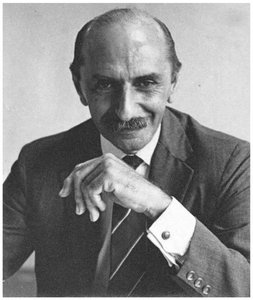
Lúcio Costa: Architect of Brasília and the Brazilian Modernist Soul
Lúcio Marçal Ferreira Ribeiro Lima Costa (February 27, 1902 – June 13, 1998) stands as a monumental figure in Brazilian architecture and urban planning. Born in Toulon, France, to a Brazilian diplomat family, his life was a fascinating synthesis of European education and deep-rooted Brazilian identity. Costa’s legacy isn't simply defined by the iconic design of Brasília, but rather by his profound contribution to shaping a distinctly modern Brazilian aesthetic – one that embraced both international influences and the rich tapestry of national heritage.
Costa’s early artistic training laid the foundation for his architectural vision. He studied at the Escola Nacional de Belas Artes in Rio de Janeiro, absorbing the principles of European Modernism while simultaneously developing a sensitivity to Brazilian forms and materials. His initial work reflected this duality, showcasing eclectic designs that blended colonial influences with emerging modern trends. However, it was his time working alongside Le Corbusier and Oscar Niemeyer – two titans of 20th-century architecture – that truly propelled him toward his signature style.
The Shaping of Brasília
Costa’s most celebrated achievement is undoubtedly the Pilot Plan for Brasília, a project he spearheaded as chief architect and urban planner. Selected as the winner of a prestigious competition in 1957, Costa meticulously crafted a plan that balanced functionality with an acute awareness of the Brazilian landscape and culture. Unlike many modernist schemes that imposed rigid grids, Brasília’s design incorporated curves and organic forms, mirroring the undulating topography of the Cerrado region. The city's layout—a central axis flanked by residential sectors—was intended to foster social interaction and a sense of community.
The construction of Brasília itself was a remarkable feat of engineering and organization, reflecting Brazil’s ambition under President Juscelino Kubitschek. Costa collaborated closely with Niemeyer on many key buildings within the city, including the National Congress, Palácio da Alvorada (Presidential Palace), and several government ministries. These structures, characterized by their bold curves, innovative use of concrete, and integration with the surrounding landscape, became instantly recognizable symbols of Brazil’s modern identity.
Influences and Artistic Style
Costa's architectural style was a complex blend of influences. He deeply admired Le Corbusier’s emphasis on functionality, rational design, and the use of concrete, but he resisted adopting the Swiss architect’s stark, geometric approach. Instead, Costa sought to infuse his designs with a distinctly Brazilian sensibility – incorporating elements of indigenous art, colonial architecture, and the vibrant colors of the country's cultural heritage.
His work also drew inspiration from Oscar Niemeyer, with whom he shared a close professional relationship. Niemeyer’s sculptural forms and innovative use of space profoundly influenced Costa’s designs, particularly in Brasília. However, Costa maintained his own distinct voice, prioritizing the creation of harmonious spaces that responded to the specific context of each project.
Beyond Brasília: A Legacy of Design
While Brasília remains his most famous work, Lúcio Costa's influence extended far beyond the capital city. He designed numerous public buildings throughout Brazil, including the Ministry of Education and Health in Rio de Janeiro, the Hotel do Park São Clemente, and several residential complexes. His designs were characterized by their elegance, functionality, and integration with the surrounding environment.
Costa’s contributions to Brazilian architecture are profound. He not only shaped the physical landscape of the country but also helped to define a national architectural identity – one that embraced modernity while celebrating Brazil's unique cultural heritage. His work continues to inspire architects and urban planners today, solidifying his place as one of the most important figures in 20th-century Brazilian design.
Costa’s Early Years & Academic Foundations
Born in Toulon, France, in 1902, Lúcio Costa's early life was marked by a peripatetic existence due to his father’s diplomatic career. This exposure to diverse cultures and architectural styles undoubtedly shaped his artistic sensibilities. He began his formal training at the Royal Grammar School in Newcastle upon Tyne and later attended the Collège National in Montreux, Switzerland, before returning to Rio de Janeiro to study architecture at the Escola Nacional de Belas Artes (later Escola de Belas Artes/FAU – Faculty of Architecture and Urbanism at the University of Rio de Janeiro).
His initial professional experience involved working as a draftsman for technical offices, primarily designing eclectic and colonial-style houses for the wealthy Carioca elite. This early work provided him with valuable practical skills while simultaneously exposing him to the diverse architectural traditions of Brazil. Crucially, it also marked a departure from purely academic training, grounding his designs in real-world construction practices.
His appointment as director of the Escola Nacional de Belas Artes in 1930 proved pivotal. This role allowed him to implement significant reforms within the school, introducing modern architectural principles and fostering a new generation of Brazilian architects. His tenure was marked by both innovation and controversy, ultimately leading to his resignation amidst political tensions.
lúcio marçal ferreira ribeiro lima costa
1902 - 1998 , France
Основные сведения
- Artistic Movement Or Style: Modernism, Brazilian Modernism
- Artists Or Movements Influenced By This Artist: ['Brazilian Modernism']
- Artists Who Influenced This Artist:
- Le Corbusier
- Oscar Niemeyer
- Date Of Birth: February 27, 1902
- Date Of Death: June 13, 1998
- Full Name: Lúcio Marçal Ferreira Ribeiro Lima Costa
- Nationality: Brazilian
- Notable Artworks:
- Brasília Pilot Plan
- Parque Guinle
- Hotel do Park São Clemente
- Place Of Birth: Toulon, France