


 Предпросмотр
 Поделиться
 Поделиться
 Детали произведения

 Скачать
 Похожие работы
 Рентгенография
 Слайд-шоу
 Статистика
Sign, Business


 Читать далее
Жикле / Арт-принт
Печать (жикле) или холст музейного качества с быстрыми сроками изготовления и широким выбором вариантов отделки. ( Купить картину ручной работы Перейти к цифровым изображениям)




P118B $10

P118H $10

P118W $10

P438Z $10

P508JH $12

P508YH $12

P805H $10

P805Z $10

P919BZ $10

P919G $10

P919XJ $10

P959ZH $10

P968JZ $12

W106C $8

W218G $10

W218JH $8

W218Y $10

W307PJ $10

W316G $10

W316PJ $8

W316Y $10

W398PJ $8

W4111J $10

W500HY $15

W500JH $15

W692G $12

W849H $8

W940BG $15

W953PJ $8




Выберите один из наших стандартных размеров, соответствующих оригинальным пропорциям произведения искусства.

Вы можете указать свои собственные размеры, чтобы репродукция идеально подошла под конкретную раму или пространство. Если выбранный вами размер не будет соответствовать пропорциям оригинала, мы либо обрежем произведение, либо дополним изображение зеркальным отражением краев или однотонной заливкой. Перед началом производства вам будет отправлен цифровой макет для утверждения.
Пожалуйста, обратите внимание, что предварительный просмотр на экране не отображает фактическую обрезку или расширение изображения. Только макет точно покажет финальную композицию.
Несмотря на возможность заказа индивидуальных размеров, мы рекомендуем выбирать размер из предопределенного списка, чтобы сохранить оригинальные пропорции.
Доставка по всему миру () за 2 недели вместо стандартных 4/5 недель. (13 Сентябрь)

Бесплатная экспресс-доставка по всему миру

Высококачественный льняной холст

Полное страхование доставки

Гарантия возмещения таможенных пошлин

Гарантия точного соответствия цветов

100-дневная политика возврата (только при обнаружении дефектов)

Гарантия возврата 100% средств

Предложение оптовых скидок
 Вариант со стеклом доступен только для размеров менее 110 см

Sign, Business
Жикле / Арт-принт
Размер репродукции
-


Итоговая стоимость
$ 62
Похожие произведения





Биография художника
A Symphony of Service: The Polymathic Soul of Albert Schweitzer
In the grand tapestry of twentieth-century intellectual history, few threads are as vibrant or as complex as that of Ludwig Philipp Albert Schweitzer. Born in 1875 amidst the picturesque landscapes of Kaysersberg, Alsace, Schweitzer was a man whose very existence seemed to bridge the gap between the cerebral and the visceral. To speak of him merely as a humanitarian is to overlook the profound musicality and theological depth that informed his every action. His life was not a seriesary of disconnected careers but rather a singular, harmonious pursuit of what he termed Reverence for Life—a philosophy that sought to find the sacred in all living things, from the intricate fugues of Johann Sebastian Bach to the struggling patients in the heart of the African jungle.
His early years in Gunsbach, under the spiritual guidance of his father, a local Lutheran pastor, provided the fertile soil for his multifaceted development. This environment of religious tolerance and deep-seated faith instilled in him a lifelong capacity for empathy and a belief in the interconnectedness of all existence. As he moved toward the University of Munich, Schweitzer’s intellect began to bloom with an almost overwhelming intensity. He did not merely study subjects; he inhabited them. In the halls of academia, he mastered theology, philosophy, medicine, and musicology, weaving these disciplines into a cohesive worldview where the logic of science met the mysticism of faith.
The Resonance of Bach and the Weight of Theology
Before the world knew him as a healer of bodies, Schweitzer was a master of sound. His relationship with music, particularly the works of Bach, was far more than a professional pursuit; it was a spiritual dialogue. As an organist and musicologist, he possessed a profound understanding of the Baroque era, and his scholarly contributions were instrumental in the Organ Reform Movement. He believed that the mathematical precision and emotional depth of Bach’s compositions offered a window into the divine order of the universe. This musical sensibility—the ability to perceive structure, rhythm, and harmony—would later become the foundation upon which he built his ethical framework.
This same rigor was applied to his theological inquiries. Schweitzer emerged as a formidable voice in Christian thought, challenging the prevailing historical-critical methods of his time. He sought to move beyond a purely secularized view of the historical Jesus, instead advocating for a more profound, mystical connection to the concept of being in Christ. His theology was never static or dogmatic; it was an evolving exploration of how humanity could live ethically within a world of profound uncertainty. For Schweitzer, the intellect served the heart, and the study of ancient texts was a preparation for the practical demands of human compassion.
The Call to Lambaréné and a Legacy of Compassion
Perhaps the most transformative chapter of his life began when he turned his gaze toward the medical needs of French Equatorial Africa. Driven by an irrepressible urge to put his philosophy into practice, Schweitzer established the Gabon Hospital in Lambaréné. This was not merely a clinical endeavor but a monumental act of will. For over four decades, he lived and worked as a physician, navigating the immense challenges of tropical medicine while maintaining his role as a global intellectual leader. In the heat and humidity of Gabon, the abstract concept of Reverence for Life found its most tangible expression through the healing of wounds and the alleviation of suffering.
His achievements were recognized on the highest global stages, most notably with the receipt of the Nobel Peace Prize in 1952. Yet, for Schweitzer, the true reward was found in the quiet dignity of his mission. His legacy remains a profound testament to the power of a multidisciplinary life. He proved that one could be a scholar and a servant, a musician and a doctor, a philosopher and a healer. Through his life, he demonstrated that true greatness lies in the synthesis of knowledge and action, leaving behind a world that is, if only by his example, more attuned to the sanctity of all living breath.
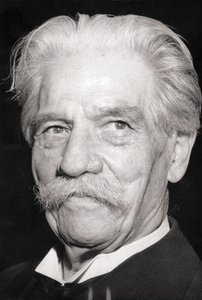
ludwig philipp albert schweitzer
1875 - 1965 , France
Основные сведения
- Artistic Movement Or Style: Romanticism
- Artists Or Movements Influenced By This Artist: ['Romanticism']
- Artists Who Influenced This Artist:
- Johann Sebastian Bach
- Adolph Menzel
- Anselm Feuerbach
- Carl Eduard Schuch
- Date Of Birth: January 14, 1875
- Date Of Death: September 6, 1965
- Full Name: Ludwig Philipp Albert Schweitzer
- Nationality: German & French
- Notable Artworks: ['Lambarene Hospital']
- Place Of Birth: Kaysersberg (Alsace)
Похожие статьи

Марк Ротко: 25 шедевров абстрактного экспрессионизма для вашего интерьера | ArtsDot
Погрузитесь в мир Марка Ротко! 25 шедевров абстрактного экспрессионизма, полных эмоций и цвета. Узнайте историю создания культовых картин и найдите идеальную репродукцию для вашего интерьера на ArtsDot.com.

Белые шедевры: 10 знаменитых картин, покоривших мир (репродукции, декор)
Откройте для себя 10 знаменитых картин, где белый цвет – главный герой! Моне, Дега и другие мастера. История искусства, техники живописи и вдохновение для вашего интерьера. Репродукции высокого качества на ArtsDot.com

Топ-10 знаменитых картин в черных тонах: шедевры искусства для вашего интерьера
Погрузитесь в мир темных шедевров! Топ-10 знаменитых картин в черных тонах от Гойи, Рембрандта и Мунка. История искусства, техники живописи и вдохновение для вашего интерьера. Купите репродукции высокого качества на ArtsDot.com

Monochrome Visions: Exploring the Aesthetic & Historical Significance of Black & White Photography
Explore the rich history & artistic power of black and white photography. From early techniques to iconic masters like Ansel Adams, discover why monochrome continues to captivate art lovers today. Expert insights for collectors.

Crimson Threads of Narrative: Exploring Symbolism & Representation in Artworks Featuring the Red Dress
Explore the rich symbolism of the red dress in art history! From ancient power displays to iconic portraits like Cézanne’s 'Madame Cezanne', discover the cultural and artistic significance behind this captivating color. Expert analysis & insights.