


 Предпросмотр
 Поделиться
 Поделиться
 Детали произведения

 Скачать
 Похожие работы
 Рентгенография
 Слайд-шоу
 Статистика
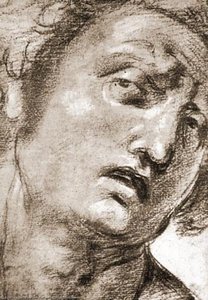
Portrait Sketch of the Dead Martin Luther


 Читать далее
Масляная репродукция ручной работы
Картина маслом на холсте в выбранном вами размере и раме, написанная на заказ нашими художниками. ( Перейти к печати Перейти к цифровым изображениям)




P118B $10

P118H $10

P118W $10

P438Z $10

P508JH $12

P508YH $12

P805H $10

P805Z $10

P919BZ $10

P919G $10

P919XJ $10

P959ZH $10

P968JZ $12

W106C $8

W218G $10

W218JH $8

W218Y $10

W307PJ $10

W316G $10

W316PJ $8

W316Y $10

W398PJ $8

W4111J $10

W500HY $15

W500JH $15

W692G $12

W849H $8

W940BG $15

W953PJ $8




Выберите один из наших стандартных размеров, соответствующих оригинальным пропорциям произведения искусства.

Вы можете указать собственные размеры, чтобы картина идеально вписалась в выбранную раму или пространство. Если выбранный вами размер не соответствует пропорциям оригинала, мы либо обрежем полотно, либо расширим его за счет дополнительных элементов, написанных вручную. Цифровой макет будет отправлен вам на утверждение перед началом производства.
Обратите внимание, что предварительный просмотр на экране не отражает фактическую обрезку или расширение. Только макет точно покажет окончательную композицию.
Хотя доступны индивидуальные размеры, мы рекомендуем выбирать вариант из предопределенного списка, чтобы сохранить исходные пропорции.
После оформления заказа команда ArtsDot.com свяжется с клиентом по электронной почте для уточнения деталей и предоставит предварительный макет
Доставка по всему миру () за 3–4 недели вместо стандартных 5 недель. (14 Сентябрь). Без компромиссов в качестве.

Бесплатная экспресс-доставка по всему миру

Высококачественный льняной холст

Полное страхование доставки

Гарантия возмещения таможенных пошлин

Гарантия точного соответствия цветов

100-дневная политика возврата (только при обнаружении дефектов)

Гарантия возврата 100% средств

Предложение оптовых скидок
 Вариант со стеклом доступен только для размеров менее 110 см

Portrait Sketch of the Dead Martin Luther
Техника репродукции
Размер репродукции
-


Итоговая стоимость
$ 263
Portrait Sketch of the Dead Martin Luther
Lukas Furtenagel’s “Portrait Sketch of the Dead Martin Luther” stands as a haunting testament to both artistic skill and the profound anxieties of its time—a pivotal moment in the High Renaissance unfolding within Augsburg, Germany. Executed in 1546 shortly after Luther's passing, this drawing transcends mere representation; it embodies a masterful distillation of humanist observation and psychological insight.
- Subject Matter: The artwork depicts Martin Luther’s lifeless visage—a solemn portrayal capturing the finality of mortality. Furtenagel meticulously rendered Luther on his deathbed, reflecting the prevailing fascination with confronting death as a central theme in Renaissance art.
- Style & Technique: Furtenagel's style aligns seamlessly with the humanist tradition championed by Burgkmair and Dürer—characterized by precise draughtsmanship and an unwavering commitment to capturing human emotion. The artist skillfully employed chiaroscuro, manipulating light and shadow to imbue the image with depth and dramatic intensity.
- Historical Context: Luther’s death coincided with a period of intense religious upheaval—the Reformation reshaping European society. Furtenagel's depiction served as inspiration for numerous reproductions by Lucas Cranach the Younger, cementing his reputation as a master draftsman and reflecting the broader cultural preoccupation with commemorating significant figures.
- Symbolism: The sketch’s muted earth tones—predominantly browns and ochres—echo the solemnity of funerary art and convey a sense of contemplative stillness. Furtenagel's careful attention to detail—particularly Luther’s facial expression—suggests an intention to portray not merely physical likeness but also inner psychological state.
- Emotional Impact: “Portrait Sketch of the Dead Martin Luther” evokes a palpable feeling of melancholy and reflection—a poignant reminder of human vulnerability in the face of inevitable decline. Its enduring appeal lies in its ability to communicate profound emotional truths through understated visual language.
The drawing’s textured background, resembling aged paper or canvas, contributes to its antique aura—further enhanced by the presence of two texts: “C” with a line through it and an initial signature marking Furtenagel's mark. This artwork is framed by what looks like an aged matting, reinforcing its historical significance.
Reproductions of this masterpiece offer collectors and interior designers alike the opportunity to experience the artistic legacy of Lukas Furtenagel—a symbol of humanist conviction and masterful draughtsmanship that continues to inspire admiration centuries later.
Похожие произведения

Биография художника
A Legacy Etched in Shadow and Light
In the vibrant, intellectually churning atmosphere of the German High Renaissance, few names evoke as much poignant mystery as Lukas Furtenagel. Born in 1505 within the storied city of Augsburg, Furtenagel was a child of the brush, raised in a lineage of creators where art was not merely a profession but a way of life. As the son of the painter Thoman Furtenagel, his early years were steeped in the technical rigors and aesthetic ambitions of the Holy Roman Empire. By the tender age of ten, his talent had already garnered the attention of the era's giants, leading to an apprenticeship under the legendary Hans Burgkmair. This formative bond did more than teach him the mechanics of pigment and parchment; it introduced him to a humanist worldview that sought to find profound meaning within the fleeting nature of human existence.
Furtenagel’s journey was one of movement and intellectual encounter, tracing a path through the most significant cultural shifts of the sixteenth century. His brief sojourn in Wittenberg brought him into the orbit of the Reformation, an era where the power of the image was being radically redefined by religious fervor. This period of his life, characterized by the influence of the workshop of Lucas Cranach the Elder, infused his work with a sense of gravity and spiritual weight. As he moved between the artistic hubs of Augsburg and Halle, Furtenagel developed a style that sat at the delicate intersection of traditional craftsmanship and the burgeoning psychological depth of the Renaissance portrait.
The Mirror of Mortality
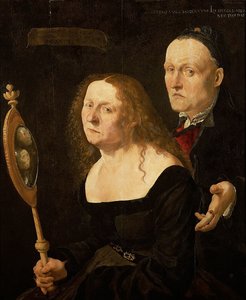
While the surviving oeuvre of Furtenagel is remarkably sparse, the works that remain possess an arresting, almost haunting intensity. He was a master of the vanitas theme—the artistic meditation on the inevitability of death and the transience of life. One of his most profound achievements, long debated by historians, is the double portrait of Hans Burgkmair and his wife Anna. In this striking composition, the couple is reflected in a hand-mirror not as vibrant living figures, but as skeletal reminders of mortality. Through subtle use of light and a chillingly precise execution, Furtenagel utilized the mirror to force a confrontation with the self, embodying the inscription "Recognize thyself/o death/hope of the world."
This preoccupation with the threshold between life and death reached its most iconic expression in his final, most famous undertaking. In 1546, following the passing of the monumental figure Martin Luther, Furtenagel was summoned to Eisleben. Tasked with capturing the likeness of the reformer, he arrived to find Luther already interred. Yet, through his sketches and drawings, Furtenagel achieved something far more enduring than a mere anatomical record. He captured the profound stillness of a departed icon, creating a visual eulogy that would serve as the foundational blueprint for subsequent masters, including Lucas Cranach the Younger. His ability to translate the heavy silence of death into a compelling visual narrative remains his most significant contribution to the history of European portraiture.
Historical Significance and Artistic Echoes
The importance of Lukas Furtenagel lies not in the sheer volume of his output, but in the emotional resonance and historical weight of his surviving fragments. He stands as a bridge between the medieval preoccupation with religious symbolism and the Renaissance focus on individual human experience. His life and work reflect the turbulent transitions of his age—the rise of Protestantism, the expansion of humanist thought, and the refinement of German printmaking and painting techniques.
To study Furtenagel is to witness the following artistic hallmarks:
- Technical Mastery: A profound ability to use light and shadow to convey psychological depth and spiritual solemnity.
- Humanist Influence: The integration of complex philosophical themes, such as memento mori, into portraiture.
- Historical Impact: Providing the essential visual documentation for some of the most pivotal figures of the Reformation.
- Legacy of Observation: A dedication to capturing the raw, unvarnished truth of the human condition, even in its final moments.
Though his career was cut short by his untimely death in 1546, Furtenagel left an indelible mark on the German Renaissance. He remains a vital figure for any student of art history, representing that rare breed of artist who could capture both the grandeur of the human spirit and the quiet, inevitable approach of its end.
lukas furtenagel
1505 - 1546 , Germany
Основные сведения
- Artistic Movement Or Style: Renaissance Art
- Artists Or Movements Influenced By This Artist: ['Lucas Cranach the Elder']
- Artists Who Influenced This Artist: ['Hans Burgkmair']
- Date Of Birth: Augsburg, Germany (1505)
- Date Of Death: ca. 1546
- Full Name: Lukas Furtenagel
- Nationality: German
- Notable Artworks:
- Portrait of Hans Burgkmair and his Wife Anna before a Mirror
- Dead Martin Luther
- Place Of Birth: Augsburg
Похожие статьи
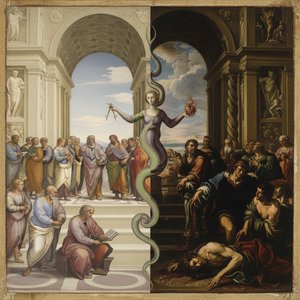
Mannerism: Bridging Renaissance Harmony & Baroque Drama – A Study of Style & Affectation
Explore the fascinating world of Mannerism! Discover its key characteristics, pioneering artists like Pontormo & Bronzino, and its pivotal role in bridging Renaissance harmony to Baroque drama. A comprehensive guide for art enthusiasts.
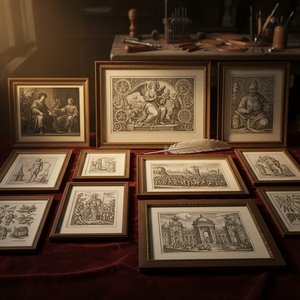
10 шедевров гравюры, изменивших искусство навсегда | ArtsDot
Откройте для себя 10 легендарных шедевров гравюры от Дюрера, Гойи и Рембрандта! Узнайте историю создания этих культовых работ и их влияние на искусство. Репродукции высокого качества для вашего интерьера – ArtsDot.
The Intricate World of Engraving: A Historical Survey of Technique, Artistic Expression & Enduring Legacy
Explore the rich history of engraving with ArtsDot. Discover techniques, iconic artists like Dürer & Callot, collecting tips, and expert guidance for preserving your art investment. Learn about intaglio printing & more!
Engraving: A Historical Survey of Technique, Artistic Expression & Enduring Legacy
Explore the rich history of engraving with ArtsDot. Discover techniques, iconic artists like Dürer & Callot, collecting tips, and expert guidance for preserving your art investment. Learn about intaglio printing & more!
Hendrick Goltzius: Master Engraver & the Flourishing of Dutch Mannerism
Explore the life & art of Hendrick Goltzius, a master engraver of Dutch Mannerism. Discover his innovative techniques, iconic engravings like 'Jahel', and lasting influence on Baroque art. Learn about collecting Goltzius today.