

 Предпросмотр
 Поделиться
 Поделиться
 Детали произведения

 Скачать
 Похожие работы
 Рентгенография
 Слайд-шоу
 Статистика
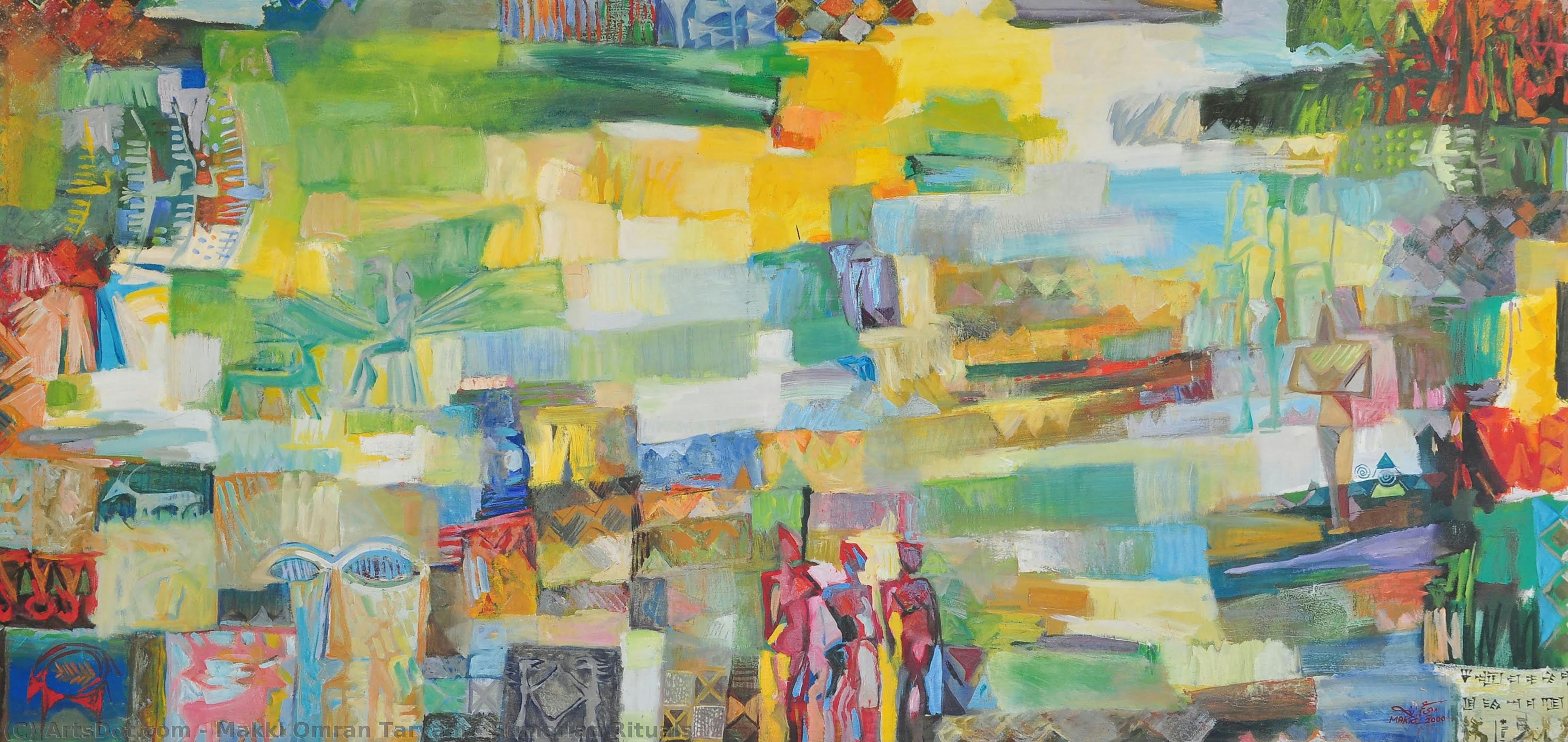
Sumerian Rituals
 Oil On Canvas
- WallArt
- Contemporary Abstract
 2000
2000- Contemporary
 120.0 x 215.0 cm
 Ibrahimi Collection
 Читать далее
Масляная репродукция ручной работы
Картина маслом на холсте в выбранном вами размере и раме, написанная на заказ нашими художниками. ( Перейти к печати Перейти к цифровым изображениям)




































Выберите один из наших стандартных размеров, соответствующих оригинальным пропорциям произведения искусства.

Вы можете указать собственные размеры, чтобы картина идеально вписалась в выбранную раму или пространство. Если выбранный вами размер не соответствует пропорциям оригинала, мы либо обрежем полотно, либо расширим его за счет дополнительных элементов, написанных вручную. Цифровой макет будет отправлен вам на утверждение перед началом производства.
Обратите внимание, что предварительный просмотр на экране не отражает фактическую обрезку или расширение. Только макет точно покажет окончательную композицию.
Хотя доступны индивидуальные размеры, мы рекомендуем выбирать вариант из предопределенного списка, чтобы сохранить исходные пропорции.
После оформления заказа команда ArtsDot.com свяжется с клиентом по электронной почте для уточнения деталей и предоставит предварительный макет
Доставка по всему миру () за 3–4 недели вместо стандартных 5 недель. (11 Сентябрь). Без компромиссов в качестве.

Бесплатная экспресс-доставка по всему миру

Высококачественный льняной холст

Полное страхование доставки

Гарантия возмещения таможенных пошлин

Гарантия точного соответствия цветов

100-дневная политика возврата (только при обнаружении дефектов)

Гарантия возврата 100% средств

Предложение оптовых скидок
 Вариант со стеклом доступен только для размеров менее 110 см

Sumerian Rituals
Техника репродукции
Размер репродукции
-


Итоговая стоимость
$ 263
A Tapestry of Form and Memory
In the expansive landscape of contemporary abstraction, Makki Omran Taryam’s Sumerian Rituals stands as a profound testament to the power of layered complexity. Created in the year 2000, this monumental work—measuring an impressive 120 x 215 cm—transcends simple geometry to offer a window into a fragmented, dreamlike reality. At first glance, the viewer is met with a dense, rhythmic composition where rectangles, triangles, and irregular polygons intersect in a dance of structural tension. It is not merely a painting, but an assemblage of visual echoes that suggests a cityscape caught in a moment of metamorphosis, or perhaps an ancient landscape reconstructed through the lens of modern memory.
The technique employed by Taryam is one of deep excavation and reconstruction. Utilizing oil paints on canvas, the artist employs a loose, expressive brushwork that lends the surface a palpable, tactile energy. The painting breathes through its textures; layers of pigment overlap to create a sense of archaeological depth, as if each stroke were a fragment of history being unearthed. This approach, reminiscent of collage and mixed-media assemblage, allows for a soft, diffused light to permeate the work, casting subtle shadows across the geometric planes. Such mastery of texture makes this piece an extraordinary candidate for high-quality reproductions, as the interplay of light and shadow remains a captivating focal point even in a printed medium.
Symbolism and the Pulse of the UAE
While the subject matter of Sumerian Rituals remains intentionally ambiguous, its title invites a deep, contemplative engagement with the concept of heritage. By invoking the "Sumerian," Taryam connects the modern abstract form to the ancient, foundational rhythms of Mesopotamia and the broader cultural legacy of the United Arab Emirates. The arrangement of shapes does not depict a literal ritual, but rather symbolizes the interconnectedness of time, culture, and urban evolution. The colors themselves act as emotional anchors; bold hues clash and harmonize to evoke the vibrant energy of a developing society while maintaining a sense of primordial mystery.
For the discerning collector or interior designer, this artwork offers more than mere decoration; it provides a sophisticated intellectual anchor for any space. Its flattened perspective and lack of a singular focal point encourage the eye to wander, making it a dynamic element in large-scale architectural settings. Whether placed in a minimalist gallery setting or a richly textured residential study, Sumerian Rituals commands attention through its sheer scale and emotional resonance. It is a piece that does not just occupy space—it defines it, offering an enduring sense of movement, history, and the beautiful chaos of human existence.
Похожие произведения



Биография художника
Anselm Kiefer: A Sculptor of German Memory
Born in Donaueschingen, Baden-Württemberg, Germany, on March 8, 1945, Anselm Kiefer’s life and art are inextricably linked to the weighty history of his nation. Raised near the Rhine River in the Black Forest, he was named after the classical painter Anselm Feuerbach – a deliberate homage that foreshadowed his lifelong engagement with German culture, myth, and its often-troubled past. From an early age, Kiefer envisioned himself as an artist, a pursuit solidified through studies at the University of Freiburg and the Karlsruhe Academy, where he found informal mentorship with the influential Joseph Beuys during brief visits to Düsseldorf. His artistic journey led him away from his childhood home, first to Barjac in the Languedoc region of southern France, and eventually to Paris in recent years, reflecting a persistent need to distance himself while simultaneously confronting the echoes of his heritage.
Early Influences and the Weight of History
Kiefer’s artistic development was profoundly shaped by the post-war German landscape – a nation grappling with the legacy of Nazism, the Holocaust, and the immense burden of its past. His early works began to explore these themes directly, often utilizing materials that spoke to this sense of devastation and reconstruction. Straw, ash, clay, lead, and shellac became recurring elements in his process, not merely as pigments but as symbolic representations of destruction, memory, and the earth itself. The poems of Paul Celan, particularly his haunting “Todesfuge” (“Death Fugue”), served as a crucial catalyst for Kiefer’s exploration of German history and its profound impact on the human psyche. He wasn't simply documenting events; he was attempting to excavate the emotional residue left behind by trauma.
Provocative Self-Portraits and Confronting Taboos
In 1969, during a journey through Switzerland, France, and Italy, Kiefer staged a series of striking photographic self-portraits known as *Occupations*. These images, depicting him dressed in paramilitary clothing and mimicking the pose of Hitler in various natural settings – from the sea to monumental landscapes – were deliberately provocative. He layered these gestures with additional meanings, referencing Romanticism through echoes of Caspar David Friedrich’s solitary wanderers, creating a complex dialogue between past and present. These photographs weren't intended as simple critiques but rather as attempts to “invoke, restage, or excavate” history, acknowledging the uncomfortable truths that lay beneath the surface. The work was met with mixed reactions; in Germany, it was viewed as an "original sin" of the post-Auschwitz era, while in America, it was often interpreted as a solitary struggle against German repression.
Materials and Techniques: A Language of Loss
Kiefer’s artistic process is characterized by its physicality and deliberate roughness. He frequently employs techniques that deliberately resist traditional notions of beauty or polish. He builds up layers of materials – often using a heavy, almost brutal application of straw, ash, and clay – creating surfaces that are deeply textured and uneven. The use of lead, in particular, carries significant symbolic weight, representing both the destructive power of war and the burden of history. His paintings frequently incorporate elements of collage, adding fragments of text, maps, and other found objects to further complicate the narrative. The process itself is as important as the finished product; it’s a tangible manifestation of his engagement with the past.
Themes and Legacy
Kiefer's work consistently returns to themes rooted in German history, myth, literature, art history, music, philosophy, topography, architecture, and even folklore. He doesn’t shy away from confronting difficult subjects such as the Third Reich, World War II, and the Holocaust, often drawing upon clichés and iconic imagery – Wagner’s *Ring* cycle, Goethe's poetry, or the legend of Barbarossa – to explore their complex meanings. His work is not simply a historical record but an ongoing interrogation of memory, trauma, and the ways in which the past continues to shape the present. Anselm Kiefer remains one of the most significant artists of his generation, recognized for his unflinching honesty, his masterful use of materials, and his profound engagement with the complexities of German identity.
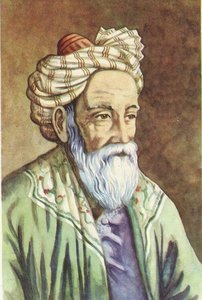
makki omran taryam
1945 - 2013 , United Arab Emirates
Основные сведения
- Artistic Movement Or Style: Neo-Expressionism, New Symbolism
- Artists Or Movements Influenced By This Artist: ['Paul Celan']
- Artists Who Influenced This Artist:
- Joseph Beuys
- Anselm Feuerbach
- Date Of Birth: March 8, 1945
- Full Name: Anselm Kiefer
- Nationality: German
- Notable Artworks:
- Margarete
- Schneeschmelze im Odenwald Winter ade
- Scheiden tut
- Place Of Birth: Donaueschingen, Germany
Похожие статьи

Топ-25 шедевров Василия Кандинского: Абстрактное искусство для вашего интерьера
Погрузитесь в мир абстрактного искусства с Василием Кандинским! 25 шедевров экспрессионизма, баухауса и русского авангарда. Репродукции картин Кандинского для вдохновения и декора вашего интерьера. Откройте всю коллекцию на ArtsDot.com
От минимализма к экспрессионизму: руководство по выбору абстрактного стиля для эмоционального резонанса в искусстве
Руководство по выбору абстрактного стиля для эмоционального резонанса в искусстве. Откройте мир минимализма и экспрессионизма с экспертами ArtsDot.com! Советы, история, техники.

Геометрическая абстракция: 10 шедевров, изменивших искусство | ArtsDot.com
Погрузитесь в мир геометрической абстракции! От Кандинского до Малевича – 10 шедевров, изменивших искусство. Узнайте историю создания и значение культовых картин. Репродукции музейного качества на ArtsDot.com. Вдохновение для вашего интерьера!

Топ-10 шедевров абстрактного экспрессионизма: искусство для вашего интерьера от ArtsDot.com
Погрузитесь в мир абстрактного экспрессионизма! Откройте для себя 10 шедевров Поллока, Ротко и других гениев. История искусства, техники живописи и вдохновение для вашего интерьера от ArtsDot.com. Explore the full collection online!
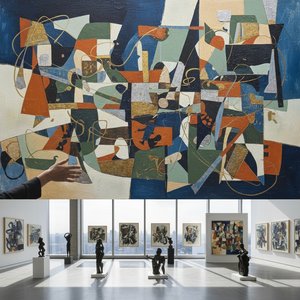
Deconstructing Form & Feeling: A Guide to Contemporary Abstract Art for Collectors
Explore the world of contemporary abstract art with ArtsDot. Discover key movements, influential artists & expert collecting advice. Invest in museum-quality paintings today.