

![La Forge [the Forge] — Maria Helena Vieira Da Silva](/media/artworks/images-full/bf/cf/bfcf0f3fb08cf5b71bbb4f8b1c9ff999.jpg)
 Предпросмотр
 Поделиться
 Поделиться
 Детали произведения

 Скачать
 Похожие работы
 Рентгенография
 Слайд-шоу
 Статистика
La Forge [The Forge]
 Painting
- Abstract Art
 1963
1963- Modern
 31.0 x 98.0 cm
 MAM Rio
 Читать далее
Приобретите цифровое изображение высокого разрешения в улучшенном качестве, которое значительно превосходит онлайн-превью.
Каждый файл тщательно подготавливается нашими специалистами с использованием передовых инструментов и экспертной ручной ретуши. Мы гарантируем исключительную четкость, точную цветопередачу и детальную проработку каждого изображения.
Финальный файл доставляется по электронной почте в течение 72 часов и оптимизирован для немедленного использования в профессиональной среде, при верстке и печати. Это тот же уровень качества, которому доверяют ведущие дизайнерские студии, издательства и галереи.
Цифровое изображение
Скачайте файл высокого разрешения для личного использования, печати и творческих проектов. ( Перейти к печати Купить картину ручной работы)
Включено в каждый заказ цифровых изображений
Гарантия экспертной цифровой доставки
Выбирая ArtsDot.com, вы получаете не просто изображение — вы приобретаете профессионально обработанное цифровое произведение искусства, созданное с безупречной точностью и под защитой гарантии качества. Вот всё, что автоматически входит в ваш заказ:

Мгновенная доставка по e-mail
Ваш цифровой файл в высоком разрешении будет отправлен вам по электронной почте в течение 72 часов после оформления заказа — и сразу станет доступен для использования.

Цифровой файл с ИИ-улучшением
Ваше произведение искусства проходит профессиональную оптимизацию с использованием передовых инструментов ИИ и ручной обработки, что гарантирует максимальную детализацию, четкость и точность цветопередачи.

Бессрочная бесплатная повторная доставка
Случайно удалили или потеряли файл? Не беспокойтесь — мы отправим его вам повторно в любое время и совершенно бесплатно.

Без импортных пошлин — навсегда
Наслаждайтесь вашим произведением искусства мгновенно без таможенных пошлин, сборов или затрат на доставку — цифровые загрузки всегда не облагаются налогом.

Гарантия точности цветопередачи
Мы гарантируем, что ваше цифровое изображение максимально точно передает оригинальные цвета благодаря использованию профессиональных инструментов и систем управления цветом.

Гарантия удовлетворенности 100 дней
Если вы не будете удовлетворены своим цифровым изображением, мы внесем правки или вернем 100% стоимости в течение 100 дней — без лишних вопросов.

100% Гарантия возврата средств
Не удовлетворены покупкой? Получите полный возврат средств в течение 100 дней после получения цифрового файла — без лишних вопросов.

Скидки на оптовые заказы
Купите 3 изображения, сэкономьте 10% — Купите 5, сэкономьте 15% — Купите 10+, сэкономьте 20%. Отличное решение для творческих проектов, галерей и агентств.
Похожие произведения
Биография художника
A Life Woven in Layers: The World of Maria Helena Vieira da Silva
Maria Helena Vieira da Silva, born in Lisbon in 1908, was an artist whose life and work were defined by a constant negotiation between abstraction and figuration, a dance between the seen and the imagined. From a young age, she displayed a remarkable aptitude for drawing and painting, embarking on formal studies at the Academia de Belas-Artes in Lisbon at just eleven years old. This early immersion in artistic training was merely the foundation for a broader European education; she sought guidance from some of the most influential figures of her time – Fernand Léger’s lessons in painting, Antoine Bourdelle’s insights into sculpture, and Stanley William Hayter’s expertise in engraving all contributed to the multifaceted nature of her developing style. These formative years weren't confined to studios; a cosmopolitan upbringing exposed her to avant-garde movements like Futurism and the Ballets Russes, sparking an early curiosity for innovative forms of expression.The Parisian Crucible: Forging a Unique Visual Language
Paris became Vieira da Silva’s artistic home in the late 1920s, a city teeming with creative energy and intellectual ferment. It was here, amidst the vibrant art scene, that she truly began to forge her distinctive visual language. Her marriage to fellow artist Árpád Szenes further enriched this period, creating a collaborative partnership that would endure throughout their lives. The 1930s saw Vieira da Silva experimenting with increasingly abstract forms, yet she resisted complete abandonment of representation. This tension – the pull between recognizable imagery and pure abstraction – became a defining characteristic of her work. She engaged in lively debates within artistic circles like “Amis de Monde,” grappling with the political implications of art and the role of the artist in a rapidly changing world. The outbreak of World War II forced a temporary relocation, first to Lisbon and then to Brazil, but Paris remained her spiritual center. It was during this period that she began developing the complex, layered compositions for which she would become renowned – intricate arrangements of small rectangles, suggestive of architectural spaces or urban landscapes, imbued with a sense of mystery and spatial ambiguity.Abstraction & Beyond: Influences and Artistic Development
Vieira da Silva’s artistic development was shaped by a diverse range of influences. The structural rigor of Paul Cézanne resonated deeply within her work, particularly his exploration of form and perspective. The fragmented forms and spatial distortions of Cubism also left an indelible mark, informing her approach to composition and the depiction of space. However, she wasn’t simply mimicking these masters; rather, she synthesized their lessons into something entirely new. Her art transcends categorization, existing in a fascinating liminal space between abstraction and figuration. Her paintings often evoke cityscapes – not literal representations, but rather impressions of urban life, with its labyrinthine streets, towering buildings, and hidden corners. These aren’t places we recognize directly, but spaces that feel strangely familiar, resonating with our own experiences of navigating the modern world. The influence of her childhood memories of Lisbon, particularly the intricate patterns of *azulejo* tiles, can also be detected in the recurring motifs and textures within her compositions.Recognition & Legacy: A Pioneer of Post-War Art
After returning to Paris following the war, Vieira da Silva’s work gained increasing international recognition. She exhibited at prestigious venues like the Art of This Century Gallery in New York, alongside other leading figures of the post-war art world. In 1966, she achieved a historic milestone by becoming the first woman to receive France's Grand Prix National des Arts, solidifying her position as a major force in contemporary art. Beyond painting, Vieira da Silva demonstrated remarkable versatility, exploring various mediums including printmaking, tapestry design, ceramic decoration, and stained glass – notably creating stunning windows for the St. James Church in Reims. Her contribution to abstract art lies not only in her unique aesthetic but also in her ability to synthesize diverse influences into a cohesive and deeply personal vision. The establishment of the Árpád Szenes-Vieira da Silva Foundation in Lisbon in 1994 ensured that her legacy, along with that of her husband, would be preserved for future generations. Today, her work can be found in prominent museum collections worldwide, including the Museu Calouste Gulbenkian in Lisbon, a testament to her enduring impact on the art world. Vieira da Silva’s paintings continue to captivate viewers with their enigmatic beauty and intellectual depth, reminding us of the power of art to explore the complexities of space, perception, and the human experience.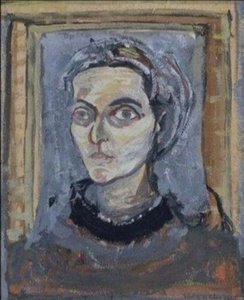
Maria Helena Vieira da Silva
1908 - 1992